


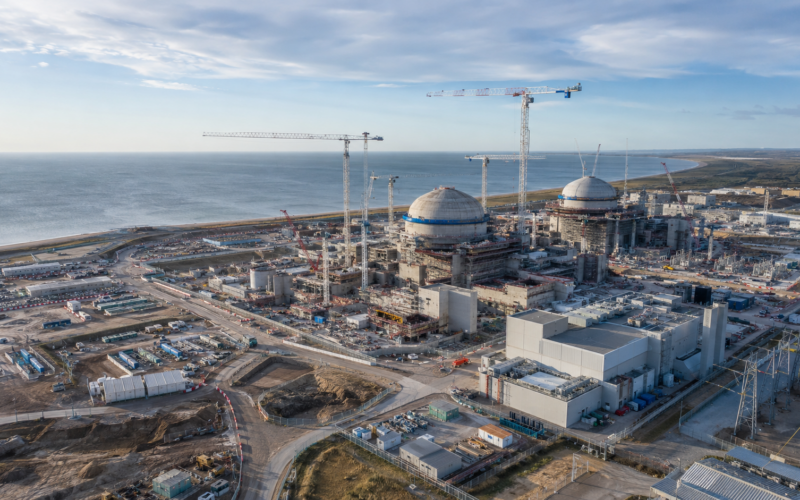
The Sizewell C Nuclear Project is being developed on the Suffolk coast in eastern England, adjacent to the existing Sizewell nuclear site near Leiston. The project is designed as a 3.2GW nuclear power station using two European Pressurised Reactor units, with the capacity to generate low-carbon electricity for the equivalent of around six million UK homes for at least 60 years.
The UK Government is the largest shareholder in Sizewell C with a 44.9% stake, but it is not a majority owner. The other confirmed shareholders are La Caisse with 20%, Centrica with 15%, EDF with 12.5% and Amber Infrastructure with 7.6%. Sizewell C is being developed as a nationally important energy infrastructure project, with government backing, private capital and a regulated asset base funding model.
Sizewell C reached final investment decision in July 2025 and financial close later that year, turning one of Britain’s longest-running nuclear proposals into a funded delivery programme. The National Audit Office reported in May 2026 that the project has a baseline cost estimate of £38.2 billion in 2024-25 prices, associated with being fully operational by July 2039.
The project matters because the UK is trying to rebuild large nuclear capacity after decades of limited new-build delivery. Sizewell C is intended to replicate Hinkley Point C’s EPR design, use lessons from that project, strengthen energy security, provide firm low-carbon electricity and support a large UK supply chain. The 2026 question is not whether Sizewell C has political backing. It is whether the project can avoid becoming another nuclear cost and schedule test for taxpayers, consumers and investors.
Where is the Sizewell C Nuclear Project located and what is being built?
The Sizewell C Nuclear Project is located on the Suffolk coast in eastern England, near Leiston and next to the existing Sizewell B nuclear power station. The coastal location gives the project access to seawater cooling, established nuclear-sector land use and proximity to existing energy infrastructure, but it also places the project in a sensitive environmental and community setting.
The project will include two EPR nuclear reactors, turbine halls, cooling-water infrastructure, electrical systems, safety systems, fuel-handling facilities, grid connection infrastructure, accommodation and transport-related works. It is a power station, but it is also a major civil engineering, marine, logistics, workforce and regional infrastructure programme.
The design is intended to replicate much of Hinkley Point C in Somerset. That replication is one of the central assumptions behind the project’s cost and delivery case. Sizewell C is expected to benefit from engineering, procurement, construction and regulatory lessons from Hinkley Point C rather than starting from a wholly new nuclear design.
The site is already seeing enabling and preparatory works, while final investment decision and financial close have allowed the project to move into a more committed delivery phase. The challenge is that nuclear construction milestones stretch across many years, so the project’s visible progress must be judged against a long baseline rather than short-term civil works alone.
The coastal setting also creates environmental and logistical complexity. Sizewell C must manage marine infrastructure, protected habitats, local transport impacts, construction traffic, workforce accommodation, water management, coastal erosion risk and the relationship with nearby communities in East Suffolk.

Who owns and operates the Sizewell C Nuclear Project?
The Sizewell C ownership structure changed materially when final investment decision was reached in 2025. The UK Government became the largest shareholder with a 44.9% stake, reflecting the project’s national energy-security and infrastructure-policy importance.
La Caisse holds 20%, Centrica holds 15%, EDF holds 12.5% and Amber Infrastructure holds 7.6%. This shareholder mix combines government capital, a major Canadian institutional investor, a large UK energy company, EDF’s nuclear delivery experience and infrastructure-fund participation.
EDF remains central because Sizewell C uses EPR technology and is designed as a sister project to Hinkley Point C. EDF’s role is not simply financial. Its technical and delivery experience from Hinkley Point C is central to the argument that Sizewell C can be built faster and more efficiently than Britain’s first EPR project.
Centrica’s participation is also significant because it brings a UK energy-market player into the equity structure. La Caisse and Amber Infrastructure add long-term capital with an infrastructure-investment profile. The government’s largest-shareholder position reflects the reality that a project of this size and risk profile requires public-sector support without the state owning a majority of the company.
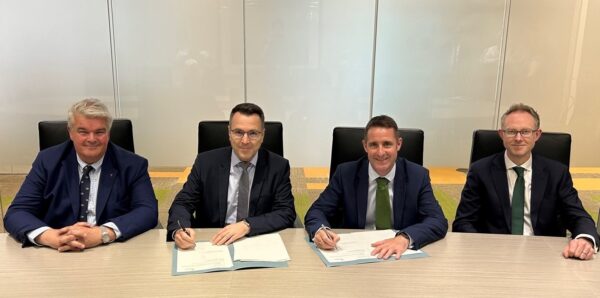
The operator and delivery structure sits around Sizewell C Ltd and the project’s alliance and contractor ecosystem. For readers, the key ownership point is that Sizewell C is no longer only an EDF-led proposal. It is now a UK Government-backed nuclear project with private and institutional investors sharing the capital structure.
What is the planned capacity of the Sizewell C Nuclear Project?
Sizewell C is planned as a 3.2GW nuclear power station. It will use two EPR reactor units and is expected to generate enough electricity to supply the equivalent of around six million homes.
The plant is expected to operate for at least 60 years once commissioned. That operating life is important because nuclear projects have high upfront capital costs, but their economic case depends on decades of large-scale, low-carbon electricity generation after construction.
The 3.2GW capacity also matters for the UK electricity system. Unlike wind and solar, nuclear generation is designed to provide firm output that does not depend on weather conditions. Sizewell C is therefore positioned as part of the UK’s future low-carbon baseload and energy-security strategy.
The capacity figure should be understood as installed generation capacity, not guaranteed continuous output. Nuclear plants still require outages, maintenance, refuelling and regulatory checks. However, if operated reliably, a plant of Sizewell C’s scale can provide a large and predictable share of electricity supply.
The project’s long construction schedule also matters. A 3.2GW nuclear plant can materially support the power system once operating, but Sizewell C will not solve near-term power-market tightness. Its value is a long-term system-planning value rather than an immediate capacity addition.
How is Sizewell C being financed?
Sizewell C is being financed through a regulated asset base model, commonly known as RAB. This model allows investors to receive regulated returns during construction, with consumers contributing through bills before the plant begins generating electricity.
The RAB model is intended to lower financing costs by reducing investor risk compared with a purely private merchant or contract-for-difference model. For a nuclear project with a construction period lasting many years, financing cost is one of the largest determinants of final consumer impact.
The funding model is also controversial. Under RAB, consumers begin paying before electricity is produced, and some construction and financing risks are shared with the public. The government argues that this structure is necessary to unlock large-scale nuclear investment at a lower cost of capital. Critics argue that it exposes consumers and taxpayers to significant risk before the project has delivered power.
The National Audit Office reported a project-baseline cost estimate of £38.2 billion in 2024-25 prices, associated with Sizewell C being fully operational by July 2039. It also said Sizewell C would increase electricity prices for a typical household by £4 in 2025-26, building to a peak of around £19 to £21 a year in the first decade of operation in 2024-25 prices.
That financing structure makes Sizewell C different from Hinkley Point C. Hinkley Point C was backed by a contract-for-difference model where EDF and its partner carried more construction risk. Sizewell C shifts more risk into a regulated-infrastructure framework, which is designed to make financing possible but requires close public oversight.
Which companies and contractors are supporting the Sizewell C Nuclear Project?
Sizewell C has a large contractor and alliance structure because the project involves nuclear engineering, civil works, turbines, fuel, site infrastructure, grid systems, workforce logistics and long-term operations.
The Civil Works Alliance is one of the most important delivery structures. Sizewell C has signed a Programme Alliance Agreement with Laing O’Rourke, Balfour Beatty and Bouygues Travaux Publics, forming the Civil Works Alliance to deliver the main civil works at the Suffolk site.
Framatome has signed multi-billion-euro contracts connected to the Sizewell C EPR project. Its scope includes nuclear steam supply system-related work, safety instrumentation and control, long-term services and nuclear fuel-related responsibilities.
Arabelle Solutions has been awarded a landmark turbine contract to supply and install two complete turbine islands. Each turbine island includes major steam turbine and generator equipment, supporting the conversion of reactor heat into electrical output.
Sizewell C has also signed multi-year fuel contracts with Urenco and Framatome. Urenco’s role covers enriched uranium services, while Framatome’s role includes nuclear fuel fabrication. These fuel contracts are important because a nuclear power station’s operating security depends not only on construction, but also on long-term fuel supply resilience.
Engineering support also includes the EDF EPR Engineering Alliance, with partners such as Assystem, AtkinsRéalis, Jacobs and Vulcain Engineering. These organisations support engineering capacity and knowledge transfer tied to EPR delivery in the UK.
How did Sizewell C move from proposal to final investment decision?
Sizewell C has been in development for many years, but the project moved through several decisive milestones after the UK Government increased its role in new nuclear financing.
The project secured a Development Consent Order in 2022, giving it a planning framework for construction. The UK Government then removed China General Nuclear from the project structure and increased public-sector involvement as nuclear energy became more closely tied to energy security and strategic infrastructure policy.
In June 2025, the UK Government announced £14.2 billion of investment for Sizewell C, signalling that the project had moved closer to full commitment. That announcement was followed by final investment decision in July 2025, when the shareholder structure and funding package were confirmed.
Financial close followed later in 2025, giving the project a more complete financing platform and allowing full-scale delivery planning to continue. The combination of final investment decision, financial close, shareholder commitments and supply-chain agreements moved Sizewell C from development and enabling works into a funded project with a delivery model.
However, final investment decision and financial close do not eliminate delivery risk. For large nuclear projects, sanction is only the beginning of the hardest phase. The next challenge is turning financing, planning consent and contracts into civil construction, nuclear island delivery, equipment installation, commissioning and regulatory approval for operation.
What are the latest Sizewell C updates in 2026?
The most important 2026 development is the National Audit Office’s May 2026 report on Sizewell C. The report provides a baseline for judging the project, including the £38.2 billion project-baseline cost estimate in 2024-25 prices and the July 2039 full-operation timing associated with that estimate.
The NAO report matters because it shifts Sizewell C from political announcement to measurable delivery risk. It sets out the implications of the deal for taxpayers, electricity consumers and investors, and highlights the need for close monitoring of risks under the project’s financing model.
The project’s 2026 status is therefore best described as funded and moving through delivery preparation, with enabling works and supply-chain mobilisation continuing, but with the main public scrutiny focused on cost, schedule, risk allocation and the RAB model.
The 2025 and 2026 contract momentum also remains important. The Civil Works Alliance, Arabelle Solutions turbine contract, fuel contracts with Urenco and Framatome, Framatome’s nuclear technology contracts and engineering alliance arrangements show that Sizewell C has been moving from financial close into supply-chain execution.
The next visible milestones will be tied to main civil works, nuclear island delivery, major equipment manufacturing, workforce mobilisation, grid-related infrastructure and continued regulatory oversight. Because the project-baseline timing points to full operation in July 2039, Sizewell C will need many years of transparent progress reporting to maintain confidence.
What role does Sizewell C play in the UK’s nuclear and energy-security strategy?
Sizewell C plays a central role in the UK’s attempt to rebuild a large nuclear fleet after decades of underinvestment. Britain’s existing nuclear fleet is ageing, and most of the country’s older reactors are approaching closure or have already closed.
A new 3.2GW plant in Suffolk would provide firm low-carbon electricity that complements renewables. Offshore wind and solar are central to the UK’s decarbonisation strategy, but nuclear offers predictable generation that can support system reliability when wind and solar output are low.
Sizewell C also supports energy-security policy. The UK has become more focused on domestic energy infrastructure after gas-market volatility and geopolitical shocks exposed the risks of heavy reliance on imported fossil fuels. A long-life nuclear asset can reduce exposure to gas-price swings over decades.
The project is also industrial policy. Sizewell C is expected to support thousands of jobs on site and tens of thousands across the wider UK supply chain, with major regional benefits in Suffolk and East Anglia. The project has committed to apprenticeships, local employment and UK-based supply-chain spending.
The strategic argument is therefore broad. Sizewell C is not only about megawatts. It is about rebuilding nuclear construction capability, preserving specialist supply chains, training workers, supporting firm low-carbon power and demonstrating whether the UK can deliver a repeat EPR project more effectively than Hinkley Point C.
What regulatory, environmental and community issues shape Sizewell C?
Sizewell C operates under a major regulatory and planning framework. It must comply with nuclear safety regulation, environmental permitting, development consent requirements, marine works controls, biodiversity obligations, construction management conditions and long-term nuclear security standards.
The project’s coastal Suffolk location creates environmental sensitivities. Concerns have included impacts on protected habitats, coastal landscapes, marine systems, water use, fisheries, traffic, noise, construction disruption and the nearby communities that will live with the project for decades.
Water management has been one of the recurring local issues. Nuclear power stations need cooling water, and coastal intake and discharge systems require careful environmental assessment. Construction also affects local roads, land use and community services.
The project has supporters and opponents. Supporters point to jobs, energy security, low-carbon power and regional investment. Opponents question cost, environmental impact, long construction times and whether nuclear is the best route compared with renewables, storage and grid investment.
Any credible Sizewell C profile has to reflect that tension. The project can support low-carbon electricity and long-term energy security, but it also carries local environmental impact, public financing risk and long-duration construction disruption.
What could limit Sizewell C’s delivery or long-term performance?
The main limitation is construction execution. Large nuclear projects are among the most complex infrastructure builds in the world, involving nuclear safety systems, civil structures, mechanical and electrical integration, supply-chain quality assurance and strict regulatory oversight.
Cost risk is central. Hinkley Point C has faced significant delays and cost increases, and Sizewell C’s investment case depends partly on avoiding repetition of those problems. Replication should reduce risk, but it does not remove the complexity of building EPR technology in the UK.
Schedule risk is also material. The NAO project baseline points to full operation by July 2039, with regulatory thresholds extending beyond that under higher-cost and longer-delay scenarios. Any delay could increase financing costs, prolong consumer bill impacts and intensify political scrutiny.
Financing risk is another issue. Under the RAB model, the balance of risk between investors, consumers and taxpayers must be monitored closely. If costs rise, the public debate will focus on who pays, how returns are protected and whether the project still represents value for money.
Supply-chain capacity could also be a constraint. Sizewell C depends on specialist nuclear manufacturing, civil construction, skilled labour, regulatory inspection, quality documentation and major equipment delivery. Competition from other infrastructure and energy projects could affect workforce availability and productivity.
What is the future outlook for the Sizewell C Nuclear Project?
The future outlook for Sizewell C is constructive but heavily dependent on delivery discipline. The project has secured final investment decision, reached financial close, confirmed shareholders, established a regulated financing model and signed major contracts across civil works, turbines, fuel and engineering support.
Its strongest advantage is replication. Sizewell C is intended to reuse much of the Hinkley Point C design and delivery learning. If that replication works, the project could become a more efficient second-of-a-kind EPR build for the UK.
Its biggest challenge is credibility on cost and schedule. The project-baseline cost estimate of £38.2 billion and July 2039 full-operation timing give the project a measurable delivery framework. From 2026 onward, Sizewell C will be judged by whether it can stay within that framework.
For the UK electricity system, Sizewell C could provide a major source of firm low-carbon electricity for six million homes over 60 years. For Suffolk, it could deliver jobs, skills and investment, while also imposing years of disruption and environmental pressure.
For investors and policymakers, the project is a test of whether the regulated asset base model can unlock nuclear infrastructure without creating unacceptable risk for consumers and taxpayers. If Sizewell C succeeds, it could strengthen the case for future UK nuclear projects. If it struggles, it will deepen doubts about whether large nuclear plants can be delivered affordably in liberalised power markets.
The 2026 reality is that Sizewell C is no longer only a promise. It has a funding structure, shareholders, contracts and a baseline delivery framework. The hard part is turning that framework into a working 3.2GW power station on the Suffolk coast.
Discover more from Business-News-Today.com
Subscribe to get the latest posts sent to your email.