



Holtec Nuclear Corporation has suspended its planned U.S. initial public offering (IPO), interrupting one of the nuclear industry’s most closely watched attempts to tap public equity markets during the artificial-intelligence power boom. Reuters reported, attributing the initial development to Bloomberg News, that Holtec postponed the offering because of unfavourable market conditions and had not established a new pricing date.
Only days earlier, Holtec had launched a roadshow for 50 million Class A shares at an expected price range of $15 to $18. At the top of that range, the company could have generated approximately $900 million in gross proceeds before any additional shares purchased through the underwriters’ option. Holtec intended to list on the Nasdaq Global Select Market and Nasdaq Texas under the proposed ticker HNUC.
Why did Holtec Nuclear postpone its IPO?
The immediate explanation is deteriorating market conditions.
Holtec founder and Chief Executive Krishna Singh told the Financial Times that a combination of economic concerns and weakening enthusiasm around AI-related stocks had created difficult conditions for the transaction. Singh also told the publication that Holtec did not face a liquidity problem and could reconsider the listing in several months. Those statements represent Holtec management’s assessment of the company’s position rather than an independently established guarantee about future funding conditions.
The timing is significant because nuclear stocks had enjoyed a powerful rerating as investors connected rising electricity demand from AI data centres with renewed interest in reactors, uranium supply and small modular reactor technologies. That enthusiasm has become more selective.
Reuters noted that newly listed nuclear companies Standard Nuclear and X-Energy had fallen approximately 20.6% and 36.7%, respectively, from their IPO prices by the time Holtec postponed its transaction. Weak aftermarket performance can make institutional investors considerably less willing to accept aggressive valuations for the next company coming to market.

What business would investors have been buying through HNUC?
Holtec is broader than a speculative small modular reactor developer.
The company has operated for decades across nuclear equipment, spent fuel management, decommissioning, manufacturing and engineering. Holtec says it has supplied products and services to more than 150 reactors worldwide and held more than 200 granted patents as of June 30, 2026.
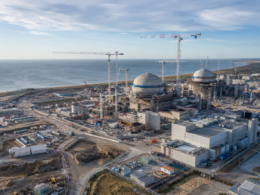
Its growth narrative increasingly centres on operating and developing nuclear generation assets. Holtec is working to recommission the Palisades nuclear plant in Michigan, which would represent the first U.S. commercial nuclear reactor returned to operation after permanent shutdown if the project is completed successfully.
Holtec is also developing the SMR-300, an advanced small modular reactor using passive safety systems. The company expects its first two SMR-300 units to be deployed at the Palisades site, giving investors exposure not only to existing nuclear services but also to a potentially much larger reactor-development business.
Why has nuclear power become linked to the AI boom?
AI data centres require enormous amounts of electricity and increasingly need power available around the clock. Nuclear generation is attractive to technology companies because reactors can deliver large quantities of continuous electricity without direct carbon emissions from generation.
That has pushed utilities, developers and hyperscale technology companies to examine reactor restarts, life extensions, power-purchase agreements and new nuclear construction.
The investment case is nevertheless more complicated than the electricity-demand story suggests. Large nuclear projects require enormous capital, regulatory approvals and long construction periods. Small modular reactors promise simpler repeatable designs, but commercial deployment remains limited compared with established large-reactor fleets.
Public-market investors therefore face an unusual combination of potentially enormous long-term demand and significant execution risk.
Does the IPO delay weaken Holtec’s reactor plans?
A postponed listing does not automatically mean Holtec has abandoned its projects.
The company’s SEC registration remains part of the public record, and Holtec could return to the market if equity conditions improve. Management has also indicated publicly that alternative financing avenues are being considered.
The delay nevertheless matters because nuclear development is capital intensive. Equity markets can provide growth companies with substantial funding while reducing dependence on debt, project finance or strategic partners.
If Holtec eventually wants to deploy fleets of SMR-300 reactors, access to public capital could become increasingly valuable. The postponed offering therefore shifts attention toward the company’s existing cash generation, potential strategic financing and external partners.
What does the Holtec delay say about nuclear stock sentiment?
It suggests that investors are becoming more discriminating.
Nuclear exposure alone is no longer sufficient to guarantee a successful listing at a premium valuation. Investors are increasingly examining the difference between companies with operating cash flows, companies developing early-stage technology and companies whose future economics depend heavily on government support or projects that may not generate revenue for years.
Holtec sits across several of those categories. It has established nuclear-service businesses but is also spending on reactor restart and new-reactor ambitions.
That can make the company attractive because it is not purely developmental, yet difficult to value because mature service operations and speculative reactor growth deserve very different valuation multiples.
When could the Holtec Nuclear IPO return?
No new pricing date has been announced.
The company would need sufficient investor demand to support a valuation that Holtec and existing shareholders consider acceptable. Broader interest-rate conditions, performance of recently listed nuclear stocks and sentiment toward AI infrastructure are all likely to influence that decision.
Holtec’s decision to postpone rather than force the offering at an unattractive price may ultimately preserve flexibility. It also provides a useful reminder that the nuclear renaissance is not exempt from capital-market discipline.
Demand for electricity may be rising dramatically, but companies still need investors willing to fund decades-long nuclear ambitions at valuations that compensate for execution risk.
Discover more from Business-News-Today.com
Subscribe to get the latest posts sent to your email.