


In a significant pivot for the European nuclear innovation landscape, newcleo—the Franco-Italian nuclear technology firm—has announced plans to wind down its UK reactor development programme and redirect its efforts toward countries that actively support the closure of the nuclear fuel cycle and offer tangible backing for Advanced Modular Reactor (AMR) technologies. The decision, made public on July 30, 2025, follows a strategic review by the newcleo board and signals a realignment of priorities in line with international policy momentum and funding clarity.
Founded in 2021 and initially headquartered in the UK, newcleo has spent the past four years working to commercialize Lead-Cooled Fast Reactors (LFRs) using reprocessed nuclear waste. The firm had hoped to build up to four reactors in Britain, generating 800 MW and powering 1.6 million homes, with investment potential pegged at £4 billion. However, persistent policy ambiguity—particularly surrounding access to the UK’s plutonium stockpile—has now prompted the company to step back.
Newcleo will retain a minimal UK presence to preserve optionality but will cease near-term development activity. The redirection of resources comes amid a broader international push to realize closed fuel cycles, especially in territories where regulators and governments have demonstrated sustained commitment to Generation IV reactors.
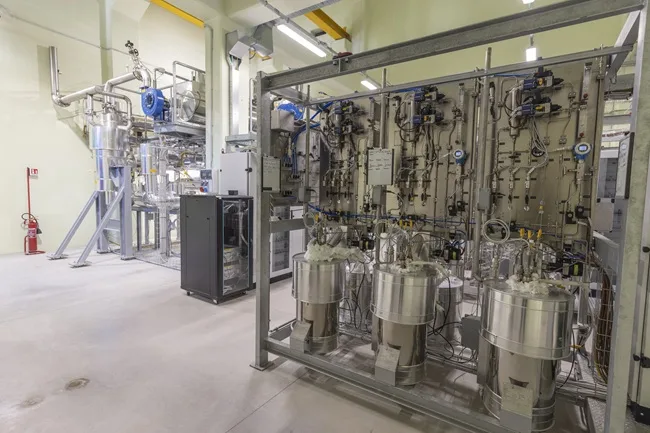
How do global nuclear policies compare, and what led to Newcleo’s shift toward Europe and the U.S.?
The withdrawal from the UK underscores a widening global divergence in nuclear policy ambition. While the United Kingdom has offered support to selected Small Modular Reactor (SMR) designs, analysts observe that Generation IV developers—particularly those focused on fuel recycling—have encountered hurdles in accessing public funding or definitive regulatory pathways. Efforts to engage with successive UK governments failed to secure either access to stored plutonium or an “in principle” project endorsement, newcleo said.
Instead, the company highlighted that other markets have made faster and more concrete moves. In France, policymakers have committed to a state-backed plan to close the fuel cycle by century’s end, with long-term strategies already taking shape. The United States, meanwhile, has made clear its intent to accelerate AMR development under executive directives signed by President Donald Trump during his second term. That momentum has translated into regulatory and funding structures that de-risk private innovation—something analysts view as critical for capital-intensive technologies like LFRs.
Slovakia and Lithuania are two European markets where newcleo has found more traction. In Slovakia, the company has formed a joint venture with state nuclear operator JAVYS to construct up to four LFRs using the country’s own spent nuclear fuel. In June, newcleo signed a similar cooperation agreement with the Lithuanian government, formalizing a bilateral effort aligned with energy sovereignty and waste management goals.
What are the implications of this move for Newcleo’s UK team and nuclear workforce development?
While newcleo’s UK drawdown represents a setback for the country’s Generation IV ambitions, the decision affects real lives. Around 150 staff members were informed of the transition, with the company stating it will engage with other British nuclear players to explore redeployment opportunities across the sector. CEO Stefano Buono called the move a “heavy-hearted decision,” expressing disappointment over the UK’s unwillingness to back plutonium-based fuel recycling initiatives despite what he described as repeated outreach.
Buono noted that newcleo had been the first reactor developer in nearly a decade to submit a design for UK regulatory justification and had made it to advanced stages of the Generic Design Assessment process. The firm had also come “tantalisingly close” to securing a site for its first reactor before the policy headwinds proved insurmountable. “We could take things forward only so far without clear and unambiguous support,” he said.
In a final attempt to salvage possibilities, newcleo said it would write to the Department for Energy Security and Net Zero and the UK Treasury, inviting further discussions on potential avenues of support that might keep the UK project viable in the future.
What is Newcleo’s broader commercial strategy across the European nuclear innovation landscape?
Beyond the UK, newcleo is rapidly consolidating its presence across mainland Europe, positioning itself as a frontrunner in the next generation of nuclear power innovation. In 2024, the European nuclear technology firm reported group turnover of EUR 70 million, reflecting growing commercial momentum. Since its inception in 2021, newcleo has secured approximately EUR 570 million in private funding, a notable achievement in a sector where capital-intensive development often hinges on public backing. This financial support has enabled the company to scale its operations and execute a multi-country strategy anchored in industrial partnerships and technology transfers.
As of mid-2025, newcleo has built a network of more than 100 collaborations spanning the nuclear value chain, including engineering, manufacturing, fuel reprocessing, and waste management. These partnerships include institutional stakeholders and technology providers across key markets such as France, Italy, Switzerland, and Slovakia—each chosen for its regulatory alignment with closed fuel cycle principles and willingness to support advanced nuclear infrastructure. The company’s design philosophy centers on Advanced Modular Reactors (AMRs) utilizing Lead-Cooled Fast Reactor (LFR) technology, a system capable of achieving passive safety and significantly higher fuel efficiency.
At the heart of newcleo’s technology is the use of recycled Mixed Oxide (MOX) fuel derived from reprocessed nuclear waste, positioning the company as both a clean energy provider and a waste remediation innovator. The lead coolant system used in its reactors allows for natural convection and thermal inertia, reducing reliance on active cooling systems and enhancing safety during off-grid conditions. This technical architecture supports newcleo’s overarching mission: to close the nuclear fuel cycle while delivering scalable, carbon-free baseload energy. By fusing proven fast reactor principles with modern modular construction and waste recycling, the company aims to supply not only power, but also strategic energy sovereignty for nations seeking alternatives to traditional uranium-based fuel models.
The company’s growth strategy includes acquisitions of high-capability firms in nuclear engineering, fuel fabrication, and waste processing—sectors seen as critical to scaling clean baseload energy in a post-fossil grid. Across its operations, newcleo now employs more than 1,100 highly skilled professionals. It is actively building out supply chain readiness for SMRs and AMRs in Europe and positioning itself as a critical node in the next generation of nuclear infrastructure.
How are institutional investors and policymakers likely to interpret this realignment?
Investor sentiment around newcleo’s strategy appears mixed but leaning positive, particularly as the firm shifts focus toward jurisdictions with stronger institutional alignment. Analysts familiar with nuclear development cycles note that regulatory clarity and government access to fissile materials are essential conditions for commercial viability in the AMR space. By concentrating its resources where political and technical will is strongest, newcleo is seen as de-risking its roadmap and protecting its capital.
At the same time, UK-based institutional stakeholders may interpret the move as a missed opportunity. The British government’s inability to integrate fuel cycle closure into its nuclear revival plans could undermine the country’s leadership aspirations in nuclear innovation, especially as other markets advance their reactor fleets with spent fuel as a strategic asset rather than a disposal problem.
Whether future UK policy shifts will entice newcleo back remains uncertain. But as the nuclear landscape continues to fragment between innovation-focused nations and regulatory holdouts, analysts expect companies like newcleo to increasingly localize investment decisions around policy realism rather than technological aspiration.
Discover more from Business-News-Today.com
Subscribe to get the latest posts sent to your email.