

Électricité de France (EDF) plans to build 10 NUWARD small modular nuclear reactors in the European Union by 2035, a programme an EDF executive said would require investment measured in tens of billions of euros. The first unit is planned for France, while a second could be developed in Italy with support from EDF subsidiary Edison and potentially companies including Saipem and Webuild. EDF is also discussing prospective projects with governments in Poland, Belgium and Finland.
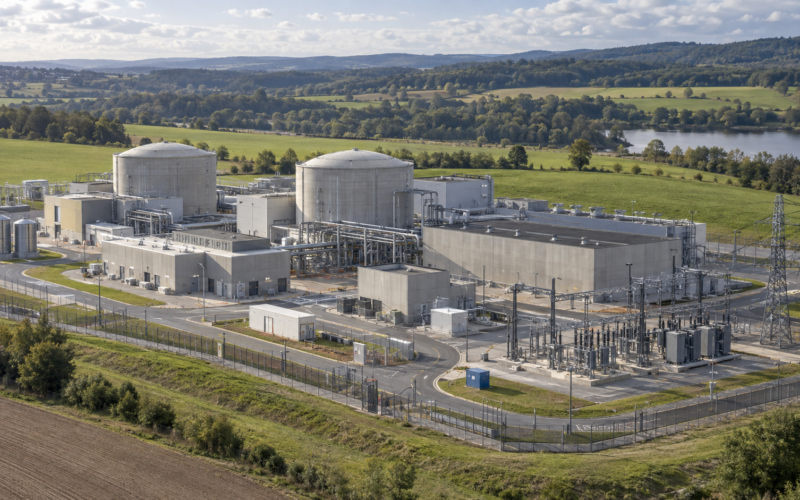
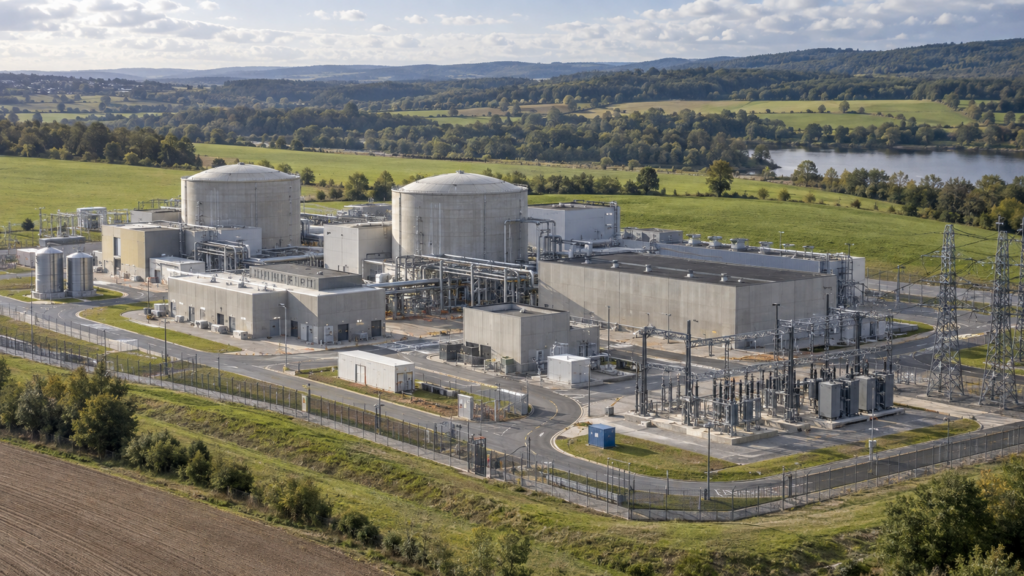
NUWARD’s current reactor design is intended to produce up to 400 megawatts of electricity, with configurations that can also supply industrial heat. The platform uses a 1,150MW thermal reactor architecture based on proven technologies and is designed around modular construction, with NUWARD saying roughly 60% of work normally completed on site can be shifted into factories or workshops.
Why has EDF redesigned its small modular reactor strategy?
EDF’s original NUWARD concept was more technically ambitious, but the company changed direction after design challenges raised concern that complexity could lead to the same schedule and cost difficulties that have affected other large nuclear programmes. The redesigned platform uses more established technology and puts greater emphasis on standardisation, modularity and repeatable construction.
That decision reflects an important lesson from the nuclear industry. The economic case for SMRs depends less on building the smallest or most technologically novel reactor than on creating a design that can be produced repeatedly, licensed predictably and constructed without every project becoming a bespoke megaproject.
EDF Senior Vice President Vakisasai Ramany framed the issue similarly when discussing the new programme, arguing that market success depends on meeting customer expectations around cost, schedule and functionality rather than pursuing technical ambition for its own sake. Reuters reported that the previous design was simplified specifically because of concerns around delays and cost overruns.
The revised NUWARD platform is consequently being marketed as an industrial product rather than a single national demonstration reactor.
Why does EDF want 10 reactors instead of one or two demonstration units?
Nuclear economics improve when engineering, supply chains and regulatory learning can be reused. Building one reactor requires expensive design work, supplier qualification, licensing and tooling. Building multiple essentially identical units allows those fixed costs to be spread across a larger number of projects.
EDF explicitly sees the 10-reactor programme as a way to improve efficiency and spread costs. That is why the company is discussing a portfolio extending across several EU member states rather than designing an isolated French demonstration unit.
Standardisation is especially important for modular reactors because much of the claimed economic advantage comes from factory fabrication. NUWARD says its design could shift around 60% of activities normally performed at the construction site into factories or workshops, with an ambition of delivering a unit in roughly 48 months once the manufacturing model is mature.
The challenge is reaching that mature state. First-of-a-kind nuclear projects frequently cost more and take longer than later units, meaning the commercial case depends partly on governments and industrial customers accepting higher early costs in exchange for learning that could benefit subsequent reactors.
Where could the first NUWARD reactors be built?
France is expected to host the first reactor, giving EDF a home market in which it already operates Europe’s largest nuclear fleet and possesses deep engineering, fuel-cycle and regulatory experience. Italy could host another early unit through Edison, while Poland, Belgium and Finland are also part of discussions.
The geographic interest reflects different national energy needs. Poland is seeking alternatives to coal while preserving reliable baseload generation. Finland already operates nuclear power and needs electricity for industrial users, while Belgium has reconsidered parts of its earlier nuclear phase-out strategy. Italy does not currently operate nuclear reactors, making an SMR programme potentially significant if the country ultimately returns to nuclear generation.
NUWARD has also been working with European safety authorities before formal project licensing. Its Joint Early Review now involves regulators from France, the Czech Republic, Finland, Sweden, Poland and the Netherlands, with Belgium joining and Italy participating as an observer in the latest phase. Conclusions from the current review are expected in early 2027.
Early regulatory coordination could become strategically valuable if EDF wants essentially the same product deployed across several countries. One of the potential advantages of SMRs disappears if every national regulator requires substantial redesign.
Why is industrial heat becoming as important as electricity for NUWARD?
The NUWARD platform is designed to operate as a multi-energy system rather than simply a small electricity plant. EDF says the reactor can produce up to 400MWe, while cogeneration configurations can combine electricity with process heat for industrial users. Potential applications include district heating, hydrogen production, desalination and energy-intensive industrial clusters.
That broadens the addressable market. Large conventional nuclear power stations usually require major electricity grids capable of absorbing gigawatts of output, whereas a smaller reactor could potentially sit near industrial customers that need continuous electricity and heat.
Data centres are another prospective application highlighted by NUWARD. Artificial-intelligence computing requires reliable electricity at high utilisation rates, and nuclear developers increasingly see data centres as potential anchor customers capable of signing long-term power agreements.
The commercial attraction is predictability. A steel, chemicals, hydrogen or data-centre facility operating continuously may value stable energy availability more than exposure to volatile wholesale electricity prices.
Can EDF finance another nuclear programme when its balance sheet already carries €51.5 billion of net debt?
Financing will be one of the most important tests. EDF reported first-half 2026 sales of €57.4 billion, EBITDA of €14.1 billion and group net income of €5.2 billion. Net financial debt stood at €51.5 billion, while net investments reached €11.4 billion as EDF funded programmes including life-extension work on existing reactors, Hinkley Point C, EPR2 and electricity networks.
That existing capital burden means EDF is unlikely to finance every European NUWARD project entirely from its own balance sheet. Individual developments could involve host governments, industrial customers, local utilities and infrastructure investors, particularly if long-term power-purchase or heat-supply agreements can support project financing.
Government policy will matter because small reactors remain expensive first-of-a-kind technologies. France has previously provided state aid to support NUWARD research and development, while broader European policy increasingly recognises nuclear power as part of energy-security and decarbonisation strategies.
The phrase “tens of billions” therefore describes the overall programme rather than an announced EDF-only capital commitment. Investors and governments will need much clearer project-level financing structures before construction begins.
How does the NUWARD programme compare with EDF’s existing nuclear priorities?
SMRs are only one element of a much larger nuclear portfolio. EDF is working to increase output from France’s existing reactors, extend operating lives through its Grand Carénage programme and develop the EPR2 generation of large reactors. First-half French nuclear production increased by 8TWh to 189.9TWh, while EDF expects 350TWh to 370TWh of annual French nuclear generation in both 2026 and 2027.
NUWARD serves a different market. A 400MW-class unit cannot replace the output of a large EPR fleet on a one-for-one basis, but it may be deployable where a multi-gigawatt nuclear station would be economically or geographically impractical.
The next milestones are therefore technological and commercial rather than financial reporting events. EDF needs host sites, customer agreements, regulatory pathways and a supply chain capable of manufacturing repeatable modules.
Ten reactors by 2035 gives the programme a clear scale ambition. Whether NUWARD becomes a meaningful European nuclear platform will depend on whether EDF can turn that ambition into standardised projects that arrive close enough to promised costs and schedules.
Discover more from Business-News-Today.com
Subscribe to get the latest posts sent to your email.