



Williams Companies, Inc. (NYSE: WMB) has formally begun construction on the Northeast Supply Enhancement project, a long-delayed expansion of its Transco pipeline network spanning Pennsylvania, New Jersey, and New York. The company said the project will add 400,000 dekatherms per day of transportation capacity, enough to serve the equivalent of 2.3 million homes, with service targeted for the fourth quarter of 2027. For Williams, this is not just another midstream expansion. It is a test of whether politically sensitive gas infrastructure can still get built in the U.S. Northeast when reliability concerns, power demand growth, and affordability pressures begin to outweigh years of permitting resistance.
The timing matters for investors too. Williams stock closed at $71.44 on April 14, fell to $70.76 on April 15, and trades within a 52-week range of $55.56 to $76.87, giving the company a market capitalization of roughly $86.5 billion. That price action suggests the market sees NESE as strategically relevant but not immediately transformative on its own, which is fair enough. A pipeline groundbreaking is not the same thing as a cash flow inflection, but it does strengthen the long-duration case for Williams as a toll-road operator with leverage to U.S. gas demand, especially in constrained regions where new capacity is unusually hard to add.
Why does the NESE project matter more now than it did during its earlier permitting battles?
The short answer is that the Northeast energy conversation has changed. When NESE was originally proposed, the project was framed largely as another fossil fuel expansion colliding with state environmental scrutiny. That framing has not disappeared, but it now competes with a more urgent question: how does the region maintain winter reliability and support rising electricity demand if pipeline capacity remains constrained while electrification, data center load, and general peak demand continue to rise? Williams is clearly betting that the answer now favors incremental gas infrastructure, especially when built as an expansion of an existing system rather than an entirely new corridor.
That is why NESE matters beyond its own nameplate capacity. It represents a broader policy and market signal that reliability has moved back to the center of the infrastructure debate in the Northeast. Reuters reported that NESE and the separate Constitution pipeline had both previously been shelved after prolonged fights over permits, particularly environmental authorizations tied to water impacts, before policy momentum shifted in 2025. In plain English, this project did not simply win because Williams kept asking nicely. It advanced because the political cost of saying no appears to have increased. Pipelines do not become less controversial with age, but blackouts, winter price spikes, and infrastructure bottlenecks have a way of sharpening official priorities.
How important is NESE to Williams Companies’ long-term Transco strategy and regulated cash flow profile?
Strategically, NESE fits Williams almost too neatly. The company’s core strength is not speculative upstream exposure or commodity price heroics. It is system optimization around large-scale gas transportation and transmission assets, especially Transco, which is already one of the most important natural gas pipelines in the United States. An expansion like NESE allows Williams to deepen the value of an existing corridor, extend service into a structurally tight-demand region, and potentially generate attractive contracted returns with a lower commercial risk profile than a greenfield gamble. That is midstream catnip, or at least the kind approved by the finance department.
Because the project is tied to existing infrastructure, Williams can also position NESE as a targeted capacity solution rather than a radical system expansion. That matters in regulatory storytelling and in capital allocation. The company’s own material has emphasized the use of modern materials and electric motor-driven compressors, while external coverage has described the project as roughly a $1 billion investment with meaningful regional job creation and economic activity. Investors should treat those figures carefully because company-backed impact estimates always arrive wearing their Sunday best, but the broader point stands: Williams is using NESE to reinforce the argument that selective gas buildout can still align with reliability, modernization, and emissions-efficiency goals.
What regulatory and political signals does the NESE groundbreaking send about U.S. energy policy in 2026?
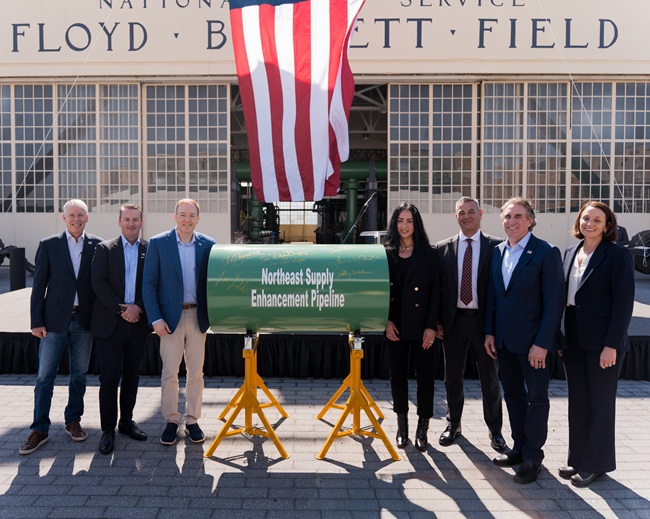
The presence of senior federal officials at the groundbreaking was not ceremonial fluff. It was a message. The U.S. Department of Energy and the U.S. Environmental Protection Agency both publicly highlighted the project as part of a pro-infrastructure, pro-reliability federal posture, while Williams noted that all required federal and state construction permits are now in hand. New York State Department of Environmental Conservation materials from November 2025 confirm that the state issued water-quality certification and related permits, reversing the dynamic that had previously blocked progress.
That does not mean permitting has suddenly become easy in the Northeast. It means the center of gravity may be shifting from blanket resistance toward conditional approval when a project can be tied to grid reliability and supply security. For energy developers, that is an important distinction. For environmental opponents, it is also a warning sign. A project like NESE creates precedent. Once one major gas expansion clears the political and regulatory maze, other delayed or canceled projects inevitably start looking less impossible. Reuters has already linked the NESE groundbreaking to renewed discussion around Constitution. That makes this groundbreaking a local construction event on the surface but a national policy indicator underneath.
What execution risks could still derail Williams’ NESE timeline before the fourth quarter of 2027?
The easiest mistake here is to confuse groundbreaking with guaranteed completion. NESE is in a much stronger position than it was a year ago, but the project is not beyond risk. Legal challenges, construction complexity, community opposition, marine and environmental compliance issues, and cost inflation could all still pressure the timeline or economics. FERC’s environmental review concluded that the project would have adverse environmental impacts, even if most could be reduced to less-than-significant levels through mitigation. That is a very different sentence from “no meaningful risk.”
There is also the demand-risk question, though it is more nuanced than critics sometimes suggest. Opponents have long argued that regional systems could meet demand through other planning tools, demand management, or alternative infrastructure choices. Supporters counter that peak-period gas shortages and fuel deliverability constraints remain real. The answer may ultimately be that both sides are partly right, but markets still pay for reliability first. If NESE enters service on schedule, Williams will have turned a political orphan into a commercially useful asset. If delays reappear, the project could become a fresh reminder that permit wins do not eliminate execution friction in the Northeast.
How should investors read Williams stock after the NESE announcement and what does sentiment suggest now?
The market’s muted response looks rational. Williams is already a large-cap midstream name, so even a strategically important project will not usually produce meme-stock fireworks. More importantly, the cash flow uplift from NESE is still future-dated. Investors appear to be recognizing the project as a positive medium-term de-risking event rather than a near-term earnings shock. With the stock still below its 52-week high but well above its 52-week low, sentiment seems broadly constructive without becoming euphoric. That is often where infrastructure investors like to live: somewhere between “useful catalyst” and “show me the actual EBITDA.”
The more interesting read-through is strategic. NESE supports the thesis that Williams can continue finding value in brownfield expansions tied to hard-to-replicate systems. In a market where power demand expectations are climbing because of industrial activity, electrification pressures, and increasingly data-heavy load growth, transport capacity in constrained regions becomes more valuable. That does not make every pipeline a winner, but it does strengthen the case for established operators with entrenched networks, regulatory experience, and scale. Williams is not being rewarded because investors suddenly discovered natural gas last Tuesday. It is being watched because it may be one of the better-positioned companies to monetize regional scarcity over time.
What does the NESE project mean for Northeast utilities, regional energy pricing, and competing infrastructure plans?
For regional utilities and customers, the promise is straightforward: more deliverability during periods of peak demand and potentially lower volatility in fuel and power costs over time. Williams and supporting agencies have stressed affordability, reliability, and grid stability, while company materials point to greater system flexibility and improved fuel availability. Independent forecasts on those cost impacts deserve scrutiny, but the economic logic is familiar. In constrained markets, even moderate capacity additions can influence basis differentials, procurement flexibility, and emergency-period pricing.
The bigger competitive implication is for the Northeast energy stack itself. If NESE succeeds, it strengthens the argument that gas infrastructure remains a necessary companion to reliability even in states pursuing aggressive clean-energy transitions. That does not invalidate renewables, offshore wind, storage, or efficiency investments. It simply means the bridge fuel keeps extending its own bridge. And yes, in energy policy, temporary solutions have a suspicious habit of staying for decades. That is one reason this project will be watched so closely by utilities, regulators, industrial users, and midstream competitors alike.
Key takeaways on what the Williams NESE project means for the company, competitors, and the Northeast energy market
- Williams has moved NESE from a regulatory narrative into an execution narrative, which is a meaningful de-risking step for a project once considered stalled.
- The project reinforces the strategic value of the Transco system and highlights Williams’ preference for expanding existing corridors rather than relying on riskier greenfield bets.
- NESE’s 400,000 dekatherms per day of added capacity could make Williams more central to Northeast winter reliability and fuel deliverability.
- The muted stock reaction suggests investors see this as a positive medium-term infrastructure catalyst rather than an immediate earnings event.
- The permitting outcome signals a more favorable political environment for reliability-linked gas infrastructure in the Northeast than existed a few years ago.
- Regulatory approval does not eliminate execution risk, and legal, environmental, and construction challenges could still pressure the timeline.
- If completed on schedule, NESE may strengthen the case for reviving or advancing other previously delayed gas infrastructure projects.
- Utilities and large energy users in the region may view the project as a hedge against future supply tightness and price spikes during peak demand.
- For competitors, NESE is a reminder that incumbents with existing corridors and regulatory persistence may still hold the advantage in constrained markets.
- For the broader industry, the project suggests the U.S. gas infrastructure debate is shifting from whether new capacity is acceptable to where and under what conditions it can still be built.
Discover more from Business-News-Today.com
Subscribe to get the latest posts sent to your email.