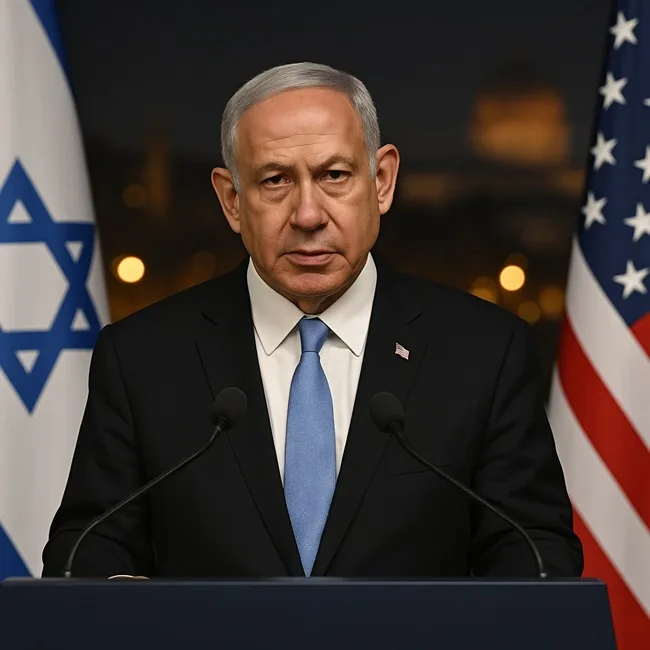


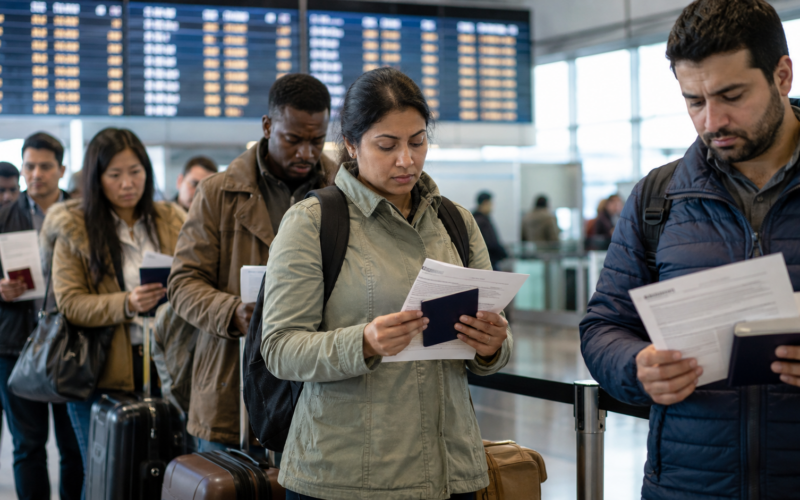
The Trump administration has announced a major shift in United States immigration policy, telling many foreign nationals who are temporarily in the United States and seeking green cards that they must return to their home countries and apply through United States Department of State consular processing.
The change, announced by United States Citizenship and Immigration Services on Friday, marks a significant break from a long-standing pathway that allowed many eligible foreign nationals already inside the United States to seek lawful permanent resident status through adjustment of status. The policy directs immigration officers to assess requests for exceptions on a case-by-case basis when extraordinary relief may be warranted.
United States Citizenship and Immigration Services framed the decision as a return to the original intent of immigration law. The agency stated that temporary visitors, students, workers and other nonimmigrants entered the United States for limited purposes and should not treat temporary admission as the first step toward permanent residence unless extraordinary circumstances justify an exception.
The United States Department of Homeland Security, which oversees United States Citizenship and Immigration Services, stated that a temporary foreign national seeking a green card must return to the applicant’s home country to apply. The department said the change would allow the immigration system to function as intended rather than encouraging what the administration views as loopholes.
The policy is the latest immigration tightening measure under United States President Donald Trump over the past year. The administration has also moved to shorten visa durations for students, cultural exchange visitors and members of the media, while the United States Department of State has said that more than 100,000 visas were revoked since President Donald Trump returned to office.
Why is United States Citizenship and Immigration Services changing the green card process for temporary foreign nationals?
United States Citizenship and Immigration Services is shifting many green card applicants away from in-country adjustment of status and toward consular processing through the United States Department of State. In practical terms, the policy tells many foreign nationals who are already in the United States on temporary status that they should leave the country and continue the green card process abroad.
The agency’s institutional position is that temporary admission to the United States should remain temporary. United States Citizenship and Immigration Services has argued that students, temporary workers, tourists and other nonimmigrants entered the United States for a defined purpose and for a limited period. The agency has stated that those categories should not routinely become a bridge to lawful permanent residence from inside the United States.
The broader consequence is that a process many applicants previously pursued while living, working or studying in the United States could now involve international travel, consular interviews, possible delays and uncertainty over re-entry. The change could affect foreign nationals with jobs, families, education commitments or humanitarian concerns in the United States. It also shifts more procedural weight to United States consulates abroad at a time when visa processing capacity, consular access and country-specific restrictions remain critical factors in immigration outcomes.
The administration has presented the policy as a legal and administrative correction. Critics have described it as a sharp restriction on legal immigration because green cards are not only immigration documents but also the main path toward United States citizenship for many foreign nationals.

How could the new green card directive affect families, workers, students and humanitarian applicants in the United States?
The new directive could affect a wide range of foreign nationals temporarily present in the United States, including workers, students, people on visitor visas, religious visa holders and some family-based applicants. The policy may also create complications for people married to United States citizens or people living in mixed-status households, although the full scope of implementation remains unclear.
United States Citizenship and Immigration Services has indicated that extraordinary circumstances may allow some applicants to remain in the United States while pursuing lawful permanent residence. The agency has not fully clarified which categories will qualify, how pending applications will be treated, or whether applicants must remain abroad for the entire consular processing period.
For families and employers, the consequence could be disruption rather than a simple procedural change. A green card applicant required to leave the United States may be separated from a spouse, child, employer or university program while the case is processed abroad. Consular processing timelines vary by country and post. In some countries, access to United States diplomatic services is limited by security conditions, diplomatic closures or visa processing restrictions.
Humanitarian groups have raised concerns that vulnerable applicants could face heightened risks if they are required to return to countries they fled. The concern is especially acute for trafficking survivors, abused or neglected children, refugees, asylum seekers and people from countries where United States embassy operations are restricted or unavailable. For such applicants, leaving the United States may not be a routine administrative step. It may expose them to safety risks, family separation or stalled processing.
Why does consular processing through the United States Department of State matter for green card applicants?
Consular processing is the route by which a person outside the United States applies for an immigrant visa through the United States Department of State and a United States embassy or consulate. After immigrant visa approval, the applicant may enter the United States as a lawful permanent resident. Adjustment of status, by contrast, allows eligible applicants already inside the United States to seek permanent residence without leaving the country.
The United States visa bulletin system is central to both routes because immigrant visa availability depends on category limits, priority dates and country-specific caps. The United States Department of State’s May 2026 visa bulletin outlines final action dates and dates for filing applications, showing how immigrant visa availability is controlled by statutory caps and demand across family-sponsored and employment-based categories.
The policy change matters because it does not merely alter paperwork. It changes where the applicant must be, which agency handles the process, which consular post becomes responsible, and how travel risk enters the immigration equation. United States Citizenship and Immigration Services may handle in-country adjustment of status, but the United States Department of State manages immigrant visa processing abroad through consular channels.
That distinction becomes important for applicants from countries facing travel restrictions, visa pauses, consular shutdowns or long appointment backlogs. A foreign national may be theoretically eligible for an immigrant visa but still face practical barriers if the relevant consular post has limited operations or if travel back to the United States becomes complicated after departure.
How does the green card policy fit into President Donald Trump’s wider immigration agenda?
The green card directive fits into a wider sequence of immigration restrictions advanced by the Trump administration over the past year. The administration has pursued tighter controls on legal migration, visa duration, visa revocation and immigration screening, while arguing that the United States immigration system must prioritize enforcement, national interest and compliance with statutory limits.
The policy is especially significant because it targets legal immigration pathways rather than only unauthorized migration. Green cards are the foundation of lawful permanent residence and, for many immigrants, the eventual path to United States citizenship. Changing access to adjustment of status therefore affects the legal architecture of settlement, family reunification and skilled immigration.
The institutional argument from the administration is that foreign nationals who entered the United States temporarily should leave when the temporary purpose ends unless a defined exception applies. The administration has linked the policy to resource allocation, saying that more cases should be handled abroad so United States Citizenship and Immigration Services can focus on other priorities such as naturalization and certain humanitarian categories.
The political consequence is likely to be sharp debate over whether the policy restores statutory discipline or narrows lawful immigration by administrative means. Supporters are likely to see the directive as a way to reduce overstays and enforce the distinction between temporary admission and permanent residence. Opponents are likely to argue that the policy creates avoidable instability for families, employers, universities and vulnerable applicants who had relied on long-established adjustment procedures.
What remains unclear about pending green card applications and extraordinary circumstances?
Several major implementation questions remain unresolved. United States Citizenship and Immigration Services has not clearly stated when the change takes effect, how it will apply to pending adjustment of status applications, or how long affected applicants may be required to remain outside the United States while consular processing continues.
The agency has stated that officers will consider relevant factors and information on a case-by-case basis when deciding whether extraordinary relief is warranted. However, the available public description does not yet provide a detailed list of qualifying extraordinary circumstances. That gap is likely to matter heavily for people with medical needs, family obligations, job commitments, humanitarian protection claims or limited ability to safely return to their countries of origin.
The uncertainty also matters for employers and institutions. Employers sponsoring foreign workers may have to plan for extended absences if employees are required to complete green card processing abroad. Universities could face disruption if students or researchers pursuing permanent residence must leave the United States during sensitive academic or research periods. Families may face difficult choices if one household member is told to depart while another remains in the United States.
Until further operational guidance is issued, the policy’s full impact will depend on how United States Citizenship and Immigration Services officers interpret extraordinary circumstances, how United States Department of State consulates absorb additional cases, and whether legal challenges alter or delay implementation.
What are the key takeaways from the Trump administration’s green card policy change?
- United States Citizenship and Immigration Services has announced that many temporary foreign nationals seeking green cards must return to their home countries and apply through United States Department of State consular processing.
The policy reduces reliance on adjustment of status from inside the United States unless extraordinary circumstances justify an exception. - The United States Department of Homeland Security has framed the move as a return to the original intent of immigration law.
The department has argued that temporary admission should not routinely become the first step toward lawful permanent residence. - The policy could affect foreign nationals already living, studying or working in the United States on temporary visas.
Potentially affected groups include students, temporary workers, visitors, religious visa holders and some family-based applicants. - Humanitarian organizations have warned that the policy could endanger vulnerable applicants.
Concerns include trafficking survivors, abused or neglected children, refugees, asylum seekers and people unable to safely return home. - The change shifts more responsibility to United States Department of State consular processing abroad.
That matters because consular access, appointment delays, visa availability and country-specific restrictions can shape outcomes. - Several implementation questions remain unresolved after the announcement.
The public guidance has not fully clarified treatment of pending cases, effective dates, re-entry risks or the full standard for extraordinary circumstances.
Discover more from Business-News-Today.com
Subscribe to get the latest posts sent to your email.