Israeli Prime Minister Benjamin Netanyahu has reignited international attention on the Gaza crisis, declaring that Hamas must be disarmed “either diplomatically or militarily” and promising that Israel will secure the release of all remaining hostages, no matter the cost. His sharp statement, made during ongoing Cairo-based talks, underscores a pivotal moment in a war that has stretched for nearly two years and redefined Middle East geopolitics.
The timing of his declaration coincides with a new U.S.-backed peace proposal, revived under the guidance of President Donald Trump and endorsed by several Arab mediators. Yet beneath the language of diplomacy lies a familiar Israeli doctrine — one that pairs the search for negotiations with an unambiguous readiness to use overwhelming force if diplomacy fails.
Why Netanyahu’s demand for Hamas disarmament has become the deal’s central fault line
For Netanyahu, the path forward is binary: Hamas must disarm, or Israel will ensure it happens by other means. His insistence reflects years of Israeli frustration with partial truces and ceasefires that collapsed after brief lulls. The prime minister argued that “peace without disarmament” would only invite a new cycle of bloodshed, echoing his long-standing security philosophy that deterrence must be tangible, not theoretical.
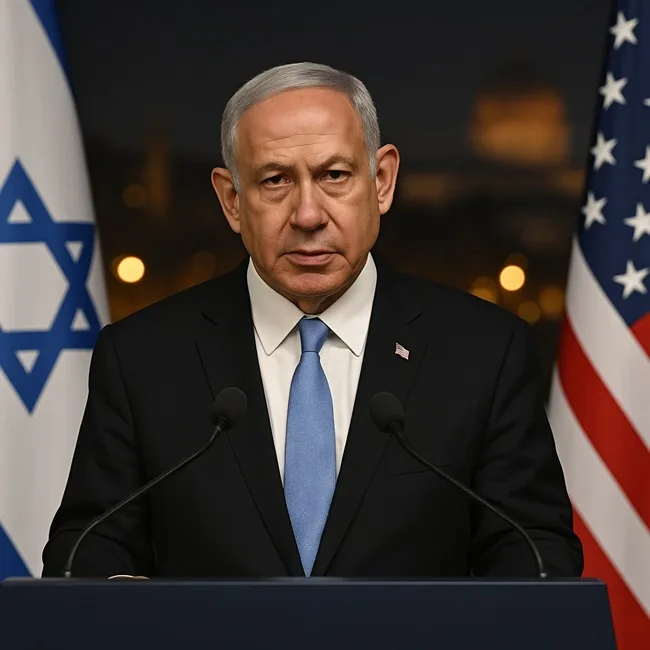
According to officials familiar with the Cairo talks, Israel has agreed in principle to a phased release of hostages in exchange for the suspension of large-scale military operations. In return, Hamas would gradually surrender its heavy weapons and hand over administrative control of Gaza to an internationally supported technocratic authority. The proposal, modeled on President Trump’s “Peace to Prosperity” framework, also includes the release of hundreds of Palestinian detainees and a limited Israeli withdrawal from northern Gaza.
However, disarmament remains the most contentious clause. Hamas has informally accepted several humanitarian provisions of the plan but stopped short of endorsing total demilitarization. Multiple intelligence briefings suggest that the group’s military wing, the Izz ad-Din al-Qassam Brigades, is unwilling to surrender stockpiles of rockets, drones, and small arms — a move it views as equivalent to political suicide.
How international diplomacy is reshaping the Gaza negotiation table
The latest round of mediation in Cairo has drawn a mosaic of players rarely aligned in one forum. Egypt is leading facilitation efforts, while Qatar and the United States are providing indirect backchannels to Hamas leadership. Jared Kushner and Steve Witkoff — once key figures in Trump’s Middle East outreach — are reported to be assisting with diplomatic coordination, reflecting Washington’s renewed and highly personal involvement in the region’s peacemaking theatre.
For the Trump administration, the stakes are as political as they are strategic. A credible breakthrough could redefine American leadership in the Middle East while shoring up regional alliances strained by years of warfare and humanitarian crisis. For Arab nations such as Egypt and Jordan, the talks offer a chance to reassert regional autonomy after years of external mediation by global powers.
Despite this unprecedented alignment, skepticism lingers. Past ceasefire frameworks — from Oslo to Annapolis to the short-lived 2024 Riyadh initiative — have all unraveled under the weight of mistrust and political posturing. Diplomats privately acknowledge that unless Hamas agrees to verifiable disarmament, Israel will not fully halt its ground or aerial operations in Gaza.
What Netanyahu’s strategy reveals about Israel’s shifting military-diplomatic balance
Netanyahu’s statement reflects more than just political theatre; it exposes the delicate recalibration inside Israel’s security establishment. After months of ground campaigns, the Israeli Defense Forces have reportedly reduced large-scale maneuvers in Gaza City, a pause interpreted by observers as an attempt to create diplomatic breathing room.
Yet this temporary restraint does not signal a strategic retreat. Analysts from Tel Aviv University’s Institute for National Security Studies say Israel’s defense doctrine is entering a “containment-with-deterrence” phase — one that relies on simultaneous negotiation and coercion. “Netanyahu is effectively holding two levers: diplomacy for optics, and force for results,” one defense analyst noted, adding that the prime minister’s credibility depends on proving that either route can yield the same outcome — the neutralization of Hamas’s combat power.
This dual-track approach also plays well with Netanyahu’s domestic political base. Within his coalition, far-right factions have warned against any concessions that might be construed as weakness. They continue to push for a permanent military presence in parts of Gaza, citing unfinished objectives and security imperatives. Conversely, centrist lawmakers are pressing for a swift end to hostilities to avoid diplomatic isolation and economic fatigue.
Could the Trump peace plan finally produce results, or will it repeat history?
The Trump-led framework being revived now is, at its core, an exercise in political rebranding. It proposes the establishment of a transitional administrative council in Gaza, composed of local technocrats and supported by international funding. Hamas, under this plan, would exit governance while maintaining limited civilian influence under a “national unity” umbrella — a clause designed to make the disarmament pill easier to swallow.
Israel, in return, would commit to easing border restrictions, facilitating reconstruction, and allowing humanitarian aid into the enclave. But the conditions remain deeply asymmetrical. While the United States and Egypt view the plan as a pragmatic compromise, hardliners in both Israel and Hamas see it as a capitulation of principles.
For Netanyahu, however, even an imperfect deal could deliver a political lifeline. Success would strengthen his narrative that only his government can combine strength with diplomacy. Failure, meanwhile, risks reigniting full-scale warfare and eroding what remains of Israel’s fragile international goodwill.
How are civilians, markets, and global institutions reacting to Netanyahu’s ultimatum and the renewed Gaza diplomacy?
Among Israel’s allies, sentiment remains divided. Washington has publicly supported a “structured ceasefire process” but is cautious about any perception of rewarding Hamas. The European Union and the United Nations have welcomed the Cairo dialogue but have urged both parties to prioritize humanitarian corridors and accountability for civilian casualties.
Inside Israel, public opinion is equally fractured. Families of hostages have staged daily vigils in Tel Aviv, pressing Netanyahu to secure their loved ones’ release through negotiation rather than prolonged conflict. For them, the promise of “freedom in days” is both a beacon of hope and a recurring heartbreak. Across Gaza, weary civilians express cautious optimism that the diplomacy could yield relief from years of siege and bombardment — though many doubt that any external plan can bring lasting stability.
Institutional investors and geopolitical analysts are also monitoring the developments closely. The Tel Aviv Stock Exchange saw muted movement this week, reflecting guarded confidence that an interim ceasefire could stabilize the Israeli economy. Defense contractors, on the other hand, remain bullish; analysts at Bank Leumi predict increased procurement for border surveillance and counter-drone technologies even in a post-conflict scenario.
Why Netanyahu’s ultimatum may define the next phase of Middle East power dynamics
Experts agree that Netanyahu’s ultimatum — diplomacy or disarmament by force — will determine not only the Gaza outcome but also Israel’s standing in future regional realignments. If the Cairo talks succeed, Israel could pivot toward normalized security relations with Saudi Arabia and Jordan under a new U.S.-brokered regional compact. But a breakdown could isolate Israel further, inviting scrutiny at the International Criminal Court and straining its alliance with Washington.
Defense strategists argue that Netanyahu’s framing of disarmament as non-negotiable marks a decisive evolution from Israel’s earlier focus on containment. It transforms Hamas’s status from a territorial adversary to a global symbol of defiance against Western-aligned order. That shift, in turn, amplifies the moral and political stakes of whatever comes next — whether it is diplomacy’s breakthrough or war’s return.
In essence, Netanyahu’s pledge to free all hostages and “disarm Hamas either diplomatically or militarily” encapsulates Israel’s dual nature in this conflict: a nation torn between its democratic image and its security imperatives. The outcome of this phase will not only determine the fate of dozens of captives but also shape how history judges the region’s latest attempt at peace.
Discover more from Business-News-Today.com
Subscribe to get the latest posts sent to your email.