
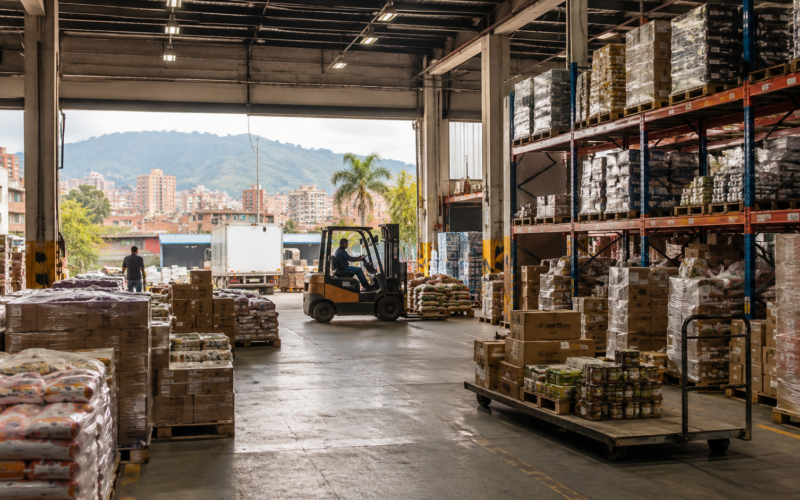
Cencosud S.A. (BCS: CENCOSUD) has agreed to acquire 100% of Makro Supermayorista S.A.S. in Colombia from SHV Interholding AG for an estimated US$158 million through Cencosud Internacional SpA. The self-funded transaction will add 21 cash-and-carry stores across 16 Colombian cities and extend Cencosud’s wholesale platform beyond Giga in Brazil and Makro in Argentina. Completion remains subject to customary conditions, including approval from Colombia’s Superintendence of Industry and Commerce. Strategically, the acquisition gives Cencosud a ready-made business-to-business retail network at a time when its Colombian operation is growing but still produces comparatively modest margins. The transaction therefore represents more than a store purchase, testing whether Cencosud can convert regional scale into procurement, logistics and private-label benefits that become visible in earnings.
Why is Cencosud paying US$158 million for Makro Colombia’s 21-store wholesale network?
The immediate attraction is physical scale without the long development cycle required to assemble a comparable network organically. Makro has operated in Colombia for more than 25 years and has stores in Bogotá, Medellín, Cali, Barranquilla and other commercially important cities. Those locations provide Cencosud with national reach in a segment serving restaurants, neighbourhood retailers, food-service operators, institutions and independent entrepreneurs rather than only conventional household shoppers.
Cash-and-carry retail also gives Cencosud access to purchasing patterns that differ from those of its Jumbo and Metro supermarket customers. Professional buyers tend to purchase larger quantities, visit stores with clearer replenishment objectives and place greater emphasis on unit economics, availability and consistency. That can create relatively dependable volumes, although price sensitivity is intense and margins are often thin. Success depends less on polished stores and more on disciplined inventory management, high stock turnover and ruthless control of logistics costs.
The acquisition is particularly relevant because Cencosud already has substantial Colombian operations in supermarkets, home improvement, shopping centres and financial services. Makro adds a missing wholesale channel rather than simply increasing the number of stores in an existing format. Cencosud can potentially use its broader supplier relationships, imported-product capabilities and private-label portfolio to improve Makro’s assortment while giving existing suppliers access to a wider customer base.
The US$158 million price implies an average consideration of approximately US$7.5 million for each of the 21 stores before assigning value to working capital, distribution capabilities, property interests, brand recognition or customer relationships. That calculation is only a rough reference because the ownership structure of individual properties and Makro’s earnings contribution have not been disclosed. The real valuation test will be whether Cencosud can raise store productivity and operating profit without materially increasing the capital required to modernise the network.
How does the Makro Colombia acquisition fit Cencosud’s wider Latin American wholesale strategy?
Cencosud is no longer treating cash-and-carry as a peripheral experiment. The company entered the Brazilian wholesale segment through Giga and expanded further by acquiring Makro and Basualdo in Argentina during 2025. Adding Makro Colombia creates a wholesale presence across three of Latin America’s largest consumer markets and suggests that Cencosud is building a repeatable regional platform rather than collecting unrelated retail assets.
This strategy can generate procurement advantages if Cencosud combines purchasing volumes across Giga, Makro Argentina and Makro Colombia. Products suitable for professional buyers, including packaged foods, beverages, cleaning supplies, disposable items and hospitality inputs, can often be sourced across multiple markets. Regional negotiations may improve purchasing terms, but local taxes, consumer preferences, import rules and currency movements will limit how much standardisation is practical.

Private-label development offers another potential source of value. Wholesale customers frequently accept private-label products when price, quality and availability are reliable, particularly in frequently replenished categories. Cencosud could use manufacturing relationships and product knowledge from its existing supermarket businesses to broaden Makro’s private-label offering. Higher private-label penetration would potentially improve gross margins while differentiating Makro from wholesalers selling broadly similar national brands.
Data may become equally important. A regional business-to-business customer database could help Cencosud understand purchasing cycles among restaurants, convenience stores and independent retailers. That information could support targeted promotions, digital ordering, credit assessment and inventory forecasting. However, the opportunity will remain theoretical unless customer records, enterprise systems and loyalty programmes can be integrated without making the purchasing process more complicated.
The timing also signals a shift in Cencosud’s portfolio priorities. While the company has been rationalising parts of its Brazilian supermarket estate and simplifying its operating model, it is simultaneously buying formats with clearer strategic positions. Premium grocery through St. Marche, wholesale through Makro and shopping-centre exposure through Plaza Central point towards selective expansion rather than indiscriminate store accumulation.
Can Cencosud extract logistics and commercial synergies without weakening Makro’s customer proposition?
Procurement is the most obvious synergy, but it may not be the easiest to capture. Makro’s professional customers expect stable pack sizes, competitive wholesale prices and reliable product availability. Integrating suppliers too aggressively could disrupt established purchasing relationships or remove products valued by local business customers. Cencosud will need to distinguish between categories where regional sourcing creates genuine savings and categories where local supplier knowledge remains essential.
Logistics integration could produce more durable benefits. Cencosud may be able to consolidate warehousing, transportation planning, imported-product handling and back-office functions across its Colombian formats. Shared logistics can reduce duplicated costs and improve truck utilisation, although wholesale and supermarket replenishment models are not identical. A distribution system optimised for consumer supermarkets may struggle with the larger pack sizes and order profiles associated with cash-and-carry stores.
Technology integration presents another execution challenge. Introducing Cencosud’s payment systems, inventory tools, digital platforms and customer analytics could improve control and support online ordering. However, large technology migrations can interrupt billing, pricing and supplier payments, particularly when an acquired company has older or heavily customised systems. In wholesale retail, even brief disruptions can push professional buyers towards competing outlets because their own businesses depend on dependable replenishment.
Cencosud must also decide how far to integrate Makro’s brand identity. Maintaining the Makro name may preserve customer familiarity and reduce transition risk, while greater Cencosud branding could eventually support cross-selling and loyalty benefits. The sensible approach is likely to be gradual, with operational integration occurring faster behind the scenes than visible changes at store level.
Labour costs will require close attention. Cencosud’s Colombian supermarket profitability was already affected during the first quarter by higher operating expenses, including the impact of minimum-wage increases and store-format conversion costs. Adding a workforce of wholesale employees increases the importance of productivity gains. Cutting too deeply, however, could weaken store execution and damage relationships with professional customers who value speed and knowledgeable service.
What does the deal mean for competition across Colombia’s grocery and cash-and-carry retail market?
Cencosud is entering a Colombian wholesale market in which price competition comes from several directions. Makro competes not only with formal warehouse and membership formats, but also with regional distributors, independent wholesalers, discount chains and traditional commercial districts. Its customers can split purchases across several suppliers, making loyalty more difficult to secure than in conventional weekly household shopping.
The acquisition could strengthen Makro’s purchasing position against competitors such as PriceSmart and against the wholesale offerings available through established Colombian retail groups. Cencosud’s existing relationships with consumer-goods suppliers may allow Makro to negotiate better availability or expand exclusive product ranges. Competitors may respond through sharper promotions, broader private-label assortments or improved delivery services for business customers.
The transaction also blurs the boundary between wholesale and conventional retail. Cash-and-carry outlets increasingly attract ordinary consumers seeking bulk savings, while supermarkets sell multipacks and offer business-oriented services. Cencosud can potentially direct different customers towards Jumbo, Metro or Makro depending on basket size and purchasing purpose. That creates cross-format opportunities but also raises the risk that promotions at one format cannibalise sales at another.
Independent retailers could benefit from a stronger Makro if Cencosud improves product availability and digital ordering. They could also face greater dependence on a large supplier with significant bargaining power. Cencosud will need to demonstrate that its expansion supports competition and customer choice, particularly during the regulatory review by Colombia’s Superintendence of Industry and Commerce.
Regulators are likely to examine local market concentration rather than relying solely on Cencosud’s national market share. The competitive situation may differ substantially between Bogotá, Medellín and smaller cities where wholesale alternatives are more limited. Store ownership, geographic overlaps and supplier relationships could therefore influence the timing or conditions attached to approval.
Why does Cencosud’s balance sheet make the US$158 million acquisition both credible and consequential?
Funding the acquisition entirely from internal resources removes immediate equity dilution and reduces execution dependence on new debt markets. Cencosud reported cash and cash equivalents of CLP 576.3 billion at the end of March 2026, equivalent to roughly US$650 million using the translation reflected in its quarterly disclosures. On that basis, the Makro Colombia consideration is close to one quarter of the reported cash balance before considering subsequent financing activities and other transactions.
The company nevertheless has limited room for casual capital allocation. Net financial debt stood at CLP 3.67 trillion at the end of March, while reported net leverage was 3.4 times adjusted EBITDA, or 3.2 times excluding Argentina-related accounting adjustments. Those ratios do not suggest an immediate balance-sheet crisis, but they place greater importance on disciplined integration and predictable cash generation.
Cencosud has also been unusually active. The Makro Colombia agreement followed the proposed purchase of the 32-store St. Marche premium grocery chain in Brazil and an agreement involving a 51% interest in Plaza Central in Bogotá. The company is simultaneously pursuing a US$600 million investment plan for 2026, covering store growth, renovations, technology and ecosystem development. Each individual investment may be strategically defensible, but the combined programme increases management complexity and demands clear prioritisation.
The group strengthened its maturity profile in April through local and international bond transactions, including a US$500 million issuance used to address a 2027 obligation. That refinancing reduces near-term maturity pressure, but it does not make acquisition spending free. Cash used for Makro cannot simultaneously fund store renovations, debt reduction, digital projects or shareholder distributions.
Investors should therefore measure the transaction against returns rather than store count. Management will need to disclose Makro’s revenue, adjusted EBITDA, working-capital requirements and integration costs after completion. Without those figures, the market cannot determine whether Cencosud acquired a productive cash generator, a turnaround opportunity or a network requiring substantial additional investment.
How should investors interpret CENCOSUD stock trading close to its 52-week low after the Makro deal?
Cencosud shares closed at approximately CLP 2,123 on June 26, rising about 0.6% during the session. The stock was broadly unchanged across the previous five trading sessions, gaining roughly 0.3% from its June 19 close, while the company’s market data indicated a gain of about 1.6% over 30 days. The closing price remained only about 5% above the 52-week low of CLP 2,020.40 and far below the 52-week high of CLP 3,299.
The weak longer-term performance matters more than the limited movement around the announcement. CENCOSUD shares were down approximately 31% over 52 weeks and around 25% during 2026, indicating that investors have been focused on earnings quality, margin pressure and execution rather than simply rewarding expansion. The Makro announcement was released near the end of the local trading week, so the June 26 movement should not be interpreted as a complete market judgment on the deal.
First-quarter results help explain the caution. Reported revenue increased only 0.2% to CLP 4.04 trillion, while adjusted EBITDA declined 11.4% to CLP 333.4 billion and the reported adjusted EBITDA margin contracted to 8.3%. Net income fell 19.2% to CLP 102.1 billion. Excluding accounting adjustments associated with Argentina, revenue declined 4.4% and adjusted EBITDA decreased 12.4%.
Colombia provided a more constructive signal. Total Colombian revenue rose 3.4% in local currency and 8% in Chilean pesos, while adjusted EBITDA increased 46.2% in local currency to CLP 10.8 billion. The country’s adjusted EBITDA margin improved from 2.9% to 4.2%. However, supermarket-level profitability remained under pressure from wage increases and format-transformation costs, showing why acquiring additional scale does not automatically translate into superior returns.
Investor sentiment is therefore likely to remain conditional. The market may view Makro as strategically sensible while withholding a valuation benefit until Cencosud demonstrates integration progress, margin improvement and stable leverage. Acquisitions can create an exciting strategic presentation, but cash flow remains the language spoken by share prices.
What must happen next for the Makro Colombia acquisition to create measurable shareholder value?
Regulatory approval is the first requirement, but operational preparation should begin well before closing. Cencosud needs a detailed integration plan covering procurement, distribution, technology, finance, human resources and customer retention. Management should identify which functions can be combined quickly and which should remain separate until the risks of disruption are lower.
The first measurable indicators should include same-store sales, gross-margin development, inventory days and operating expenses as a percentage of revenue. Higher sales will mean little if they require excessive discounting or working capital. Similarly, procurement savings will not create value if stock availability declines and professional customers shift their purchases elsewhere.
Private-label penetration and digital business-to-business ordering could become important medium-term indicators. Cencosud should be able to use its broader ecosystem to make Makro more convenient for restaurant operators, small retailers and entrepreneurs. Features such as scheduled collection, electronic invoicing, personalised pricing and dependable delivery could increase customer retention without relying entirely on promotions.
Management must also show that the acquisition does not distract from existing transformation work. Cencosud is integrating Makro in Argentina, restructuring parts of Brazil, investing in The Fresh Market in the United States and remodelling formats across several countries. The operating model must be capable of handling simultaneous integrations without weakening service or cost control.
Ultimately, the Makro Colombia acquisition will be judged by whether the business earns a return above Cencosud’s cost of capital. Store numbers, geographic coverage and regional narratives provide context, but they are not substitutes for improved operating profit and cash conversion. The strongest outcome would be a scalable wholesale platform that improves purchasing economics across Latin America. The weakest would be another layer of complexity added to a group already managing multiple formats, currencies and transformation programmes.
What are the key takeaways from Cencosud’s Makro Colombia acquisition for investors and regional retailers?
- Cencosud is paying an estimated US$158 million for 21 Makro stores across 16 Colombian cities, immediately adding a national cash-and-carry network.
- The acquisition extends Cencosud’s wholesale strategy across Colombia, Argentina and Brazil rather than representing an isolated Colombian expansion.
- Internal funding avoids share dilution but makes returns and cash conversion important because Cencosud already carries significant net financial debt.
- Procurement, private-label development, logistics integration and customer data are the principal potential sources of value.
- Technology migration, labour costs and disruption to Makro’s professional customer base are among the largest execution risks.
- Colombian regulatory approval may focus on local market concentration, supplier relationships and competition in cities with fewer wholesale alternatives.
- Cencosud’s Colombian business is growing and improving at the total-country level, but supermarket margins remain sensitive to wage and transformation costs.
- CENCOSUD shares remain close to their 52-week low, suggesting investors require evidence of earnings improvement rather than additional expansion announcements.
- The deal arrives during an active acquisition and investment period that includes St. Marche in Brazil and Plaza Central in Bogotá, increasing management demands.
- The decisive test will be whether Makro delivers higher adjusted EBITDA, disciplined working capital and returns above Cencosud’s cost of capital.
Discover more from Business-News-Today.com
Subscribe to get the latest posts sent to your email.