




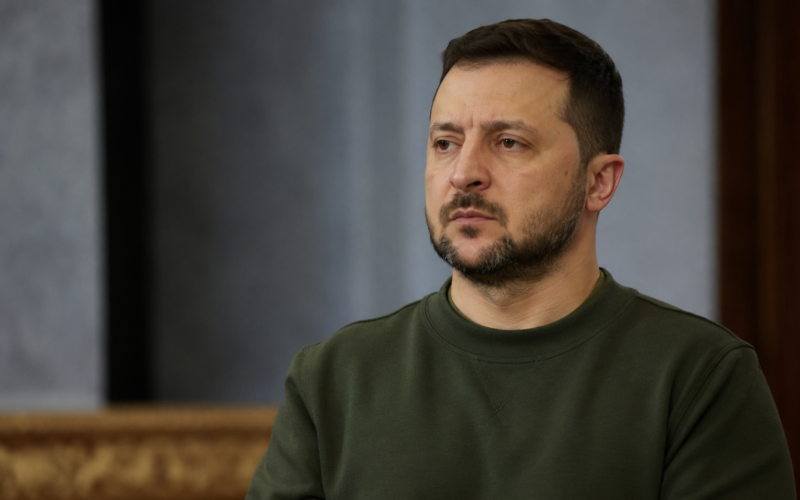
Ukrainian President Volodymyr Zelenskyy has used his first official visit to Serbia to deepen ties with one of Europe’s most carefully balanced governments, securing a commitment to expand economic cooperation while Serbian President Aleksandar Vučić again backed Ukraine’s territorial integrity without agreeing to join Western sanctions against Russia.
The August 8 talks in Belgrade came during another violent night of the Russia-Ukraine war. Russian forces launched six ballistic missiles and more than 150 drones towards Ukraine, killing four people in Kyiv and the surrounding region, including a three-year-old boy and his grandparents. Ukraine simultaneously intensified its campaign against Russian energy infrastructure, striking oil facilities as Kyiv attempts to reduce Moscow’s ability to finance and sustain the war.
The diplomatic and military developments underline the significance of Zelenskyy’s visit. Serbia has condemned Russia’s invasion and consistently says it recognises Ukraine within its internationally accepted borders, including Ukrainian territories occupied by Russia since 2014. Yet Belgrade has refused to impose sanctions on Moscow and remains heavily dependent on Russian natural gas.
Vučić is therefore trying to preserve a relationship with Russia while moving Serbia towards the European Union and strengthening cooperation with Ukraine. Zelenskyy’s willingness to travel to Belgrade suggests Kyiv increasingly believes it can work with governments that have not completely aligned themselves with Western Russia policy.
The two presidents said Serbia and Ukraine would seek to complete a free trade agreement by the end of 2026 while expanding cooperation in infrastructure, energy and food security. For Serbia, progress on the trade deal carries an additional strategic benefit because the agreement is important to its efforts to join the World Trade Organization and ultimately advance its European Union membership ambitions.
Why is Volodymyr Zelenskyy’s first official visit to Serbia politically significant?
Serbia occupies an unusual place in Europe’s political response to Russia’s invasion of Ukraine.
Belgrade has formally condemned the invasion at the United Nations, recognises Ukraine’s territorial integrity and has provided humanitarian and other non-military assistance to Kyiv. At the same time, it has resisted repeated European pressure to align with sanctions imposed on Russia.
That balancing act reflects historical, economic and domestic political realities.
Russia has traditionally enjoyed strong political and cultural ties with Serbia and remains an important energy supplier. Serbia depends on Russia for most of its natural gas, while Russian companies have maintained a major presence in the country’s energy sector.
Moscow has also supported Serbia diplomatically over Kosovo, whose 2008 declaration of independence Belgrade refuses to recognise. Ukraine has similarly declined to recognise Kosovo, giving Kyiv and Belgrade an important area of diplomatic alignment despite their different relationships with Russia.
Zelenskyy’s visit demonstrates that Ukraine is willing to separate Serbia’s refusal to sanction Moscow from its broader bilateral relationship.
That matters because Serbia is an important Western Balkan state and a European Union candidate. Pulling Belgrade gradually closer to Kyiv could reduce Russian political influence in the region without requiring Serbia to abruptly abandon relationships it considers strategically important.
Vučić described Ukraine as a friendly country and reaffirmed that Serbia would continue supporting its independence and territorial integrity. He did not, however, indicate that his government was preparing to join sanctions against Russia.
The message was carefully constructed. Serbia can deepen relations with Ukraine without presenting the visit as an anti-Russian realignment.

What did Zelenskyy and Vučić agree on during the August 8 talks in Belgrade?
Economic cooperation emerged as one of the clearest outcomes of the talks.
Both leaders said they wanted Serbia and Ukraine to complete negotiations on a free trade agreement by the end of 2026. The negotiations have a long history, with Ukraine having blocked progress since 2005 because of disagreements involving tariffs and agricultural quotas.
Resolving those issues could significantly expand bilateral commerce.
The agreement is particularly important for Serbia because concluding it is linked to Belgrade’s long-running effort to join the World Trade Organization. World Trade Organization membership would also strengthen Serbia’s economic integration credentials as it pursues membership of the European Union.
Zelenskyy said the talks covered infrastructure projects as well as cooperation in energy and food security.
Energy is particularly important for Ukraine as another winter approaches. Russian missile and drone attacks have repeatedly targeted power generation, transmission infrastructure and other elements of Ukraine’s energy system.
Serbia has experience managing energy systems that depend on multiple external suppliers and could potentially contribute equipment, technical cooperation or commercial arrangements supporting Ukrainian resilience.
Food security offers another area of potential cooperation because both Serbia and Ukraine possess significant agricultural sectors.
The leaders avoided announcing new military cooperation. Vučić specifically said the subject had not been discussed.
That omission is politically important for Serbia because Moscow has repeatedly accused Serbian defence companies of allowing ammunition to reach Ukraine through third countries. Belgrade denies supplying Ukraine directly and says Serbian weapons manufacturers sell products legally to international customers.
By focusing publicly on trade, infrastructure and energy, Vučić can strengthen relations with Kyiv without appearing to cross one of Moscow’s most sensitive political lines.
Why is Serbia still refusing to sanction Russia despite supporting Ukraine’s territorial integrity?
Serbia’s Russia policy often appears contradictory from outside the country, but Belgrade views the different components as compatible.
Vučić argues that Serbia can oppose the violation of Ukraine’s borders while maintaining economic and diplomatic relations with Moscow.
Energy dependence is one of the strongest constraints.
Russia remains Serbia’s dominant natural gas supplier. Rapidly replacing those supplies could expose Serbian households and industry to higher costs while requiring new infrastructure and contracts.
Russian ownership in parts of Serbia’s energy industry has created further complications.
The relationship also has a geopolitical dimension connected with Kosovo. Russia holds a permanent seat on the United Nations Security Council and supports Serbia’s position opposing Kosovo’s international recognition.
Belgrade therefore sees Moscow as a useful diplomatic partner even while pursuing membership of the European Union.
Domestic politics matter as well. Sections of Serbian society retain strongly favourable attitudes towards Russia, meaning aggressive sanctions could create political costs for any government implementing them.
The European Union, however, expects candidate countries eventually to align more closely with the bloc’s foreign and security policies.
Vučić’s strategy is consequently becoming harder to sustain as the war continues.
Each new Russian attack on Ukrainian civilians increases political pressure on European governments to isolate Moscow. Serbia must simultaneously convince Brussels that it remains serious about European integration.
Zelenskyy’s visit allows Vučić to demonstrate engagement with Ukraine without making the much more politically difficult decision to impose sanctions.
Why are the latest Russian attacks around Kyiv adding urgency to Zelenskyy’s diplomatic campaign?
The Belgrade talks took place against another demonstration of Ukraine’s vulnerability to Russian ballistic missiles.
Ukraine said Russia launched six ballistic missiles and 151 drones during the overnight assault. Ukrainian air defences intercepted most of the drones, but ballistic missiles remain substantially more difficult to stop.
A Russian drone attack on Puhivka near Kyiv killed a three-year-old boy and his grandparents. Another person was killed during a separate ballistic missile strike on the Ukrainian capital.
The deaths followed other major Russian attacks on Kyiv during recent days, reinforcing Zelenskyy’s argument that Ukraine requires additional air-defence systems and interceptor missiles.
Ukraine’s shortage of Patriot interceptors has become particularly serious.
Kyiv has said its forces were able to destroy only a relatively small proportion of ballistic missiles launched during July because interceptor stocks had become depleted. Russia has increasingly exploited that vulnerability with concentrated ballistic attacks against urban areas, logistics centres and infrastructure.
This makes Zelenskyy’s diplomatic outreach about more than symbolic political support.
Ukraine needs governments to contribute equipment, financing, energy assistance and diplomatic pressure even when they are unwilling to become major military suppliers.
Serbia is a particularly interesting target because its position remains outside the European sanctions consensus while still supporting Ukraine’s internationally recognised borders.
Every improvement in relations with Belgrade weakens the idea that countries must maintain political distance from Kyiv in order to preserve ties with Moscow.
Why is Ukraine striking Russian oil refineries while Russia attacks Kyiv’s infrastructure?
The conflict increasingly features sustained attacks against energy and logistics infrastructure on both sides.
Ukraine has expanded long-range drone operations against Russian oil refineries, storage facilities, logistics centres and other industrial targets. During the latest exchange, Ukrainian forces struck oil facilities in Russia’s Krasnodar and Samara regions.
Kyiv argues that Russian oil infrastructure contributes directly to Moscow’s war economy and provides fuel needed by the armed forces.
The campaign also serves an economic objective.
Repeated refinery disruptions can reduce domestic fuel supplies, force plants to halt operations for repairs and increase transportation costs. Damage becomes particularly disruptive when attacks affect several facilities within a short period.
Russia, meanwhile, has concentrated substantial firepower against Ukrainian electricity systems, warehouses, transport infrastructure and cities.
The resulting pattern resembles an infrastructure war layered on top of the ground conflict.
Ukraine does not possess Russia’s enormous missile arsenal, but relatively inexpensive long-range drones allow Kyiv to impose costs hundreds of kilometres inside Russian territory.
Moscow retains a much greater ability to launch ballistic missiles and large drone barrages against Ukrainian cities.
The imbalance explains Ukraine’s focus on Russian energy infrastructure. Kyiv is attempting to exploit targets that are economically valuable, geographically dispersed and difficult to defend completely.
The strategy is also designed to make the consequences of the war more visible inside Russia.
If refinery attacks contribute to fuel shortages or higher domestic prices, the Kremlin faces additional economic pressure even when Ukrainian forces cannot rapidly change the territorial balance along the front.
Could closer Serbia-Ukraine ties weaken Russian influence across the Balkans?
The Balkans remain one of the European regions where Russia retains meaningful political influence despite the war.
Serbia is central to that position.
Moscow has historically presented itself as a defender of Serbian interests, particularly regarding Kosovo, while Russian energy supplies have strengthened economic links between the countries.
Yet Serbia’s long-term economic orientation remains heavily connected to Europe.
The European Union is Serbia’s most important trading and investment partner, while membership of the bloc remains an official national objective.
Vučić is therefore attempting to maintain Russian ties without allowing them to close Serbia’s European path.
Zelenskyy’s visit provides evidence that this balance may slowly be moving.
Vučić travelled to Ukraine twice before welcoming Zelenskyy to Belgrade, including a July visit to Kyiv. Serbia has provided humanitarian assistance to Ukraine and repeatedly endorsed its territorial integrity.
None of those actions amount to Serbia abandoning Russia.
However, relationships between countries frequently change incrementally rather than through one dramatic diplomatic rupture.
Expanded trade with Ukraine, cooperation on European Union accession and infrastructure partnerships could gradually make Kyiv a more important Serbian partner.
Russia is likely to monitor that development closely.
Moscow has already criticised Belgrade over reports that Serbian ammunition may have reached Ukrainian forces through intermediaries. Additional political or commercial alignment with Kyiv could generate further Russian pressure.
Vučić will therefore continue trying to demonstrate that engagement with Ukraine does not mean hostility towards Russia.
Whether that position remains sustainable will depend partly on how the war develops and partly on how strongly the European Union links Serbian accession progress to alignment on Russia.
What does a Serbia-Ukraine free trade agreement mean for Belgrade’s European Union ambitions?
The proposed agreement has importance beyond bilateral commerce.
Serbia has been negotiating to join the World Trade Organization for many years, but unresolved bilateral trade arrangements have complicated the process.
Ukraine has blocked Serbia’s accession since 2005 because of disputes involving agricultural tariffs and quotas.
Completing a free trade agreement could remove one of those longstanding barriers.
World Trade Organization membership matters because Serbia is one of relatively few European countries outside the organisation. Joining would strengthen its integration into international trade rules and remove an anomaly in its economic position.
It would also support Serbia’s European Union candidacy.
European Union members belong to the World Trade Organization, meaning Serbia will ultimately need to resolve these outstanding issues if it wants its accession negotiations to progress.
The prospective agreement therefore creates an unusual area where Ukraine has direct leverage over Serbia’s European economic ambitions.
Zelenskyy can use that leverage constructively by offering progress in exchange for deeper commercial and political cooperation.
Vučić similarly has an incentive to resolve agricultural disputes if doing so removes another obstacle from Serbia’s European path.
The arrangement could therefore produce a tangible economic outcome from a visit otherwise dominated by geopolitics.
What are the key takeaways from Zelenskyy’s first official visit to Russia-friendly Serbia?
- Ukrainian President Volodymyr Zelenskyy completed his first official visit to Serbia on August 8, meeting President Aleksandar Vučić as Kyiv expands diplomatic outreach to European governments that maintain significant relationships with Moscow.
- Vučić reaffirmed Serbia’s support for Ukraine’s independence and territorial integrity, including territories occupied by Russia since 2014, but stopped short of agreeing to impose sanctions on Moscow.
- Serbia and Ukraine want to complete a free trade agreement by the end of 2026, potentially resolving disputes that have delayed Serbia’s World Trade Organization accession since 2005.
- Zelenskyy and Vučić discussed infrastructure, energy and food-security cooperation, with Ukraine seeking greater resilience ahead of another winter exposed to Russian attacks on its power system.
- Serbia remains heavily dependent on Russian natural gas and continues balancing its historical relationship with Moscow against its long-term ambition to join the European Union.
- The two presidents said they did not discuss military cooperation, an important distinction because Russia has repeatedly accused Serbia of allowing ammunition to reach Ukraine through third-party buyers.
- Russia launched six ballistic missiles and more than 150 drones towards Ukraine during the latest overnight attacks, killing four people around Kyiv, including a three-year-old boy and his grandparents.
- Ukraine simultaneously continued its campaign against Russian energy infrastructure, striking oil facilities as Kyiv attempts to disrupt Moscow’s fuel supplies and war economy.
Why Zelenskyy’s Serbia visit could matter more than another symbolic show of European support
Zelenskyy does not need Serbia to transform overnight into one of Ukraine’s strongest military supporters for the visit to have strategic value.
The more important objective is demonstrating that maintaining historical ties with Russia does not require a European government to remain politically distant from Kyiv.
Serbia provides an unusually useful example.
It continues buying Russian energy, refuses Western sanctions and values Moscow’s diplomatic support over Kosovo. Yet it simultaneously recognises Ukraine’s full territorial integrity, supports Kyiv’s European Union aspirations and now wants substantially stronger economic relations.
That combination limits Russia’s ability to divide Europe into simple categories of friends and enemies.
For Vučić, closer relations with Ukraine can also strengthen Serbia’s European credentials while avoiding an immediate rupture with Moscow.
The arrangement remains fragile. Russian pressure could intensify if economic cooperation develops into deeper security coordination, while the European Union could eventually demand clearer Serbian alignment with its sanctions policies.
Much will also depend on Serbia’s domestic politics and the timing of possible early elections.
Yet the direction of travel is worth watching.
The war has already transformed European security, defence spending and energy relationships. It may now be slowly reshaping political alignments in parts of the Balkans where Moscow once assumed its influence was relatively secure.
Zelenskyy’s first official visit to Belgrade does not mean Serbia has chosen Ukraine over Russia.
It does show that Serbia increasingly believes it can strengthen its relationship with Ukraine without waiting for the war to end, and that may ultimately prove more consequential than a dramatic diplomatic declaration.
Discover more from Business-News-Today.com
Subscribe to get the latest posts sent to your email.


