

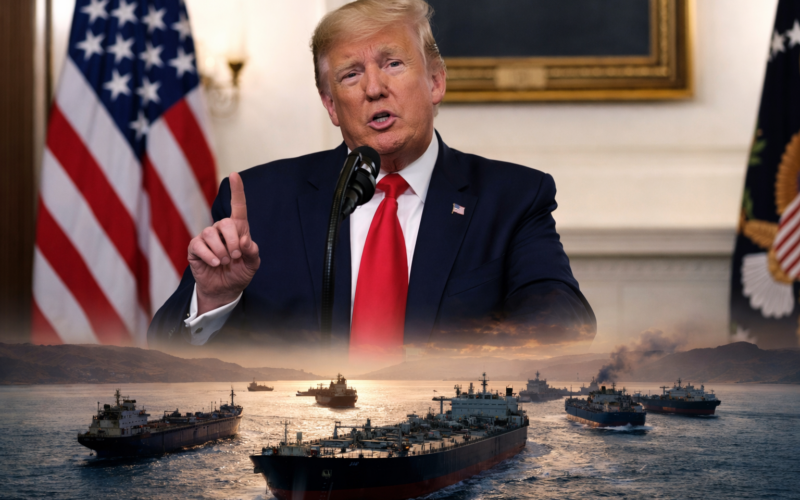
United States President Donald Trump has rejected Iran’s response to a United States peace proposal, calling Tehran’s position unacceptable as diplomatic efforts to end the 10-week conflict remain under strain and fresh drone incidents across the Gulf highlight the fragility of the month-old ceasefire.
Iran’s response, forwarded to Washington through Pakistan, focused on ending the war on all fronts, protecting shipping through the Strait of Hormuz, lifting United States sanctions, ending the United States naval blockade, securing guarantees against further attacks, and addressing war damage compensation. Trump dismissed the response shortly after reviewing it, offering no detailed public explanation of which Iranian demands Washington considered unacceptable.
The rejection came after nearly two days of relative calm following sporadic clashes in and around the Gulf. That pause was interrupted when hostile drones were detected over several Gulf countries, including the United Arab Emirates and Kuwait, while Qatar reported a drone strike on a cargo ship arriving from Abu Dhabi. No Gulf country reported casualties in the latest drone incidents, but the timing reinforced how narrow the space for de-escalation remains.
The dispute has now moved beyond a bilateral United States and Iran standoff. It directly affects Gulf Arab security, energy markets, global maritime traffic, Pakistan’s mediation role, Qatar’s diplomatic position, Israel’s military calculations, and wider international efforts to prevent the Strait of Hormuz from becoming a prolonged chokepoint for oil and liquefied natural gas shipments.
How does Trump’s rejection of Iran’s response affect the United States peace proposal?
Trump’s rejection of Iran’s response leaves the United States peace proposal without immediate diplomatic traction. Washington had offered a pathway that would end fighting before negotiations moved to more difficult issues, including Iran’s nuclear programme. Iran’s reply placed heavier emphasis on ending the war, restoring shipping security, lifting sanctions, ending the naval blockade, and protecting Iranian sovereignty over the Strait of Hormuz.
That difference matters because the two sides appear to be sequencing the conflict differently. The United States wants fighting to stop first, followed by talks on Iran’s nuclear infrastructure and broader security issues. Iran wants the terms of de-escalation to include relief from sanctions, guarantees against renewed military action, and recognition of its role around the Strait of Hormuz.
Pakistan’s role as mediator remains significant because it has provided the channel through which Iran’s response reached Washington. Qatar is also involved in mediation, particularly because Gulf shipping security and liquefied natural gas flows are directly affected by the crisis. However, Trump’s public rejection suggests that mediation has not yet narrowed the central gap between United States demands and Iranian conditions.
The diplomatic consequence is that the ceasefire remains exposed to military pressure. If neither side adjusts its sequencing, the United States peace proposal may remain a framework rather than a negotiable settlement. That raises the importance of third-party mediation by Pakistan and Qatar, but it also increases the risk that battlefield incidents around the Gulf could overtake diplomacy.
Why is the Strait of Hormuz central to the United States and Iran confrontation?
The Strait of Hormuz has become the central pressure point because it links the military conflict to global energy flows. Before the war, the narrow waterway carried about one-fifth of the world’s oil supply. Since the conflict began, Tehran has largely restricted non-Iranian shipping through the strait, while the United States has maintained pressure through a naval blockade of Iranian ports.
Iran’s response to the United States peace proposal emphasised shipping safety and Iranian sovereignty over the strait. Tehran’s position is that outside powers should not control maritime security in the waterway. The United States position is that Iran cannot be allowed to control an international shipping route that is central to global energy markets.
The passage of the QatarEnergy-operated carrier Al Kharaitiyat through the Strait of Hormuz toward Pakistan’s Port Qasim offered a limited sign that some shipping movement remains possible. The vessel’s transit was important because it was the first Qatari liquefied natural gas carrier to cross the strait since the United States and Israel began military operations against Iran on February 28. A Panama-flagged bulk carrier bound for Brazil also passed through using a route designated by Iranian armed forces.
Those individual transits do not remove the wider risk. The strait remains vulnerable to drone activity, naval clashes, missile threats, insurance disruption, and political bargaining. For energy-importing economies, especially those dependent on Gulf crude oil and liquefied natural gas, the Strait of Hormuz is no longer only a maritime security issue. It is a macroeconomic risk channel.
How are Gulf drone incidents changing the security calculation for Qatar, Kuwait and the United Arab Emirates?
The latest drone incidents show that Gulf Arab states remain exposed even while a ceasefire is formally in place. The United Arab Emirates said it intercepted two drones launched from Iran. Kuwait said its armed forces dealt with hostile drones that entered Kuwaiti airspace. Qatar said a cargo ship arriving from Abu Dhabi was hit by a drone near the port of Mesaieed, after which the vessel continued its journey once the fire was brought under control.
The absence of reported casualties reduces the immediate human toll, but it does not reduce the strategic impact. Drone activity over Gulf states creates uncertainty for air defence systems, port operations, commercial vessels, energy infrastructure, and insurance markets. It also places Gulf governments in a difficult diplomatic position, because they need to maintain mediation channels while also protecting national airspace and maritime access.
Qatar’s position is especially important because Qatar is both a mediator and a major liquefied natural gas exporter. Any sustained disruption around the Strait of Hormuz or Qatari waters could affect energy buyers far beyond the Gulf. Kuwait and the United Arab Emirates face similar risks because their security environments are tied to maritime flows, port operations, and United States military presence in the region.
The regional consequence is that the Gulf is becoming the operational theatre where diplomatic failure becomes immediately visible. Even when Washington and Tehran communicate through intermediaries, drones, vessels, air defence systems, and naval patrols continue to shape the balance of risk.
Why does Israel’s position keep Iran’s nuclear programme at the centre of the war?
Israeli Prime Minister Benjamin Netanyahu has maintained that the war cannot be considered over while enriched uranium remains in Iran, enrichment sites remain operational, and Iran’s proxies and ballistic missile capabilities remain unresolved. Netanyahu has said diplomacy would be the best way to remove Iran’s enriched uranium, while not ruling out the use of force.
That position reinforces the central contradiction in the peace effort. Iran’s response to the United States proposal emphasised ending the war and securing sanctions relief, while the United States and Israel continue to frame the conflict through Iran’s nuclear programme, enriched uranium, regional proxies, and ballistic missile capabilities.
Iranian President Masoud Pezeshkian has publicly maintained that negotiations do not mean surrender or retreat, presenting Tehran’s diplomatic engagement as compatible with defending national interests. That stance is intended to preserve Iran’s domestic political position while allowing room for mediated talks.
The broader consequence is that any peace proposal limited to a ceasefire may not satisfy Israel’s security objectives or Washington’s nuclear concerns. At the same time, any proposal that prioritises nuclear dismantlement before sanctions relief and security guarantees may remain unacceptable to Tehran. This is why the conflict is not merely a ceasefire problem. It is a sequencing problem involving war termination, sanctions, nuclear restrictions, maritime security, and regional deterrence.
How does the Lebanon front complicate United States and Iran peace diplomacy?
Iran’s response to the United States proposal focused on ending the war on all fronts, especially Lebanon. That reference matters because fighting between Israel and Hezbollah has continued despite a United States-brokered ceasefire announced on April 16. Hostilities between Israel and Hezbollah reignited after Tehran came under United States and Israeli attack earlier in the conflict.
Lebanon complicates the diplomacy because the conflict is not contained to direct United States and Iran military activity. Israel’s operations, Hezbollah’s actions, Iranian support networks, and Lebanese territorial security all feed into the broader regional picture. If Lebanon remains active, Iran can argue that the war has not truly ended. If Hezbollah remains militarily engaged, Israel can argue that the security threat remains unresolved.
The planned talks between Israel and Lebanon in Washington on May 14 therefore sit inside the wider Iran diplomacy, even if they are formally separate. Progress on the Lebanon file could reduce pressure on the broader ceasefire. Failure on the Lebanon track could keep Israel and Iran-linked forces in confrontation, making a United States and Iran settlement harder to sustain.
The regional implication is that a durable settlement would require more than one document between Washington and Tehran. It would require parallel de-escalation in the Gulf, around the Strait of Hormuz, in Lebanon, and across the network of forces aligned with Iran.
What does the latest Gulf escalation mean for energy markets and global shipping?
The United States and Iran failure to reach agreement has already affected energy markets, with oil prices rising after Trump rejected Iran’s response. The market reaction reflects a simple risk calculation: if the Strait of Hormuz remains restricted, energy flows stay vulnerable and shipping costs remain under pressure.
The economic risk extends beyond crude oil. Liquefied natural gas movements from Qatar, shipping routes to South Asia, commercial vessels bound for global markets, and maritime insurance rates are all affected by the security picture in the Gulf. Pakistan’s interest in the safe passage of Qatari liquefied natural gas underscores how regional diplomacy connects directly to domestic electricity supply and fuel availability.
The passage of some vessels through the Strait of Hormuz shows that the route is not fully closed. But selective passage, designated routes, drone incidents, and naval warnings are not the same as normal commercial navigation. Energy markets price uncertainty, not only confirmed disruption.
For governments outside the Middle East, the strategic issue is now whether the Gulf can return to predictable shipping conditions without a final United States and Iran settlement. If the answer is no, the conflict becomes a global inflation risk as much as a regional security crisis.
What are the key takeaways from Trump’s rejection of Iran’s response to the United States peace proposal?
- United States President Donald Trump rejected Iran’s response to the United States peace proposal after Iran sent its reply through Pakistan.
- Iran’s response focused on ending the war, securing shipping through the Strait of Hormuz, lifting sanctions, ending the naval blockade, and obtaining guarantees against further attacks.
- Hostile drones were detected over several Gulf countries after about 48 hours of relative calm, testing the month-old ceasefire.
- The United Arab Emirates, Kuwait and Qatar each reported drone-related incidents, while no Gulf country reported casualties in the latest incidents.
- The Strait of Hormuz remains central to the conflict because it carried about one-fifth of the world’s oil supply before the war and remains critical to global energy markets.
Discover more from Business-News-Today.com
Subscribe to get the latest posts sent to your email.