




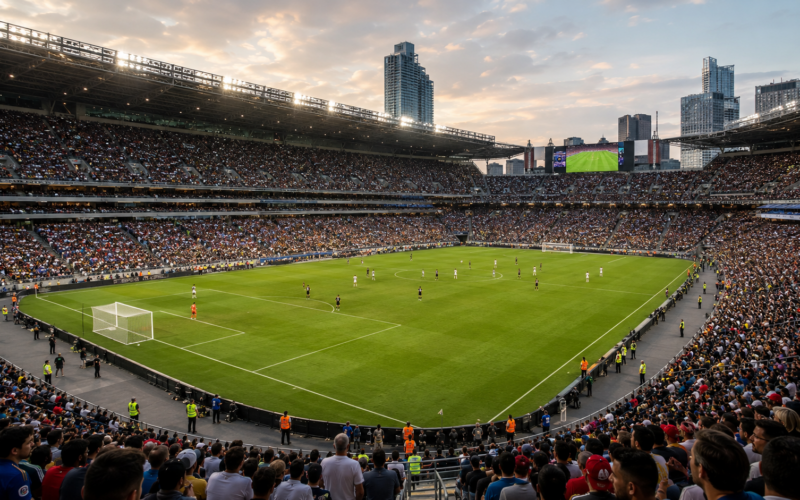
England were held to a 0-0 draw by Ghana at Boston Stadium in Foxborough, Massachusetts, on June 23, 2026 local time, with the match concluding early on June 24 in India. Thomas Tuchel’s team controlled 78.8 percent possession and attempted 19 shots but failed to score against Carlos Queiroz’s compact defensive system.
Nico O’Reilly came closest to breaking the deadlock when his 86th-minute header struck the crossbar. The rebound fell invitingly to Harry Kane, but the England captain lifted his close-range attempt over the goal when presented with the clearest chance of the match.
Ghana also had reason to feel that the result might have been even better. Substitute Prince Kwabena Adu broke into the England penalty area in the 79th minute and appeared to be challenged by Ezri Konsa, but the referee allowed play to continue and no penalty was awarded following the subsequent review process.
England and Ghana moved to four points from two Group L matches. Croatia’s later 1-0 victory over Panama left the group open before the final round, with England facing eliminated Panama and Ghana meeting Croatia in a direct qualification contest.
England vs Ghana FIFA World Cup 2026 match scorecard
How did Ghana’s defensive system neutralise England despite almost 79 percent possession?
Ghana entered the match with a clear priority. Queiroz wanted his team to protect the central areas, surround Kane and prevent England’s attacking midfielders from receiving possession close to goal.
The Black Stars frequently formed a compact defensive line with another narrow group positioned immediately in front of it. England were allowed to circulate possession around the outside because Ghana were more concerned with stopping forward passes through the middle.
Kane was rarely left against a single defender. Whenever England attempted to find him between the lines, Thomas Partey, Kwasi Sibo and the nearest centre-back moved toward the captain.
Jude Bellingham encountered the same problem. He could drop toward midfield to receive the ball, but doing so moved him farther away from the areas where he could influence the final action.
England completed hundreds more passes than Ghana and spent long periods in the attacking half. The possession became repetitive, however, because too many passes were played in front of the defensive block.
Noni Madueke occasionally isolated Gideon Mensah on England’s right, but he frequently checked back rather than driving immediately toward the penalty area. Anthony Gordon also struggled to create separation on the opposite side.
Ghana’s discipline was reflected by the first-half statistics. England controlled almost 80 percent of possession, yet neither team registered a shot on target during the opening 45 minutes.
It was the first half of the tournament in which both sides failed to test the opposing goalkeeper. For Ghana, that represented successful execution rather than a lack of ambition within their chosen game plan.
Why did England’s slow passing tempo make Ghana’s low block easier to defend?
A deep defensive system becomes most vulnerable when the attacking team moves the ball quickly enough to force defenders to change direction.
England rarely achieved that level of speed. Passes travelled from one side to the other, but Ghana’s midfield had enough time to move across the pitch and rebuild the protective structure.
Reece James and Djed Spence advanced from full-back, although England did not consistently use overlapping and underlapping runs to create numerical advantages.
Madueke’s cross for Rice in the 36th minute became the best first-half opening. Rice moved into the penalty area and reached the delivery but headed over the crossbar.
The chance showed what England could produce when the winger attacked his defender and delivered before Ghana settled. Too few attacks followed the same pattern.
Elliot Anderson helped England retain possession but could not consistently accelerate the game from midfield. Bellingham became increasingly frustrated as the spaces around him remained crowded.
Ghana were happy to allow England’s central defenders to hold the ball. Marc Guéhi and Konsa completed passes without forcing the Black Stars to abandon their positions.
Tuchel’s team therefore controlled territory without controlling Ghana’s decisions. The defensive side remained comfortable because England’s possession developed at the speed Queiroz wanted.
The contrast with the 4-2 victory over Croatia was significant. England had attacked quickly after half-time in the opening match, using movement and direct passing to exploit a team willing to move forward.
Ghana offered no comparable space. England required a different solution and failed to find it until the final minutes.
Did Thomas Tuchel’s substitutions improve England’s attacking threat?
Tuchel began changing the attack in the 65th minute when Bukayo Saka and O’Reilly replaced Gordon and Spence.
Saka immediately offered greater urgency on the right. He moved inside, combined closer to Kane and tested Benjamin Asare with a low curling effort during England’s strongest late period.
O’Reilly gave England another runner capable of entering the penalty area from the left. His willingness to attack crosses eventually created the match’s clearest opening.
Morgan Rogers and Eberechi Eze were then introduced for Bellingham and Anderson. The changes placed more creative players around Ghana’s penalty area and reduced England’s dependence on slow midfield circulation.
Marcus Rashford later replaced Madueke, giving Tuchel five attacking substitutes on the pitch during the closing stages.
The changes improved England’s energy but did not immediately alter the structure. Ghana continued protecting the central route and forcing the substitutes to create from wide or crowded positions.
The major breakthrough nearly arrived when James delivered from the right in the 86th minute. O’Reilly attacked the cross and directed his header against the crossbar.
Kane was perfectly positioned for the rebound but could not keep his shot below the crossbar. The miss preserved Ghana’s clean sheet and prevented England from converting their late pressure into three points.
England created another opportunity during stoppage time when Guéhi met Eze’s delivery. Ghana crowded the goal area and cleared the defender’s header before it could cross the line.
The substitutes therefore improved the final 15 minutes, but the match also demonstrated the difficulty of changing momentum after allowing a defensive opponent to become comfortable for more than an hour.
Why was Harry Kane unable to repeat his two-goal performance against Croatia?
Kane entered the match after scoring twice against Croatia and stood one goal away from moving beyond Gary Lineker as England’s leading World Cup scorer.
Ghana made denying that milestone central to their defensive plan. The captain was surrounded whenever he received possession with his back to goal and rarely found room to turn.
Partey remained close to the area directly in front of the central defenders. Jonas Adjetey and Jerome Opoku then competed physically with Kane whenever England delivered into the box.
The England striker responded by dropping deeper to assist the build-up. That movement allowed him to touch the ball more frequently but left England without a consistent penalty-area target.
When Kane did remain high, the service was often delayed. Ghana had time to position several defenders between the ball and the striker before England attempted the final pass.
His major opportunity came only after O’Reilly’s header rebounded from the crossbar. Kane waited for the ball to drop but leaned back and sent the finish over.
It was the type of chance he would normally be expected to convert. The miss was particularly damaging because Ghana’s defensive performance meant England were unlikely to receive another opening of similar quality.
Kane remains central to England’s tournament prospects, but the match showed that Tuchel needs alternative routes when opponents devote several players to controlling him.
The supporting attackers must either score themselves or create enough movement to force defenders away from the captain.
Should Ghana have received a penalty after Ezri Konsa challenged Prince Kwabena Adu?
Ghana’s most dangerous second-half moment developed from a rapid counterattack in the 79th minute.
Abdul Fatawu moved the ball forward and released Adu behind England’s advanced defensive structure. The substitute entered the penalty area as Konsa attempted to recover from the side.
Konsa launched into a challenge and appeared to make contact with Adu before Ghana could complete the chance. Adu remained involved on the ground and attempted to direct the loose ball toward goal.
The effort struck Semenyo, who was subsequently flagged offside. Ghana immediately appealed for a penalty based on the earlier contact involving Konsa.
The referee allowed play to continue and no spot kick followed. Queiroz later argued that Ghana should have received a penalty and questioned the handling of the incident.
The situation exposed a vulnerability created by England’s increasing attacking commitment. With several substitutes moving forward, Ghana suddenly found a four-against-four transition.
England escaped without conceding, but stronger knockout opponents may exploit the same imbalance more efficiently.
The incident also demonstrated that Ghana’s plan was not purely defensive. The Black Stars were prepared to attack quickly whenever England lost possession with the full-backs and midfielders advanced.
How important were Benjamin Asare and Ghana’s central defenders in preserving the draw?
Asare entered the tournament as Ghana’s goalkeeper and produced a calm performance despite spending most of the match surrounded by England pressure.
He was not required to make a first-half save because Ghana prevented England’s attempts from reaching the goal. His concentration became more important after the interval.
Gordon registered England’s first shot on target in the 57th minute, but the attempt travelled directly toward Asare. Saka later forced the goalkeeper into a more demanding low save during the late England surge.
The defence in front of him performed the more significant work. Opoku and Adjetey blocked shooting lanes, won aerial challenges and remained close enough to prevent Kane from receiving clean possession.
Gideon Mensah protected the left side against Madueke, while Marvin Senaya helped Ghana close the opposite flank.
The midfield also contributed continuously. Partey, Sibo and Caleb Yirenkyi remained disciplined rather than following England players into areas that could have opened central gaps.
Ghana completed far fewer passes and created only two attempts, but their performance should not be measured by attacking volume. Queiroz designed a plan around denying England clear chances, and the players executed it for the complete match.
The point moved Ghana closer to their first World Cup knockout appearance since reaching the quarter-finals in 2010.
What does the draw reveal about England’s ability to defeat defensive opponents?
England’s opening victory created optimism because the attack produced four goals against an experienced Croatian side.
The Ghana match presented a completely different tactical problem. Croatia attempted to play, creating transitions and spaces that England could attack.
Ghana accepted long periods without possession and removed almost every opportunity to run behind the defence. England were therefore required to create through positional movement, quick combinations and accurate crosses.
The performance exposed familiar weaknesses against a low block. England played too slowly, depended heavily on Kane and lacked a player who could repeatedly unlock crowded central spaces.
Saka improved the attack from the bench, while Eze offered some unpredictability. The final pressure suggested England possess sufficient depth to change matches, but the response arrived late.
Tuchel may face similar opponents during the Round of 32, particularly if England qualify as group winners and meet a third-placed team.
The lesson is not that England cannot win the tournament. Group-stage draws often reveal problems without determining the eventual campaign.
The concern is that a knockout match offers no opportunity to accept a stalemate after 90 minutes. England must develop a more reliable method for breaking down a team that prioritises defensive numbers over possession.
What does the result mean for the FIFA World Cup 2026 Group L qualification race?
England remain first with four points and a +2 goal difference. Ghana also have four points but sit second because they have scored fewer goals and hold a +1 goal difference.
Croatia’s 1-0 victory over Panama moved them to three points. Panama remain without a point and have been eliminated.
FIFA World Cup 2026 Group L points table
| Team | P | W | D | L | GF | GA | GD | Pts |
|---|---|---|---|---|---|---|---|---|
| England | 2 | 1 | 1 | 0 | 4 | 2 | +2 | 4 |
| Ghana | 2 | 1 | 1 | 0 | 1 | 0 | +1 | 4 |
| Croatia | 2 | 1 | 0 | 1 | 3 | 4 | -1 | 3 |
| Panama | 2 | 0 | 0 | 2 | 0 | 2 | -2 | 0 |
England will guarantee qualification by avoiding defeat against Panama. A victory would take Tuchel’s side to seven points and leave them in a strong position to win the group.
Ghana will guarantee a top-two finish by avoiding defeat against Croatia. Victory would take the Black Stars to seven points and could secure first place if England fail to beat Panama.
Croatia must defeat Ghana to move to six points and guarantee progression. A draw would leave Croatia on four points and dependent on the third-place ranking.
Panama cannot qualify but can still influence the final standings by taking points from England.
Key takeaways from England vs Ghana at FIFA World Cup 2026
- England and Ghana drew 0-0 at Boston Stadium on June 23, 2026 local time.
- England controlled 78.8 percent possession, the highest recorded share by a team that failed to score in a World Cup match.
- Neither team registered a shot on target during the first half.
- England attempted 19 shots but placed only three on target against Ghana’s disciplined defensive block.
- Nico O’Reilly headed against the crossbar during England’s late surge.
- Harry Kane sent the rebound over from close range and missed the opportunity to break England’s World Cup scoring record.
- Ghana appealed for a penalty after Ezri Konsa challenged Prince Kwabena Adu in the 79th minute.
- Bukayo Saka and Eberechi Eze improved England’s attacking urgency after entering as substitutes.
- England and Ghana have four points, while Croatia remain one point behind after defeating Panama.
- England next face eliminated Panama, while Ghana and Croatia meet in a decisive final Group L fixture.
Discover more from Business-News-Today.com
Subscribe to get the latest posts sent to your email.

