



Brunswick Corporation (NYSE: BC), the Illinois-based marine manufacturing and technology group behind Mercury Marine, Boston Whaler, Sea Ray, Simrad and Lowrance, has appointed Aine Denari as chief executive officer effective January 1, 2027. Denari will succeed David Foulkes, who will retire as chief executive and chairman at the end of 2026 after eight years leading the company, while current lead independent director David Everitt will become non-executive chairman. Brunswick described the change as the outcome of a planned succession process rather than a response to deteriorating performance or an abrupt leadership departure.
Denari currently serves as executive vice president, president of Navico Group and Brunswick’s chief technology officer, placing her at the centre of the company’s push to make electronics, digital systems and automation a larger part of the marine business. She joined Brunswick in 2020 as president of Brunswick Boat Group before moving into her current dual technology and Navico role in August 2024. Her promotion therefore gives Brunswick an internal successor who has already run both its boat manufacturing operation and one of its most technology-intensive divisions.
The handover also comes during an earnings recovery. Brunswick reported second-quarter 2026 consolidated sales of $1.56 billion, up 7.7% from a year earlier, while adjusted operating earnings increased 19.1% to $150.1 million and adjusted operating margin improved to 9.6%. Management subsequently lifted its full-year adjusted earnings-per-share forecast to between $4.35 and $4.75 and now expects at least $400 million of free cash flow, giving Denari a stronger financial starting point than the marine industry downturn had suggested only a year earlier.
Why has Brunswick chosen Aine Denari as its next chief executive?
Denari brings more than three decades of experience across automotive, mobility, industrial manufacturing and marine technology. Before joining Brunswick, she spent about 20 years in automotive and consulting roles, including senior positions at ZF where she led an advanced driver-assistance systems business generating more than $1 billion in revenue. That background increasingly matches Brunswick’s strategic direction because modern boats are becoming more dependent on sensors, digital controls, software, connectivity and assisted-navigation technology rather than competing only through engines and hull design.
Her first major Brunswick assignment was running Boat Group from 2020, a period that included unusually volatile demand as pandemic-era boating growth was followed by higher interest rates and more cautious discretionary spending. Brunswick said the business delivered strong operational and financial performance during her tenure while introducing new boat models and brands. Moving Denari from Boat Group to Navico and the CTO position in 2024 appears to have been part of a broader executive-development process designed to give her experience across both physical manufacturing and technology before the CEO succession.
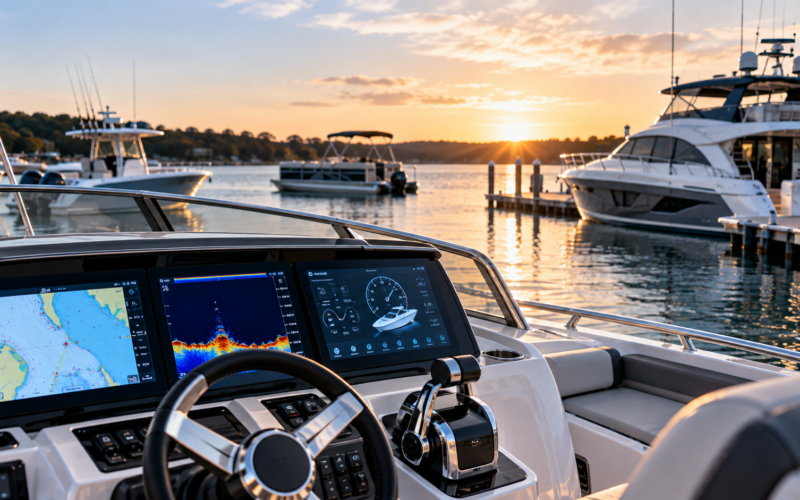
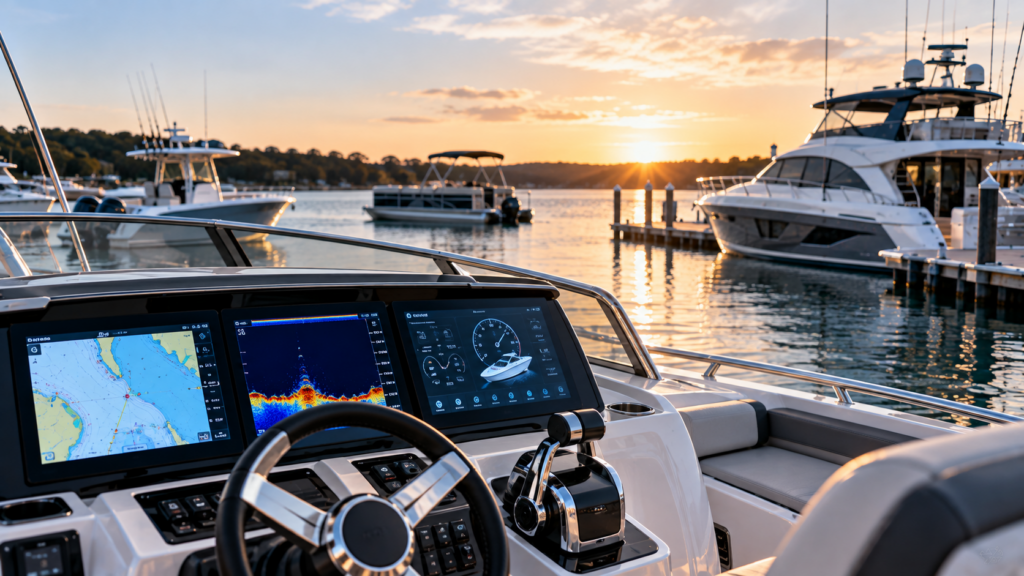
At Navico Group, Denari has overseen brands including Lowrance and Simrad while also carrying responsibility for Brunswick’s wider technology strategy and advanced development programmes. Brunswick specifically highlighted market-share gains, financial performance and products such as AutoCaptain, which it describes as an integrated autonomous docking solution, when announcing her promotion. Her new role therefore signals that technology integration is likely to remain central to the group’s growth strategy rather than being treated as a separate electronics business.
What workforce does Aine Denari inherit at Brunswick Corporation?
Brunswick reported approximately 14,000 employees at December 31, 2025, of whom around 95% were full-time, while roughly 600 additional people worked as temporary, contingent or contract personnel. The company said approximately 60% of employees were hourly and 40% salaried, reflecting the large manufacturing workforce required across engines, boats, electronics and parts. Brunswick’s latest corporate description places its current workforce at approximately 14,500 employees across 26 countries, indicating the scale of the organisation Denari will oversee when she takes control.
The employment mix also gives Brunswick significant exposure to organised labour and manufacturing workforce issues. At the end of 2025, approximately 1,800 US employees belonged to unions, while another roughly 1,000 employees internationally were represented by unions or works councils. Brunswick said those relationships remained stable, but maintaining specialist manufacturing skills will be important as the company balances tight cost control with investment in engines, electronics and integrated marine systems.
Unlike several recent corporate leadership transitions, Brunswick has not paired Denari’s appointment with a new large-scale workforce reduction. Management’s current emphasis is on operational efficiency, disciplined production, technology investment and aligning wholesale output with retail demand rather than announcing a fresh restructuring programme. That makes the workforce challenge different: Denari must preserve productivity gains while ensuring the company still has enough engineering, manufacturing and software talent to support its technology ambitions.
What financial position does David Foulkes leave behind?
Brunswick’s 2026 recovery provides important context for the leadership change. Second-quarter sales increased across every reporting segment for the fourth consecutive quarter, while adjusted earnings grew faster than revenue as pricing, product mix and operating discipline supported margins. The Boat segment also returned to sales and earnings growth, while recurring and aftermarket businesses continued providing more stable revenue during a period when purchases of large discretionary products remained sensitive to consumer confidence and borrowing costs.
Management now expects full-year net sales of approximately $5.7 billion to $5.8 billion, adjusted operating margin of about 8% and adjusted diluted earnings per share between $4.35 and $4.75. The company is also targeting free cash flow of at least $400 million and has been retiring debt while continuing share repurchases. Those targets give the incoming chief executive financial flexibility, but they also establish a higher performance benchmark after the rebound in 2026.
Foulkes’ tenure has also involved repositioning Brunswick as more than a traditional boat manufacturer. The company now spans propulsion through Mercury Marine, parts and accessories, electronics and digital systems through Navico Group, boat brands including Boston Whaler and Sea Ray, and services such as Freedom Boat Club. That portfolio is intended to generate revenue across more stages of a customer’s boating activity and reduce dependence on new-boat purchases alone.
Why is Navico Group strategically important to Brunswick’s next CEO?
Navico Group generated $800.4 million of sales in 2025 from marine electronics, electrification, power systems and related technology sold to consumers, aftermarket channels and original equipment manufacturers. In the second quarter of 2026, the segment generated approximately $215.8 million of sales as Brunswick continued integrating electronics more deeply into boats and propulsion systems. The division includes products that increasingly determine how boaters navigate, monitor systems, manage power and interact with vessels.
This matters because Brunswick sees greater value in selling interconnected systems rather than individual components. A customer purchasing a boat can potentially use Brunswick engines, electronics, controls, digital services and aftermarket parts throughout the product’s life, giving the company several revenue opportunities from the same boating relationship. Denari’s combination of Boat Group and Navico experience positions her to accelerate that integration across previously separate product categories.
The technology push also gives Brunswick an opportunity to borrow concepts from automotive development, where integrated software, driver assistance and connected systems have become increasingly important competitive differentiators. Denari’s previous experience leading ZF’s advanced driver-assistance operations is relevant because marine autonomy is following a similar path, albeit with different regulatory, safety and operating requirements. Brunswick’s investment in autonomous docking and its Boating Intelligence DesignLab indicates that these capabilities are moving closer to commercial products rather than remaining purely experimental projects.
What challenges will Brunswick’s new CEO face in the marine market?
The biggest external challenge remains the sensitivity of recreational boating demand to economic conditions. Boats are major discretionary purchases, meaning consumer confidence, financing costs and household wealth can materially influence demand even when participation in boating remains strong. Brunswick has responded by keeping dealer inventories disciplined and aligning manufacturing output closely with retail demand rather than building excess wholesale inventory in anticipation of a stronger market.
Tariffs remain another complication. Brunswick said in July that it expected approximately $40 million of incremental tariff costs in 2026, although expected refunds connected with previously paid IEEPA tariffs were providing a partial offset. A company with a global manufacturing and supplier network must therefore balance localisation, procurement and pricing without allowing trade costs to weaken competitiveness across boats, engines or electronics.
Denari will also need to decide how aggressively Brunswick invests ahead of demand. Technology programmes, new engines and redesigned boat platforms can require significant development spending before revenue arrives, while cutting investment too deeply during a slower market risks leaving the company behind when demand recovers. Her engineering and technology background may become especially important in determining which programmes deserve capital and which provide too little differentiation to justify continued spending.
Why does Brunswick’s CEO transition separate the chair and chief executive roles?
Foulkes currently serves as both chairman and chief executive, but those responsibilities will be separated when he retires at the end of 2026. Denari will become CEO and join the board, while David Everitt, currently lead independent director, will become non-executive chairman. The structure gives the incoming chief executive responsibility for running the business while placing board leadership with an independent director.
That arrangement also creates a cleaner transition than keeping the retiring CEO as executive chair for an extended period. Foulkes has said he will work with Denari to support the handover before his departure, but from January 2027 the leadership structure should be clearly divided between management and board oversight. For employees and investors, that reduces uncertainty over where executive authority sits once the succession becomes effective.
The board described Denari’s appointment as the culmination of a deliberate succession and talent-development process. Her move through Boat Group, Navico Group and the enterprise technology function supports that description because each role expanded the range of businesses she had directly managed. Brunswick is therefore relying on internal leadership development rather than bringing in an outsider to redesign the company after Foulkes leaves.
What should employees and investors watch before Aine Denari takes control?
The first issue is whether Brunswick can maintain its 2026 earnings recovery through the remainder of the year. The company has raised its sales, margin, earnings and free-cash-flow expectations, increasing the likelihood that Denari inherits a stronger operating base if management delivers the revised guidance. Continued revenue growth across all four reporting segments would also reduce the pressure on the incoming CEO to undertake immediate corrective restructuring.
The second issue is how Brunswick reorganises Navico Group and the chief technology officer responsibilities after Denari becomes CEO. She currently holds both positions, meaning the company will eventually need to determine who leads a strategically important technology division and whether the enterprise CTO role remains separate under the new leadership structure. Those appointments could provide an early indication of how Denari intends to distribute responsibility across the executive team.
The third issue is how quickly Brunswick can convert its technology strategy into measurable financial returns. Products involving autonomy, integrated electronics and digital marine systems can strengthen customer loyalty and expand revenue per boat, but they also require sustained engineering investment and effective coordination among historically distinct businesses. Denari’s performance will therefore be judged not simply by whether Brunswick sells more boats or engines, but by whether the broader marine ecosystem produces stronger margins, recurring revenue and durable competitive advantages.
Brunswick’s latest CEO transition is consequently more about the next stage of strategy than repairing a damaged business. David Foulkes is retiring with sales growing, 2026 guidance moving higher and the company generating stronger cash flow, while Aine Denari enters the role after running both the Boat Group and Navico technology operations. The handover leaves her responsible for approximately 14,500 employees and a portfolio increasingly built around the idea that the future of boating will combine manufacturing expertise with software, electronics and automation.
Discover more from Business-News-Today.com
Subscribe to get the latest posts sent to your email.