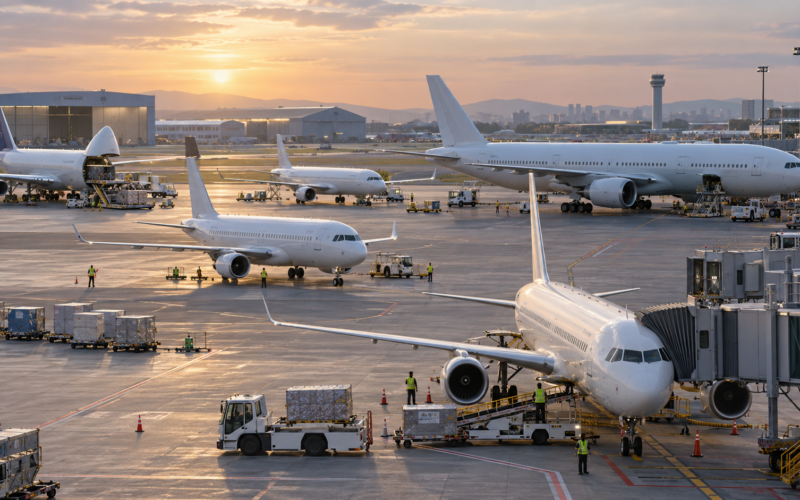
The Boeing Company (NYSE: BA) and Korean Air Lines Co. Ltd. (KRX: 003490) have finalised one of the largest aircraft orders in the South Korean carrier’s history, covering 103 Boeing jets with a list-price value of $36.2 billion. The package includes 50 737-10 aircraft, 25 787-10 Dreamliners, 20 777-9 widebody jets and eight 777-8 Freighters, converting a procurement commitment originally disclosed in August 2025 into a firm order.
Korean Air separately said the broader procurement package, including spare engines and maintenance services from GE Aerospace and CFM International, totals approximately $44.8 billion. The engine and service portion is valued at about $8.6 billion, making the transaction substantially larger than the aircraft agreement alone.
Why does Korean Air need 103 additional Boeing aircraft?
The order is fundamentally a fleet-modernisation and growth programme. Korean Air has been reshaping its network and aircraft portfolio while integrating Asiana Airlines, creating a larger aviation group with substantial passenger and cargo operations. A fleet order spanning narrowbody aircraft, long-haul passenger jets and dedicated freighters gives management flexibility to replace older aircraft while supporting different parts of the combined network.
The 50-aircraft commitment to the 737-10 provides substantial single-aisle capacity, while the 787-10 is suited to long-distance passenger operations with lower fuel consumption than older widebody designs. The 777-9 represents Boeing’s largest next-generation passenger twinjet, while the 777-8 Freighter is designed for the global air-cargo market in which Korean Air has historically maintained an important position.
The mix therefore matters more than the headline aircraft count. Korean Air is not simply adding 103 identical planes; it is constructing a fleet architecture spanning regional routes, intercontinental passenger traffic and freight operations. That breadth also gives Boeing exposure to several distinct parts of Korean Air’s future business.
How important is the Korean Air order to Boeing’s commercial recovery?
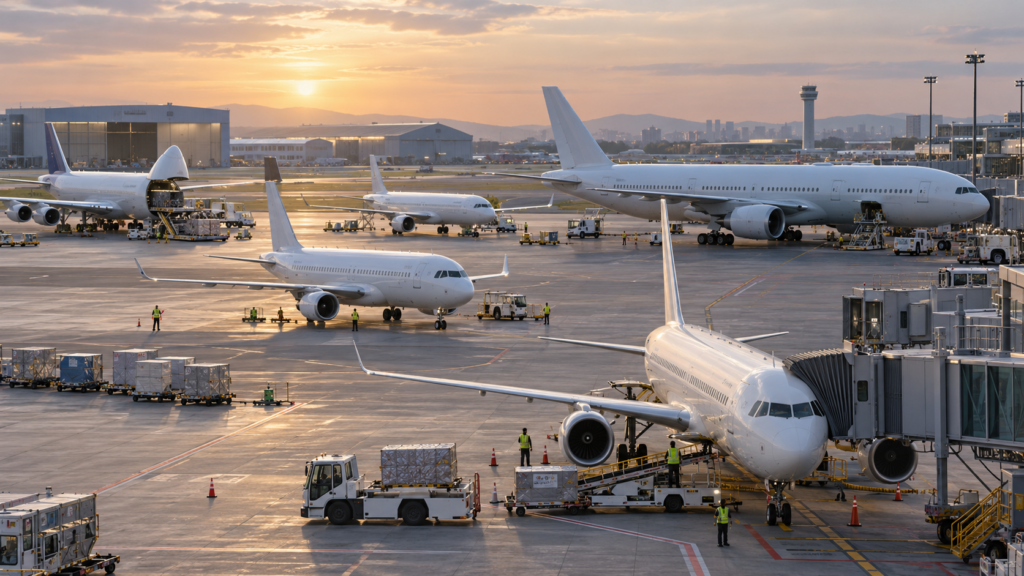
Large orders add visibility to Boeing’s backlog, giving the manufacturer future production demand as it works to stabilise deliveries and restore confidence across its commercial-aircraft operation. A 103-aircraft commitment from a major international carrier is particularly valuable because airlines typically make fleet decisions over decades and incur substantial training, maintenance and infrastructure costs around the aircraft families they choose.
The economic value, however, should not be confused with the $36.2 billion headline figure. Commercial aircraft are routinely sold at significant discounts to published list prices, and actual revenue will be recognised over many years as aircraft are manufactured and delivered rather than when an order is announced.
The stronger strategic signal is customer commitment. Korean Air is allocating a large portion of its future fleet to Boeing products even while airlines globally can choose between Boeing, Airbus and, in some markets, emerging alternatives such as Commercial Aircraft Corporation of China. That supports Boeing’s competitive position, particularly in widebody aircraft and freighters.
Why does certification remain a major risk inside this order?
The composition of the order creates a notable execution issue: of the aircraft types included, Reuters reported that only the 787 is currently certified for commercial service. Boeing continues developing and certifying the 737-10, 777-9 and 777-8 Freighter, meaning the eventual delivery profile depends heavily on regulatory approvals and programme schedules.
That matters because airline fleet planning depends on aircraft arriving when expected. Delays can force carriers to retain older aircraft longer, lease substitute capacity or alter network plans, while manufacturers may face customer compensation and cash-flow disruption.
For Boeing, converting orders into deliveries is especially important because aircraft manufacturers generally receive substantial portions of the transaction value near delivery. A huge backlog provides long-term demand, but delayed certification prevents that backlog from turning into revenue and cash at the intended pace.
Korean Air’s commitment therefore represents both validation and pressure. The airline is giving Boeing substantial future business, but Boeing must complete its development programmes reliably enough for that capacity to arrive when the carrier needs it.
How does the order strengthen Boeing’s position in South Korea?
The agreement has broader industrial significance because it was originally announced alongside major US-South Korean commercial commitments. Boeing described the final order as an outcome connected with bilateral industrial cooperation, and the signing ceremony involved senior corporate and government representatives from both countries.
For Boeing, a flagship order from Korean Air reinforces a long relationship with one of Asia’s major international carriers. Aircraft deals create extensive follow-on economics through spare parts, training, maintenance, upgrades and engine services, meaning the commercial relationship can continue for decades after aircraft delivery.
GE Aerospace also benefits from the wider package, while CFM International participates through engines for narrowbody aircraft. The transaction therefore extends beyond Boeing into a much broader aerospace manufacturing and services supply chain.
What is the latest investor sentiment around Boeing and Korean Air?
Boeing shares closed at $209.61 on September 15, leaving the stock roughly 3.4% lower for 2026 at that point despite a positive five-day performance. That indicates investors are still evaluating Boeing through a wider set of factors including production execution, certification, deliveries and cash generation rather than assigning major valuation changes to any single aircraft order.
Korean Air shares closed September 16 at 29,050 won, down approximately 1% for the session and around 7% below their 52-week high of 31,200 won. The decline should not be interpreted as a direct verdict on the aircraft agreement because a procurement plan of this size had already been announced in 2025, meaning much of the strategic information was not new to investors.
The finalisation nevertheless removes one uncertainty: the 103-aircraft commitment is now firm. The next value-creating milestones depend less on paperwork and more on whether Boeing can certify, manufacture and deliver the aircraft on schedules that support Korean Air’s fleet transformation.
Discover more from Business-News-Today.com
Subscribe to get the latest posts sent to your email.