




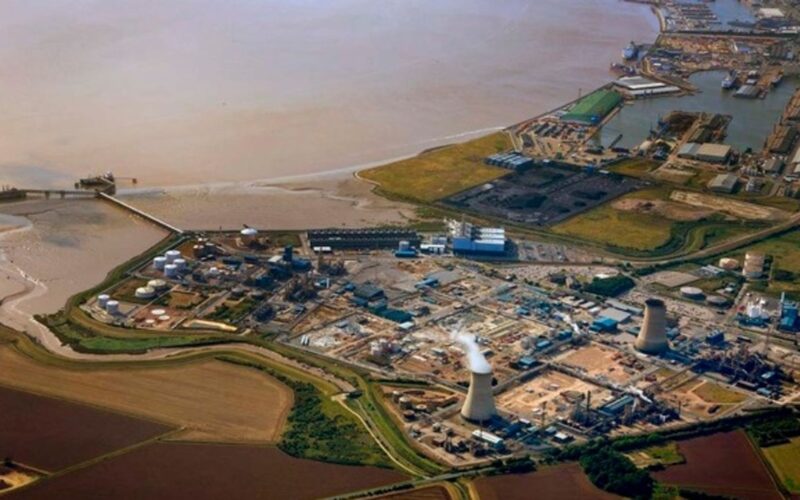
INEOS Acetyls, part of privately held INEOS Group Limited, is idling all three of its world-scale chemical plants at Saltend near Hull, saying European gas costs have made production uncompetitive against the United States and China. Two units had already stopped and the third was due to cease within days of the 22 September announcement. Reuters reported that the complex supports almost 4,000 skilled jobs and apprenticeships through direct activity and the surrounding industrial network.
The site makes acetyls, chemical building blocks used in pharmaceuticals, clothing, cosmetics, detergents, construction materials, explosives and food applications. INEOS described the Hull units as Europe’s last remaining world-scale acetyls plants, making the decision significant beyond one company or region. Mothballing preserves the possibility of a restart, but the phrase until further notice provides no timetable and gives customers little certainty about when domestic supply might resume.
Natural gas is both an energy source and an important feedstock for the process, so a regional price gap affects the plant twice. UK front-month gas was about $23.51 per million British thermal units when Reuters reported the closure, compared with $2.84 for the US Henry Hub benchmark. That roughly eightfold spot comparison differs from INEOS’s broader assertion that European gas costs are 12 times US levels, but both indicate a structural disadvantage large enough to overwhelm ordinary efficiency measures.
Why does INEOS say Hull acetyls production is no longer viable?
Energy-intensive chemical plants compete on incremental production costs because many products are internationally traded and customers can source imports. A producer paying substantially more for gas cannot always pass that difference through when overseas suppliers set the market price. Running the plant can then destroy cash even if demand remains, making a controlled shutdown more rational than continuing to operate at a loss.
INEOS also compared European production with Chinese acetyls made using coal-based processes, saying the European gas-cost burden was eight times higher. Cost comparisons across technologies depend on efficiency, freight, contracts and product grade, but the directional pressure is clear. Low-priced imports can reach Europe while local producers face high energy, carbon and compliance expenses.
The company has framed the decision as evidence of a policy failure rather than a normal cyclical shutdown. In its Hull site announcement, INEOS called for competitive energy pricing and trade measures that recognise the carbon intensity of imports. The government must assess that claim against the cost to taxpayers and consumers of supporting one industrial process.
Mothballing itself has costs. Plants need to be made safe, maintained and preserved, skilled workers can leave, and customers build new supply relationships that may not return. The longer the units remain idle, the more difficult and expensive a restart can become even if gas prices later decline. Repeated stopping and starting is rarely economical for continuous-process chemistry, so management will need a durable cost improvement rather than a brief period of favourable spot prices.
Which supply chains depend on the Saltend acetyls complex?
Acetic acid and related acetyl products sit far upstream from the goods consumers recognise. They are used to make solvents, coatings, adhesives, pharmaceutical ingredients, textiles and cleaning products, so a supply interruption can travel across several industrial tiers. The importance of the site lies less in one finished brand than in the breadth of manufacturers that use its output.
Customers can import replacement material, preventing the shutdown from automatically becoming a shortage. Import dependence nevertheless adds shipping time, freight cost, currency exposure and vulnerability to port or geopolitical disruption. Buyers that relied on short delivery distances or specific grades may need to hold more inventory and qualify alternative suppliers.
The adjustment may also alter bargaining power across the market. Remaining overseas suppliers can gain leverage if European buyers have fewer qualified sources, especially during plant outages or shipping disruption elsewhere. Procurement teams will need to compare the apparent savings from imported acetyls with larger inventories, longer payment cycles and the financial cost of protecting production continuity.
Saltend is also an integrated industrial cluster where one company’s output, utilities and logistics can support another’s economics. Reduced throughput can affect contractors, maintenance providers, transport operators and neighbouring facilities even when their own market demand remains healthy. The figure of almost 4,000 jobs should therefore be understood as employment supported across the ecosystem, not as 4,000 direct INEOS redundancies.
The immediate workforce outcome remains unclear because idling a facility does not necessarily mean every role disappears. INEOS will need staff for safe shutdown and preservation, while consultations and redeployment may determine longer-term employment. Workers and regional suppliers need a more detailed operating plan than the public announcement currently provides.
Does the shutdown strengthen INEOS’s carbon leakage argument?
INEOS said the Hull plants have a carbon footprint about half that of equivalent US production and one-eighth that of coal-based Chinese supply. Those are company estimates and the underlying boundaries, energy assumptions and transport treatment were not detailed in the announcement. If independently confirmed on a comparable basis, replacing Hull output with higher-emission imports could lower Britain’s territorial emissions while increasing the global footprint of the goods it consumes.
That is the central carbon leakage problem. Strict domestic standards can reduce local emissions, but their global benefit is weakened if production simply moves to a jurisdiction with cheaper energy and more carbon-intensive processes. Border carbon measures, product standards or targeted electricity and gas support are possible responses, each with administrative and trade-offs.
Policy support also creates difficult distribution questions. Discounting energy for one sector can transfer costs to households, other businesses or public finances, while tariffs can increase input prices for manufacturers that depend on imported chemicals. A durable solution must distinguish facilities with a credible efficient future from assets seeking indefinite protection from global competition.
The Hull case will become a test of whether British industrial policy can move quickly enough to affect a shutdown decision. Support announced after equipment deteriorates, workers leave and contracts shift overseas may not restore the original economics. Any intervention needs a measurable restart condition, a defined duration and evidence that it improves both competitiveness and emissions rather than merely postponing closure.
What would have to change for INEOS to restart the three plants?
Gas economics are the clearest variable, but a short price dip may not be sufficient. INEOS would need confidence that operating margins can remain positive long enough to justify recommissioning, rehiring and rebuilding customer volumes. Long-term energy contracts, policy relief, trade protection or a material recovery in acetyl prices could all alter that calculation.
Customers will watch inventory, contract declarations and import arrangements, while lenders and private-credit investors will focus on cash preservation and liabilities associated with the idle site. INEOS has no listed parent equity price that provides a daily market reaction, so there is no public share movement to interpret. The more relevant financial signals will be bond pricing, credit assessments, supplier terms and any disclosure of exceptional shutdown costs.
The distinction between a temporary mothball and a permanent exit should remain central. Continued maintenance spending, retention of critical personnel and engagement with government would support the possibility of a restart. Asset sales, equipment removal or prolonged silence on conditions would point toward a more lasting loss of European capacity.
For UK policymakers, the decision creates a specific rather than theoretical deadline. The third unit’s stoppage completes the loss of active output, but the site remains potentially recoverable while assets and expertise are preserved. INEOS has made its required remedy clear in broad terms; the next step is to establish whether a commercially and environmentally defensible package exists, and whether it can arrive before mothballing becomes irreversible.
Discover more from Business-News-Today.com
Subscribe to get the latest posts sent to your email.



