




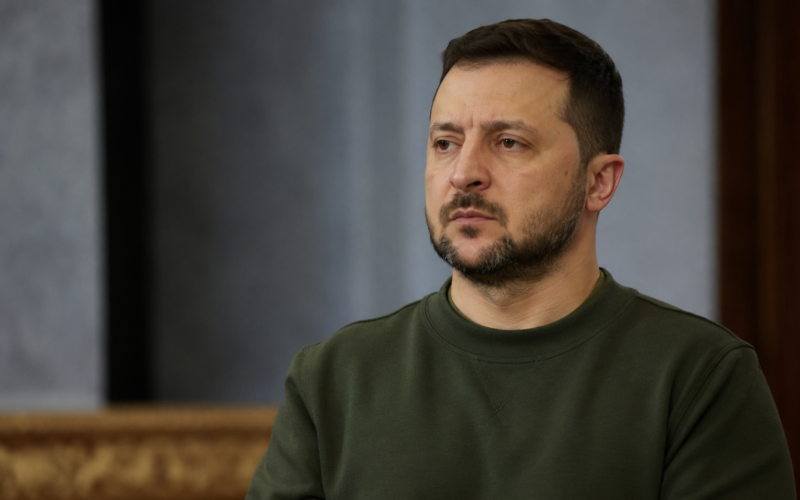
Ukraine has signalled that it is prepared to accept a reciprocal maritime truce in the Black Sea and halt strikes on Russian energy and export infrastructure if Moscow agrees to equivalent restrictions, creating a new diplomatic proposal aimed at protecting ports, food exports and energy systems as winter approaches. President Volodymyr Zelenskyy said at the United Nations that Kyiv supported a maritime ceasefire based on ideas advanced by Egypt, India and Türkiye and that Russia now needed to decide whether it would respond.
The proposal builds on Zelenskyy’s September 22 meeting with Donald Trump, during which the two presidents discussed de-escalation measures and winter air-defence support. Ukraine’s presidential office said Kyiv was prepared for reciprocal steps but would continue defending itself while Russian ballistic missiles and jet-powered drones continued striking Ukrainian targets.
What exactly is Ukraine proposing for the Black Sea?
The maritime component would seek to halt attacks affecting commercial shipping, ports and export routes in the Black Sea. Ukraine is one of the world’s important grain and agricultural exporters, meaning disruption to its ports can affect food prices and supplies far beyond Europe.
Zelenskyy said the initiative incorporates proposals from Egypt, India and Türkiye, countries that have economic and diplomatic interests in maintaining reliable Black Sea trade. Türkiye is particularly important because it controls access between the Black Sea and Mediterranean through the Turkish Straits and has previously played a role in negotiating grain-export arrangements.
Kyiv’s immediate objective is to restore greater security for maritime transportation and food exports. Ukraine’s presidential office has separately identified safe shipping, transit security and stable export corridors as major priorities for the country’s agricultural sector.
How would an energy ceasefire work alongside a maritime truce?
Ukraine says it is prepared to stop attacking Russian energy and export infrastructure if Russia stops striking Ukrainian energy infrastructure. The principle is reciprocity rather than unilateral restraint.
That distinction matters because Ukrainian long-range drones have inflicted significant damage on Russian oil refineries, giving Kyiv one of its most visible forms of economic leverage. Russia meanwhile possesses a much larger missile and drone arsenal capable of striking Ukrainian power plants, substations, heating systems and fuel infrastructure.
Zelenskyy told Dutch Prime Minister Rob Jetten that Ukraine was ready to refrain from attacking Russian energy and export infrastructure if Moscow demonstrated equivalent willingness. He said continuing Russian missile and drone strikes meant Ukraine would maintain defensive and retaliatory capabilities in the absence of such an agreement.
What changed after Zelenskyy met Donald Trump in New York?
The September 22 meeting focused specifically on steps that could open a path toward diplomacy. Ukraine’s presidential office said Trump and Zelenskyy discussed de-escalation as well as a winter air-defence package and work toward producing Patriot interceptors in Ukraine.
Trump has expressed concern about Ukrainian strikes on Russian refineries because reduced Russian fuel production can contribute to higher global oil and diesel prices. Reuters reported that the US president asked Zelenskyy to consider stopping refinery attacks as part of a reciprocal arrangement.
Ukraine has resisted any unilateral pause because refinery attacks impose real economic costs on Russia. A mutual energy ceasefire would allow Kyiv to retain that leverage while offering to suspend it in exchange for protection of its own infrastructure.
Why is the Black Sea important to global food markets?
Ukraine exports large volumes of wheat, corn, sunflower oil and other agricultural commodities. When Black Sea shipping is interrupted, import-dependent countries in Africa, the Middle East and Asia can face higher prices and reduced availability.
War-related damage to ports and shipping has already constrained exports repeatedly. Ukraine’s agricultural industry therefore depends on maintaining secure maritime corridors as well as alternative rail and river routes.
The economic effects extend to Russia as well because Russian grain and fertiliser exports also use Black Sea infrastructure. A maritime truce could therefore benefit both sides economically even while their wider military conflict continues.
Why are Patriot missiles still central to Ukraine’s negotiating position?
Ukraine can only sustain diplomatic restraint if it can protect cities and infrastructure when agreements fail. Russia has increased use of ballistic missiles and advanced drones, creating growing demand for Patriot interceptor missiles capable of defeating high-speed ballistic threats.
Zelenskyy and Trump discussed efforts to increase Patriot availability and develop production capacity inside Ukraine. Kyiv argues that stronger air defence is necessary both to protect civilians and to improve its negotiating position by reducing Russia’s ability to gain leverage through long-range strikes.
The relationship between diplomacy and defence is therefore complementary rather than contradictory from Kyiv’s perspective. Ukraine is offering reciprocal restraint while simultaneously preparing for the possibility that Moscow rejects the proposal.
Has Russia accepted the Black Sea or energy ceasefire proposal?
No public Russian acceptance has been announced. That leaves the proposal at an early diplomatic stage.
Russia has participated in previous negotiations over Black Sea shipping but has repeatedly linked cooperation to sanctions relief and improved access for Russian agricultural exports and financial transactions. Those demands could reappear in any new maritime arrangement.
Moscow is therefore likely to assess the proposal not only in military terms but also in relation to sanctions, trade and its ability to export commodities. A durable agreement would require precise definitions of prohibited targets, monitoring procedures and consequences for alleged violations.
What are the key takeaways from Ukraine’s new Black Sea and energy truce proposal?
Ukraine has moved beyond general calls for peace and publicly identified specific areas where it is prepared to restrain military action. Maritime shipping and energy infrastructure are economically important targets where both Russia and Ukraine have something tangible to gain from reciprocal limits.
The proposal also reflects international involvement beyond Washington and Europe. India, Egypt and Türkiye are cited in connection with maritime ideas, highlighting how food security gives countries outside NATO a direct interest in Black Sea stability.
Whether the initiative changes the war depends entirely on Russian participation. Until Moscow agrees to reciprocal restrictions, Ukraine says it will continue operations against targets it considers relevant to the war while strengthening air defences ahead of winter.
Discover more from Business-News-Today.com
Subscribe to get the latest posts sent to your email.