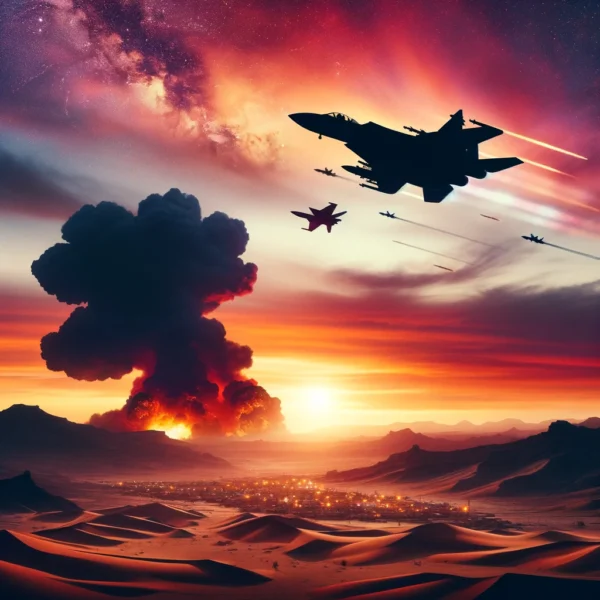





The United States has publicly supported Pakistan’s right to defend itself against terrorist attacks as escalating cross-border operations threaten to turn the worsening confrontation between Pakistan and Afghanistan into a prolonged regional conflict.
The United States Department of State announced its position on July 2, 2026, days after Pakistani airstrikes in eastern Afghanistan killed at least 28 civilians and injured 49 others, according to the United Nations Assistance Mission in Afghanistan. Pakistan said the operations targeted militant camps and weapons facilities rather than civilians.
The diplomatic intervention followed retaliatory action announced by Afghanistan’s Taliban government. Afghan authorities said their forces carried out airstrikes against targets inside Pakistan, while Islamabad said it intercepted four rudimentary drones over the southwestern province of Balochistan.
Washington’s statement strengthens Pakistan’s argument that cross-border militancy represents a legitimate national-security threat. However, it does not give Islamabad unrestricted political approval to conduct attacks inside Afghanistan, particularly when operations produce disputed civilian casualty figures and raise questions over proportionality, sovereignty and international law.
What did the United States support and what did Washington leave deliberately unresolved?
The United States Department of State said the Pakistani population had suffered extensively from terrorism and that Pakistan possessed the right to defend itself against terrorist attacks.
The statement represented clear diplomatic support for Islamabad’s central security claim. Pakistan maintains that militants operating from Afghan territory are organising attacks against Pakistani soldiers, civilians and government institutions.
Washington did not explicitly endorse the methods Pakistan has used to respond. The United States did not state that every target struck inside Afghanistan was a militant facility, accept Pakistan’s complete account of the operations or reject the civilian casualty findings published by the United Nations.
That distinction matters because the right of self-defence does not remove obligations to distinguish between military targets and civilians. It also does not automatically settle disputes over whether an attack from another country was imminent, whether the host government was unwilling to act or whether the force used was proportionate.
The United States position therefore gives Pakistan political support without resolving the legal and factual controversies surrounding particular airstrikes. Washington can recognise Pakistan’s security concerns while still expecting Islamabad to minimise civilian harm and produce credible evidence concerning the targets it attacked.
The wording may also have been designed to preserve room for diplomacy. An unconditional endorsement of Pakistani military operations could have weakened any future United States effort to encourage negotiations between Islamabad and Afghanistan’s Taliban authorities.
How did Pakistani airstrikes and Afghan retaliation bring the neighbours closer to open conflict?
Pakistan conducted air and ground operations along the Afghanistan border during the June 28 to June 29 period after blaming militants based across the frontier for a series of deadly attacks inside Pakistan.
Pakistani Information Minister Attaullah Tarar said airstrikes against three locations in Afghanistan’s Paktia, Paktika and Kunar provinces killed 25 militants and destroyed substantial quantities of weapons and ammunition. Pakistani forces separately reported killing four militants during ground operations in the Bajaur district of Khyber Pakhtunkhwa.
The United Nations Assistance Mission in Afghanistan confirmed at least 28 civilian deaths and 49 injuries. Afghanistan’s Taliban government provided a considerably higher account, reporting 38 civilian deaths and 163 injuries, including women and children.
Afghan officials said the largest number of casualties occurred when Pakistani aircraft struck a home in Paktia province. Local authorities alleged that a second strike occurred after residents moved toward the site to help victims. Pakistan rejected claims that its operations deliberately targeted civilians.
The Taliban government subsequently announced retaliatory airstrikes against targets inside Pakistan. Islamabad denied that conventional Afghan aircraft had successfully conducted the operation and said Pakistani forces destroyed four drones over Balochistan.
The exchange demonstrated how quickly the conflict can escalate through competing military narratives. Pakistan describes its strikes as counterterrorism operations. Afghanistan presents them as violations of sovereignty requiring retaliation. Each government therefore uses the other side’s action to justify its next move.
Why have Pakistan and Afghanistan moved from close allies to military adversaries?
Pakistan supported the Afghan Taliban during much of its insurgency against the former Western-backed government in Kabul. Islamabad expected the Taliban’s return to power in August 2021 to produce a friendly administration capable of securing Pakistan’s western frontier.
Instead, the relationship deteriorated because of Tehreek-e-Taliban Pakistan, commonly known as the Pakistani Taliban. The organisation is separate from the Afghan Taliban but shares ideological, historical and personal connections with elements of the movement governing Afghanistan.
Tehreek-e-Taliban Pakistan seeks to overthrow or transform Pakistan’s political system through armed insurgency. Its militants have attacked military bases, police stations, schools, political figures and civilian locations.
Islamabad alleges that Tehreek-e-Taliban Pakistan commanders and fighters use Afghan territory to plan attacks, train personnel and avoid Pakistani security operations. Pakistan wants the Taliban government to arrest militants, dismantle camps and prevent Afghan territory from being used against Pakistan.
Afghanistan’s Taliban authorities deny sheltering foreign militants for cross-border attacks. Kabul argues that Pakistan’s growing insurgency is primarily an internal problem created by Pakistani political, social and security failures.
The disagreement has become increasingly difficult to contain because neither side accepts the other’s basic explanation. Pakistan believes the Afghan government is unwilling or unable to act against the militants. Afghanistan believes Pakistan is blaming Kabul to justify military intervention across the border.
The result is a striking reversal. A movement once viewed by Pakistani strategists as a source of influence in Afghanistan is now governing a country against which Pakistan has conducted repeated airstrikes.
How did the Karachi attack contribute to Pakistan’s decision to strike Afghanistan?
Pakistan connected the latest operations with several militant attacks, including a June 27 assault against a Sindh Rangers facility in Karachi.
The attack involved an explosion and gunfire at a paramilitary installation in the Gulistan-e-Jauhar area. Three members of the Sindh Rangers were killed and four others were injured.
Pakistan said Jamaat-ul-Ahrar, a faction associated with Tehreek-e-Taliban Pakistan, carried out the attack. Security forces killed three attackers and detained another person whom Pakistani authorities identified as an Afghan national.
Karachi lies far from the Afghan border and is Pakistan’s largest city and commercial centre. A successful operation there demonstrated that militant networks could project violence beyond the frontier districts where Tehreek-e-Taliban Pakistan has historically been most active.
Pakistan used the attack as evidence that the threat could not be treated solely as a local policing problem in Khyber Pakhtunkhwa or Balochistan. Islamabad argued that militant leadership, training and logistical support across the Afghan border enabled attacks deeper inside Pakistan.
The Taliban government disputes that conclusion. Afghan officials have said Pakistan should address militant recruitment, political grievances and security failures within its own territory instead of attacking Afghanistan.
Determining whether individual operations were directed from Afghanistan will require intelligence evidence that is rarely released publicly. This information gap allows both governments to maintain incompatible versions of responsibility.
Why does Pakistan hold the military advantage without possessing an easy path to victory?
Pakistan possesses a substantially larger and more advanced conventional military than Afghanistan. It has modern combat aircraft, drones, artillery, armoured units and a nuclear arsenal.
Afghanistan’s Taliban forces inherited weapons, vehicles, helicopters and some aircraft from the former Afghan government, but their conventional air power remains limited. Taliban units are nevertheless experienced in guerrilla warfare after fighting United States-led and Afghan government forces for approximately two decades.
Pakistan can strike targets across Afghanistan, including locations far from the border. Air power allows Islamabad to damage fixed facilities, ammunition stores and command positions while limiting immediate risks to Pakistani ground forces.
Airstrikes cannot guarantee that militants will be permanently removed. Fighters can disperse, relocate equipment, operate through civilian communities and return after the aircraft leave.
Any sustained Pakistani ground campaign inside Afghanistan would carry far greater risks. Mountainous terrain, limited roads, local resistance and the Taliban’s combat experience could turn a short intervention into an expensive and politically damaging conflict.
Afghanistan cannot match Pakistan in a conventional war, but the Taliban government does not need to defeat Pakistan’s military directly to impose costs. Cross-border raids, drone attacks, support for irregular forces and disruption of trade routes could sustain pressure over an extended period.
This imbalance creates a dangerous strategic problem. Pakistan may believe its military superiority allows it to compel Taliban cooperation, while Afghanistan may believe its capacity for prolonged resistance prevents Islamabad from achieving a decisive outcome.
Could United States support encourage Pakistan to expand cross-border operations?
Washington’s statement may strengthen confidence within the Pakistani government and military that its security concerns are receiving international recognition.
Pakistan remains a major non-North Atlantic Treaty Organization ally of the United States. Relations between Washington and Islamabad have improved since Donald Trump returned to the White House, particularly as Pakistan has participated in diplomatic efforts concerning Iran and regional security.
The United States also has its own concerns about militant activity in Afghanistan. Washington seeks to prevent Afghanistan from again becoming a base for organisations capable of threatening American interests or destabilising neighbouring countries.
However, United States support for Pakistan’s right of self-defence should not automatically be interpreted as approval for an unlimited military campaign. Large civilian casualties could create diplomatic pressure, damage regional stability and strengthen militant recruitment.
Washington has an interest in preventing the confrontation from expanding. A prolonged Pakistan-Afghanistan conflict could weaken counterterrorism cooperation, interrupt regional trade and create new displacement in an area already facing severe humanitarian pressures.
The United States may therefore combine public support for Pakistan with private pressure for restraint. The diplomatic objective would be to persuade the Taliban government to act against Pakistani militants while discouraging Islamabad from conducting operations likely to trigger larger retaliation.
The difficulty is that public statements can be interpreted differently by the parties. Pakistan may see the message as validation of its military strategy. Afghanistan may view it as evidence that Washington has taken Islamabad’s side.
Why have Chinese mediation efforts failed to produce a durable ceasefire?
China has attempted to mediate between Pakistan and Afghanistan because conflict between the two countries threatens Chinese economic and security interests.
Pakistan is one of China’s closest strategic partners and hosts major projects connected with the China-Pakistan Economic Corridor. Chinese companies and citizens have repeatedly been targeted by militants operating inside Pakistan.
China also seeks stable relations with Afghanistan’s Taliban government. Beijing is interested in mineral resources, regional connectivity and preventing militant organisations from using Afghan territory to threaten China or Chinese interests.
Pakistan and Afghanistan began talks after their severe fighting in February and March 2026. The negotiations reduced the intensity of the conflict temporarily but did not resolve the dispute over Tehreek-e-Taliban Pakistan.
The principal obstacle is enforcement. Pakistan wants measurable action, including arrests, expulsions and the closure of militant facilities. The Taliban government may lack the capacity to dismantle every network, may reject Pakistan’s evidence or may be unwilling to confront fighters with longstanding links to Afghan Taliban members.
China can encourage dialogue and offer political or economic incentives, but it cannot easily guarantee compliance. Any settlement would require monitoring arrangements capable of verifying whether militant groups are leaving Afghan territory or merely changing locations.
Renewed airstrikes show that the diplomatic process has not produced sufficient trust. Pakistan continues to rely on military force when it believes a major attack originated from Afghanistan, while Kabul continues to deny the accusations and respond to violations of its territory.
What risks do civilians, border communities and regional trade face if fighting continues?
Communities along the approximately 2,600-kilometre Pakistan-Afghanistan border face the most immediate danger from airstrikes, artillery exchanges, drone attacks and closures of formal crossings.
The frontier divides tribal and commercial networks that existed long before the present international boundary. Families, traders and workers frequently have connections on both sides.
Border closures can interrupt food, medicine, fuel and agricultural trade. Trucks may remain stranded for days, causing perishable products to deteriorate and increasing prices in communities dependent on cross-border supplies.
Military escalation could also displace additional Afghan families. Afghanistan already faces poverty, food insecurity and restrictions on international assistance. Pakistan hosts a large Afghan population while simultaneously conducting deportation and repatriation programmes.
Civilian deaths could deepen hostility toward Pakistan inside Afghanistan and provide recruitment material for armed groups. Attacks inside Pakistan could similarly intensify public demands for retaliation and reduce political support for negotiations.
The risk extends beyond the two countries. Continued instability could affect Iran, Central Asia, China and India, while forcing Gulf governments and international organisations to invest greater diplomatic effort in preventing a wider regional crisis.
The United States statement makes clear that Pakistan’s terrorism concerns are being taken seriously. The next test is whether that support produces stronger counterterrorism cooperation or encourages another cycle of airstrikes and retaliation.
What are the key takeaways from the United States position on the Pakistan-Afghanistan conflict?
- The United States Department of State said on July 2, 2026, that Pakistan had the right to defend itself against terrorist attacks, providing Islamabad with important diplomatic support during its escalating confrontation with Afghanistan.
- Washington did not explicitly endorse every Pakistani cross-border strike, verify Pakistan’s account of all targeted facilities or dismiss United Nations findings concerning civilian deaths and injuries inside Afghanistan.
- The United Nations Assistance Mission in Afghanistan confirmed at least 28 civilian deaths and 49 injuries from Pakistani airstrikes in Paktia, Paktika and Kunar provinces during the June 28 to June 29 period.
- Pakistan said its air operations killed 25 militants and destroyed weapons facilities, while Afghanistan’s Taliban government reported higher civilian casualties and accused Islamabad of deliberately violating Afghan sovereignty.
- Afghanistan announced retaliatory airstrikes against targets inside Pakistan, while Pakistani authorities said they intercepted four rudimentary drones over Balochistan, demonstrating the conflict’s widening military and geographic scope.
- Pakistan accuses Afghanistan of sheltering Tehreek-e-Taliban Pakistan militants responsible for attacks inside Pakistan, while the Taliban government says the insurgency is an internal Pakistani security problem.
- Pakistan possesses overwhelming conventional military superiority, but Afghanistan’s Taliban forces have extensive guerrilla experience and could sustain an irregular conflict that would be difficult for Islamabad to end decisively.
- Chinese mediation reduced fighting temporarily after severe clashes earlier in 2026, but negotiations have failed to resolve the central dispute over militant sanctuaries, arrests and verifiable enforcement inside Afghanistan.
Discover more from Business-News-Today.com
Subscribe to get the latest posts sent to your email.