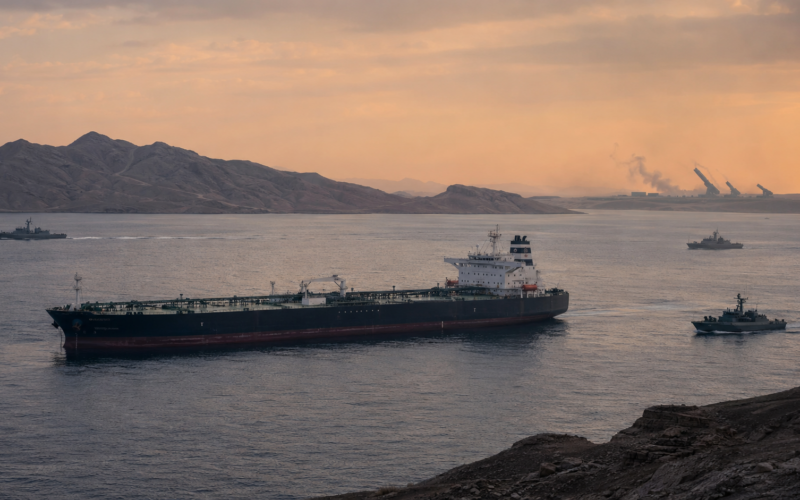
The United States and Iran have entered their most dangerous confrontation since agreeing to an interim ceasefire, with commercial shipping, Gulf military bases and control of the Strait of Hormuz emerging as the immediate pressure points.
The United States military struck 10 Iranian military targets on Saturday, June 27, 2026, after a Panama-flagged oil tanker was hit while travelling through the Strait of Hormuz. United States Central Command said the operation targeted surveillance infrastructure, communications systems, air defence sites, drone storage facilities and capabilities associated with laying naval mines.
Washington identified the damaged vessel as the Kiku and attributed the attack to an Iranian single use drone. Iran had not directly accepted responsibility for striking the tanker at the time of reporting, although Iranian authorities have warned vessels against travelling through shipping channels that Tehran has not approved.
The Kiku was carrying more than two million barrels of crude oil when it was hit. The vessel sustained damage to its bridge, but its crew was reported safe and no environmental damage was immediately reported. The attack followed a separate incident involving the Singapore-flagged Ever Lovely near Oman on Thursday, June 25, intensifying concern that commercial vessels are becoming instruments of pressure in the dispute over control of the waterway.
Why did the United States strike 10 Iranian targets after the Kiku tanker attack?
United States Central Command described the strikes as a response to continued Iranian aggression against commercial shipping. The command said Iran had been given an opportunity to comply with the ceasefire arrangements but had instead launched another attack against a vessel passing through the Strait of Hormuz.
The military action represented the second United States response within approximately two days. Washington had already struck Iranian missile, drone and coastal radar positions following the attack on the Ever Lovely. The fresh operation expanded the target list to include air defence systems, military communications infrastructure, surveillance facilities, drone storage sites and mine-laying capabilities.
United States President Donald Trump said Iran was repeatedly violating the ceasefire and warned that Washington could undertake a broader military campaign if the attacks continued. The warning raised the political stakes because the United States and Iran had agreed only two weeks earlier to use a 60 day period to negotiate more permanent arrangements covering the Strait of Hormuz, Iran’s nuclear programme and related regional conflicts.
Iran presented a different sequence of responsibility. The Iranian Foreign Ministry characterised its military actions as defensive responses to United States strikes, while the Islamic Revolutionary Guard Corps said it had attacked installations associated with United States forces in the region. Iranian statements did not initially identify all the locations targeted.
The competing accounts underline the core problem facing the ceasefire. Both governments say the other side acted first, allowing each to describe its subsequent military operations as retaliation rather than a new offensive. That pattern increases the possibility of repeated exchanges even when neither government formally declares that the ceasefire has ended.
How is Iran using control of Strait of Hormuz shipping routes as strategic leverage?
The latest escalation is closely connected to a dispute over who regulates commercial traffic through the Strait of Hormuz. Iran has directed vessels to use routes approved by Iranian authorities and has warned that it cannot guarantee the safety of ships using alternative corridors.
The United States and Gulf governments reject Iran’s claim to exclusive control. Although the narrowest parts of the strait pass through the territorial waters of Iran and Oman, the waterway is treated internationally as a passage used for commercial navigation. Washington has supported a southern route closer to the Omani coast to help vessels enter and leave the Gulf without depending on Iranian authorisation.
A multinational maritime organisation overseen by the United States Navy has expanded the Omani route to accommodate traffic in both directions. Iran, however, has promoted a northern route passing through waters under its control and has indicated that it ultimately wants to impose charges on vessels using the strait.
Iranian state television reported that the Islamic Revolutionary Guard Corps had fired warning shots towards vessels that attempted to use channels not approved by Tehran. Iranian officials have also warned that breaches of their shipping instructions would receive a decisive response.
Commercial operators are therefore confronting two competing security systems. Following United States or multinational guidance may reduce dependence on Iran, but Iran has indicated that ships using such routes could face military action. Following Iranian instructions could increase Tehran’s authority over a waterway that carries a substantial share of internationally traded oil and liquefied natural gas.
The attacks on the Ever Lovely and Kiku demonstrate how quickly that regulatory dispute can become a physical threat. Both vessels were travelling through or near routes that sought to reduce Iranian control over shipping movements. Iran has not directly confirmed responsibility for the individual ship strikes, but the incidents occurred alongside explicit Iranian warnings concerning unauthorised routes.
What does the renewed fighting mean for the 60 day United States and Iran ceasefire process?
The interim agreement between the United States and Iran was intended to create a 60 day negotiating window for a broader settlement after four months of conflict. The arrangement included discussions about reopening the Strait of Hormuz, facilitating commercial navigation and addressing the future of Iran’s nuclear programme and enriched uranium stockpile.
The agreement was also connected to efforts to stabilise Lebanon. Iran has accused the United States of failing to ensure the implementation of ceasefire commitments involving Israel and Lebanon, particularly because Israeli forces continue to occupy territory in southern Lebanon.
Hezbollah leader Naim Qassem rejected a recently announced agreement between Israel and Lebanon, describing its provisions as unacceptable while Israeli troops remain in Lebanese territory. Israel has maintained that it requires a security zone and restrictions on Hezbollah’s military presence before withdrawing.
Iranian officials have therefore linked compliance in the Gulf to developments elsewhere in the region. From Tehran’s perspective, the United States cannot demand restraint around the Strait of Hormuz while continuing to support Israeli military operations and territorial positions in Lebanon.
Washington disputes that interpretation. United States Vice President JD Vance, who has played a central role in negotiations with Iran, said the United States had complied with the agreement and that disagreements should be addressed through direct communication rather than military attacks.
The widening list of disputes makes the ceasefire difficult to enforce. Shipping lanes, nuclear negotiations, Israeli operations, Hezbollah’s weapons and the status of occupied areas in Lebanon are being treated as parts of one interconnected settlement. A failure in any one area can consequently be used to justify retaliation in another.
Why are Bahrain, commercial shipping and Gulf energy security now exposed to wider risk?
Bahrain said Iranian drones targeted its territory during the latest exchange and condemned the action as a threat to residents and regional security. No immediate damage was reported, but the incident was significant because Bahrain hosts the headquarters of the United States Navy’s Fifth Fleet.
The Islamic Revolutionary Guard Corps said it had attacked several locations associated with United States forces in the region, although it did not initially specify every target. Air raid warnings were also reported elsewhere in the Gulf as regional governments monitored the possibility of additional drone or missile attacks.
Military facilities and commercial shipping are becoming increasingly connected within the confrontation. Iran regards United States bases in Gulf countries as part of Washington’s regional military structure. Gulf governments, meanwhile, view attacks launched towards their territory as violations of their sovereignty, even when Iran identifies United States facilities as the intended targets.
The Gulf Cooperation Council has called for an end to attacks and for the Strait of Hormuz to remain fully open. Gulf states depend on stable maritime access for energy exports, imported goods and the functioning of ports, refineries and industrial facilities.
The risk is not limited to direct damage. Air defence alerts, drone interceptions and uncertainty surrounding shipping corridors can delay cargo movements even when vessels and facilities remain operational. Energy infrastructure operators must also consider whether attacks intended for military installations could affect nearby ports, processing plants or residential areas.
Bahrain’s involvement demonstrates how a bilateral United States and Iran confrontation could gradually draw neighbouring states into the crisis. Gulf governments may host United States forces without seeking direct conflict with Iran, but their territory can nevertheless become exposed when Tehran retaliates against Washington’s military operations.
How could repeated attacks on vessels reshape oil flows and maritime insurance decisions?
The Strait of Hormuz was gradually reopening after months of disruption, allowing oil tankers and other commercial vessels stranded inside the Gulf to resume their journeys. Approximately 115 vessels had reportedly moved through the waterway during the initial reopening period.
The International Maritime Organization paused an operation intended to support the evacuation of ships after the Ever Lovely was hit near Oman. The organisation said it needed to reconfirm that adequate safety guarantees remained in place for vessels and crews before resuming the initiative.
The Kiku attack has further weakened confidence in those guarantees. The vessel was carrying more than two million barrels of crude oil, making the incident particularly relevant to oil traders, refiners, shipping companies and insurers. Although the tanker’s cargo was not reported to have leaked, an attack on a fully laden vessel demonstrates the potential scale of environmental and supply disruption.
Hundreds of vessels, including tankers carrying oil, had been blocked or delayed in the Gulf after the conflict began. Their gradual departure increased available supply and helped oil prices move closer to levels recorded before the fighting. Renewed attacks could reverse that progress if shipowners delay voyages or insurers increase war-risk costs.
The immediate effect may not be a complete closure of the strait. A more likely operational danger is intermittent disruption in which vessels move only during limited periods, follow heavily protected routes or wait for clearer security guidance. Such conditions can restrict effective shipping capacity even when the waterway remains technically open.
The situation also places crews in an increasingly difficult position. Vessel owners may be required to choose between routes supported by Iran and corridors backed by the United States and international maritime authorities. Neither route can be regarded as fully insulated from the political and military contest surrounding the strait.
The strategic significance of the latest escalation therefore extends beyond the physical damage to two ships. Repeated attacks may create a permanent risk premium around Gulf shipping, with consequences for insurance, freight rates, voyage planning and the reliability of energy deliveries to Asian and European markets.
What are the key takeaways from the latest United States and Iran Strait of Hormuz escalation?
- The United States military struck 10 Iranian targets on June 27, 2026, after United States Central Command attributed an attack on the Panama-flagged Kiku oil tanker to an Iranian single use drone.
- The Kiku was carrying more than two million barrels of crude oil through the Strait of Hormuz when it was hit, sustaining bridge damage while its crew remained safe and no environmental damage was initially reported.
- The United States strikes targeted Iranian surveillance infrastructure, communications systems, air defence positions, drone storage facilities and mine-laying capabilities located at multiple sites near the strategically important Strait of Hormuz.
- Iran has not directly accepted responsibility for attacking the Kiku, but Iranian authorities have warned vessels against using shipping channels not approved by Tehran and have reported warning shots towards unspecified ships.
- The latest confrontation follows the June 25 attack on the Ever Lovely near Oman, which prompted the International Maritime Organization to pause an initiative supporting the movement of ships through the strait.
- Bahrain reported an Iranian drone attack on its territory during the wider exchange, increasing concerns that Gulf states hosting United States military facilities could become directly exposed to further retaliation.
- The renewed military exchanges threaten a 60 day negotiating process covering commercial navigation, Iran’s nuclear programme and regional conflicts, with Washington and Tehran each accusing the other of breaching the interim ceasefire.
Discover more from Business-News-Today.com
Subscribe to get the latest posts sent to your email.