




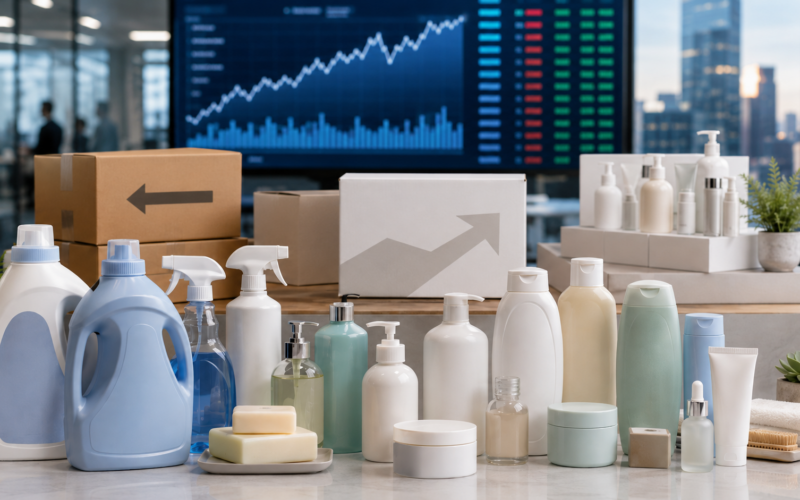
Unilever (LSE: ULVR) shares close up 0.13% at 4,229p on Friday, May 15, 2026, in a modest move that masks the most aggressive portfolio restructuring in the FTSE 100 consumer goods group’s recent history. Under chief executive Fernando Fernandez, the company has completed the December 2025 demerger of The Magnum Ice Cream Company, announced in March 2026 the combination of its Foods business with McCormick to create a global flavour powerhouse, and is now executing toward a pureplay Home and Personal Care company structure expected to be substantially complete by 2027. The Q1 2026 trading update on April 30 delivered underlying sales growth of 3.8%, ahead of the 3.6% consensus, with strong volume growth of 2.9% and price growth of 0.9%. The next major catalyst for shareholders is the H1 2026 interim results in late July, where Fernandez will need to demonstrate that the volume-led growth model is sustaining against the headwinds of Iran war commodity inflation, currency volatility and consumer caution in developed markets.
What does Unilever actually do today, and how does the post-demerger Unilever differ from the conglomerate of two years ago?
Unilever is a London and Rotterdam-headquartered consumer goods group with operations spanning approximately 190 countries, employing approximately 128,000 people. Following the December 2025 demerger of the ice cream business, the group is now organised into four major business segments. Beauty and Wellbeing combines premium skincare and hair care brands including Dove, Vaseline, Hourglass, Dermalogica and K18, supported by the wellbeing portfolio anchored by Olly vitamins. Personal Care covers Dove, Axe, Lifebuoy and TRESemmé, with the global FIFA World Cup 2026 sponsorship as the most visible marketing platform. Home Care spans Persil, Comfort, Domestos, Cif and the Dirt is Good brand, with particular strength in India and Brazil. Nutrition continues as the legacy Foods business spanning Knorr, Hellmann’s, Maille and Marmite, but will combine with McCormick during 2026 and 2027 under the announced flavour powerhouse plan.
For Q1 2026, Unilever reported turnover of €12.6 billion, down 3.3% as positive underlying sales growth and net acquisitions were offset by currency translation. Underlying sales growth of 3.8% beat the 3.6% consensus, with Power Brands representing approximately 78% of turnover and delivering 5.0% underlying sales growth and 4.0% volume growth. The Q1 quarterly interim dividend was raised 3.0% to €0.4664 per share, and the previously announced €1.5 billion share buyback programme commenced trading on April 30 with completion expected on or before July 6, 2026.
The risk profile of the new Unilever sits at the intersection of three structural shifts. First, the move to a pureplay HPC business removes the volatility associated with ice cream seasonality and food category headwinds, but concentrates the group on fewer category exposures. Second, the cost base is increasingly exposed to commodity inflation, with the Iran war driving energy, crude oil derivatives, packaging and freight costs higher across the H2 2026 outlook. Third, the consumer environment remains uneven, with strength in emerging markets including India and Latin America offsetting more cautious spending in North America and Europe.
How does the April 30 Q1 trading update set up the rest of the 2026 reporting calendar?
The Q1 trading update on April 30 confirmed a strong start to 2026 despite macroeconomic uncertainty. Group underlying sales growth of 3.8% was led by volume growth of 2.9%, the highest Q1 volume growth in several years, with price growth of 0.9%. The breakdown by business group revealed broad-based performance. Beauty and Wellbeing delivered 3.6% underlying sales growth, with 1.9% volume and 1.6% price, led by double-digit growth in Dove Hair and K18. Personal Care grew with strong contributions from Dove and Vaseline. Home Care surged 6.1% underlying, with volume up 6.2% and price down 0.1%, driven by acceleration in India and Brazil. Nutrition continued to navigate consumer caution but contributed positively to group growth.
The geographic breakdown showed continuing emerging market strength with growth of 5.7% in underlying terms and 4.2% volume, led by India and a strong recovery in Latin America. North America improved sequentially through the quarter, with management indicating a more positive trajectory through 2026. Europe lagged the group average, reflecting more conservative consumer spending and continued retail private label competition. The acceleration in North America in particular gives management confidence that the H2 sales growth trajectory will continue to support the full-year 4-6% target range, though Unilever has guided to delivery at the bottom end of that range.
The execution risk on the H2 outlook is principally commodity-driven. Chief financial officer Srinivas Phatak indicated at the Q1 call that elevated commodity costs will support increased pricing for the balance of the year, and that margin expansion will be more weighted to H2 than H1. The Iran war has driven crude oil derivatives, packaging materials, fragrance compounds, surfactants and shipping costs higher across the consumer goods supply chain. Unilever’s productivity programme, launched in 2024 and now ahead of schedule with €750 million of savings already delivered toward the €800 million end-2026 target, provides an offset, but the net margin trajectory depends on pricing landing and consumers absorbing the increases.

Why is Fernando Fernandez restructuring Unilever into a pureplay HPC company, and what does it mean for the long-term investment case?
Fernando Fernandez was promoted from chief financial officer to chief executive in 2024 to accelerate the restructuring strategy that had been outlined by predecessor Hein Schumacher. His tenure has been characterised by speed, decisiveness and a clear focus on portfolio simplification. The two most significant moves under his leadership are the December 2025 demerger of The Magnum Ice Cream Company and the March 2026 announcement to combine the Foods business with McCormick. Together these transactions transform Unilever from a four-segment conglomerate into a pureplay HPC company with structurally higher growth and margin characteristics.
The strategic logic for the HPC focus is clear. Personal care, beauty and home care all share complementary routes to market, with similar retail channels including supermarkets, pharmacies, beauty specialists, and e-commerce platforms. The categories share similar product development cycles, similar marketing approaches around brand desirability and innovation, and similar supply chain economics. By contrast, ice cream required a frozen supply chain with very different logistics, and Foods carried different category dynamics with mature growth profiles in many developed markets. Separating these businesses allows each to focus on its specific growth model with appropriate capital allocation.
The financial implications are meaningful. The Foods-McCormick combination is expected to generate approximately $600 million of annual run-rate cost synergies net of growth reinvestments, plus an additional $100 million of incremental cost and revenue synergies. The cash receipts from the Foods transaction are expected to support a total of €6 billion of share buybacks between 2026 and 2029, on top of the €1.5 billion already announced for execution by July 2026. The combined HPC business should deliver higher underlying sales growth than the pre-restructuring conglomerate, with a structurally higher mix toward Power Brands that have demonstrated consistent volume-led growth.
The execution risk for the strategy is principally one of timing and market reception. The Magnum demerger valued the standalone ice cream business at approximately €7.8 billion at the Amsterdam listing on December 8, 2025, below pre-demerger analyst expectations clustered above €10 billion. The Foods-McCormick combination is targeted for completion during 2026 and 2027 but faces regulatory, integration and market valuation risks. If the food business is monetised at lower-than-expected multiples, the cash return to Unilever shareholders may disappoint relative to current guidance.
What does the Magnum demerger outcome tell investors about the consumer staples valuation backdrop?
The Magnum Ice Cream Company demerger completed on December 6, 2025, with TMICC shares beginning trading on Euronext Amsterdam, the London Stock Exchange and the New York Stock Exchange on December 8 under the ticker MICC. Unilever shareholders received one TMICC share for every five Unilever shares they held, and Unilever subsequently executed an 8-for-9 share consolidation to maintain per-share metric comparability. Unilever retained a 19.9% minority stake in TMICC, which it plans to sell down over five years to support separation costs and capital flexibility.
The TMICC debut at €12.80 per share gave a market capitalisation of approximately €7.8 billion, well below Barclays’ pre-listing estimate of more than €20 per share. The valuation reflected several factors. First, investor concerns about ice cream as a sugar-heavy category facing structural headwinds from the GLP-1 weight loss drugs and the Trump administration’s Make America Healthy Again campaign. Second, the substantial separation costs and the absence of dividends until 2027. Third, the technical pressure from index fund selling as TMICC was not immediately eligible for major indices including the FTSE.
The implications for the remaining Unilever business are mixed. On the positive side, the lower-than-expected TMICC valuation makes Unilever’s pureplay HPC strategy look more compelling, since HPC categories have shown more consistent volume growth and lower cyclical sensitivity than the ice cream business. On the negative side, the technical TMICC pressure and the broader debate about indulgent food brands in a GLP-1 era have prompted analysts to question whether some of Unilever’s premium Beauty and Personal Care brands could face similar long-term demand pressures. The current Unilever share price already reflects partial pricing of these concerns, but the H2 trajectory will be the test of the durability of volume-led growth.
How does the Iran war commodity cost pressure feed through to Unilever’s H2 margin outlook?
The Iran war that began on February 28, 2026 has driven commodity prices higher across multiple inputs that affect Unilever’s cost base. Crude oil derivatives feed into petrochemicals, surfactants, fragrance compounds, plastic packaging and lubricants. Energy costs affect manufacturing, distribution and refrigeration. Freight rates have risen as global shipping reroutes around Middle East security risks, with bunker fuel surcharges adding to landed costs. The cumulative effect on Unilever’s input cost base is meaningful, with management indicating that elevated commodity costs will support increased pricing for the balance of the year.
The pricing response is the principal lever. Q1 2026 pricing of 0.9% reflected the carryover impact of price reductions in Home Care, notably in Brazil and in liquids in India, plus tea deflation in India and increased in-store activation in Personal Care linked to the FIFA World Cup 2026 sponsorship. From Q2 onward, pricing should accelerate as commodity costs feed through and as the productivity savings continue to deliver. The €800 million productivity programme launched in 2024 is now ahead of schedule, with €750 million already delivered by end-Q1 2026.
The risk is that pricing increases drive consumer trade-down or volume softness, particularly in the more price-sensitive emerging market categories. India and Brazil have demonstrated strong volume momentum so far, but consumer confidence in those markets could be tested by sustained price increases. The competitive set, including Procter and Gamble, Colgate-Palmolive, L’Oréal and Reckitt Benckiser, faces the same input cost pressures, which provides some discipline on the pricing environment, but private label competition in developed markets may capture share if branded prices rise too aggressively.
What does the McCormick combination announced in March mean for Unilever shareholders?
The Foods-McCormick combination announced on March 31, 2026 is the second major portfolio transaction under Fernandez’s leadership. The structure combines Unilever’s Foods business, including Knorr, Hellmann’s, Maille, Marmite, Colman’s and adjacent brands, with US-listed McCormick to create a global flavour powerhouse. The combined entity will have meaningful scale across both savoury condiments and seasoning categories, with international reach that neither company could achieve standalone. The combination excludes Unilever’s Foods business in India, Nepal and Portugal, plus the Lifestyle Nutrition business, Buavita and Lipton Ready-to-Drink, which are described as Excluded Businesses.
The financial structure delivers value through three mechanisms. First, the approximately $600 million of annual run-rate cost synergies net of growth reinvestments, plus the $100 million of incremental cost and revenue synergies. Second, the cash receipts to Unilever shareholders from the transaction, which support approximately €6 billion of share buybacks between 2026 and 2029. Third, the strategic clarity for Unilever as a pureplay HPC business, which should support a higher trading multiple relative to the conglomerate structure.
The execution risk is twofold. First, the regulatory approval process across multiple jurisdictions including the United States, European Union, United Kingdom and key emerging markets could prove complex, given McCormick’s existing market positions in some seasoning categories. Second, the integration challenge of combining two complex global supply chains across different category specialties will require multi-year management attention. The cumulative timeline from announcement to full integration is likely to extend into 2027 and 2028.
How is the market currently pricing Unilever against analyst consensus and the implied recovery scenarios?
Unilever shares trade at 4,229p, with a market capitalisation of approximately £104 billion. The dividend yield at the current price is approximately 3.4%, with the €0.4664 Q1 quarterly dividend and the trajectory of approximately 3% annual increases providing income visibility. The trailing price-to-earnings ratio is approximately 22 times, broadly in line with the global consumer staples sector average but at a discount to premium beauty peers including L’Oréal and Estée Lauder that trade at 25 to 35 times.
The consensus analyst position is broadly Buy to Hold, with most coverage maintaining constructive ratings on the pureplay HPC thesis. Bank of America cut its price target to 5,700p from 6,075p following the Magnum demerger completion in December 2025, maintaining a Buy rating. UBS maintained a Sell rating with a 12-month price target of 4,120p, cautioning on consumer staples challenges. RBC Capital Markets has an Underperform rating with a 4,000p price target, questioning the achievability of the 4-6% organic sales growth target. The dispersion between bull and bear price targets reflects genuine analyst debate about whether the HPC restructuring will deliver sustained re-rating.
The bull case is anchored on four pillars. First, the Q1 2026 outperformance with 3.8% underlying sales growth versus 3.6% consensus demonstrates that the Power Brands strategy is working. Second, the volume-led growth of 2.9% in Q1, supported by Power Brand volume of 4.0%, indicates genuine consumer demand strength rather than purely price-driven growth. Third, the €1.5 billion buyback running through July 2026 plus the €6 billion of buybacks over 2026-2029 provide substantial capital return. Fourth, the pureplay HPC structure should support multiple expansion versus the historical conglomerate average.
The bear case rests on three concerns. First, the GLP-1 and broader health-conscious consumer trend could pressure indulgent personal care and beauty brands, similar to the concerns that affected the Magnum debut valuation. Second, the Iran war commodity cost pressures may compress margins more than the productivity savings can offset. Third, the multi-year execution risk of the Foods-McCormick combination creates strategic and operational uncertainty until completion.
What are the execution risks Fernando Fernandez and Srinivas Phatak face over the next 12 months?
Fernando Fernandez has been characterised by speed and decisiveness since his appointment as CEO. His tenure has so far delivered the Magnum demerger, the McCormick combination announcement, a €1.5 billion buyback, a productivity programme running ahead of schedule, and Q1 2026 outperformance against consensus. The challenge over the next 12 months is to deliver continued operational performance while navigating the complex execution of the Foods-McCormick combination and the broader macroeconomic and geopolitical environment.
The first specific risk is the H2 margin trajectory. Management has guided to modest underlying operating margin improvement versus 2025, with H2 expected to deliver the majority of the year’s expansion. If commodity costs continue to rise or if pricing landing proves harder than expected, the margin guidance could come under pressure. The Q1 underlying operating margin commentary from chief financial officer Srinivas Phatak emphasised the balance between productivity savings and commodity inflation, with margin progression weighted to H2.
The second risk is North American performance. The market is the second-largest geographic segment for Unilever and has been a recurring source of underperformance over recent years. Q1 2026 showed sequential improvement, but the trajectory through the FIFA World Cup 2026 marketing platform and the H2 pricing initiatives will need to deliver sustained recovery. Any softness in North American Personal Care or Beauty and Wellbeing would amplify investor concerns about the pureplay HPC strategy.
The third risk is the broader portfolio simplification execution. The Foods-McCormick combination is the largest single transaction in Unilever’s recent history and carries multi-year execution complexity. The January 2026 announcement to sell Home Care businesses in Colombia and Ecuador represents the ongoing bolt-on disposal programme, but larger portfolio actions including the potential exit from non-core HPC categories will require continued board attention. Any execution missteps would damage the credibility of the restructuring narrative that has supported the share price through Fernandez’s tenure.
Why are retail investors on UK forums viewing Unilever as a quality consumer staples recovery and restructuring play?
Forum chatter on London South East, ADVFN and Stockopedia has been actively engaged with Unilever through 2026. The dominant retail investor framing positions Unilever as a credible restructuring story that combines portfolio simplification, capital return discipline and underlying brand strength. The shares have outperformed the broader consumer staples sector through the demerger period and the Q1 results, with retail investors increasingly viewing the post-Magnum, post-Foods Unilever as a higher-quality investment case than the pre-restructuring conglomerate.
The bull case being articulated on retail forums points to five pillars. First, the Power Brands strategy is delivering measurable outperformance, with 78% of revenue growing at 5.0% versus the broader business at 3.8%. Second, the productivity programme is ahead of schedule, providing the cost base flexibility to absorb Iran war commodity inflation. Third, the €1.5 billion buyback running to July 2026 plus the €6 billion over 2026-2029 provide substantial capital return that compounds with the 3.4% dividend yield. Fourth, the pureplay HPC structure should support multiple expansion as the conglomerate discount unwinds. Fifth, the emerging market momentum, particularly in India, gives long-term growth optionality that developed market consumer staples lack.
The bear case on the same forums focuses on three concerns. First, the GLP-1 demand pressure and broader health-conscious consumer trend could affect long-term volume growth across the Personal Care and Beauty portfolio. Second, the Iran war commodity inflation could compress margins more than productivity savings can offset, particularly if consumers resist H2 pricing increases. Third, the Foods-McCormick combination execution risk extends through 2027 and beyond, creating multi-year uncertainty about the final shape and earnings profile of the pureplay HPC Unilever.
Key catalysts and watchpoints for Unilever shareholders heading into the H1 2026 results
- Unilever shares close up 0.13% at 4,229p on Friday, May 15, 2026, in a modest move that reflects the steady-state market view of the company’s ongoing restructuring under chief executive Fernando Fernandez.
- The Q1 2026 trading update on April 30 delivered underlying sales growth of 3.8%, beating the 3.6% consensus, with volume growth of 2.9% and price growth of 0.9%, supported by Power Brands delivering 5.0% growth and 4.0% volume.
- The Magnum Ice Cream Company demerger completed on December 6, 2025, with TMICC trading on Amsterdam, London and New York at an initial market capitalisation of approximately €7.8 billion, below pre-listing analyst expectations.
- The Foods-McCormick combination announced on March 31, 2026 will create a global flavour powerhouse with approximately $600 million of annual run-rate cost synergies, while transforming Unilever into a pureplay HPC company expected to deliver structurally higher growth.
- A €1.5 billion share buyback runs from April 30 through expected completion on or before July 6, 2026, with an additional €6 billion of buybacks supported by Foods cash receipts expected to deliver across 2026 to 2029.
- The €800 million productivity savings programme launched in 2024 is ahead of schedule with €750 million already delivered by end-Q1 2026, providing the cost base flexibility to absorb Iran war commodity inflation across H2 2026.
- Iran war commodity cost pressures support a pricing acceleration through H2 2026, with chief financial officer Srinivas Phatak indicating margin progression weighted to the second half of the year.
- The H1 2026 interim results in late July provide the next major catalyst, where Fernandez will need to demonstrate that the volume-led growth model is sustaining against macroeconomic headwinds and that the FIFA World Cup 2026 sponsorship is delivering Personal Care uplift.
Discover more from Business-News-Today.com
Subscribe to get the latest posts sent to your email.


