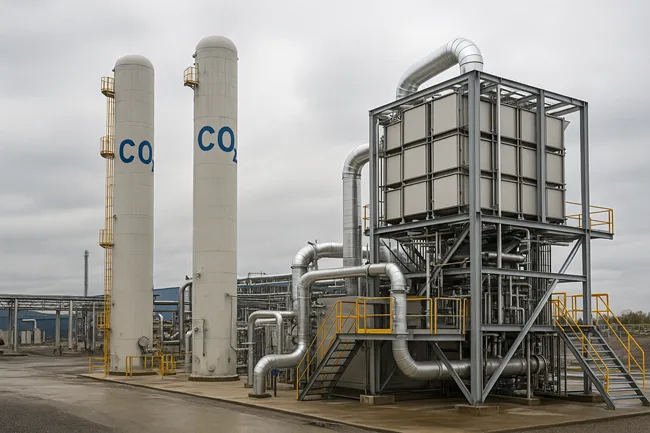



The Tata Power Company Limited (NSE: TATAPOWER) has signed a memorandum of understanding with Bharat Petroleum Corporation Limited (NSE: BPCL) to develop 110 kV electricity infrastructure for a major refinery modernisation project in Mumbai, addressing an estimated power requirement of 90 MW. Announced in late October 2026, the proposed infrastructure development is expected to involve a combined investment of approximately ₹250 crore by the two companies and to be completed over an estimated 24-month period, subject to regulatory approvals and project milestones. The electricity infrastructure will support Bharat Petroleum Corporation Limited’s Petro Resid Fluidised Catalytic Cracking Unit development, a ₹14,203 crore investment with a planned processing capacity of three million metric tonnes annually. Although the memorandum establishes a framework for cooperation, the companies have not disclosed a definitive construction contract value attributable exclusively to Tata Power.
The agreement links investment in India’s petroleum refining industry with the expansion of high-capacity electricity infrastructure for industrial consumers. The refinery development is Bharat Petroleum Corporation Limited’s largest project at its Mumbai refinery and its second-largest project under execution across the group, according to the October announcement. For Tata Power, the proposed connection offers an opportunity to strengthen the transmission network around Trombay while supporting future electricity demand from industrial and commercial facilities.
Why does Bharat Petroleum Corporation’s ₹14,203 crore Mumbai refinery project require a dedicated 90 MW electricity connection?
The Petro Resid Fluidised Catalytic Cracking Unit project is intended to process heavier petroleum refinery streams into higher-value products, supporting improved resource utilisation and greater petrochemical integration. Its planned processing capacity of three million metric tonnes per annum makes it a major industrial installation requiring dependable electricity for process equipment, control systems, pumps, compressors and supporting utilities. The projected 90 MW requirement reflects the scale of the associated electrical infrastructure needs rather than an additional amount of electricity generation capacity.
Electricity reliability is particularly important in complex refining and petrochemical operations because interruptions can affect process stability, equipment performance and production schedules. Large processing units typically operate within interconnected systems, meaning power disturbances can create consequences beyond a single piece of equipment. Providing suitable high-voltage infrastructure is therefore part of ensuring that refinery investments can operate as intended once mechanical construction and commissioning are complete.
The proposed 110 kV arrangement is designed to connect the refinery project to the electricity network at a voltage suitable for large industrial power requirements. Tata Power will undertake design and development responsibilities for the associated infrastructure, with the final scope subject to the memorandum’s subsequent implementation arrangements. The investment also complements the utility’s existing power network in the Trombay region.
The refinery project’s announced ₹14,203 crore capital outlay is separate from the approximately ₹250 crore electricity infrastructure investment being considered jointly by Tata Power and Bharat Petroleum Corporation Limited. Confusing these amounts would materially overstate the value of the power infrastructure arrangement. The larger figure relates to the underlying refinery development, while the smaller estimate concerns the associated electricity connectivity programme.
How will Tata Power’s proposed 110 kV infrastructure strengthen industrial electricity supply in Mumbai’s Trombay area?
The arrangement is intended to provide the electrical connectivity required for the refinery’s new processing facilities while strengthening Tata Power’s wider transmission network. This dual purpose is commercially important because electricity infrastructure developed for a large industrial customer can also support longer-term network expansion where technical capacity and regulatory arrangements permit. However, the memorandum does not establish that every asset constructed for the refinery will be available for unrestricted use by other electricity consumers.
Tata Power expects the associated infrastructure development to be completed over approximately 24 months. The timetable reflects the complexity of designing, approving and installing high-voltage electrical facilities, including the equipment required for safe power delivery and integration with existing networks. Procurement, construction scheduling, regulatory permissions and the readiness of the refinery project will all influence whether the proposed completion period can be achieved.
The companies have described the estimated combined investment as approximately ₹250 crore, but have not provided a detailed allocation of expenditure between them. Nor does the memorandum establish a guaranteed revenue stream, a fixed return on capital or a completed award for every engineering component. These distinctions are relevant to investors seeking to evaluate the transaction’s eventual impact on Tata Power’s regulated or commercially contracted earnings.
The agreement also forms part of Tata Power’s wider transmission infrastructure strategy for Mumbai. The utility is separately planning a 400 kV transmission facility at Trombay over the next five years to strengthen power evacuation capability and support the reliability of electricity supply across the industrial and commercial network. That planned development is a separate longer-term infrastructure initiative and should not be treated as included within the ₹250 crore estimate unless subsequent disclosures explicitly establish such a relationship.
The broader opportunity lies in responding to industrial electricity demand as manufacturing and refining projects increase their requirements for dependable grid connectivity. Large consumers can provide substantial and relatively concentrated demand, but electricity infrastructure must still be developed within applicable technical and regulatory frameworks. The commercial value of these connections will depend on approved tariffs, asset ownership and the costs associated with construction and ongoing operation.
What does the petro residue fluidised catalytic cracking project mean for BPCL’s refining strategy and industrial competitiveness?
Bharat Petroleum Corporation Limited is undertaking the refinery project to improve the value recovered from heavier petroleum processing streams and expand its capabilities in higher-value products. The proposed three-million-tonne-per-annum facility represents a substantial investment in refining complexity rather than an expansion measured simply by crude oil processing capacity. Its economic contribution will depend on the products recovered, operating efficiency and the difference between feedstock costs and realised product values.
Residue-upgrading technologies can help refineries improve the commercial utilisation of materials that would otherwise contribute to lower-value output streams. By increasing the ability to produce more valuable refined and petrochemical products, such investments may improve margins under favourable market conditions. However, the eventual profitability of the project will depend on commissioning, operating costs, feedstock availability and changing market prices for petroleum products.
The project also highlights the continuing role of refinery infrastructure investment even as India expands its renewable electricity portfolio. Petroleum processing remains important for fuels, transport, industrial feedstocks and petrochemicals, while electricity infrastructure is required to operate increasingly sophisticated refining systems. The connection between the two sectors creates investment opportunities for power utilities and specialist engineering contractors.
The planned electricity network development is therefore an enabling component of a much larger industrial investment. Although 90 MW is modest compared with the capacity of major electricity generation projects, dependable delivery of that power is operationally important to a complex refinery unit. The project’s eventual contribution to industrial output will depend partly on whether the required electricity infrastructure is ready when the processing facilities reach commissioning.
How should Tata Power and Bharat Petroleum shareholders assess the proposed investment and its potential financial impact?
For Tata Power, the agreement offers an opportunity to participate in high-voltage electricity infrastructure development associated with a large industrial customer. Such projects can strengthen the utility’s network position and potentially contribute to long-term electricity delivery activity. However, the announcement does not disclose a binding construction revenue figure or guaranteed profit contribution, making it premature to calculate the memorandum’s effect on earnings.
Tata Power shares closed October 28, 2026, at approximately ₹335 on the National Stock Exchange, declining about 1.21% from the previous session. Bharat Petroleum Corporation Limited shares also weakened during the session, although the movements should not be attributed solely to the infrastructure announcement. Both companies operate businesses influenced by wider economic conditions, commodity prices and sector-specific investment considerations.
For Bharat Petroleum Corporation Limited, the electricity connection is part of the broader capital required to bring the refinery upgrade into commercial operation. The ₹250 crore combined infrastructure estimate is relatively small compared with the ₹14,203 crore refinery project, but power connectivity remains essential for the reliability of the new processing facility. The eventual financial return on the refinery investment will depend on far more than electricity supply alone, including construction execution, product recovery and refining margins.
The memorandum also creates an important distinction between announced cooperation and contracted infrastructure execution. Subsequent disclosures confirming expenditure allocation, regulatory approvals and implementation milestones will provide a firmer basis for assessing commercial consequences. Until those details are available, the agreement should be viewed primarily as an industrial power supply and network development initiative.
For Mumbai’s industrial electricity system, the proposed development could become part of a wider strategy to accommodate concentrated electricity demand from large manufacturing and processing facilities. Tata Power’s separate 400 kV Trombay plans reinforce the significance of network strengthening, although the two initiatives operate on different implementation timelines.
The Tata Power-Bharat Petroleum arrangement illustrates how industrial expansion can create electricity infrastructure opportunities that receive less attention than large power generation announcements. Its commercial value will ultimately be established through completed contracts, approved investment, timely construction and the successful commissioning of the refinery’s new processing facilities.
Discover more from Business-News-Today.com
Subscribe to get the latest posts sent to your email.