


Marriott International, Inc. (NASDAQ: MAR) has opened The Cape Town EDITION at South Africa’s V&A Waterfront, marking the first African location for its luxury lifestyle hotel brand. The 142-room property, which officially debuted on 27 October 2026, occupies a prominent waterfront site overlooking the city’s superyacht marina and Table Mountain. South African financial publication Moneyweb reported that approximately R1.1 billion was invested in the development, with the property financed through the V&A Waterfront investment structure rather than directly by Marriott International. The opening extends Marriott’s luxury brand portfolio into a strategically important tourism destination while raising broader questions about development economics, destination demand and the returns available from internationally branded premium hotels.
Why has Marriott International selected Cape Town for the African debut of its EDITION luxury hotel brand?
The Cape Town EDITION occupies Quay 7 within the V&A Waterfront, one of South Africa’s most recognisable commercial and tourism precincts. The location combines access to leisure attractions, waterfront dining, retail businesses and the city’s broader cultural economy. For a luxury lifestyle hotel, the surrounding district forms an important part of the customer proposition because guests increasingly expect accommodation to be integrated with dining, entertainment and destination experiences.
EDITION operates at the premium end of Marriott International’s brand portfolio, competing through design, service and lifestyle positioning rather than room availability alone. Its existing international presence includes destinations such as New York, London, Tokyo and Lake Como. The Cape Town opening extends that footprint into Africa, giving Marriott an additional luxury offering in a market where destination recognition can help attract international travellers.
The property also demonstrates how global hospitality brands can enter new destinations through locally financed developments. Marriott’s role involves operating the hotel and associated hospitality facilities, while the underlying property investment comes from the V&A Waterfront structure. This separates real-estate ownership from brand operation and allows the respective parties to concentrate on their different areas of expertise.
Such arrangements can support international expansion without requiring hotel operators to fund every property’s construction from their own balance sheets. The financial benefits ultimately depend on the contractual structure, operating performance and fees generated, none of which were disclosed in sufficient detail to calculate the property’s contribution to Marriott’s earnings.
What does the reported R1.1 billion investment reveal about the economics of Cape Town’s luxury hotel market?
Moneyweb reported on 28 October that approximately R1.1 billion had been invested in developing The Cape Town EDITION. The publication attributed the investment to the V&A Waterfront Company, which is jointly owned by Growthpoint Properties and the Government Employees Pension Fund through South Africa’s Public Investment Corporation. The reported amount represents a media-sourced development estimate rather than a capital figure separately confirmed in Marriott’s opening announcement.
Using the reported investment and 142 guestrooms and suites produces an indicative development cost of approximately R7.75 million per room. This calculation is useful for understanding the scale of capital committed, but it should not be interpreted as the cost of accommodation alone. The project also includes restaurants, bars, wellness facilities, event spaces and extensive architectural features that contribute to the overall investment.
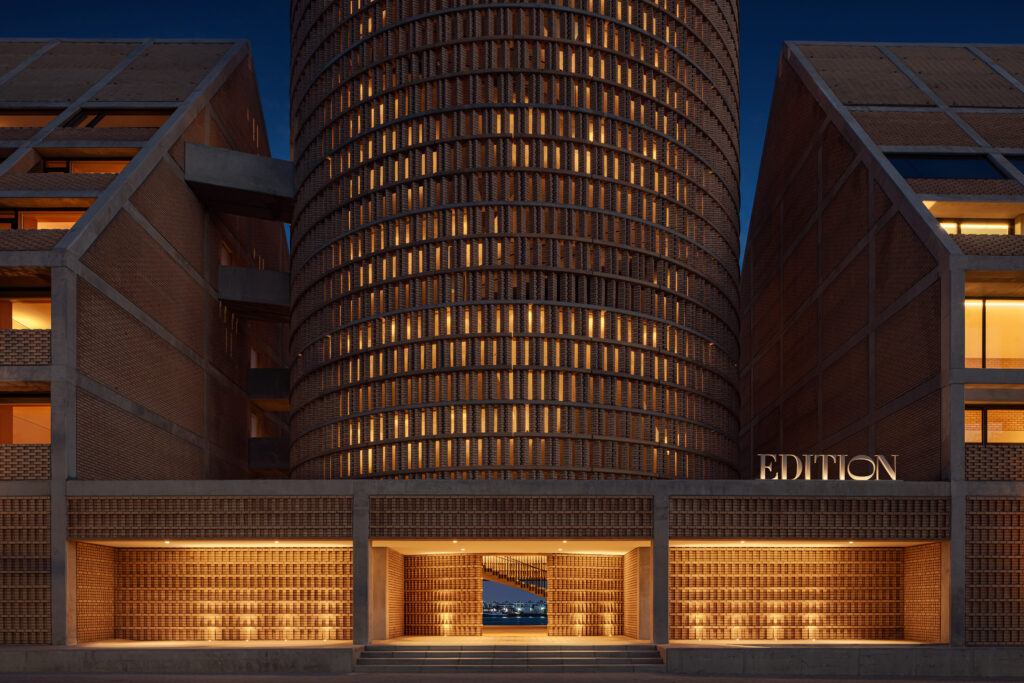
The property’s design by Neri&Hu incorporates architectural elements inspired by Cape Town’s maritime history. Marriott said more than six million bricks were laid by hand in creating the building’s exterior, while the central architectural feature, known as The Drum, provides a distinctive arrival space and outdoor observation experience. These features can strengthen a hotel’s identity and premium positioning, although distinctive construction also increases the importance of achieving sustainable operating returns.
The long-term investment case will depend on occupancy, average daily room rates, food and beverage sales and operating costs. Higher room prices can help premium hotels absorb substantial development expenditure, but they do not eliminate exposure to seasonal demand, maintenance costs or competition from other luxury properties.
How will destination dining, wellness and events influence the Cape Town EDITION’s commercial performance?
The Cape Town EDITION has been developed around more than overnight accommodation. Its hospitality offering includes the Shale restaurant, the EAVE rooftop restaurant and bar, the Pool Terrace, a Lobby Bar and Punch Room. These venues are designed to serve guests and local customers, potentially creating additional sources of revenue beyond occupied rooms.
Executive chef Phil Carmichael is leading the property’s food programme alongside South African beverage specialist George Hunter. Shale focuses on seasonal produce and regional suppliers, while the rooftop dining concept combines food and beverages with views across the waterfront. The emphasis on local sourcing and destination-specific experiences allows the hotel to differentiate itself from standardised international accommodation formats.
The wellness offering includes a spa with five treatment rooms, a couples’ suite, sauna, steam room and recovery-focused facilities. The hotel also provides a rooftop pool and fitness programming, allowing wellness services to contribute to its broader hospitality positioning. Such amenities may support higher guest spending and strengthen the property’s appeal to travellers seeking integrated experiences.
Business events represent another potential revenue source. The hotel includes a ballroom capable of accommodating up to 200 people, alongside meeting facilities and private-event spaces. The ability to serve corporate meetings, weddings and hospitality functions can help diversify demand across different customer categories.
However, operating several premium hospitality venues introduces complexity. Restaurant profitability, staffing costs, specialist service requirements and venue utilisation can all influence overall performance. The commercial success of an integrated luxury hotel therefore depends on coordinating its accommodation and non-room businesses rather than treating each amenity simply as a marketing feature.
Why does the Cape Town EDITION matter to Marriott’s wider luxury hotel expansion strategy?
The opening strengthens Marriott International’s ability to offer multiple brands across different price points and travel occasions. Luxury lifestyle hotels occupy a particular segment of the market, appealing to travellers who prioritise destination experiences, design and hospitality services. A distinctive brand such as EDITION can help Marriott compete for demand that might otherwise flow to independent luxury properties.
The V&A Waterfront location also creates opportunities for local partnerships and spending within the surrounding commercial district. Restaurants, cultural attractions, retailers and destination operators can benefit from additional hotel visitors, while the property gains access to an established visitor environment. These relationships may enhance the guest experience, although the scale of wider economic benefits cannot be determined from the opening announcement alone.
Marriott’s operating model also creates a distinction between hotel development investment and recurring brand economics. The owner must justify the property investment over its useful life, while Marriott’s financial returns depend on the management arrangements and the business generated by the hotel. The announcement does not provide sufficient financial details to estimate the property’s contribution to Marriott’s annual earnings.
For Marriott International shareholders, the opening should therefore be evaluated as a strategic addition to the company’s international luxury portfolio rather than a standalone earnings catalyst. Hotel openings contribute to network expansion over time, but the financial materiality of an individual property depends on its scale and contract economics relative to the global business.
What should investors and hospitality operators monitor following Marriott’s Cape Town luxury hotel opening?
Marriott International is scheduled to release its third-quarter 2026 financial results on 2 November, when investors will receive updated information about its wider operating performance. The forthcoming report should provide a more comprehensive basis for evaluating the group’s international expansion, earnings outlook and hospitality market exposure. The Cape Town development is only one component of that broader portfolio.
Marriott shares traded around $390 during the US session on 28 October, close to the previous day’s closing price. The limited movement suggests that the hotel opening was not independently driving a significant market reassessment at that stage. Broader financial guidance, revenue per available room trends and management commentary are more likely to influence short-term valuation.
At the property level, the most meaningful indicators will emerge as the hotel establishes its operating record. Occupancy, pricing, restaurant demand, customer reviews and the utilisation of event facilities will help determine whether the opening translates into durable commercial performance. These figures were not available in the initial announcement.
The Cape Town EDITION represents a substantial addition to the city’s premium hospitality infrastructure and a new geographical milestone for Marriott’s EDITION brand. Its long-term success will be determined by the ability to convert a distinctive waterfront location and extensive hospitality facilities into sustainable financial returns for the property’s investors and operating partners.
What are the key takeaways from Marriott International’s Cape Town EDITION opening and African luxury expansion?
Marriott International has introduced the EDITION brand to Africa through a 142-room luxury hotel at Cape Town’s V&A Waterfront.
Moneyweb reported an approximately R1.1 billion development investment financed through the V&A Waterfront structure, highlighting the scale of capital involved in premium hotel projects.
The property’s long-term economics will depend on accommodation demand, pricing, restaurant performance and operating efficiency, while Marriott’s next quarterly results are scheduled for 2 November.
Discover more from Business-News-Today.com
Subscribe to get the latest posts sent to your email.