
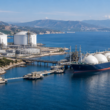



The United States Maritime Administration has approved the deepwater port licence application for ST LNG, LLC’s proposed $8.2 billion liquefied natural gas export facility offshore Matagorda, Texas, advancing a project designed to produce up to 8.4 million tonnes of LNG annually. Announced on October 28, 2026, the regulatory decision covers an offshore development comprising four liquefaction systems, floating LNG storage infrastructure, marine loading facilities and associated natural gas pipelines. Construction is expected to begin in 2027, with the project targeting initial operations in 2029. However, the approval does not establish that the entire development has secured financing, executed all construction contracts or reached a final investment decision.
The project represents a distinctive approach to expanding US LNG exports because its liquefaction and loading infrastructure would be located offshore rather than within a conventional coastal export terminal. The proposed site is approximately 10 miles from the Texas coast, providing access to offshore shipping routes while drawing natural gas from existing regional infrastructure. The Maritime Administration described the regulatory process as its fastest deepwater port review in more than two decades, although the commercial timetable remains dependent on several separate investment and construction milestones.
Why has the United States approved the $8.2 billion ST LNG offshore export project as global gas infrastructure investment accelerates?
The approval reflects federal efforts to accelerate the development of LNG export infrastructure at a time when American natural gas producers are seeking additional international markets. The United States already operates substantial LNG liquefaction capacity, while further projects under construction are expected to increase the country’s ability to supply Europe, Asia and other importing regions. Additional export capacity could strengthen the commercial connection between domestic gas production and international demand, although actual utilisation will depend on global gas prices, shipping economics and competition from other exporters.
ST LNG’s proposal involves four liquefaction systems rated at 2.1 million tonnes per annum each, providing a combined planned production capacity of 8.4 million tonnes annually. This scale would place the project among significant US LNG developments, although considerably larger multitrain facilities are also under development elsewhere along the Gulf Coast. Its distinguishing feature is the offshore configuration, which could create different marine logistics, construction and operational requirements from those associated with conventional onshore terminals.
The US Department of Transportation estimates that the development could support approximately 2,000 construction jobs and up to 855 permanent positions. These figures represent projected employment associated with the development rather than verified jobs already created. The department has also indicated that the project could increase American LNG export capacity by approximately 7% to 9%, an estimate that should be understood within the context of the relevant national capacity assumptions rather than as an immediate increase in operating exports.
The approval also demonstrates how permitting timelines can influence the economics of energy infrastructure. Large LNG projects require substantial capital commitments before they begin generating commercial revenue, making regulatory uncertainty an important consideration for potential lenders and investors. A shorter review period can reduce one category of development risk, but it does not eliminate exposure to inflation, construction costs, commodity markets or future policy changes.
How will ST LNG’s four liquefaction systems, offshore platforms and floating storage units operate near Matagorda?
The proposed facility would comprise 20 offshore platforms, four floating LNG storage units and four marine mooring systems, together with approximately 7.7 miles of associated pipeline infrastructure. Its four liquefaction systems are intended to process natural gas into LNG before the product is stored and transferred to export carriers. The offshore location is designed to move LNG vessel operations away from more congested coastal facilities, potentially reducing certain navigation conflicts associated with existing shipping activity.
Natural gas for the project is expected to originate from the Tres Palacios Natural Gas Storage and Trading Hub and the Williams Markham Gas Processing Plant. The planned supply configuration would use an existing Transcontinental Gas Pipe Line network connection located northeast of the project area. This linkage is commercially relevant because access to established gas transportation infrastructure can reduce the requirement for entirely new upstream pipeline systems, although final delivery arrangements and any necessary modifications must still be completed.
Offshore LNG infrastructure can offer advantages where coastal land availability, marine congestion or environmental constraints complicate development. Nevertheless, moving liquefaction and storage equipment offshore introduces operational considerations involving weather, marine access, equipment maintenance and offshore construction logistics. The final engineering design will need to address these factors while maintaining dependable gas supply, safe LNG handling and access for export vessels.
The project’s intended use of floating storage also creates a different operating model from large land-based LNG tanks. Floating facilities must accommodate marine operating conditions and coordinate LNG loading with vessel availability, potentially affecting maintenance and logistics requirements. Whether this approach produces a competitive overall cost structure will depend on the project’s engineering, procurement and operational performance rather than the offshore location alone.
What does the accelerated Maritime Administration approval actually mean for ST LNG’s construction and investment timeline?
The Maritime Administration completed the project’s final environmental impact statement in approximately 410 days, which the agency said was nearly 3.7 years faster than its historical average. Federal officials attributed the shorter review period to changes in the deepwater port licensing process, including efforts to reduce duplication and improve coordination between agencies. The administration described the outcome as the fastest review of its kind in more than 20 years.
The regulatory process involved cooperation with the United States Coast Guard, federal agencies and the State of Texas to assess relevant safety, environmental and security requirements. The approval represents a major step in the project’s regulatory progression, but individual construction activities may remain subject to additional conditions, technical approvals and compliance obligations. It would therefore be misleading to interpret the decision as evidence that every remaining implementation requirement has already been satisfied.
The planned 2027 construction start provides a relatively short interval between the approval announcement and the proposed commencement of physical work. Achieving that timetable would require the developers to progress financing, contracting, detailed engineering and procurement within the available period. Major LNG facilities can face long equipment manufacturing schedules, particularly for specialised liquefaction machinery, offshore structures and marine components.
The proposed 2029 operational target is similarly ambitious given the scale of the infrastructure involved. Construction must be followed by installation, testing, commissioning and the demonstration of safe operating performance before sustained LNG exports can begin. Any delays affecting major equipment, pipeline connections or marine infrastructure could influence the start-up schedule and the timing of commercial deliveries.
Can the $8.2 billion ST LNG development secure commercial customers and financing before its targeted 2029 commissioning?
The announced project cost provides an indication of the capital intensity involved, but does not establish the amount of financing already secured. The available regulatory announcement does not disclose a completed project financing package, a definitive final investment decision or the full portfolio of binding LNG sales agreements required to evaluate the revenue structure independently. These distinctions matter because regulatory approval is only one part of converting a proposed LNG terminal into an operating commercial asset.
The planned 8.4 million tonnes per annum of export capacity could provide substantial future sales volume if the facility is completed and operates at its design rating. However, potential capacity should not be treated as contracted sales, and annual revenue cannot be reliably calculated without information on realised LNG prices, contractual terms and expected utilisation. The financial attractiveness of the project will also depend on the cost of feed gas and the margin available between domestic natural gas procurement and international LNG sales.
Another important consideration is competition from established and developing US LNG exporters. Projects with operating infrastructure, construction financing or substantial long-term customer commitments may enjoy advantages over developments still advancing through commercialisation. ST LNG’s offshore design could create opportunities for differentiated operations, but prospective customers and financiers will require evidence that the technical and cost assumptions remain competitive.
The broader export market also presents demand uncertainty. European buyers continue to evaluate long-term gas supply diversification, while Asian demand depends on economic growth, energy policy and competition between natural gas and alternative generation sources. LNG investment decisions must therefore account for market conditions several years beyond the initial construction period, particularly where new facilities are expected to operate for decades.
For ST LNG, the October 28 approval represents an important transition from regulatory review towards project implementation. The next major indicators will be confirmation of financing, construction commitments, gas supply arrangements and customer contracts. If those elements are secured, the proposed facility could become another significant component of the US Gulf Coast’s expanding export industry.
The project’s ultimate commercial significance will depend on whether its $8.2 billion development cost can support competitive LNG production and reliable offshore operations. The accelerated approval creates an opportunity to advance the schedule, but financing and construction execution will determine whether the 2029 start-up objective becomes achievable.
Discover more from Business-News-Today.com
Subscribe to get the latest posts sent to your email.