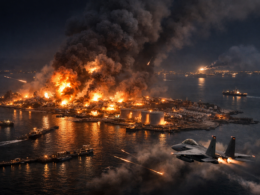



The United States military’s expenditure on the war involving Iran has exceeded $47 billion, according to an updated Pentagon estimate obtained by Reuters, highlighting the rising financial burden of a conflict that has continued for eight months. The estimate, reported on October 28, 2026, is more than 25% above the $37.5 billion figure publicly discussed by Defence Secretary Pete Hegseth in July. Pentagon records also indicate that replacing munitions consumed during the fighting could require more than $29 billion, while losses involving military equipment and platforms create additional replacement requirements exceeding $6 billion.
The disclosure comes ahead of the November 3 congressional elections, with President Donald Trump facing political pressure over the conflict’s duration, rising energy prices and its implications for government spending. The United States and Israel began the military campaign against Iran in February, when Trump initially indicated that operations would be comparatively short. Subsequent developments, including an April ceasefire and renewed military pressure, have complicated the original expectations.
The updated figures require careful interpretation because the Pentagon has not publicly released a complete accounting document explaining every category or the precise treatment of future replacement costs. Reuters reported that the estimate may not fully reflect the expense of repairing American military bases damaged during Iranian missile and drone attacks.
How much has the United States spent on the Iran war compared with the July Pentagon estimate?
Reuters reported that the latest Pentagon figure exceeds $47 billion, compared with Hegseth’s July estimate of $37.5 billion. Using $47 billion as the lower reference point, the increase is at least approximately $9.5 billion, equivalent to more than 25%.
The comparison demonstrates how the assessed financial burden has grown as the conflict has continued. However, it does not establish that the entire increase arose from one particular military operation or procurement decision.
The underlying figure covers operational activity associated with conducting the conflict. Reported categories include the use of aircraft, weapons and supporting capabilities required for military operations.
A full government financial assessment would need to clarify obligations, completed expenditure, replenishment requirements and other costs that may fall into different accounting periods. The unpublished estimate provides an important indication of scale without resolving every accounting question.
Why could replacing missiles and other munitions require more than $29 billion?
Military operations consume weapons that must eventually be replaced if armed forces are to restore their inventories. The Pentagon’s reported estimate includes projected requirements exceeding $29 billion for munitions expended during the Iran campaign.
Precision-guided weapons can be particularly expensive, depending on their capabilities and the quantities purchased. Replenishing stocks may also require manufacturing capacity, production scheduling and agreements with suppliers.
The cost of replacing weapons does not necessarily arise entirely at the moment they are fired. Procurement funding and physical deliveries may occur over subsequent fiscal periods.
The $29 billion replacement estimate should not automatically be added to the $47 billion headline as though the two figures were entirely separate expenditure totals. Reuters described the replenishment requirement within the Pentagon’s wider war-cost assessment, without publishing a complete reconciliation of every component.
What military aircraft, drones and other equipment losses are included in the estimate?
The Pentagon data identifies more than $6 billion in requirements associated with replacing lost equipment and military platforms. Reuters reported that the losses include aircraft and numerous drones used during the war.
The precise cost depends on the type of equipment involved, the replacement configuration and whether additional supporting systems are required. A lost unmanned aircraft has a different financial profile from a crewed combat aircraft or another major platform.
Replacement requirements may also differ from the original purchase price of equipment that entered service years earlier. Manufacturing costs, modernisation and current procurement arrangements can influence the amount needed to restore capability.
The reported figure does not provide a verified public inventory of every aircraft or drone lost. It should therefore not be used to infer specific platform quantities that the available Pentagon information does not establish.
Are repairs to American military bases included in the $47 billion Iran war total?
Reuters reported that the estimate did not clearly account for the potentially substantial expense of repairing American military bases damaged by Iranian missile and drone attacks. This creates an important limitation when assessing the final financial burden.
Base repairs can involve buildings, communications systems, runways, defensive installations and other infrastructure. However, the cost of individual projects depends on the damage sustained and the requirements for restoring facilities.
The absence of a complete repair figure means the overall cost could rise as those needs become clearer. It does not justify assigning an invented amount to the outstanding work.
The accounting also raises a broader distinction between the immediate cost of military operations and the longer-term expense of restoring assets. Both can affect defence budgets, but they may be financed and recorded through different processes.
Why has the military campaign lasted longer than Donald Trump’s initial expectations?
Trump launched the campaign with Israel in February, initially anticipating a relatively short conflict. The military strategy included the use of sophisticated precision weapons to weaken Iranian defences and create conditions for further operations.
An April ceasefire interrupted the fighting, but Reuters reported that the pause allowed Iran to recover some equipment and capabilities from underground storage facilities. This included systems that had been inaccessible during earlier attacks.
The conflict consequently developed differently from the initial expectations. The United States has maintained pressure on Iran through measures including a naval blockade intended to restrict oil-export revenue.
The continuation of hostilities and preparations for possible renewed fighting illustrate why the financial cost has increased. However, military expenditure alone cannot determine whether the administration’s strategic objectives have been achieved.
What is the significance of the Pentagon preparing for possible new strikes after November 3?
Trump has publicly raised the possibility of renewed combat operations after the congressional elections. Reuters also reported that U.S. officials said military planners were preparing for heavier fighting if the president authorised it.
Military planning is different from an order to launch operations. Armed forces can develop contingency arrangements without those plans necessarily being implemented.
Nevertheless, preparations are relevant to future spending because renewed large-scale strikes could require additional munitions, aircraft activity and logistical support. The expense would depend on the scope and duration of any subsequent operations.
The November 3 election is therefore an important political milestone, but it is not a confirmed date for renewed attacks. Reporting should preserve that distinction until the administration announces a specific military decision.
How could the rising war bill affect Congress and the federal defence budget?
Congress has responsibility for authorising and appropriating federal expenditure, including funding for military operations and equipment replacement. Large replenishment requirements may therefore lead to requests for additional appropriations or changes within existing budgets.
Lawmakers may examine whether resources are needed immediately or can be provided across several fiscal years. They may also scrutinise the pace of weapons consumption and the industrial capacity available to replace them.
The financial question extends beyond the initial estimate because repair obligations and future operations could affect subsequent budgets. However, the available information does not establish the exact amount of any new congressional funding request.
Debate over the cost is likely to involve both military readiness and domestic fiscal priorities. Those competing considerations form part of Congress’s wider oversight responsibilities.
Why are global oil prices relevant to the domestic political consequences of the Iran war?
The conflict has disrupted energy markets and contributed to higher fuel prices, affecting households and businesses well beyond the immediate combat zone. Transport, freight and industrial operations are among the activities exposed to changes in petroleum costs.
Reuters reported that the war’s impact on energy prices has weighed on support for Republican candidates ahead of the November midterms. That political assessment is separate from the Pentagon’s direct military expenditure figures.
Higher oil prices are not included as a simple additional amount in the $47 billion war-cost estimate. They represent wider economic consequences experienced through markets and consumer spending.
The distinction is essential for understanding the true range of costs. Government military expenditure is one measurable category, while energy-market disruption can impose separate effects on businesses, families and national economies.
What are the key takeaways from the latest Pentagon estimate of Iran war expenditure?
- Pentagon data obtained by Reuters places U.S. military expenditure on the Iran conflict above $47 billion.
- The headline estimate is more than 25% above the $37.5 billion figure discussed by Defence Secretary Pete Hegseth in July.
- Projected munitions-replacement requirements exceed $29 billion, while equipment and platform losses create additional requirements above $6 billion.
- The estimate may not fully account for repairing U.S. bases damaged by Iranian missile and drone attacks.
- No complete public Pentagon accounting has been released, and renewed military operations could change the ultimate cost.
What will determine the eventual cost of the Iran war beyond the current $47 billion estimate?
The decisive developments will be the scale of any further military operations, the financing of replenishment programmes and the assessment of damaged infrastructure. Congress may also require greater detail about how different costs have been calculated.
The October estimate demonstrates that the war has become substantially more expensive than previously disclosed. Its final fiscal impact remains uncertain because military operations, procurement and restoration requirements have not all been completed or comprehensively reconciled.
Discover more from Business-News-Today.com
Subscribe to get the latest posts sent to your email.