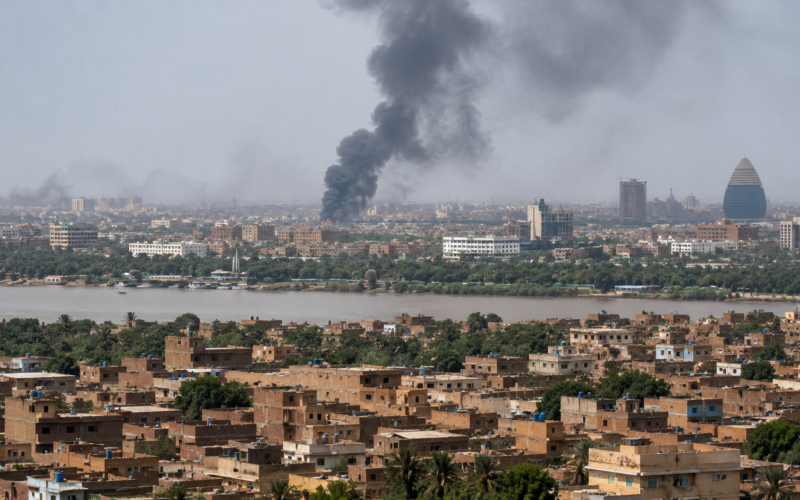
Sudan’s army-led government has conditioned broad acceptance of a United States peace proposal on the full withdrawal of the Rapid Support Forces from cities it has occupied since May 11, 2023, according to documents seen by Reuters and confirmed by senior Sudanese officials. The demand has become the central obstacle in Washington’s latest attempt to halt Sudan’s three-year civil war.
The United States proposal, circulated last month, called for both sides to accept an immediate 90-day humanitarian truce, open negotiations on a permanent ceasefire and begin a civilian-led political transition towards elections. It also proposed a United Nations-led mechanism to support limited RSF withdrawals, with priority given to North Darfur and North Kordofan.
Sudan’s army-led authorities accepted most of the plan but rejected the idea of limited withdrawals, insisting that the RSF must leave all cities it has occupied since May 2023. That position has repeatedly blocked earlier peace efforts because the army views any partial pullback as legitimising RSF control, while the RSF has continued military operations even after welcoming previous diplomatic initiatives.
The dispute comes as international alarm rises over atrocities in Darfur and the risk of similar violence around al-Obeid in North Kordofan. A United Nations probe said on July 8 that RSF actions in al-Fashir, including mass killings, rapes, abductions and deliberate starvation, amounted to genocide, while the RSF denied targeting civilians and rejected abuse allegations as fabricated by its enemies.
Why has the Sudanese army made full RSF withdrawal from cities its central condition?
The Sudanese army’s demand reflects a basic military and political calculation: it does not want the Rapid Support Forces to retain control of major urban centres while negotiations proceed. From the army’s perspective, a truce that leaves the RSF embedded in cities would freeze wartime gains and allow the paramilitary force to strengthen its administrative, financial and military position.
Cities matter because they provide more than shelter for fighters. They contain banks, markets, hospitals, warehouses, transport routes, government offices and civilian populations that can be taxed, coerced or used as bargaining leverage. If the RSF remains in those spaces during a ceasefire, the army fears it would gain time to reorganise without giving up meaningful power.
The army’s position is also shaped by its experience in earlier talks. Past ceasefires in Sudan repeatedly collapsed or failed to halt fighting on the ground. Each failed pause has made both sides more sceptical that the other will use diplomacy for peace rather than regrouping.
For General Abdel Fattah al-Burhan and the army leadership, a limited withdrawal plan may look too weak. It could reduce fighting in selected areas while leaving the RSF present in other strategic cities, enabling the paramilitary force to preserve a parallel structure.
The difficulty is that the army’s demand may be too large for immediate negotiations. A full RSF withdrawal from all occupied cities would require command compliance, monitoring, security guarantees, humanitarian access, civilian protection measures and clarity over who takes control after RSF units leave.
That is why the United States proposal appears to have started with limited withdrawals. Washington may be trying to create a sequence: humanitarian truce first, partial pullbacks in the most dangerous zones second, broader negotiations third. The army wants the sequence reversed or greatly expanded.

What does the United States peace proposal actually offer Sudan’s warring sides?
The plan offers three linked elements: an immediate humanitarian truce, negotiations on a permanent ceasefire and a civilian-led transition towards elections. That structure tries to address both the urgent human cost of the war and the political dispute that caused the conflict in the first place.
The 90-day humanitarian truce is designed to open access for food, medicine, water and emergency relief. Sudan’s war has produced one of the world’s worst humanitarian disasters, with millions displaced, hunger spreading and health systems heavily damaged. The truce would give aid agencies time to reach communities cut off by fighting.
The proposal also calls for a United Nations-led mechanism to support RSF withdrawals, prioritising North Darfur and North Kordofan. Those areas are central because North Darfur has already seen catastrophic violence after the RSF capture of al-Fashir, while North Kordofan is facing drone strikes and warnings of a new mass atrocity risk around al-Obeid.
The political track would move Sudan towards a civilian-led process and eventual elections. That is essential because the war began in April 2023 after the army and RSF fell out over plans to integrate their forces and transition towards civilian rule.
The proposal also includes a unified national army, disarmament, demobilisation and reintegration arrangements, and a political process excluding the Muslim Brotherhood or militia elements accused of atrocities. That language reflects Washington’s attempt to prevent Sudan from returning either to paramilitary fragmentation or ideological military dominance.
The plan therefore tries to solve several problems at once. It seeks relief for civilians, a pause in fighting, eventual integration or dismantling of armed forces, and a political path beyond military rule. The army’s objection shows how hard it is to move from diplomatic architecture to battlefield reality.
Why are North Darfur and North Kordofan now the centre of Sudan’s peace and atrocity debate?
North Darfur and North Kordofan are central because they show the direction of the war. The RSF captured al-Fashir in North Darfur after a long siege, and United Nations investigators have now said the violence there amounted to genocide. The same pattern of siege, starvation, attacks on civilians and forced displacement is feared around al-Obeid in North Kordofan.
Al-Fashir was symbolically and strategically important because it had been one of the last major centres outside full RSF control in Darfur. Its fall altered the balance in western Sudan and deepened fear among non-Arab communities who had already faced repeated ethnic violence.
North Kordofan matters because it sits between Darfur and the army-controlled eastern half of Sudan. If the RSF expands its drone-led campaign there, the war could further threaten central routes, civilian concentrations and the army’s ability to hold its remaining strategic depth.
Al-Obeid is especially sensitive. United Nations officials and Britain have warned of possible large-scale atrocities as RSF forces mass around the city, which is home to about half a million people, including more than 83,000 internally displaced people.
That geography explains why the United States proposal prioritised these regions for limited withdrawals. Washington appears to be trying to stop the most immediate atrocity risks before the conflict produces another al-Fashir.
The army’s response is that selective withdrawal is not enough. It wants the RSF out of all occupied cities, not only those where international concern is highest. The gap between urgent humanitarian triage and maximal military demands is now the core problem.
How do the United Nations genocide findings change pressure on the RSF and peace talks?
The United Nations finding that RSF actions in al-Fashir amounted to genocide changes the political atmosphere around the talks. It raises the cost of treating the RSF as an ordinary negotiating party while also making negotiations more urgent because the same patterns may be spreading to other areas.
The UN Fact-Finding Mission for Sudan said the RSF and allied forces carried out mass killings, abductions of women and girls, mass gang rapes and forced starvation in al-Fashir as part of an intentional policy. It also found that the RSF committed the war crime of starvation by imposing a prolonged siege, blocking relief supplies and shelling food production systems.
Those findings strengthen the army’s argument that RSF withdrawal cannot be partial or symbolic. If a force accused of genocide remains in cities, the army can argue that civilians are still exposed to the same pattern of abuses.
At the same time, the findings also strengthen the argument for an immediate truce. Civilians cannot wait for a perfect political settlement if cities are being encircled, aid is blocked and atrocities are feared.
This creates a moral and strategic dilemma. Excluding the RSF entirely may be impossible because it controls territory and armed forces. Including it without accountability risks normalising crimes that international investigators say amount to genocide.
A credible peace process will therefore need both ceasefire sequencing and accountability language. Withdrawal, monitoring, humanitarian access, civilian protection and future prosecutions cannot be treated as separate issues.
Why does the RSF’s response to peace proposals remain difficult to trust?
A senior RSF official told Reuters the force had received and welcomed the latest United States proposal and had sent a written response, but gave no further details. The problem is that the RSF has previously welcomed peace offers while continuing military operations.
This pattern has damaged trust. Diplomatic acceptance means little if battlefield behaviour does not change. For civilians, the question is not whether leaders welcome a proposal, but whether shelling stops, aid enters, fighters withdraw and abuses end.
The RSF’s military strategy has often combined negotiations with continued pressure. If the force believes it can gain more territory or improve its bargaining position through attacks, it may have little incentive to freeze the conflict prematurely.
The drone-led campaign in Kordofan illustrates this danger. Even while peace language circulates, the RSF is conducting operations in a region that could determine the next phase of the war.
The army has also been accused of abuses during the conflict, and any serious peace framework must address violations by all sides. But the RSF’s role in Darfur, its establishment of parallel authority in areas under its control and the United Nations genocide findings make its commitments especially scrutinised.
For Washington, the challenge is verification. A ceasefire cannot depend only on written acceptance. It requires independent monitoring, defined withdrawal zones, consequences for violations and immediate humanitarian access.
Why does the proposed unified national army remain one of the hardest issues?
The war began after the army and RSF fell out over plans to integrate their troops and move towards a civilian-led democratic transition. That origin means the question of a unified national army is not a technical detail. It is the central issue behind the war.
The army wants to preserve itself as Sudan’s recognised national military institution. The RSF wants to protect its fighters, commanders, networks and political relevance. Civilians want armed groups removed from politics and the economy.
The United States proposal calls for a unified national army and disarmament, demobilisation and reintegration arrangements. In theory, this would end Sudan’s dual military structure and prevent the country from remaining divided between competing armed institutions.
In practice, integration is extremely difficult after mass violence. The army is unlikely to accept RSF commanders accused of atrocities into senior positions. The RSF is unlikely to disarm without guarantees that its fighters will not be detained, excluded or attacked.
A real DDR process would require screening, cantonment, weapons registration, command restructuring, salaries, reintegration pathways and accountability mechanisms. It would also require external monitoring and political agreement over who controls the future military.
Sudan has failed before because armed actors retained too much power after transition promises. The new peace proposal will be judged on whether it actually reduces armed fragmentation or simply repackages it under a national label.
Can a 90-day humanitarian truce save civilians without freezing the war in place?
A 90-day truce could save lives if it opens roads, stops shelling, allows food deliveries, restores medical access and lets civilians move away from front lines. Sudan’s humanitarian situation is so severe that even a temporary pause could make an immediate difference.
The risk is that a truce without real monitoring becomes a tactical pause. Armed groups could use the time to resupply, recruit, reposition drones, repair vehicles and strengthen control over civilian areas.
That is why the withdrawal dispute matters. The army fears that a humanitarian truce combined with limited RSF withdrawals would leave the paramilitary force entrenched in major cities. The RSF may fear that broader withdrawal would expose it militarily and politically before a final settlement.
The humanitarian case for a truce remains overwhelming. Millions of Sudanese need food, shelter, medical care and protection. Aid agencies cannot operate safely when front lines shift, roads are blocked and commanders use starvation as a weapon.
The diplomatic task is to design a pause that is not merely symbolic. It must define routes, guarantee access, protect aid workers, establish reporting mechanisms and provide penalties for obstruction.
A truce cannot solve Sudan’s war by itself. But without one, the conflict will continue producing famine, displacement and atrocities while diplomats argue over sequencing.
What should be watched next in the United States-led Sudan peace effort?
The first issue is whether Washington can bridge the gap between limited withdrawals and the army’s demand for full RSF withdrawal from all occupied cities. If that disagreement remains unresolved, the proposal may stall before a formal ceasefire begins.
The second issue is whether the RSF gives a detailed public response. A vague welcome will not be enough. Diplomats will look for commitments on withdrawal, humanitarian access, monitoring and violence around al-Obeid.
The third issue is Massad Boulos’s role. The United States senior adviser said he was pleased to hear that Abdel Fattah al-Burhan had apparently accepted rather than rejected the latest peace proposal. That optimism will be tested by whether the army’s conditions can be negotiated into an implementable text.
The fourth issue is the battlefield around North Kordofan. If RSF attacks intensify near al-Obeid, international concern over mass atrocities could overtake the diplomatic process.
The fifth issue is accountability. The United Nations genocide findings make it harder for outside powers to pursue a ceasefire that ignores crimes committed in al-Fashir.
The sixth issue is whether civilian actors are given a meaningful role. Sudan’s war began partly over a failed transition to civilian rule. A peace process dominated only by armed leaders risks reproducing the same imbalance.
What are the key takeaways from Sudan’s response to the United States peace proposal?
- Sudan’s army-led government has conditioned broad acceptance of a United States peace proposal on full Rapid Support Forces withdrawal from all cities the paramilitary group has occupied since May 11, 2023.
- The United States proposal called for an immediate 90-day humanitarian truce, negotiations on a permanent ceasefire and a civilian-led political process leading towards elections.
- Washington’s plan also proposed a United Nations-led mechanism to support limited RSF withdrawals, with priority given to North Darfur and North Kordofan because of urgent atrocity and humanitarian risks.
- The Sudanese army accepted most of the proposal but rejected limited withdrawals, arguing that the RSF must leave all occupied cities rather than retain urban control during negotiations.
- The RSF has said it received and welcomed the latest proposal and submitted a written response, but the force has previously welcomed peace offers while continuing military operations.
- A United Nations probe said RSF actions in al-Fashir, including mass killings, rape, abductions and deliberate starvation, amounted to genocide, intensifying pressure for accountability and civilian protection.
- North Kordofan is now a critical flashpoint because the RSF is conducting a drone-led campaign there and international officials have warned of possible large-scale atrocities around al-Obeid.
- The next test is whether Washington can convert conditional acceptance, RSF assurances and international pressure into a monitored truce that delivers aid without freezing Sudan’s war in place.
Discover more from Business-News-Today.com
Subscribe to get the latest posts sent to your email.