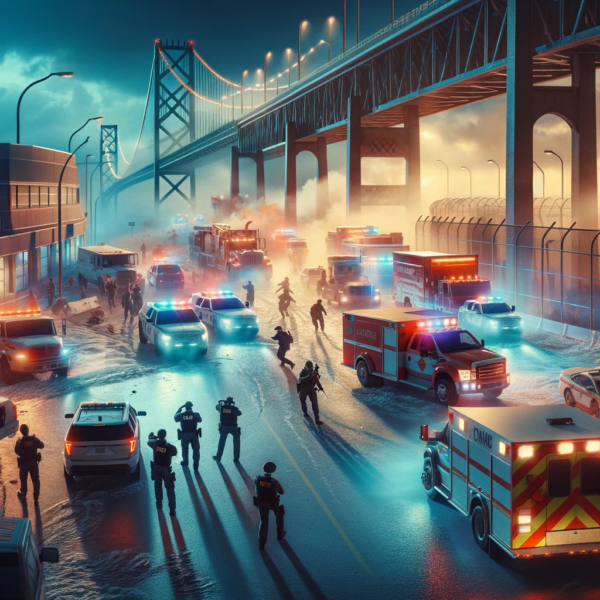

Taiwan began its largest annual military exercise on August 5, 2026, mobilising approximately 20,000 reservists for 10 days of continuous drills intended to test how the island would respond if a Chinese attack disrupted communications, command centres and established defence plans.
The 42nd Han Kuang exercise has moved away from tightly scripted demonstrations towards scenarios in which commanders receive incomplete information and must adjust when simulated enemy movements differ from expectations. Taiwan is also deliberately reducing mobile internet speeds during parts of the exercise for the first time to test communication under wartime bandwidth shortages.
The armed forces will disperse combat aircraft, relocate military production, mobilise civilian factories and vehicles, protect critical infrastructure and practise escorting essential supplies along Taiwan’s Pacific coast. Two reserve brigades are being fully mobilised alongside active Army, Navy and Air Force units.
China had not issued a detailed response to the opening phase of the drills during the first reporting period. Beijing claims Taiwan as part of its territory, opposes official military cooperation between Taipei and Washington and has never renounced the use of force to bring the island under its control.
The central test is no longer whether Taiwanese forces can execute a rehearsed sequence successfully. Han Kuang 42 is examining whether military units, civilian institutions and essential industries can continue functioning after an adversary disrupts the assumptions on which Taiwan’s original defence plan was built.
How has Taiwan changed Han Kuang 42 to prepare for an unpredictable Chinese attack?
Taiwanese defence officials have acknowledged that earlier Han Kuang exercises were sometimes criticised for appearing overly controlled. Units knew too much about the sequence of events, major activities were announced in advance and successful outcomes could appear built into the exercise design.
Han Kuang 42 attempts to create greater uncertainty. Field commanders may encounter unexpected enemy movements, interrupted communications, damaged infrastructure or orders that become outdated as the simulated conflict develops.
Senior planners have withheld portions of the exercise scenario from participating officers. Commanders must reassess conditions, determine whether their original mission remains achievable and issue revised instructions without waiting for every decision to come from Taipei.
The change reflects a basic wartime reality. A Chinese attack would not necessarily follow Taiwan’s preferred timetable or the sequence used during military planning. Missile strikes, cyberattacks, sabotage and maritime operations could occur simultaneously or in an unexpected order.
Taiwan is therefore testing judgement rather than only technical execution. A unit may know how to move vehicles, fire a missile or defend a position, but it must also understand when its assigned mission should change.
The exercise will continue until August 14 and is intended to sustain operations through 10 days and nine nights. That duration tests fatigue, logistics, shift changes and decision-making after the initial phase of an emergency has passed.
What is the United States-style backbrief system being introduced during the exercise?
Taiwan is adopting a military communication method known as a backbrief, which is used within the United States armed forces and other militaries.
Under this approach, junior commanders do not merely acknowledge that they received an order. They explain the mission back to their superior, describe how they intend to carry it out and identify the assumptions guiding their plan.
The senior commander can then determine whether the subordinate understood the purpose of the order rather than simply its literal wording. Misunderstandings can be corrected before units begin moving or engaging an enemy.
Backbriefs also support decentralised command. A subordinate who understands the broader objective can continue acting when communications fail, even when the original method becomes impossible.
That capability could be essential for Taiwan because China would be expected to target command centres, military communications, radar systems and telecommunications infrastructure during the opening phase of a conflict.
A unit that depends on continuous instructions from headquarters could become ineffective after losing contact. A unit that understands the commander’s intent can select another route, defend an alternative position or coordinate locally with nearby forces.
The approach does not remove central authority. It is intended to ensure that decisions made at lower levels remain consistent with the broader defence plan when immediate supervision becomes unavailable.
Why is Taiwan deliberately slowing mobile internet during Han Kuang 42?
Taiwan will temporarily reduce mobile internet speeds in parts of northern and central Taiwan during scheduled phases of the exercise.
The measure is intended to simulate limited bandwidth after cyberattacks, physical damage, power failures or unusually high network demand. Authorities want to understand how civilians, emergency services and military units communicate when normal digital services become slow or unreliable.
Modern societies depend heavily on smartphones for warnings, maps, payments, transport, news and contact with relatives. Even a partial disruption could create confusion without producing a total telecommunications blackout.
China could attempt to affect Taiwan’s communications through several methods. These may include cyber operations, electronic warfare, attacks on ground infrastructure or interference with submarine cables and satellite links.
The exercise will test which government messages receive priority, whether emergency information can reach the public and how institutions operate when cloud-based services or high-speed mobile applications become difficult to access.
Officials must also assess public behaviour. People may repeatedly refresh social media, call relatives or share unverified information, increasing demand on networks that are already operating with limited capacity.
Alternative communication systems become important under those conditions. Radio, satellite communications, fixed-line networks, local government announcements and military communication vehicles may need to carry information normally distributed through mobile internet.
How are Taiwan’s armed forces dispersing aircraft and reinforcing threatened regions?
Taiwan began the exercise by moving aircraft and other military assets away from their normal operating locations.
Six Mirage 2000 fighters and eight Indigenous Defense Fighters were moved to Chiashan Air Force Base, a protected facility built into a mountain near Hualien. F-16 fighters escorted the movement and later conducted an aerial sweep off eastern Taiwan.
Dispersal is intended to prevent China from destroying a large portion of Taiwan’s combat aircraft during opening missile strikes against known airbases.
Aircraft may operate from hardened shelters, alternative bases or prepared sections of civilian infrastructure when principal runways are damaged. Ground crews must move fuel, weapons, spare parts and maintenance equipment along with the aircraft.
The exercise also included a rapid reinforcement operation involving seven military helicopters. CH-47SD Chinooks and UH-60M Black Hawks transported nearly 100 soldiers from southern Taiwan towards strategic positions in the north.
This movement tested whether Taiwan can reinforce a threatened region when roads, railways or fixed bases are unavailable. Helicopters provide speed and flexibility but remain vulnerable to air defence systems, enemy aircraft and attacks on landing zones.
Cross-regional movement is especially important because China could attempt to create several simultaneous crises. Taiwan must determine where limited forces are most urgently required while avoiding the concentration of units in locations vulnerable to missile attack.
Why is Taiwan relocating an arsenal and mobilising civilian factories for wartime production?
Han Kuang 42 includes a simulated emergency relocation of the Armaments Bureau’s 202nd Arsenal and selected civilian manufacturing capacity.
The objective is to determine whether weapons, ammunition and essential components can continue being produced after fixed industrial sites are attacked or threatened.
Large defence factories offer efficiency during peacetime because equipment, skilled workers and supplies are concentrated in one place. The same concentration becomes a vulnerability when an opponent possesses long-range missiles and detailed satellite imagery.
Relocation requires more than moving machines. Authorities must identify substitute buildings, electricity supply, secure communications, transport, trained employees and access to raw materials.
Civilian manufacturers may be asked to support defence production under emergency mobilisation orders. Companies that normally produce vehicles, electronics, machinery or industrial components could contribute equipment or manufacturing capacity.
The exercise is also testing the requisition of civilian vehicles through local governments and contracted companies. Vehicles were directed to staging areas to demonstrate how commercial assets could be converted into military transport and logistical support.
These arrangements require clear legal authority and compensation procedures. Businesses and owners are more likely to cooperate when they know how property will be recorded, used and returned or compensated if damaged.
A prolonged defence would depend heavily on civilian industry. Taiwan cannot assume that all weapons, fuel and spare parts required during a conflict will already be stored before an attack begins.
How will Taiwan protect Pacific supply routes if China attempts a maritime blockade?
The exercise includes naval and coast guard operations intended to protect sea lines of communication along Taiwan’s Pacific coast.
China could attempt to isolate Taiwan through a blockade or quarantine rather than beginning with a full amphibious invasion. Ships might be inspected, diverted or discouraged from approaching Taiwanese ports through military pressure and insurance risk.
Taiwan’s western ports face the Taiwan Strait and are closer to China’s coast. Pacific ports and eastern sea routes could become essential for receiving fuel, food, military supplies and humanitarian assistance.
Han Kuang 42 includes escort operations involving the Navy and Coast Guard Administration. These forces will practise maritime surveillance, patrols, intelligence sharing and the protection of vessels carrying essential goods.
Taiwan is also preparing denial measures around ports, airports and transport hubs. If an enemy captures or approaches a facility, Taiwanese forces may attempt to prevent its immediate use.
The Navy’s coastal units deployed mobile anti-ship missile vehicles, radar systems, field ambulances and satellite communication equipment during the opening phase of the drills. Mine-laying preparations were also included.
A blockade would present legal and operational difficulties for every side. China could attempt to describe inspections as law enforcement, while Taiwan and its partners might treat them as coercive military action.
The exercise cannot fully reproduce the commercial consequences of a blockade. Shipping companies, insurers and crews could avoid Taiwan even before China physically stops every vessel.
Why are more than 20,000 reservists central to Taiwan’s whole-of-society defence strategy?
Taiwan’s active armed forces cannot defend every coastline, city, military base and critical facility without reserve personnel.
Approximately 20,000 reservists were called up for the live-fire phase, including two brigade-level formations undergoing full mobilisation.
The process tests whether authorities can notify reservists, verify identities, issue weapons and equipment, organise units and move personnel to assigned locations within the required period.
Reservists are practising rifle, mortar and defensive operations in urban and coastal environments. Their responsibilities may include protecting infrastructure, reinforcing active units, guarding transport routes or defending areas behind the principal battlefront.
Full-brigade mobilisation is more demanding than recalling small groups. Command structures, communications, logistics, medical support and transport must function as an integrated formation.
Taiwan has extended and reformed reserve training because a prolonged conflict would require replacements for exhausted or wounded active-duty personnel.
The effectiveness of reserve forces depends on realistic training and suitable equipment. A large mobilisation number has limited value when personnel do not understand their missions or lack communications, transport and ammunition.
Whole-of-society defence also extends beyond reservists. Local governments, hospitals, utilities, manufacturers, transport operators and telecommunications companies must operate alongside the military during a national emergency.
How will embedded reporters and disinformation drills shape Taiwan’s wartime communication?
Taiwan has invited journalists to observe selected parts of Han Kuang 42 under a new embedded-reporting arrangement.
The military wants to test how quickly it can release accurate information from the frontline and whether communication procedures remain effective during a conflict.
Information would become a major battlefield during any confrontation with China. False reports about surrendered units, destroyed leaders or collapsing defences could be used to weaken public morale.
Delays by the government can create space for manipulated images, fabricated statements and misleading accounts to spread before verified information becomes available.
Embedded journalists could provide independent first-hand reporting, but the arrangement requires safeguards. Reporters must not disclose troop locations or operational details that could endanger military personnel.
The military must also avoid turning access into controlled publicity. Credibility depends on allowing journalists to report setbacks and uncertainty rather than only successful operations.
Taiwan’s democratic system creates both vulnerability and strength. Open information networks can transmit disinformation rapidly, but independent media can also challenge false claims and provide trusted evidence.
The exercise will test whether military spokespeople, government agencies and journalists can communicate under pressure without compromising operations or allowing rumours to dominate the public response.
Does Han Kuang 42 indicate that a Chinese invasion of Taiwan is imminent?
The launch of the exercise does not mean Taiwan has evidence that China is preparing an immediate invasion.
Han Kuang has been held annually since 1984 and forms part of Taiwan’s regular defence planning. The 2026 exercise is more realistic because the military environment around the island has become more demanding.
China has increased aircraft and naval operations around Taiwan and has conducted large exercises involving blockade, precision-strike and joint-force scenarios.
These activities reduce the distinction between routine pressure and preparation for a real operation. Taiwan must assess whether a Chinese exercise is ordinary signalling or cover for forces moving into attack positions.
Han Kuang 42 begins with that problem. Its opening scenario assumes that China uses a military exercise to conceal preparations for a wider assault.
Taiwan must therefore raise readiness without reacting to every Chinese movement as the beginning of war. Excessive mobilisation would impose economic costs and could exhaust personnel if maintained repeatedly.
The value of the exercise lies in improving options rather than predicting a date. Better command flexibility, reserve mobilisation and civil resilience can strengthen deterrence by making a rapid Chinese victory less likely.
What are the key takeaways from Taiwan’s Han Kuang 42 defence exercise?
- Taiwan began the 10-day and nine-night live-fire phase of Han Kuang 42 on August 5, mobilising approximately 20,000 reservists alongside Army, Navy and Air Force units across the island.
- The exercise is replacing predictable and heavily scripted demonstrations with surprise scenarios that require commanders to reassess changing conditions, revise plans and continue operating when communications with senior headquarters become unreliable.
- Taiwan is introducing United States-style backbriefs in which subordinate commanders explain how they understand and intend to execute orders, allowing misunderstandings to be corrected while supporting decentralised wartime decision-making.
- Mobile internet speeds will be deliberately reduced in parts of northern and central Taiwan to test whether civilians, emergency services and government agencies can communicate when wartime bandwidth becomes scarce.
- Aircraft were dispersed to protected facilities, while helicopters transported nearly 100 soldiers from southern Taiwan towards northern positions to test rapid reinforcement when ordinary transport routes are disrupted.
- The military will simulate relocating the 202nd Arsenal, mobilising civilian factories and requisitioning commercial vehicles to determine whether weapons production and logistical support can continue after fixed facilities are attacked.
- Taiwan’s Navy and Coast Guard will practise protecting Pacific sea routes and escorting essential shipments as concern grows that China could attempt a blockade or isolate the island before launching an amphibious assault.
- China had not issued a detailed response to the opening stage, but Beijing continues claiming Taiwan as its territory and has never renounced force as a means of achieving control over the self-governed island.
Discover more from Business-News-Today.com
Subscribe to get the latest posts sent to your email.