




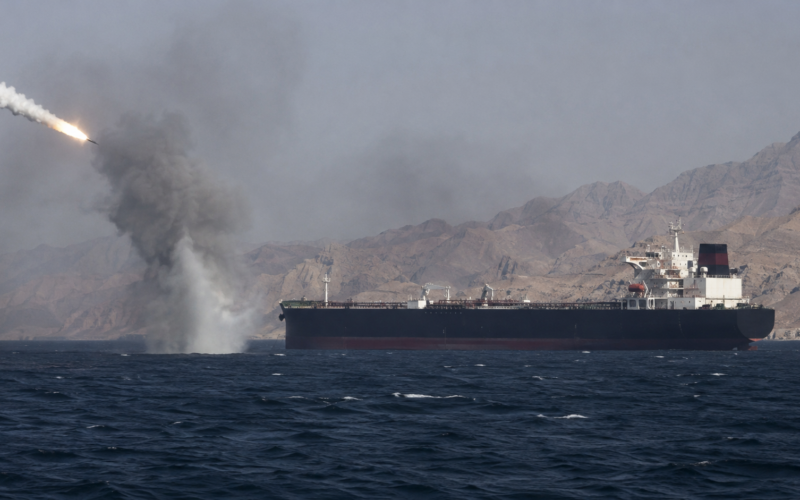
The United Arab Emirates has accused Iran of firing a missile at a vessel affiliated with Abu Dhabi National Oil Company while it was transiting the Strait of Hormuz on Saturday, August 8, 2026, creating a fresh maritime crisis just as negotiations appeared to be moving towards an agreement that could restore commercial shipping through the strategic waterway.
The United Arab Emirates Foreign Ministry condemned what it described as a hostile Iranian attack and accused Tehran of using commercial shipping and the Strait of Hormuz as instruments of economic pressure. No injuries were reported in Saturday’s incident, and authorities said the situation involving the vessel had been brought under control. Details concerning the ship’s identity, cargo and the extent of any physical damage had not been released.
The attack is particularly consequential because Abu Dhabi National Oil Company said only a day earlier that 15 of its vessels had been struck by missiles or drones while transiting the Strait of Hormuz since the Iran war began on February 28. Three of those attacks occurred during the current week, according to the company. The accumulated incidents have killed one crew member and injured 20 others, underscoring how dangerous routine energy movements through the Gulf have become.
Iran had not immediately publicly accepted responsibility for Saturday’s specific strike. Iranian media reported that the United Arab Emirates had announced an attack but omitted Abu Dhabi’s allegation that Tehran was responsible. The distinction is important even though Iran’s Islamic Revolutionary Guard Corps has previously warned that ships linked to Tehran’s adversaries or vessels refusing to follow Iranian navigation directives could be targeted.
The escalation came on the same day Iranian Foreign Minister Abbas Araqchi said Tehran and Oman were very close to agreement on a new shipping route through the Strait of Hormuz. Washington believes such an arrangement could become the foundation for restoring commercial traffic and eventually winding down the wider conflict. Iran, however, has made clear that an Oman agreement by itself will not automatically reopen the strait.
Why is the August 8 missile attack on an ADNOC-linked vessel particularly significant now?
The timing is what turns the latest shipping incident into a potentially important diplomatic event.
For several days, United States, Iranian, Omani and Gulf officials have signalled progress towards a mechanism that could allow normal oil and commercial shipping to return through the Strait of Hormuz. A United States official said Washington expected an agreement between Oman and Iran soon and indicated that the United States would lift its blockade of Iranian ports once commercial vessels could again move through the strait without obstruction.
Saturday’s alleged attack creates an immediate credibility test for those negotiations.
If ships affiliated with one of the Gulf’s largest state energy producers remain vulnerable to missile strikes while diplomats discuss freedom of navigation, insurers, tanker operators and commodity traders will have little reason to assume the waterway is genuinely secure merely because an agreement is announced.
Abu Dhabi’s response also matters because the United Arab Emirates has attempted to balance regional diplomacy with close security ties to the United States and extensive commercial relationships across Asia. An attack on an Abu Dhabi National Oil Company-linked carrier risks making that balancing strategy increasingly difficult.
The United Arab Emirates Foreign Ministry argued that the incident violated international principles protecting freedom of navigation and called for the strait to be reopened fully and without conditions. The ministry also accused Iran’s Islamic Revolutionary Guard Corps of conduct amounting to piracy.
That language is substantially stronger than a routine maritime-security statement. It signals that Abu Dhabi increasingly views attacks on its shipping as a direct challenge to national economic interests rather than collateral instability created by the wider Iran conflict.
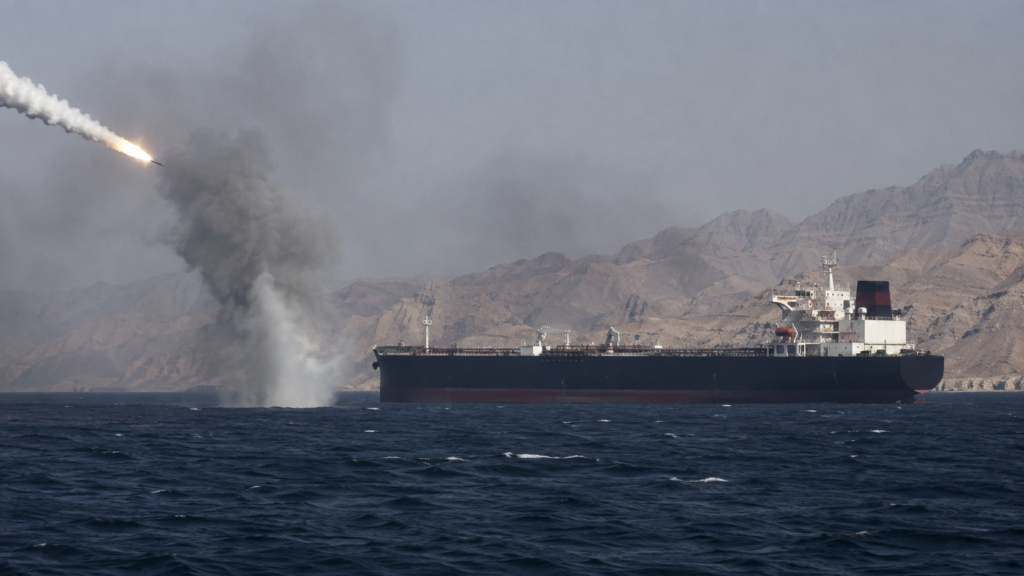
How badly has the Iran war disrupted Abu Dhabi National Oil Company’s shipping operations?
The scale revealed by Abu Dhabi National Oil Company on August 7 provides important context for Saturday’s attack.
The company said 15 vessels connected to its operations had been attacked by missiles or drones while crossing the Strait of Hormuz since February 28. One crew member had been killed and another 20 injured.
The company did not publicly attribute every previous incident to Iran, which means individual attacks should not automatically be assigned to Tehran without supporting evidence. Yet the concentration of strikes around a waterway where Iran has explicitly threatened non-compliant vessels has created an extremely difficult operating environment.
Abu Dhabi National Oil Company remains one of the world’s major energy producers, supplying crude oil, natural gas and refined petroleum products to customers across Asia and other international markets.
That makes maritime reliability essential.
The United Arab Emirates possesses an important alternative export route through its pipeline linking Abu Dhabi’s oilfields with Fujairah on the Gulf of Oman, allowing some crude to bypass the Strait of Hormuz entirely. However, pipelines cannot replace every tanker movement, and refined products, logistics operations and other flows remain connected to maritime routes.
Repeated vessel attacks therefore impose costs even if Abu Dhabi continues meeting customer commitments.
Operators must consider higher insurance premiums, security requirements, rerouting, delays and possible restrictions imposed by vessel owners or crews. Buyers may also demand additional assurances when cargoes must travel through an area exposed to missiles and drones.
The longer the insecurity persists, the more the physical vulnerability of tankers becomes a commercial pricing issue throughout the global energy market.
What is Iran negotiating with Oman over a new shipping route through the Strait of Hormuz?
Iran and Oman sit on opposite sides of the narrow Strait of Hormuz and are therefore central to any arrangement governing vessel movements through the passage.
Araqchi said on August 8 that the two governments were very close to agreement on a new shipping route. Tehran considers the previous traffic-separation structure through the strait no longer acceptable and has been discussing a temporary route while technical and legal work continues on a permanent arrangement.
The details are highly sensitive.
Earlier regional discussions indicated that Iran was seeking greater authority over vessels entering the Gulf, a concession that would fundamentally alter how navigation through the strait has traditionally operated.
United States officials have previously resisted the idea that Tehran should control access to an international shipping route carrying a major share of global energy supplies.
The current negotiations therefore appear to be searching for a compromise between Iran’s demand for a revised navigation regime and the wider international insistence that commercial shipping cannot depend entirely on political permission from Tehran.
Oman is unusually well placed to mediate.
Muscat has maintained working relationships with Iran, the Gulf monarchies and the United States throughout periods of intense regional confrontation. Its geography also gives it direct interests in ensuring safe navigation through the strait.
A temporary route agreed between Tehran and Muscat could create practical separation between opposing forces while broader legal questions remain unresolved.
The larger problem is enforcement. A navigation agreement means little if missiles continue hitting commercial vessels or if individual ships must negotiate separate permissions before crossing.
Why is Iran saying an agreement with Oman will still not automatically reopen Hormuz?
The apparent contradiction is one of the most important developments on August 8.
Iran says a shipping-route agreement with Oman is close, but both Araqchi and the Islamic Revolutionary Guard Corps have indicated that reopening the Strait of Hormuz depends on additional conditions involving the United States.
Araqchi has linked a broader settlement to compensation from Washington for damage caused during the conflict. The Islamic Revolutionary Guard Corps separately said the strait would reopen when the United States accepts Iran’s conditions and stops interfering in regional negotiations.
The exact conditions have not been fully disclosed publicly.
This distinction means Washington and Tehran are talking about two connected but different agreements.
One concerns the practical navigation route between Iranian and Omani waters. Another concerns the political settlement required for Iran to stop restricting commercial traffic and for the United States to remove its blockade of Iranian ports.
A technical shipping agreement could therefore be signed without immediately restoring pre-war traffic volumes.
That possibility will concern oil markets because expectations have repeatedly risen that Hormuz reopening is imminent, only for Iranian officials to challenge or qualify American descriptions of the negotiations.
Commercial operators will ultimately respond to observable security conditions rather than diplomatic announcements. Tankers will return at scale only when vessel owners, insurers and charterers believe crossing the strait no longer carries an unacceptable risk of interception or attack.
Why does the Strait of Hormuz remain so important to global oil and liquefied natural gas markets?
Before the conflict, roughly one-fifth of global oil and liquefied natural gas shipments passed through the Strait of Hormuz, making it arguably the most important energy chokepoint in the world.
The passage connects producers inside the Persian Gulf with the Arabian Sea and global shipping routes.
Saudi Arabia, the United Arab Emirates, Kuwait, Iraq and Qatar all depend to varying degrees on Gulf export infrastructure. Qatar’s enormous liquefied natural gas industry is particularly exposed because most of its LNG exports must travel through the strait.
Alternative pipelines exist but cannot fully replace maritime capacity.
Saudi Arabia can move crude westward through its East-West pipeline to Red Sea terminals, while the United Arab Emirates can transport some oil to Fujairah outside Hormuz. These routes provide strategic resilience but do not replicate the enormous volume normally transported through the strait.
The consequences of disruption therefore spread rapidly.
Freight rates increase because available ships demand higher compensation. Insurance premiums rise because the probability of physical damage is greater. Buyers may turn towards alternative suppliers, pushing up prices in other regions.
Energy-market disruption then feeds into inflation through fuel, electricity, transport, chemicals and manufacturing.
The Iran conflict has demonstrated why even countries far removed from the Middle East closely monitor every development in Hormuz.
A missile striking a single tanker may appear geographically limited, but repeated attacks can alter the economics of an energy corridor supporting a significant share of the global economy.
Could Saturday’s strike derail the wider effort to end the United States-Iran conflict?
The attack does not automatically destroy the negotiations.
Diplomatic processes frequently continue during periods of military confrontation, particularly when neither side believes it can achieve its objectives quickly through force.
Washington has explicitly tied easing pressure on Iran to measurable changes in shipping conditions. A United States official indicated that the blockade of Iranian ports could be lifted when Iran implements commitments restoring unrestricted commercial navigation.
That creates a potential exchange.
Iran would ease restrictions and attacks around Hormuz, while the United States would remove part of the economic pressure imposed on Tehran.
The difficulty is sequencing.
Iran does not want to surrender its maritime leverage before receiving concessions. Washington does not want to ease its blockade before verifying that Iran has stopped threatening commercial vessels.
The August 8 incident demonstrates why verification will be essential.
If another ship can be targeted immediately before an agreement, Washington and Gulf governments will demand mechanisms capable of determining whether attacks have genuinely ceased.
Iran may argue that ships must comply with a revised navigation regime before security can be guaranteed. Gulf states will resist any arrangement that effectively legitimises Iranian coercion over an international waterway.
Oman’s role will therefore extend beyond drawing a route on a maritime map. Muscat may need to help establish communication procedures, monitoring arrangements and dispute-resolution mechanisms preventing individual incidents from collapsing the broader deal.
What would a genuine reopening of the Strait of Hormuz look like for global shipping?
The first meaningful signal would be a sustained decline in attacks rather than a political announcement.
Shipping companies would then look for consistent vessel movements without interception, missile launches or demands that ships obtain politically sensitive permission before entering the Gulf.
Insurance markets would provide another signal. Premiums should begin falling if underwriters conclude that physical risk has genuinely declined.
Tanker traffic would probably recover gradually rather than return instantly to pre-war levels.
Ships and crews displaced during months of disruption must be repositioned. Cargo schedules need to be rebuilt, contractual obligations rearranged and ports prepared for higher throughput.
Energy companies may initially continue using alternative routes even after Hormuz becomes safer because resilience has acquired greater strategic importance during the conflict.
The United States would also need to implement its promised easing of the blockade on Iranian ports if Tehran fulfils its commitments.
The durability of such an arrangement would then depend on whether both sides can prevent unrelated military confrontations from spilling back into maritime traffic.
That is precisely why Saturday’s alleged missile strike matters. It shows that the gap between diplomatic progress and operational security remains substantial.
What are the key takeaways from the Iranian missile attack alleged by the United Arab Emirates?
The United Arab Emirates said on August 8 that an Iranian missile targeted a vessel affiliated with Abu Dhabi National Oil Company while it was transiting the Strait of Hormuz, although no injuries were reported and details concerning the ship, cargo and damage remained limited.
Abu Dhabi National Oil Company said a day earlier that 15 of its vessels had been attacked by missiles or drones in the Strait of Hormuz since the Iran conflict began on February 28, including three during the current week. Those attacks have killed one crew member and injured 20 others.
Iran had not immediately publicly acknowledged responsibility for the latest strike. Iranian media reported the United Arab Emirates announcement without repeating Abu Dhabi’s allegation that Tehran was behind the attack.
Iranian Foreign Minister Abbas Araqchi said Tehran and Oman are very close to an agreement on a new shipping route through the Strait of Hormuz, including an interim arrangement while technical and legal work continues on a permanent navigation system.
Iran has nevertheless said an Oman agreement alone will not automatically reopen the strait. Tehran has linked full reopening to additional United States concessions, while the Islamic Revolutionary Guard Corps says Washington must accept Iranian conditions.
A United States official has said Washington expects an agreement soon and would lift its blockade of Iranian ports once commercial shipping through Hormuz is restored without impediments and Iran implements its commitments.
Roughly one-fifth of global oil and liquefied natural gas shipments passed through the Strait of Hormuz before the war, making the security of individual tanker movements directly relevant to global energy prices, freight costs and inflation.
The August 8 attack therefore creates an immediate test of whether the emerging diplomatic framework can deliver genuine freedom of navigation rather than simply announcing another temporary political understanding.
Why the next breakthrough must be measured in safe tanker crossings rather than diplomatic statements
The negotiations surrounding Hormuz may now be closer to a workable framework than at several points during the five-month conflict, but the latest attack demonstrates how fragile that progress remains.
Washington wants unrestricted commercial navigation before lifting its blockade. Tehran wants political and economic concessions before surrendering the maritime leverage it has accumulated. Oman is attempting to construct a mechanism that allows both sides to move without appearing to capitulate.
That is achievable in theory.
In practice, every missile or drone strike makes the agreement harder to implement.
The United Arab Emirates is unlikely to consider the crisis solved merely because Iran and Oman approve a new shipping lane. Abu Dhabi will want evidence that its vessels can actually use that route safely.
International shipowners will make the same calculation.
If several weeks pass without attacks and tanker traffic begins moving predictably again, shipping costs could ease and oil markets could gradually remove part of the geopolitical risk premium associated with Hormuz.
If attacks continue, the opposite could happen. A supposedly reopened strait in which vessels remain vulnerable could prove more destabilising than an openly restricted one because companies would struggle to determine what level of risk they were accepting.
The immediate significance of August 8 is therefore the collision of two narratives.
Diplomatically, Iran says an agreement is close.
Operationally, the United Arab Emirates says another missile has just hit an energy vessel.
Until those two realities converge, the Strait of Hormuz cannot meaningfully be described as secure.
Discover more from Business-News-Today.com
Subscribe to get the latest posts sent to your email.



