Siemens Energy AG (XETRA: ENR) reported record third-quarter fiscal 2026 results on Wednesday, with order intake of €17.9 billion, revenue up 18.5% on a comparable basis to €11.4 billion, and profit before special items more than tripling to €1.62 billion from €497 million a year earlier. The Munich-headquartered energy technology group also confirmed that Siemens Gamesa, its long-troubled wind subsidiary, delivered a positive quarterly result for the first time since fiscal 2022 and remains on track to reach break-even for the full year. Free cash flow before tax jumped to €2.32 billion from €419 million in the prior-year quarter, supported by customer advance payments tied to the surge in bookings. Management guided profit margin before special items towards the upper end of the raised 10% to 12% full-year range and reiterated targets of around €4 billion in net income and €8 billion in free cash flow before tax for fiscal 2026. The central question for the market is whether the operational momentum can carry the shares back towards the April all-time high of €191.66, after a roughly 9% one-week pullback and with a supervisory board meeting on 25 August set to discuss a possible spinoff of the industrial-facing business.
What is driving the record order intake at Siemens Energy in the third quarter of fiscal 2026?
The €17.9 billion order intake represents another sequential record, and the composition matters more than the headline number. Gas Services delivered a new record order intake, Grid Technologies posted a strong increase, and Transformation of Industry also expanded. Management attributed the strength primarily to demand in the United States, where a combination of hyperscale data centre build-out, capacity additions at existing utilities and industrial reshoring is translating into large gas turbine, transformer and high-voltage direct current orders. The book-to-bill ratio of 1.57 means Siemens Energy is booking new work at more than one and a half times the pace at which it is delivering, a ratio that in ordinary industrial cycles would already flag a capacity constraint rather than a demand problem.
The book has now grown to €162 billion at quarter-end, giving the group multi-year revenue visibility that few global industrials can match. The strategic implication is that the immediate scarce resource inside Siemens Energy is no longer demand, financing or credibility with customers, but rather production capacity, skilled labour and supplier throughput. This is a materially different problem from the one the group faced at listing in 2020, when the market was still adjusting to a slower-growth thermal power narrative, and it explains why capacity expansion, rather than order chasing, is the recurring theme in management commentary.
How is Grid Technologies emerging as the profit engine behind Siemens Energy’s raised guidance?
Grid Technologies has quietly become the most important segment for the investment case, and the fiscal 2026 guidance makes this explicit. The business is now expected to grow comparable revenue by 25% to 27% for the full year and to deliver a profit margin before special items of 18% to 20%. Those numbers place the segment on a growth and margin profile that is closer to a specialised electrical equipment leader than to a legacy heavy industrial, and they reflect a structural shift in the utility spending mix towards transmission, high-voltage direct current interconnection, offshore grid connection and grid stabilisation.
The commercial backdrop is favourable in a way that is likely to persist for several years. Transmission operators across the European Union, the United Kingdom and North America are running multi-decade capital programmes to accommodate renewable generation, cross-border trading and data-centre load. Order backlogs at competing transformer, switchgear and HVDC vendors are extended, which supports pricing power. The question for investors is not whether Grid Technologies is a good business today, but how far the margin can expand as fixed cost absorption improves at newly ramped plants, and how much of the current pricing environment reflects a genuine industry re-rating rather than a temporary supply-demand imbalance.
Why does Siemens Gamesa returning to profit matter more than the headline gas services numbers?
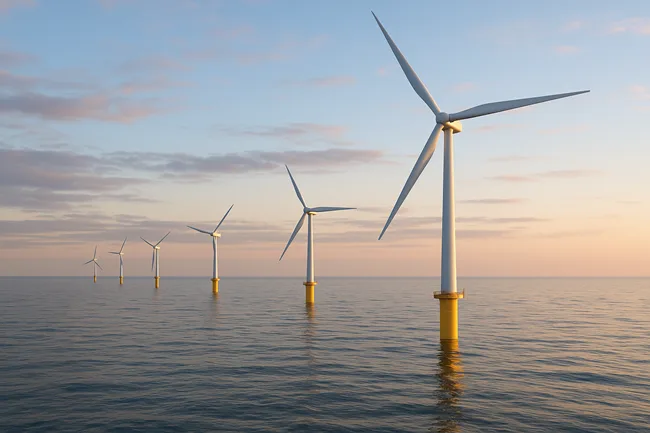
Siemens Gamesa reported a positive quarterly result for the first time since fiscal 2022, a milestone that Chief Executive Officer Christian Bruch highlighted as a fantastic team achievement. Gamesa has been the single largest overhang on the group narrative since the discovery of quality issues in onshore turbine platforms in 2023, the state-guarantee package that followed, and the successive rounds of provisions that erased shareholder value at the wind business.
For fiscal 2026, management now expects Gamesa to deliver comparable revenue growth of 3% to 5% and a profit margin before special items at break-even. A break-even year would validate the turnaround plan that combined selective onshore market withdrawal, offshore capacity investment, warranty containment and a reset commercial approach. The strategic significance goes beyond the segment. As long as Gamesa was loss-making, the sum-of-the-parts valuation of Siemens Energy was compressed by the wind subsidiary regardless of how well Gas Services or Grid Technologies performed. A sustained break-even, followed by any credible path to positive contribution, would allow the group multiple to rerate on the same underlying earnings.
The investor caution remains that a single positive quarter does not close the book. Offshore project execution, warranty accrual adequacy and the pace of onshore ramp all need to sustain into fiscal 2027 before Gamesa can be treated as a normalised earnings contributor rather than a recovering business.
What does the €162 billion order backlog mean for revenue visibility into fiscal 2027 and beyond?
At €162 billion, the order backlog is roughly four times fiscal 2025 revenue of €39.1 billion. That level of coverage is unusual outside long-cycle infrastructure, defence and rail, and it changes the analytical framework in three ways.
First, near-term revenue growth becomes more a function of capacity delivery and supply chain fluidity than of end-market demand. Second, the risk profile skews towards execution, warranty and margin adequacy rather than order shortfall. Third, the ability to be selective on new bookings, both in terms of customer credit quality and contractual terms, becomes a genuine lever for margin protection. Management has referenced disciplined order intake at Gas Services in prior communications, and the current book-to-bill of 1.57 suggests that even after any selectivity, incoming work continues to outpace deliveries.
For investors, the practical implication is that fiscal 2027 revenue is already substantially underwritten by contracts booked or in negotiation. The variables that will most affect fiscal 2027 profit are the mix of high-margin service and modernisation work within Gas Services, the ramp curve at newly expanded Grid Technologies plants and whether Gamesa can convert its break-even trajectory into modest positive contribution.
How is the raised outlook and cash conversion changing the shareholder-returns arithmetic at Siemens Energy?
The fiscal 2026 outlook, raised at the half-year and now expected to land near the upper end, points to net income of around €4 billion and free cash flow before tax of around €8 billion. Those numbers place Siemens Energy in a materially different cash generation category than the market assigned to it two years ago. The group has been active in the market with share buybacks, with public disclosures indicating repurchases of about 5.3 million shares between early June and the start of August, and a dividend payout that has resumed after the Gamesa crisis interrupted the group’s original capital return plan.
Management has not signalled any change to its stated capital allocation framework, which prioritises investment in capacity expansion, followed by shareholder returns. The strategic tension for the next twelve months is that both claims on cash are intensifying at the same time. Grid Technologies requires continued investment in transformer, switchgear and HVDC capacity to convert order backlog into revenue on time. Gamesa still needs to fund its own turnaround investments. And a €129 billion market capitalisation attracts institutional expectations for a rising, predictable return of capital.
Why is the supervisory board’s 25 August meeting on a possible spinoff a live variable for the investment case?
Reporting ahead of the print indicated that the Siemens Energy supervisory board plans an extraordinary meeting on 25 August to discuss a possible spinoff of a division serving industrial customers. Management has not publicly confirmed the terms or perimeter of any transaction, and any decision would remain subject to formal governance approvals and, potentially, shareholder consent. The most obvious candidate perimeter would be within the Transformation of Industry segment, which now guides for 5% to 7% comparable revenue growth and 11% to 13% margin, a growth and margin profile below the group average.
A separation, if it were to proceed, would need to be assessed on strategic fit, tax efficiency, standalone viability and the fate of shared engineering and service capabilities. The commercial rationale would be that a focused pure-play in transmission, generation and wind, without industrial process exposure, would command a cleaner multiple, and that the industrial business itself would benefit from a dedicated capital structure. The counter-argument is that Transformation of Industry provides useful cross-selling with Gas Services and Grid Technologies in decarbonisation projects. Investors will read the 25 August outcome for signal on both the perimeter under consideration and the timeline, neither of which has been officially confirmed.
How is the market pricing the record quarter given the recent share-price consolidation from the April high?
The shares traded around €150 on Wednesday, close to the previous session’s close, after an intraday range that extended above €154 and dipped below €149. The stock has retraced approximately 9% over the past week and sits roughly 21% below its 24 April 2026 all-time high of €191.66, while the 52-week low of €83.32 remains a reminder of how far the equity has already travelled. Market capitalisation stood at approximately €129 billion, and the average of published analyst price targets, according to consensus aggregators, was near €199, implying scope for further appreciation if execution meets guidance.
The muted immediate reaction to a record print is consistent with a stock that had already discounted a strong quarter. The valuation now embeds substantial confidence in the growth trajectory of Grid Technologies, the durability of the Gas Services order pipeline and a successful Gamesa turnaround. A sustained rerating from current levels would likely require either upward revisions to fiscal 2027 consensus, a favourable outcome from the 25 August board deliberations or evidence that pricing and margin can continue to expand as capacity comes online. Conversely, any execution setback at Gamesa, a slippage in Grid Technologies capacity ramp, or a disappointing announcement on the potential spinoff could invite a deeper consolidation.
What execution risks remain despite the record third-quarter results?
Three residual risks warrant attention. Capacity ramp at Grid Technologies is the single largest lever for converting backlog into fiscal 2027 revenue and profit, and any delay in commissioning of new transformer or high-voltage direct current facilities would compress the growth trajectory. Warranty and quality performance at Siemens Gamesa remains an ongoing test, particularly on legacy onshore platforms, and management has flagged that its outlook does not include charges related to any future legal and regulatory matters, a standard caveat that nonetheless reminds investors of the tail risk. Finally, the concentration of demand in the United States, while a positive today, introduces exposure to potential policy changes on data centre power, energy permitting and cross-border trade that could affect order timing.
None of these individually undermines the investment case at current guidance, but collectively they explain why a stock that has produced a record quarter can trade sideways on the day of the print.
Key takeaways from Siemens Energy’s record third quarter fiscal 2026 results
- Siemens Energy reported record Q3 FY 2026 order intake of €17.9 billion, revenue of €11.4 billion up 18.5% on a comparable basis, and profit before special items of €1.62 billion, more than three times the prior-year quarter
- Siemens Gamesa delivered a positive quarterly result for the first time since fiscal 2022 and management expects the wind business to reach break-even for the full year
- Free cash flow before tax rose to €2.32 billion from €419 million a year earlier, supported by strong cash-effective profit and customer advance payments on new orders
- The order backlog reached €162 billion, giving the group multi-year revenue visibility and shifting the operational bottleneck to capacity delivery rather than demand
- Grid Technologies is guided to grow comparable revenue 25% to 27% and deliver 18% to 20% margins in fiscal 2026, making it the most important profit lever for the raised outlook
- Fiscal 2026 guidance expects net income of around €4 billion and free cash flow before tax of around €8 billion, with profit margin before special items towards the upper end of the 10% to 12% range
- A supervisory board meeting on 25 August is reported to consider a possible spinoff of an industrial-facing division, though the perimeter and terms have not been officially confirmed
- The shares traded near €150 on the day of the print, roughly 21% below the April all-time high, with a €129 billion market capitalisation and average analyst targets near €199
- Residual execution risks centre on Grid Technologies capacity ramp, Siemens Gamesa warranty and quality performance, and the concentration of order growth in the United States
- The next measurable proof points are the outcome of the 25 August board meeting, fiscal fourth-quarter delivery against the raised guidance and evidence that Siemens Gamesa can extend a single positive quarter into a sustained break-even year
Discover more from Business-News-Today.com
Subscribe to get the latest posts sent to your email.