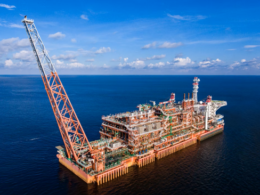
Shell shares rose 0.27% to 3,157p on Friday, May 15, 2026, with positioning steady ahead of the annual general meeting scheduled for Tuesday, May 19. The modest move belies a complex underlying picture in which Shell is benefiting from the Iran war energy price premium, integrating the $13.6 billion ARC Resources acquisition that establishes Canada as an upstream heartland, executing a fresh $3 billion buyback announced with the May 7 Q1 results, and managing the ongoing operational impact of the Iranian missile strike that took its Pearl gas-to-liquids facility in Qatar offline in March. Chief executive Wael Sawan’s stark assessment that the global oil market is short nearly 1 billion barrels due to the conflict has become a defining strategic narrative for the energy sector. The next major catalyst for shareholders is the May 19 AGM, where management will face shareholder questions on capital allocation, the ARC integration timeline, low-carbon strategy and the speed at which buybacks can be resumed after the ARC suspension window.
What does Shell actually own, and how has the Wael Sawan strategy reshaped the portfolio?
Shell is a London-headquartered integrated oil and gas company formed in 1907 from the merger of Royal Dutch Petroleum and the Shell Transport and Trading Company. The modern Shell organisation operates across upstream oil and gas, integrated gas including LNG, refining, marketing, chemicals and a residual low-carbon energy portfolio. The group employs approximately 84,000 people, operates in dozens of countries, and reported 2025 revenue of $284 billion with Q1 2026 revenue of $69.7 billion. The company is the world’s largest LNG trader, with a portfolio spanning the QatarEnergy partnership, Australian projects including Prelude FLNG and Gorgon, US Gulf Coast facilities, and growing positions in Eastern Mediterranean gas.
Since taking over as chief executive in January 2023, Wael Sawan has executed a clear strategic pivot. The energy transition strategy that defined the late-Ben van Beurden era has been dialled back in favour of disciplined upstream investment, aggressive shareholder returns and selective low-carbon participation. Shell has spent more than $3 billion a quarter on share buybacks for 14 quarters in a row, with the explicit objective of narrowing the valuation gap with US energy majors ExxonMobil and Chevron. The April 19, 2026 sale of Shell’s South African fuel retail business to ADNOC closed a 120-year presence in the country and exemplifies the focus on portfolio simplification. The May 7 announcement of the Jiffy Lube International sale for $1.3 billion alongside a long-term lubricants supply agreement continues that pattern.
The risk Sawan carries is that the Iran war-driven earnings boost is masking underlying strategic challenges. If Brent crude reverts from the current $90 to $100 range back to the pre-war $70 to $80 environment as US-Iran diplomatic progress accelerates, Shell’s reported earnings will compress meaningfully even as the ARC acquisition adds production. The Pearl GTL outage in Qatar is removing a high-margin integrated gas earnings stream that will not return for roughly a year, and the rebuild costs of just under $500 million will be felt in 2026 cash flow.
Why did Wael Sawan say the world is short nearly 1 billion barrels of oil, and what does it mean for Shell?
The most consequential energy market statement of the past month came from Sawan on the May 7 Q1 earnings call when he told analysts the world has dug itself a hole of close to a billion barrels of crude shortage, either from locked-in barrels stranded in tankers or unproduced crude. The shortfall has been replaced essentially by stock drawdown, with Goldman Sachs estimating that global inventories have been depleting at 11 to 12 million barrels per day. Sawan added that the hole is deepening every single day and that the journey back will be a long one.
The supply gap originates with the Iran war that began on February 28, 2026 when the United States and Israel attacked Iran. The conflict effectively blockaded the Strait of Hormuz, the narrow sea lane through which approximately 20% of global oil and 20% of LNG flowed pre-conflict. Persian Gulf oil output has fallen 57% from pre-war levels, with the International Energy Agency describing the disruption as the biggest in history. Brent crude surged from approximately $70 per barrel pre-war to a peak above $126, with the price oscillating between $90 and $130 over the past three months.
For Shell, the implications are mechanical. Every $10 sustained increase in average Brent prices adds approximately $2 billion to annual pre-tax operating profit, with trading desk performance providing additional upside in volatile periods. The Q1 print confirmed this dynamic, with adjusted earnings more than doubling from the previous quarter and rising 24% year-on-year. The risk is the reverse trade. Sawan himself noted that oil prices have fallen more than 10% since the start of the week on renewed hopes of a US-Iran agreement to end the war and reopen the Strait. A genuine peace deal would compress Shell’s earnings rapidly even as ARC integration costs and Pearl GTL repair costs continue to weigh on cash flow.
How does the $13.6 billion ARC Resources acquisition reshape Shell’s gas-weighted growth story?
The ARC Resources deal, announced alongside the Q1 results on May 7, is the largest Shell upstream acquisition since the 2016 BG Group merger. The transaction values ARC at $13.6 billion including approximately $2.8 billion of assumed debt, funded approximately 25% in cash and 75% in shares. The deal adds 370,000 barrels of oil equivalent per day of production, a significantly expanded position in Canada’s Montney basin, and establishes Canada as a strategic heartland for Shell’s upstream portfolio. Shell expects the acquisition to drive a 4% production compound annual growth rate to 2030.
The strategic logic is clear. The Montney basin produces predominantly condensate-rich natural gas with low decline rates, low operating costs and direct access to growing North American LNG export infrastructure including LNG Canada in which Shell holds a 40% stake. Sawan has framed the deal as strengthening Shell’s position in the global LNG supply chain at exactly the moment when Iran war disruption is exposing the structural under-supply of gas markets. The acquisition is expected to be free cash flow accretive from 2027 onward.
The execution risk is twofold. First, Shell’s buyback programme will be temporarily suspended around the ARC shareholder circular period due to UK and Canadian securities law requirements, removing the most visible shareholder return mechanism during a period of elevated cash generation. Second, the cash component of approximately $3.4 billion adds to net debt at a time when working capital has been outflowing significantly. Q1 net debt rose to $52.6 billion from $45.7 billion at end-Q4 2025, with gearing increasing to 23.2% from 20.7%. If commodity prices revert before ARC integration is complete, the deleveraging path could be slower than current guidance implies.
What is the operational impact of the Iranian missile strike on Shell’s Pearl GTL plant in Qatar?
The Pearl gas-to-liquids facility in Qatar is one of Shell’s flagship integrated gas assets, converting natural gas into high-value liquid fuels and lubricants. The plant was targeted during Iranian strikes on Qatari energy infrastructure in March 2026 as the Iran war escalated. Shell has confirmed that damage to a unit at Pearl will cost well below half a billion dollars to repair and that the facility could be approximately a year before returning to full service. Integrated Gas production for Q2 2026 is expected to range between 880,000 and 920,000 barrels of oil equivalent per day, down from 948,000 in Q4 2025.
The financial impact in Q2 and the rest of 2026 is meaningful but not destabilising. The Pearl outage removes approximately 5% of Shell’s gas production base for the year, partially offset by ARC integration once that completes. The repair cost of just under $500 million is manageable within the 2026 cash capital expenditure budget of $24 billion to $26 billion. The strategic implication is more important. The strike confirmed that energy infrastructure in the Gulf states is now exposed to direct kinetic attack from Iranian forces or proxies, fundamentally changing the risk profile of investments in the region.
The longer-term implications for Shell’s broader Middle East portfolio remain under assessment. Shell retains substantial gas interests in Oman, the Saudi-Kuwait Neutral Zone, and exploration positions across the region. The Iran war has not directly damaged these assets, but the insurance, security and operational continuity costs across the entire Gulf footprint have risen materially. Sawan acknowledged at the Q1 call that supply balances are set to be tight for the coming months, if not the next year-plus, language that suggests Shell does not expect a rapid normalisation of regional energy infrastructure operations.
What does the recent Bulgargaz LNG tender win tell investors about Shell’s LNG market positioning?
Shell won a tender from Bulgargaz, the Bulgarian state-owned gas utility, in May 2026 to supply LNG cargoes during the European peak winter heating season. The deal is operationally meaningful but strategically more important as a signal of Shell’s continued dominance of the European LNG buyer relationship base. Europe replaced approximately 40% of its pre-2022 Russian pipeline gas imports with LNG, with Shell handling a substantial share of those flows through its global LNG trading book.
The Iran war disruption to Qatari LNG has intensified European reliance on Atlantic basin LNG, primarily from the United States, with Shell’s portfolio approach allowing the group to optimise across multiple supply sources. The Bulgargaz win adds to a series of recent contract awards across Central and Eastern Europe where Shell’s reputation for reliable winter supply has commanded premium pricing. With European TTF gas prices averaging significantly above pre-war levels through 2026, the LNG marketing margin is structurally elevated for Shell relative to the 2019 to 2021 base period.
The risk is competitive. ExxonMobil, TotalEnergies, BP and the major US LNG developers including Cheniere Energy and Venture Global are all expanding LNG marketing footprints in Europe. Shell’s competitive moat rests on the scale and flexibility of its LNG trading book, the long-term Qatari relationship that survives the Pearl GTL incident, and the new Montney-to-LNG-Canada value chain that ARC enables. If gas prices revert with Iran war resolution, the LNG marketing margins will compress, though probably less than oil prices given the structural Asian and European demand for clean-burning gas.
How is the market currently pricing Shell against US peers and the implied earnings power?
Shell shares trade at 3,157p on the London Stock Exchange, with a market capitalisation of approximately £176 billion. The trailing 12-month price-to-earnings ratio sits at 13.23 times, with a 52-week range from 2,403.50p to 3,592p. The dividend yield, following the 5% increase to $0.3906 per share announced May 7, is approximately 4.0% at current prices, with the share buyback running at $3 billion per quarter providing additional shareholder return. Six analysts revised earnings estimates upward following the Q1 results, with full-year 2026 EPS projections now reaching $5.07.
The persistent valuation gap with US peers remains the central frustration for Shell investors. ExxonMobil and Chevron trade at price-to-earnings multiples typically 30% to 50% above Shell’s, despite similar underlying business mix and comparable capital return policies. The reasons for the discount are structural and include the UK dividend tax treatment, the larger European ESG-focused investor base reducing demand, the legacy of the Royal Dutch Shell domicile relocation, and the perception that European supermajors face tighter regulatory environments. Sawan has repeatedly stated that closing this gap is a strategic priority, but the gap has narrowed only modestly over his tenure.
The bull case anchors on the buyback as a continuous re-rating mechanism. Each quarter of $3 billion plus repurchases at multiples below intrinsic value transfers economic ownership from selling shareholders to remaining holders, mechanically increasing earnings per share even without operational growth. If buybacks were to be resumed at scale post-ARC integration in 2027, the trajectory could support a re-rating toward the 16 times P/E that the US peers command. The bear case is that without a US listing or fundamental structural change, the discount will persist regardless of capital return intensity.
What are the execution risks Wael Sawan faces over the next 12 months?
Sawan’s most immediate risk is the ARC Resources integration. Large upstream acquisitions have historically been one of the highest-risk corporate activities in the energy sector, with even successful deals taking 18 to 36 months to deliver promised synergies. The ARC deal is conceptually clean because the Montney asset base is well understood and the LNG Canada offtake provides a clear monetisation route, but the integration costs, regulatory approvals in Canada, and the share component dilution will all be tracked closely by investors.
The second risk is the oil price trajectory. Shell’s $90 to $100 average price assumption embedded in current consensus earnings forecasts depends on continued Iran war disruption or sustained OPEC+ production discipline. Sawan himself acknowledged that oil prices have fallen more than 10% in a week on US-Iran diplomatic hopes. Goldman Sachs’ base case sees Brent easing toward $80 per barrel by Q4 2026, which would represent a meaningful earnings reset from Q1 levels.
The third risk is the long shadow of the energy transition strategy. Shell remains committed to halving Scope 1 and 2 emissions under operational control by 2030 on a net basis, achieving near-zero methane emissions intensity by 2030, and reducing the net carbon intensity of products sold by 15 to 20% compared to 2016 levels. The May 19 AGM will see resolutions and shareholder questioning on these commitments, with climate-focused investor groups continuing to press for faster transition action. Sawan’s challenge is to balance the activist push for higher capital returns and upstream investment against the long-term reputational and access-to-capital implications of any further perceived retreat from climate commitments.
Why are retail investors on UK forums viewing Shell as a war-premium income play with optionality?
UK retail investor chatter on London South East, ADVFN and Stockopedia has been actively engaged with Shell over the past month. The dominant retail thesis is that the Iran war provides a sustained earnings tailwind, the $3 billion quarterly buyback compounds shareholder value, the 4% dividend yield is well-covered by cash flow, and the ARC acquisition adds long-duration gas reserves at a time when global energy markets are structurally short of supply. Forum participants have noted the persistent valuation gap with US peers and view the Sawan strategy as the most credible attempt at closing it in recent memory.
The bull case being articulated on retail forums points to four catalysts over the next 12 months. First, the May 19 AGM where management may provide additional colour on the buyback resumption timeline. Second, the H1 2026 results in late July, which will quantify the Pearl GTL impact and the early ARC integration progress. Third, the continued Iran war or any escalation, which would push Brent back toward the $126 peak and drive further earnings upside. Fourth, the longer-term LNG market tightness as new export capacity is needed to meet structural demand growth across Asia and Europe.
The bear case on the same forums centres on three concerns. First, the risk of rapid Iran war resolution that would compress oil prices and remove the trading desk earnings boost. Second, the ARC integration risk including the buyback suspension window. Third, the structural UK supermajor discount that has proved resilient to multiple management teams and strategic resets. The current share price near the upper end of the 52-week range gives limited margin of safety if any of these risks materialise.
Key catalysts and watchpoints for Shell shareholders heading into the May 19 AGM and beyond
- Shell shares rose 0.27% to 3,157p on May 15, 2026 as positioning steadies ahead of the annual general meeting scheduled for Tuesday, May 19, where management will face shareholder questions on capital allocation, ARC integration, and low-carbon strategy.
- Q1 2026 adjusted earnings of $6.9 billion more than doubled from $3.3 billion in the previous quarter and rose 24% year-on-year, the biggest quarterly profit in two years, with cash flow from operations excluding working capital of $17.2 billion.
- The $3 billion buyback announced May 7 runs for three months but will be suspended around the ARC Resources shareholder circular period, removing the most visible shareholder return mechanism during peak cash generation.
- The $13.6 billion ARC Resources acquisition adds 370,000 barrels of oil equivalent per day, establishes Canada’s Montney basin as a strategic heartland, and is expected to drive 4% production compound annual growth to 2030, with completion targeted before year-end.
- Chief executive Wael Sawan’s assessment that the global oil market is short nearly 1 billion barrels due to the Iran war has become a defining narrative for the energy sector, with Persian Gulf oil output down 57% from pre-war levels.
- The Pearl GTL facility in Qatar will be offline for approximately a year following the March Iranian missile strike, with repair costs of just under $500 million, and Q2 Integrated Gas production guided 3% to 7% below Q4 2025 levels.
- The 5% dividend increase to $0.3906 per quarter gives an annualised yield of approximately 4.0% at current prices, with the 40% to 50% distribution payout commitment providing visibility on capital returns through the cycle.
- Goldman Sachs’ base case sees Brent easing toward $80 per barrel by Q4 2026, which would meaningfully reduce Shell’s reported earnings even as ARC integration progresses, with oil prices having fallen more than 10% in a week on US-Iran diplomatic progress hopes.
Discover more from Business-News-Today.com
Subscribe to get the latest posts sent to your email.