
Seeing Machines Limited (AIM: SEE) is an Australian computer-vision company developing artificial intelligence systems that monitor drivers, vehicle occupants, commercial-fleet operators and pilots. Its technology combines cameras, embedded processing, optics and machine-learning algorithms to determine where a person is looking and whether fatigue, distraction, impairment or reduced engagement may increase accident risk. The company was founded in 2000, has traded on the London Stock Exchange’s AIM market since December 2005 and had 4,912,392,305 ordinary shares carrying voting rights in July 2026.
The Seeing Machines company profile has changed materially as its automotive programmes have moved from development into mass production. More than 6.1 million cars were on the road with its driver and occupant monitoring technology by March 31, 2026. Automotive production volumes reached a record 1,284,557 units during the third quarter of fiscal 2026, representing growth of 122% from the preceding quarter and 259% from the corresponding period a year earlier.
Automotive royalty revenue during that quarter exceeded the amount recorded across the entire first half of the financial year. The company also added approximately US$47 million of company-estimated initial lifetime programme value through a US$31 million European expansion, two Japanese manufacturer awards worth approximately US$11 million and a new European rear-view-mirror programme expected to generate approximately US$5 million. These estimates are not guaranteed backlog or immediate revenue because actual receipts depend on vehicle production volumes, launch schedules and programme duration.
The operational momentum is significant, but it does not remove the financial risk. Seeing Machines remained loss-making in its latest published financial period, held US$3.4 million of cash at December 31, 2025 and disclosed a material uncertainty related to its ability to refinance, extend or convert debt facilities before maturity. Its largest convertible note is due on October 4, 2026, and a completed refinancing had not been announced by August 1.
What does Seeing Machines do and how does its driver-monitoring technology work?
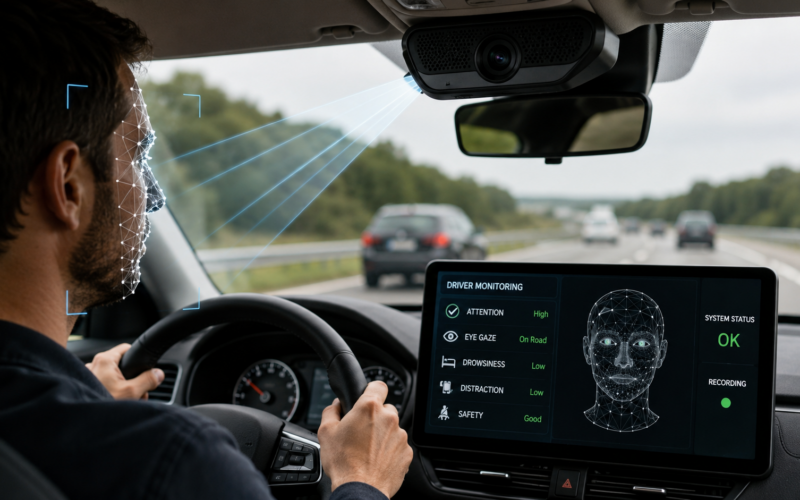
Seeing Machines develops technology that allows a vehicle or machine to measure and interpret the state of its human operator. Its systems analyse head position, eyelid movement, eye gaze and other behavioural signals under different lighting conditions, including when a person is wearing sunglasses. The resulting information can help determine whether the driver is attentive, distracted, drowsy or potentially impaired.
The technology can generate warnings when a driver looks away from the road for too long, shows signs of fatigue or fails to remain sufficiently engaged while an advanced driver-assistance system is operating. More advanced driver and occupant monitoring systems can also assess other people inside the cabin and support functions involving restraints, airbags, comfort, convenience and automated-driving handovers.
Seeing Machines does not manufacture complete passenger vehicles and generally does not supply the entire finished camera system. Its software and algorithms are commonly integrated through Tier 1 automotive suppliers, which combine the technology with cameras, processors, mirrors, cockpit electronics and other components before delivering the completed architecture to a vehicle manufacturer.
This creates a scalable but lengthy commercial cycle. Seeing Machines may work with a carmaker and Tier 1 supplier for several years before a vehicle reaches production. Engineering and development revenue can be irregular during that period, but a successful programme can later generate royalties across hundreds of thousands or millions of vehicles.

How did Seeing Machines move from research technology into global transport safety?
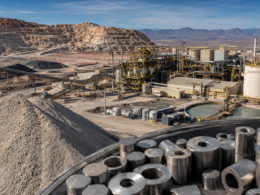
Seeing Machines was founded in Australia in 2000 after emerging from research associated with the Australian National University. The company initially focused on safety-critical settings where fatigue and distraction could create severe human and financial consequences. Mining equipment and heavy industrial fleets provided an early commercial market because operators could quantify the cost of accidents, equipment damage and lost production.
The company later extended its Guardian technology into commercial road transport and created a separate original-equipment automotive business. Automotive programmes offered substantially greater production volumes but required longer development periods, specialised hardware integration, safety validation and coordination with global vehicle manufacturers.
That transition gradually changed Seeing Machines from a provider of comparatively small numbers of aftermarket devices into an intellectual-property and software company embedded within mass-produced cars. Its automotive revenue model increasingly depends on royalties generated each time a vehicle containing its technology is manufactured.
The progression has not been smooth. Vehicle-launch schedules, engineering milestones, automotive production cycles and one-off licence payments have made reported revenue volatile. The long-term shift, however, is towards a higher contribution from per-vehicle royalties and recurring Guardian monitoring revenue rather than dependence on isolated engineering projects.
How does the Seeing Machines business model generate revenue?
Seeing Machines reports two principal operating segments. Its OEM division includes automotive and aviation activities, while Aftermarket includes Guardian fleet and off-road products, installations, monitoring services and Caterpillar-related income.
Automotive royalties are generated as vehicles containing Seeing Machines technology are produced. This is the most scalable part of the model because each additional vehicle can generate revenue without requiring the company to manufacture a corresponding complete hardware unit.
Non-recurring engineering revenue is earned while Seeing Machines develops, adapts and validates its technology for a particular customer or production programme. This revenue supports the work needed to launch future royalty-generating platforms, but it can decline when major development projects are completed.
Licence revenue is generated through agreements allowing partners to use Seeing Machines technology or intellectual property in defined products or markets. Licensing can produce substantial upfront cash receipts, but the income may be concentrated in particular periods and should not automatically be treated as recurring.
Guardian combines hardware and installation revenue with ongoing monitoring subscriptions. Seeing Machines said Guardian customer contracts typically span approximately 36 months, giving the company greater visibility as installed devices are connected and activated.
The overall model therefore contains several forms of operating leverage. Automotive royalties can rise as manufacturers increase production, Guardian can convert hardware installations into recurring service income, and licensing can monetise intellectual property without Seeing Machines manufacturing every final product.
Why did automotive production accelerate during fiscal 2026?
Seeing Machines reported 1,284,557 automotive production units for the quarter ended March 31, 2026. That compared with 578,363 units in the previous quarter and 358,162 units in the corresponding period of fiscal 2025. The number of cars on the road containing its technology increased to 6,103,288, up 88% from a year earlier.
The acceleration was partly connected to the European Union’s General Safety Regulation. From July 7, 2026, all new passenger cars and vans registered across the EU were required to include an advanced driver-distraction-warning system. Seeing Machines is positioned to address that regulated function through its camera-based driver-monitoring software, although the legislation mandates the safety capability rather than one particular supplier or technological architecture.
The implementation timetable encouraged vehicle manufacturers to increase fitment across broader model portfolios. This created an opportunity not only when manufacturers introduced entirely new cars, but also when they adapted existing vehicle platforms to satisfy the new requirements.
Seeing Machines said third-quarter automotive royalty revenue exceeded total royalty revenue for the first half of fiscal 2026. The comparison illustrates the operating leverage in the model because royalty income can increase rapidly once awarded programmes enter higher-volume production.
The company expected production volumes to rise again during the fourth quarter. Final fiscal 2026 results will be required to confirm whether the step-change was sustained and whether the higher royalties were sufficient to produce the positive second-half adjusted EBITDA anticipated by management.
What do the latest European and Japanese automotive awards add to the pipeline?
Seeing Machines secured a US$31 million expansion of an existing programme with a major European vehicle manufacturer in June 2026. The additional work extends its driver and occupant monitoring technology across more vehicle models in China, the United States and Europe, with production expected to begin during the second half of 2026.
The award shows how the economic value of an automotive programme can grow after the original contract. Once the technology has been validated and integrated, a manufacturer may extend it into additional models, geographic markets or vehicle platforms.
Two further awards involved separate Japanese carmakers. Seeing Machines will provide driver and occupant monitoring software through existing European and Japanese Tier 1 customers, with production scheduled to begin from 2028. The programmes cover single-camera and dual-camera architectures in steering-column and overhead-console positions and carry a combined estimated initial lifetime value of approximately US$11 million.
A July 2026 award added a European manufacturer programme through an existing Tier 1 supplier. Seeing Machines technology will be integrated into a rear-view-mirror solution across future vehicle platforms, including electric vehicles, with production expected from 2028. The company estimated approximately US$5 million of initial lifetime revenue.
These wins improve geographic and architectural diversity. Seeing Machines is participating in steering-column, overhead-console and mirror-based systems serving manufacturers in Europe and Japan and vehicle markets that include China and North America.
The limitation is timing. Programmes beginning production in 2028 may generate engineering activity before they create material royalty revenue. Estimated lifetime values may also change when manufacturers revise production volumes, models or launch dates.
Why is the rear-view mirror important to the Seeing Machines strategy?
The interior rear-view mirror provides a potentially attractive position for driver and occupant monitoring cameras because it can offer a broad view of the cabin and can be integrated into a component already installed in most passenger vehicles.
Seeing Machines entered an exclusive mirror-related collaboration with Magna International in 2022. Magna also provided a convertible-note facility of up to US$47.5 million, with the note scheduled to mature on October 4, 2026. The original collaboration included licence payments associated with mirror exclusivity.
The exclusivity provisions expired in June 2025. Seeing Machines consequently recorded materially lower licence revenue in the first half of fiscal 2026 because earlier exclusivity-related payments did not recur. The expiry also gave the company greater flexibility to pursue mirror-based opportunities through other Tier 1 suppliers and vehicle manufacturers.
The July 2026 European award confirms that rear-view-mirror integration remains commercially relevant after the end of the original exclusivity period. A mirror architecture may allow a carmaker to deploy monitoring across several vehicle lines while reducing engineering complexity.
Magna remains financially important because of the convertible note. Seeing Machines said in July that it had received multiple refinancing term sheets and was in advanced discussions with potential lenders, but the company had not entered final documentation or announced completion.
How does Guardian extend the business beyond passenger cars?
Guardian is Seeing Machines’ aftermarket monitoring system for commercial fleets, logistics operators, heavy vehicles and autonomous-driving test fleets. The technology monitors drivers and can provide alerts when fatigue or distraction is detected.
Guardian Generation 3 was developed to improve hardware economics, simplify installation and support wider integration with fleet systems. Hardware and installation revenue reached US$4.6 million in the first half of fiscal 2026, compared with US$2.3 million in the corresponding period, as Generation 3 deployments increased.
Guardian annual recurring revenue reached US$14.7 million by March 2026, up from US$14 million three months earlier and US$13.4 million in the comparable quarter. The measure represents the annualised value of ongoing monthly monitoring services from connected hardware and excludes Caterpillar.
Quarterly hardware sales can be volatile. Seeing Machines sold 3,764 Guardian units during the second quarter but 1,610 units during the third quarter after some expected sales shifted into the following period. Investors therefore need to assess device sales alongside connected units and recurring service revenue.
A US$3.8 million purchase order from a North American autonomous-driving company demonstrates another application. The Guardian Backup-driver Monitoring System supports fleets that still require a human safety operator while autonomous-driving technology is tested and expanded into additional markets.
Fully autonomous vehicles could eventually reduce the need for backup-driver monitoring. In the nearer term, however, many autonomous test and deployment programmes continue to require human supervision, creating a transitional market for Seeing Machines.
Why is the Caterpillar relationship commercially important?
Seeing Machines’ relationship with Caterpillar helped establish Guardian in mining and heavy equipment. The companies entered a revised five-year master licence and marketing agreement in June 2024, under which Caterpillar made an upfront US$16.5 million licence payment. The agreement also allowed Seeing Machines to pursue certain markets directly that had previously been restricted.
The Caterpillar agreement illustrates the attraction and accounting complexity of licensing. The payment strengthened liquidity and validated the value of Seeing Machines’ intellectual property, but only part of the fee was recognised as revenue immediately, with the balance recognised over the agreement period.
Caterpillar provides access to global mining customers and heavy-equipment distribution. Seeing Machines can also pursue additional on-road and commercial opportunities outside the fields retained by Caterpillar.
The relationship therefore adds scale and credibility to the Aftermarket business, although Caterpillar-related licence income should be distinguished from the separate Guardian annual recurring revenue measure.
How do Mitsubishi Electric Mobility and Valeo support international growth?
Mitsubishi Electric Mobility Corporation invested approximately £26.2 million, equivalent to about US$32.8 million at the transaction exchange rate, in Seeing Machines during December 2024. Mitsubishi later held 19.9% of the company’s voting shares and remained its largest disclosed shareholder in July 2026.
The relationship extends beyond capital. Mitsubishi and Seeing Machines are cooperating on automotive opportunities in Japan, Guardian distribution and possible applications in adjacent industries. The partnership gives Seeing Machines access to established Japanese customer relationships and automotive-market expertise.
Seeing Machines also acquired Berlin-based Asaphus Vision from Valeo in July 2024 for a fixed consideration of US$6 million. US$2 million was structured as two cash instalments, while US$4 million was linked to specified business outcomes, with any unpaid balance due by the fifth anniversary.
The acquisition added machine-learning specialists, data, intellectual property and a European engineering base. Seeing Machines and Valeo also established a wider strategic collaboration involving driver and occupant monitoring.
These relationships allow Seeing Machines to remain focused on perception software and human-state measurement while Tier 1 companies handle cameras, electronics, vehicle integration and production. The trade-off is dependence on partners for customer access, hardware quality and programme execution.
What do the latest Seeing Machines financial results reveal?
Seeing Machines reported unaudited adjusted revenue of US$23.4 million for the six months ended December 31, 2025, down 8% from US$25.3 million a year earlier. The decline reflected reduced non-recurring engineering activity and lower licence income following the conclusion of certain collaboration and exclusivity arrangements.
OEM adjusted revenue declined 26% to US$10.7 million, although high-margin automotive royalty revenue increased 33% to US$8.4 million. Aftermarket adjusted revenue rose 18% to US$12.7 million, supported by Guardian Generation 3 hardware and installations.
Gross profit declined slightly to US$13.3 million from US$14 million, while gross margin increased to 58% from 55%. The adjusted EBITDA loss narrowed to US$13.7 million from US$17.7 million, but the statutory loss after tax widened to approximately US$22.5 million from US$18.2 million.
Operating activities used approximately US$15.4 million of cash during the half. Cash and cash equivalents fell from US$22.6 million at June 30, 2025 to US$3.4 million at December 31.
Seeing Machines subsequently received an accelerated royalty payment of approximately US$14.2 million from an automotive customer and entered an A$11 million receivables-financing facility with HSBC Bank Australia. The accelerated royalty amendment also created future payment obligations of approximately US$3.2 million.
The company’s borrowings were classified as current liabilities as the convertible note approached maturity. The US$47.5 million principal note also carries interest and conversion terms, meaning the economic cost of any refinancing must be judged through interest rates, maturity, security and possible equity-linked features rather than principal value alone.
Why does the going-concern disclosure matter to investors?
Seeing Machines’ interim financial statements were prepared on a going-concern basis, but the directors disclosed a material uncertainty. The company said its ability to continue as a going concern depended on successfully refinancing, extending or converting the relevant debt facility before its October 2026 maturity.
The accelerated royalty receipt and receivables facility improved short-term liquidity, but the directors said those mitigating measures did not remove the uncertainty. They warned that an inability to refinance or extend the facilities could cast significant doubt on the group’s ability to continue as a going concern.
This does not mean failure is inevitable. The July update said Seeing Machines had received multiple term sheets and expected to complete refinancing well before maturity. It does mean that the refinancing is more than a routine balance-sheet exercise and represents the company’s most important near-term financial risk.
The final terms will affect future shareholder value. A conventional loan may increase cash interest costs, while a convertible or warrant-linked structure could create dilution. Security over assets and restrictive covenants could also reduce financial flexibility.
When could Seeing Machines become profitable and cash-generative?
Management expected adjusted EBITDA to become positive during the third quarter and across the second half of fiscal 2026. The record automotive volumes and accelerating royalty revenue support that expectation, but final full-year results had not been published by August 1.
Company-published analyst consensus forecasts underlying revenue of US$78.5 million and an adjusted EBITDA loss of US$3 million for fiscal 2026. Consensus increases to US$103.4 million of revenue and US$16 million of positive adjusted EBITDA in fiscal 2027, followed by US$127.5 million of revenue and US$27.7 million of adjusted EBITDA in fiscal 2028. These figures represent analyst estimates rather than formal company guidance.
The path to profitability depends on revenue mix as much as headline revenue. Engineering work and Guardian hardware carry delivery costs, while incremental automotive royalties and monthly monitoring services can offer stronger margins.
The third-quarter production surge suggests that mix may be improving. Royalty revenue exceeded the entire first-half amount, while operating costs had already been reduced through restructuring.
Adjusted EBITDA profitability would not automatically produce positive free cash flow. Working-capital movements, research and development expenditure, finance costs and debt repayments may continue to consume cash even after the operating measure turns positive.
How has the Seeing Machines share price performed in 2026?
Seeing Machines shares ended July 2026 at approximately 4.50 pence, around 16% below the December 31, 2025 closing price of approximately 5.36 pence. The stock remained below its 52-week high of 6.48 pence and above its 52-week low of 2.40 pence.
Applying the late-July share price to the company’s 4.912 billion voting shares produces an indicative equity-market value of approximately £221 million. Some market-data providers display different capitalisations because they use older issued-share counts or different price timestamps.
The stock closed at approximately 4.78 pence on July 24 before ending the month near 4.50 pence, implying a decline of roughly 6% over the final five trading sessions. It was nevertheless about 5% above its June 30 closing price of approximately 4.27 pence.
A price-to-earnings ratio is not meaningful because Seeing Machines remained loss-making. Investors are valuing the company primarily on future royalties, Guardian recurring revenue, regulatory adoption and the possibility of achieving sustainable positive cash flow.
The share price also reflects the refinancing uncertainty. Completion on manageable terms could remove a material overhang, while delay, high interest costs or an equity-linked structure could weaken per-share value.
Who owns and leads Seeing Machines?
Paul McGlone serves as chief executive officer, while Kate Hill is chair. Seeing Machines is incorporated in Australia, meaning shareholder rights are governed primarily by Australian corporate law, its constitution and AIM requirements rather than the same framework that applies to a UK-incorporated company.
Mitsubishi Electric Mobility Corporation held 19.9% of voting shares as of July 2026. Lombard Odier Asset Management held 7.94%, Gruppo Generali held 6.48%, VS International Venture held 3.87% and Herald Investment Management held 2.63%.
Mitsubishi’s holding provides strategic credibility and is close to the general 20% control threshold referenced under Australian takeover law. The company notes that investors moving above 20% would generally need to rely on a permitted exception or make a takeover offer.
Seeing Machines employed 353 full-time-equivalent employees at December 31, 2025, compared with 365 at June 30. The lower cost base is intended to allow additional royalty revenue to flow more directly into earnings.
How does Seeing Machines compare with Smart Eye and other competitors?
Seeing Machines competes with Smart Eye AB, Cipia Vision Ltd., Tier 1 automotive suppliers and technology developed internally by vehicle manufacturers.
The company said it retained more than 50% of current automotive DMS production volumes during the first half of fiscal 2026. That is a company-generated market-share assessment rather than an independently audited industry figure, but the presence of its technology in more than six million vehicles demonstrates meaningful production experience.
Its competitive strengths include a large human-behaviour dataset, established carmaker programmes, experience with regulatory requirements and the ability to operate across different camera positions, processors and vehicle architectures.
The principal competitive risk is commoditisation. As driver monitoring becomes standard equipment, manufacturers may pressure software royalty rates or select lower-cost solutions that satisfy minimum regulatory requirements.
Tier 1 suppliers could also develop or acquire competing software. Seeing Machines addresses some of that risk by working with multiple integration partners, including Magna, Valeo and Mitsubishi, rather than relying on a single route to market.
What are the biggest risks facing Seeing Machines?
Refinancing is the most immediate risk. The Magna convertible note matures on October 4, 2026, and the interim financial report included a formal material uncertainty related to going concern. Multiple term sheets do not constitute completed financing.
Liquidity remains closely connected to that process. Cash was only US$3.4 million at the half-year date, although the subsequent accelerated royalty payment and receivables facility provided additional resources.
Automotive programme timing creates another major risk. Awards can take years to enter production, while manufacturers may reduce estimated volumes, delay launches, discontinue models or change geographic plans. Lifetime programme values are management estimates rather than guaranteed sales.
Customer and partner concentration can affect execution. Seeing Machines depends on Tier 1 suppliers to integrate its software and vehicle manufacturers to produce the underlying models at expected volumes.
Competition could pressure royalties as monitoring technology becomes more widely available. Semiconductor and camera suppliers may offer increasingly integrated products, while carmakers may seek greater internal control over the cabin-software stack.
The European regulatory catalyst is also not unlimited. Once advanced distraction-warning systems become embedded across the new-vehicle fleet, longer-term growth will depend on global adoption, richer occupant-monitoring functions, autonomous-driving applications and market-share gains.
Privacy and cybersecurity remain important. In-cabin cameras may concern drivers and passengers, particularly when it is unclear whether images or behavioural information are stored, transmitted or shared. Strong local processing, cybersecurity and transparent data policies are therefore commercially important.
What is the growth outlook for Seeing Machines through 2027?
Seeing Machines enters fiscal 2027 with stronger operating momentum than its first-half income statement suggests. Automotive production accelerated sharply, EU safety rules took effect and new programmes broadened the customer and technology pipeline.
The first test is the publication of full fiscal 2026 results. Investors need confirmation that the third-quarter volume surge continued during the fourth quarter and that the company achieved the positive second-half adjusted EBITDA expected by management.
The second test is refinancing. Completion before October would address the largest immediate balance-sheet uncertainty, but investors will need to examine the interest rate, maturity, covenants, security arrangements and any conversion or warrant rights.
Automotive royalties should remain the principal growth engine. Existing production programmes can benefit from wider regulatory fitment, while the US$31 million European expansion was expected to begin production during the second half of 2026.
Guardian provides a complementary path through hardware installations and recurring monitoring income. Mitsubishi distribution, autonomous-driving test fleets and commercial-vehicle applications could extend the platform beyond its traditional mining and transport base.
The Japanese and new rear-view-mirror programmes strengthen the longer-term pipeline but are not expected to reach production until 2028. Their immediate importance is strategic because they validate new customer relationships, camera positions and Tier 1 routes to market.
Seeing Machines has spent more than two decades building human-monitoring technology. The automotive market has moved closer to its original proposition as regulation, advanced driver-assistance systems and autonomous testing make reliable measurement of driver attention increasingly important.
The investment case now rests on financial execution rather than proving that the technology has a market. Seeing Machines must convert more than six million vehicles, expanding royalties and global partnerships into sustainable earnings and positive cash generation. Successful refinancing and continued production growth could move the company from a long-running development story into a scalable automotive-software business. Failure to address the debt maturity or deliver the expected operating leverage would leave shareholders exposed to renewed funding and dilution risk.
Discover more from Business-News-Today.com
Subscribe to get the latest posts sent to your email.