Scatec ASA (Oslo Børs: SCATC), the Norwegian renewable energy developer and operator, has advanced financing arrangements for the approximately $650 million Dandara solar and battery storage project in southern Egypt, strengthening its position in a market that is becoming increasingly important to its international growth strategy. Announced by Egyptian authorities on October 26, 2026, the development involves approximately 1 GW of solar generation and 200 MWh of battery storage, with the European Investment Bank, European Bank for Reconstruction and Development and African Development Bank participating in financing arrangements. The project will be implemented in two phases and is intended to supply a substantial portion of the electricity requirements of Egypt Aluminium Company, supporting the country’s industrial decarbonisation objectives. However, the financing agreements remain preliminary, while Scatec has separately reduced its 2026 power production EBITDA forecast by NOK 300 million, leaving investors to weigh future project growth against immediate operating and financial pressure.
What financing arrangements have been announced for Scatec’s $650 million Dandara solar project?
The latest development involves agreements supporting the financing and implementation of the Dandara project in Nagaa Hammadi, Qena Governorate. The estimated overall project investment is approximately $650 million, reflecting the scale of the planned solar generation and battery storage infrastructure. The agreements involve international development finance institutions alongside Egyptian financial and electricity-sector organisations.
The European Investment Bank, European Bank for Reconstruction and Development and African Development Bank are participating in the financing arrangements. Separate agreements address the project’s electricity grid connection and the participation of the National Bank of Egypt as an investor in the project company. These structures combine potential project debt, institutional equity and infrastructure arrangements.
The October signing should not be described as full financial close or evidence that the complete $650 million has already been disbursed. Preliminary agreements and individual lender approvals are important development milestones, but the availability and timing of cash depend on definitive documentation and applicable conditions. The financing amount also represents the project’s estimated total investment rather than a single loan advanced by one institution.
The African Development Bank previously approved financing of up to $66 million for Dandara’s initial phase, comprising $46 million from its ordinary resources and $20 million in concessional financing from the Climate Investment Funds. The European Bank for Reconstruction and Development has also considered a senior loan of up to $80 million for the first phase. These commitments should be assessed within the overall financing structure, without adding them mechanically to the $650 million project value as though they represent separate projects.
The next financial milestone will be confirmation of the final debt and equity arrangements. That would clarify how much capital Scatec itself must contribute and when construction expenditure will be funded.
How will the 1 GW solar and 200 MWh storage project be developed in two phases?
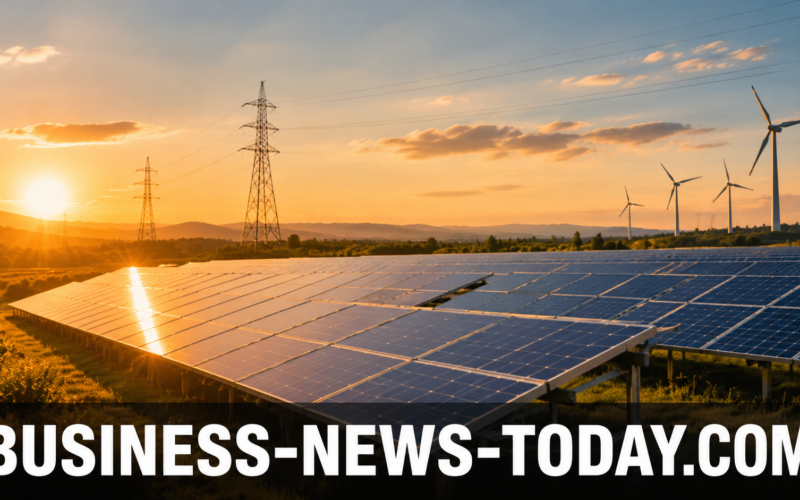
The Dandara project is planned around approximately 1,000 MW of solar generation capacity and 200 MWh of battery energy storage. Egyptian authorities have described two phases, each involving approximately 500 MW of solar generation and 100 MWh of storage. This structure allows the project to progress in stages rather than requiring every component to become operational simultaneously.
The European Investment Bank’s earlier project documentation describes approximately 1.1 GWp of solar photovoltaic capacity and a 50 MW/200 MWh battery configuration. The difference between the 1 GW and 1.1 GWp solar figures reflects project descriptions using different capacity references, with gigawatt-peak commonly used for the direct-current rating of photovoltaic modules. These figures should not be treated as two separate generating projects.
The battery component provides flexibility in the timing of electricity deliveries. However, the latest government announcement specifies storage energy capacity rather than a revised power output for each phase. A precise discharge duration should therefore be tied to the confirmed technical configuration rather than inferred from the solar generation rating.
Construction in two phases may help coordinate investment, equipment procurement and customer delivery requirements. It also creates the possibility that the first phase could begin generating electricity before the entire project is completed. However, the October announcement does not establish a confirmed commercial operation date for either phase.
The project’s development will require photovoltaic modules, inverters, battery equipment, grid connection infrastructure and associated civil works. Procurement costs and construction performance will be important to the final capital requirement.
Why is Egypt Aluminium Company central to the commercial economics of the Dandara development?
Dandara is intended to supply electricity to Egypt Aluminium Company, also referred to as EgyptAlum, a major industrial electricity consumer. Egyptian authorities expect the completed project to meet approximately one-third of the company’s electricity needs. The arrangement therefore links renewable generation investment with industrial electricity procurement rather than relying exclusively on sales into an undifferentiated wholesale market.
The initial phase benefits from a long-term power purchase agreement involving EgyptAlum. European Bank for Reconstruction and Development documentation describes a 25-year take-or-pay arrangement, supported by electricity transmission arrangements. Such a structure can improve revenue visibility because it establishes a contractual customer relationship and defined purchase obligations.
However, long-term revenue visibility does not eliminate counterparty and operating risks. The financial strength of the customer, electricity delivery performance and contractual payment conditions will influence project cash generation. The announcement does not disclose the tariff applicable to the entire development, preventing a reliable independent revenue forecast.
The project could reduce the aluminium producer’s exposure to electricity generated from fossil fuels. That may have commercial relevance where export customers and regulatory frameworks place increasing emphasis on the emissions intensity of industrial production. Nevertheless, the amount of emissions reduction will depend on the electricity actually delivered and the generation it displaces.
Industrial renewable power projects may be particularly attractive where customers have relatively consistent electricity demand and an interest in securing long-term pricing. The Dandara project could provide an important reference for similar arrangements if it demonstrates reliable electricity supply and attractive project economics.
How does Scatec’s new EBRD investment platform change the financing of its Egyptian projects?
On October 22, Scatec announced a separate agreement with the European Bank for Reconstruction and Development to establish a renewable energy investment platform focused on Egypt. The platform is structured with 60% ownership by Scatec and 40% by the development bank. The European Bank for Reconstruction and Development has committed up to $221 million, including approximately $170 million in equity and the remaining amount in project-level guarantees.
The platform is intended to hold interests in several developments, including Obelisk, Shadwan, Energy Valley and Dandara’s first phase. Scatec expects the platform to hold approximately 60% of the first-phase Dandara project alongside other minority investors. These are proposed ownership structures within the investment platform rather than a statement that the development bank directly owns 60% of Dandara.
The arrangement provides a way to share equity requirements across an institutional partnership. Scatec can potentially continue developing and managing projects while reducing the amount of capital it must fund entirely from its own resources. However, greater participation by third-party investors also changes the proportion of project earnings and cash flows attributable to Scatec’s shareholders.
The platform’s financial commitment should not be added to the Dandara project value as though all $221 million represents additional spending exclusively on Dandara. It covers a broader portfolio of Egyptian renewable developments and includes guarantees as well as equity commitments. Actual deployment will depend on individual project arrangements.
Scatec intends to retain development, engineering, procurement, construction and asset management roles across the projects. This creates potential earnings opportunities from project delivery and management services in addition to ownership interests, although the profitability of these activities must be evaluated separately.
Why did Scatec cut its 2026 EBITDA outlook despite expanding its Egyptian renewable portfolio?
Scatec announced on October 21 that it had reduced its full-year 2026 power production EBITDA estimate by NOK 300 million to a range of NOK 3.3 billion to NOK 3.6 billion. The revised outlook reflects several adverse developments across its operating portfolio. These factors involve existing generating assets rather than the newly announced Dandara financing arrangements.
In Ukraine, intensified attacks on energy infrastructure have disrupted operations and delayed repairs to a power plant damaged during 2025. In the Philippines, the suspension of the ancillary-services reserves market has affected the commercial environment for relevant assets. Scatec also identified a delayed battery connection in South Africa and a postponed tariff true-up process in Pakistan.
Foreign exchange movements have added pressure because several operating currencies have weakened relative to the Norwegian krone. These changes can reduce reported earnings when foreign operations are translated into the company’s reporting currency. The combination of operational disruptions, regulation and currency exposure makes the revised EBITDA estimate a broader portfolio issue rather than a single-project problem.
The timing of Dandara’s financing announcements creates a contrast between near-term earnings weakness and future investment opportunities. Additional project development can strengthen the company’s long-term earnings base, but it does not immediately reverse lost revenue or delayed cash generation from existing assets.
The latest transactions must therefore be assessed alongside the company’s current operating performance. Successful development in Egypt could provide growth, while continuing challenges elsewhere may influence the amount of financial flexibility available to fund that growth.
What does Scatec’s share-price recovery mean ahead of its October 30 earnings results?
Scatec shares closed at NOK 80.25 on October 26, gaining approximately 4.15% from the previous session’s NOK 77.05 close. However, the stock had fallen sharply on October 22, closing at NOK 76.85 compared with NOK 101 the preceding day. The subsequent recovery therefore occurred after a substantial market decline rather than representing a return to pre-downgrade trading levels.
The earlier weakness coincided with Scatec’s reduced earnings outlook, making the revision an important part of the market context. Nevertheless, the precise share-price movement cannot be attributed exclusively to one announcement without accounting for wider trading conditions.
Scatec is scheduled to report its third-quarter results on October 30. Those results should provide greater detail concerning operating performance, financial obligations and the impact of the developments behind the guidance reduction. Updated information on project financing and capital commitments would also help investors assess the Egyptian growth programme.
Dandara could become an important source of industrial renewable electricity in Egypt while strengthening Scatec’s project portfolio. The investment case will improve as financing reaches definitive completion and the company demonstrates that new project growth can support future earnings without excessive capital requirements.
Key takeaways on Scatec’s $650 million Dandara solar financing and earnings outlook
- Egypt announced financing and implementation agreements for Dandara on October 26.
- The estimated total project investment is approximately $650 million.
- The development involves around 1 GW of solar generation and 200 MWh of battery storage.
- Construction is planned in two phases of approximately 500 MW each.
- International financing institutions include the European Investment Bank, European Bank for Reconstruction and Development and African Development Bank.
- Egypt Aluminium Company is expected to receive approximately one-third of its electricity requirements from the completed project.
- Scatec separately established a 60:40 investment platform with the European Bank for Reconstruction and Development.
- The bank committed up to $221 million to the wider investment platform.
- Scatec reduced its 2026 power production EBITDA estimate by NOK 300 million.
- Shares closed at NOK 80.25 on October 26, with third-quarter earnings scheduled for October 30.
Discover more from Business-News-Today.com
Subscribe to get the latest posts sent to your email.