

Bajel Projects Limited (NSE: BAJEL, BSE: 544042), the Mumbai-based power transmission engineering and infrastructure company, has secured contracts valued at approximately ₹1,500 crore for a major electricity transmission development supporting renewable energy evacuation in Gujarat. Announced on October 26, 2026, the awards from Lakadia A Power Transmission Limited cover approximately 270 kilometres of 765 kV double-circuit transmission lines between Halvad and Vadodara, together with additional works at three substations. The development forms part of a wider transmission system intended to evacuate approximately 14 GW of renewable energy from the Lakadia, Jam Khambhaliya and Jamnagar regions, with execution scheduled over 36 months. Although Bajel describes the awards as its largest transmission contract to date, the transaction has an additional financial dimension because Bajel owns 26% of the infrastructure developer’s parent company, making related-party governance, construction margins and project financing important considerations.
Why is Bajel Projects building a 765 kV transmission corridor between Halvad and Vadodara in Gujarat?
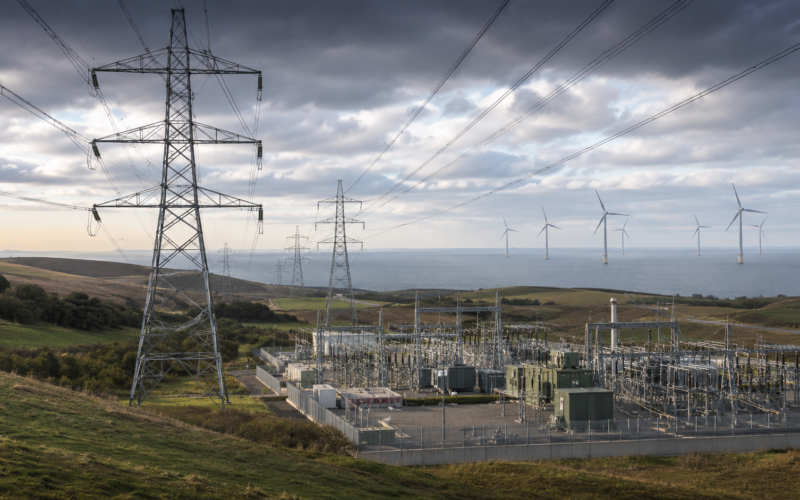
The contracts cover a substantial high-voltage transmission development designed to move electricity from renewable generation regions toward the wider grid. Gujarat has attracted extensive solar and wind investment, creating demand for infrastructure capable of transporting power from locations with strong renewable resources to electricity consumption centres. Large transmission corridors are necessary because available generation capacity cannot deliver its full system benefits without adequate network connectivity.
Bajel’s scope includes approximately 270 kilometres of 765 kV double-circuit transmission lines from Halvad to Vadodara. The company will also undertake additional engineering and construction works at the Halvad, Vadodara and South Olpad substations. The combination of transmission lines and substations makes the contract a more comprehensive infrastructure assignment than a standalone overhead-line construction package.
The wider programme supports electricity evacuation from Lakadia Phase II, involving 7.5 GW, Jam Khambhaliya Phase II, involving 5.5 GW, and Jamnagar Phase I, involving 1 GW. These regional allocations total 14 GW, providing the basis for the programme’s renewable energy capacity reference. However, the stated capacity describes the wider evacuation system and should not be presented as the capacity of a single Bajel-built transmission line.
High-voltage transmission projects of this scale require land access, tower foundations, conductor installation and coordination with substation construction. Their delivery schedules depend on procurement, rights of way, weather conditions and the readiness of connected network infrastructure. The 36-month period begins from the contractual order date rather than constituting a guarantee of completion by a particular calendar date independent of future developments.
What does the ₹1,500 crore contract value mean for Bajel Projects’ revenue and order book?
Bajel disclosed that the combined value of the letters of award is approximately ₹1,500 crore, including goods and services tax. This distinction matters because the gross contract amount should not automatically be treated as an equivalent amount of accounting revenue. The ultimate revenue recognised will depend on the applicable accounting treatment, including the exclusion of tax collected on behalf of the government.
The company classifies the awards as an ultra-mega order under its internal categorisation framework. It also describes the transaction as its largest transmission order so far, suggesting a substantial increase in the scale of individual projects it can undertake. However, the order’s profitability will depend on procurement costs, construction productivity and the contractual payment structure rather than its headline size alone.
Spread evenly over the 36-month execution period, ₹1,500 crore would represent an illustrative gross contract run rate of ₹500 crore annually. That is not management’s revenue guidance, because construction contracts normally recognise revenue according to project progress rather than in equal monthly or annual instalments. Substation equipment procurement and major line-construction milestones could result in uneven revenue recognition across reporting periods.
The project may provide substantial manufacturing and engineering workload for Bajel’s transmission business. Nevertheless, large contracts can require significant working capital to procure materials and mobilise construction resources before all customer payments have been received. Advance payments, billing milestones and supplier credit will influence the extent of financing needed during execution.
The company has not disclosed a project-specific EBITDA margin or expected net profit. Consequently, the order should be assessed as a substantial addition to future business activity rather than an immediately quantifiable increase in earnings attributable to shareholders.
How does Bajel’s 26% ownership in AnantGrid change the economics and governance of the award?
The contractual structure is particularly relevant because Lakadia A Power Transmission Limited is held through AnantGrid Projects One Private Limited. AnantGrid is owned 74% by the National Investment and Infrastructure Fund and 26% by Bajel Projects. The developer secured the wider transmission project through a tariff-based competitive bidding process in August 2026.
Bajel therefore participates in the infrastructure development arrangement as a minority investor while also receiving engineering, procurement and construction contracts. This creates two different potential economic interests: construction-related earnings from delivering infrastructure and investment-related exposure through the company’s ownership in the project developer.
The two interests should not be combined into a single assumed profit stream without considering the applicable financial and accounting arrangements. Construction margins depend on Bajel’s contract execution, while returns on its investment in the developer depend on the infrastructure project’s financing, operating obligations and eventual cash distributions.
Bajel explicitly disclosed that the awards fall within related-party transactions. The company stated that they were undertaken on an arm’s-length basis and that prior shareholder approval had been obtained. The disclosure identifies an important governance framework, but it does not independently establish that the contracted margin or project returns will be attractive.
The ownership structure also creates potential financing requirements separate from the engineering contracts. Bajel’s 26% stake does not mean it must fund 26% of every expenditure through immediate cash equity contributions, because project-level financing and shareholder arrangements may determine funding obligations differently. The eventual capital commitments will depend on the developer’s financial structure.
The commercial evaluation must therefore consider the construction company’s profitability alongside any investment commitments and long-term infrastructure returns associated with AnantGrid.
What challenges could affect execution of the 270-kilometre renewable transmission project?
A 765 kV double-circuit line is technically substantial infrastructure, requiring specialised towers, electrical equipment and coordinated installation. The length of the corridor means construction may encounter differing terrain, land access requirements and local conditions across the route. Delays in obtaining rights of way or completing individual sections could affect overall project progress.
Substation works create additional dependencies because electricity transmission infrastructure must operate as an integrated network. Line construction and the development of connected substation equipment need to remain sufficiently aligned for the system to become operational. A completed line without the necessary connected facilities cannot automatically deliver its intended power evacuation capability.
Material procurement will be another important consideration. Steel, conductors, insulators and electrical equipment can represent substantial components of project expenditure, while delivery schedules may affect construction productivity. Bajel will need to manage these requirements within the contract’s agreed commercial terms.
The engineering contracts also create exposure to execution risk over three years. Productivity improvements may support margins, but delays, cost inflation or contractual disputes could reduce the financial benefit of the order. No project-specific cost contingency or inflation-adjustment mechanism has been disclosed in the announcement.
Successful delivery could improve Bajel’s credentials in high-voltage renewable-energy transmission projects. However, the strongest evidence of commercial performance will be the company’s ability to complete the works within the contract timetable while recognising profitable revenue and generating positive cash flow.
How are Bajel Projects shares performing ahead of the market’s response to the new order?
Bajel Projects shares closed at ₹156.05 on the National Stock Exchange on October 26, gaining approximately 1.67% from the previous session’s ₹153.48 close. The stock traded between ₹150 and ₹157.33 during the session, following a period of relatively weak performance earlier in October. These figures provide a market reference but not a confirmed reaction to the ₹1,500 crore announcement.
The company submitted its detailed exchange disclosure after normal Indian market trading hours on October 26. Consequently, the closing-price movement should not be presented as evidence that investors had already priced in the announced contract. The first regular trading session following the disclosure will provide a clearer initial market response, although broader market conditions may also influence the share price.
The contract is strategically meaningful because it increases Bajel’s exposure to Gujarat’s renewable transmission infrastructure programme. Its shareholder value will depend on profitable execution and the financial consequences of Bajel’s investment in the associated project developer.
A strong outcome would involve timely completion, acceptable contract margins and sustainable returns from the development structure. The next measurable evidence will come from construction progress, cash conversion and disclosures that clarify Bajel’s continuing project-level investment commitments.
Key takeaways on Bajel Projects’ ₹1,500 crore Gujarat transmission contract
- Bajel secured multiple transmission contracts worth approximately ₹1,500 crore including GST.
- The awards were announced on October 26, 2026.
- The scope covers approximately 270 kilometres of 765 kV double-circuit transmission lines.
- Additional works are planned at Halvad, Vadodara and South Olpad substations.
- The wider system is intended to evacuate approximately 14 GW of renewable generation.
- Contract execution is scheduled over 36 months.
- Lakadia A Power Transmission is held through AnantGrid Projects One.
- Bajel owns 26% of AnantGrid, while the National Investment and Infrastructure Fund owns 74%.
- Bajel disclosed the awards as arm’s-length related-party transactions with prior shareholder approval.
- Profitability, project financing and construction progress will determine the financial outcome.
Discover more from Business-News-Today.com
Subscribe to get the latest posts sent to your email.