
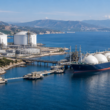
Avanti Helium Corp. (TSXV: AVN, OTC: ARGYF), the Calgary-based helium exploration and development company, has reported substantial progress at its Sweetgrass project in Montana, with civil construction largely completed and natural gas gathering infrastructure installed ahead of helium recovery plant assembly. Announced on October 26, 2026, the update confirms that construction of the processing building is underway, with completion targeted for early November and major equipment scheduled to be transported to the site for installation. The announcement follows the United States Department of Energy’s October 23 decision to designate helium as a critical material, reflecting its importance to semiconductor production, advanced manufacturing and other technologies requiring highly specialised gases. Although the construction milestones improve the project’s physical readiness, commercial helium production has not yet begun, leaving equipment installation, commissioning, operating performance and sales arrangements central to the company’s financial outlook.
What construction milestones has Avanti Helium completed at the Sweetgrass project in Montana?
Avanti has substantially completed the civil works and site preparation required for the Sweetgrass helium processing facility. The company has also commenced construction of the building intended to accommodate helium recovery and purification equipment. These developments move the project beyond the earliest infrastructure stage but do not yet establish that the processing plant is mechanically complete.
The gathering pipelines connecting the WNG 11-22 and WNG 10-21 wells to the proposed processing facility have been completed. This infrastructure is intended to transport helium-bearing natural gas from the wells to the central recovery plant. Completing the connections establishes a physical route for feed gas, although actual commercial throughput will depend on successful processing equipment commissioning and well performance.
Construction of the main processing building is expected to finish during early November 2026. Major components of the helium recovery unit are scheduled for transportation to Montana in preparation for installation. Separately, an inlet separator module is expected to be shipped during the first week of November.
The project is approaching the stage at which equipment delivery, mechanical integration and electrical installation become the principal activities. This differs from operating production because the recovery plant must still be assembled, tested and commissioned before it can process gas commercially.
The company has not announced a confirmed first-sales date in its October 26 update. Consequently, the latest construction progress should be described as advancing the project toward production rather than the commencement of a new commercial helium supply.
Why is helium recovery from natural gas commercially different from conventional gas production?
Helium can occur within natural gas reservoirs, but it requires specialised separation and purification equipment before becoming a commercially usable industrial product. A gas well capable of delivering raw gas does not automatically establish an equivalent volume of saleable helium. The concentration of helium, processing recovery rate and operating costs determine how much finished product can ultimately be produced.
At Sweetgrass, Avanti intends to process helium-bearing gas obtained from its connected wells through a dedicated recovery system. The plant must remove or separate other gas components to achieve the required helium purity. The technical configuration therefore places considerable importance on the recovery equipment and the performance of the purification process.
Quantum Technology has designed and fabricated the helium recovery plant and is working with Avanti on the next stage of implementation. Following equipment delivery, the companies plan to integrate major processing components, piping, electrical equipment and control systems. Testing will then be required to establish whether the facility can operate according to its intended design.
The October announcement does not provide updated verified commercial production volumes, helium recovery efficiency or final operating expenditure. It would therefore be inappropriate to calculate annual helium revenue from historical raw gas forecasts alone.
Successful commissioning will need to demonstrate consistent raw gas supply, effective helium recovery and product quality meeting commercial customer requirements. These measurements will provide a more reliable basis for assessing the project’s economics than the completion of civil construction alone.
What does the US Department of Energy’s critical-material designation mean for helium producers?
On October 23, the United States Department of Energy formally designated helium as a critical material under the Energy Act of 2020. The department identified helium’s importance to semiconductor manufacturing and advanced energy technologies, together with concerns about supply-chain resilience. The decision establishes a formal policy recognition of helium’s strategic relevance.
Helium has properties that make it difficult to replace in several industrial applications. Its extremely low boiling point supports specialised cooling applications, while its inert characteristics make it useful in manufacturing environments requiring carefully controlled conditions. Semiconductor manufacturing, advanced research and certain medical technologies depend on access to suitable helium supplies.
The department also identified constraints involving domestic processing infrastructure and lengthy development timelines. These factors can limit the amount of helium available from domestic resources even when helium-bearing natural gas deposits exist. New recovery facilities therefore represent a potential way to increase supply, provided their economics and technical performance justify commercial operation.
However, a critical-material designation is not the same as a specific grant, loan or guaranteed customer contract for Avanti. The company has not announced that the federal government has committed funding to Sweetgrass under the new designation. Any future financial assistance would require the applicable application, approval and contractual processes.
The policy change may increase attention to domestic helium production and associated supply infrastructure. The commercial benefit to an individual producer will nevertheless depend on its ability to deliver a reliable product at prices that support operating and financing costs.
How could Sweetgrass contribute to North American helium supply and semiconductor manufacturing?
The Sweetgrass project is intended to establish a source of domestically produced helium in Montana. The location provides exposure to a North American industrial gas market that includes technology manufacturing, scientific applications and specialised equipment users. However, Avanti has not disclosed a final customer allocation or contracted sales portfolio in the latest update.
Domestic production could reduce some dependence on international supply routes for buyers able to source suitable volumes from the facility. Yet the effect on supply security depends on more than producing gas locally. Processing reliability, storage, transportation and customer distribution arrangements are also necessary to deliver helium consistently.
Helium supply is particularly sensitive to processing infrastructure because recovery requires specialised equipment and technical expertise. Adding a new plant may provide incremental capacity, but the actual scale of that contribution cannot be established without confirmed throughput and product recovery rates.
The project also requires dependable gas production from its wells. Reservoir performance and raw gas composition will influence the operation of the recovery facility over time, while maintenance and equipment performance will affect operating availability.
For Avanti, demonstrating the complete production chain from gas wells through purification to customer delivery would provide an important commercial milestone. It could also support future development discussions involving additional helium resources, although no such expansion should be assumed from the current construction update.
What financing and execution risks remain before Avanti Helium can begin commercial production?
The construction programme still requires the delivery and installation of the helium recovery unit, completion of the processing building and integration of electrical and mechanical systems. Each stage can influence the final commissioning timetable. A delay affecting specialised equipment could postpone plant operation even where the civil and pipeline works are substantially complete.
Equipment testing will be particularly important because helium recovery involves different technical requirements from conventional natural gas handling. The facility must operate consistently while maintaining the desired product purity and recovery rate. Any additional modifications required during commissioning could increase expenditure or extend the period before commercial sales begin.
Avanti’s October announcement does not provide an updated comprehensive project cost, remaining funding requirement or detailed financing schedule. This limits the ability to assess the exact cash needed to reach commercial production. Investors should therefore distinguish physical construction progress from evidence that all future capital obligations have been satisfied.
The company also faces commodity and customer-market considerations. Helium prices and contractual arrangements will influence potential revenue, while operating costs will depend on plant energy requirements, labour, maintenance and gas processing efficiency.
A successful outcome would require Avanti to move from construction milestones toward repeatable production performance and customer deliveries. The next measurable disclosures should include equipment installation, mechanical completion, commissioning results and any confirmed commercial sales arrangements.
Why did Avanti Helium shares rise after the Sweetgrass construction announcement?
Avanti Helium shares finished trading at approximately C$0.475 on the TSX Venture Exchange on October 26, an increase of about 10.5% from the previous session’s C$0.43 closing level. The stock traded as high as approximately C$0.51 during the session. The advance coincided with the company’s construction update and heightened attention surrounding the federal critical-material designation.
The market reaction indicates stronger investor interest during the session, but it does not establish that commercial production risks have been resolved. Avanti remains exposed to equipment delivery, commissioning, financing and eventual sales performance.
A successful start-up could materially change the company’s financial profile by introducing commercial production to a project currently in development. Nevertheless, the scale of that change cannot be established without confirmed output, realised sales prices and operating costs.
The next important milestone is completion of the processing building and the arrival of major helium recovery equipment. Successful mechanical integration and testing would provide stronger evidence of progress toward commercial operations than the policy designation alone.
Key takeaways on Avanti Helium’s Sweetgrass project and US critical-material designation
- Avanti announced a Sweetgrass construction update on October 26, 2026.
- Civil construction and site preparation are substantially complete.
- Gathering pipelines connecting WNG 11-22 and WNG 10-21 are completed.
- The processing building is expected to be finished in early November.
- Major helium recovery equipment is being prepared for transportation and assembly.
- Quantum Technology designed and fabricated the processing plant.
- The United States designated helium a critical material on October 23.
- Commercial helium production has not yet commenced.
- Avanti shares gained approximately 10.5% on October 26.
- Commissioning, product recovery and customer sales remain the principal financial milestones.
Discover more from Business-News-Today.com
Subscribe to get the latest posts sent to your email.