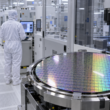





Eli Lilly and Company (NYSE: LLY) is committing an additional $4.5 billion across two manufacturing sites in Lebanon, Indiana, lifting its total Indiana capital expansion commitments since 2020 to more than $21 billion. The investment will support Lilly Lebanon API and Lilly Lebanon Advanced Therapies, the company’s first dedicated genetic medicine manufacturing facility. The decision ties Eli Lilly and Company’s domestic manufacturing buildout directly to anticipated demand for Zepbound, Mounjaro, Foundayo and retatrutide. For investors, the signal is clear: Eli Lilly and Company is no longer merely scaling a drug portfolio, it is trying to hardwire manufacturing control into its competitive advantage.
Why is Eli Lilly and Company putting another $4.5 billion into Indiana manufacturing capacity now?
The latest Eli Lilly and Company investment comes at a point where pharmaceutical growth is becoming as much about manufacturing certainty as clinical innovation. Demand for obesity and diabetes medicines has exposed one of the industry’s most uncomfortable bottlenecks: even category-defining drugs cannot fully monetize demand if supply cannot keep up. Lilly’s Lebanon API site is expected to support production linked to its incretin franchise, including Foundayo, its oral GLP-1 obesity medicine, and retatrutide, its late-stage triple hormone receptor agonist for obesity and cardiometabolic disease.
That matters because the obesity drug market is shifting from a race of mechanisms into a race of availability, formulation convenience and scale. Injectable GLP-1 therapies created the commercial category, but oral drugs could broaden adoption if pricing, supply and reimbursement align. Eli Lilly and Company’s decision to place additional capital behind active pharmaceutical ingredient capacity suggests the company is preparing for a future in which demand is not the problem. The problem may be whether it can manufacture enough high-value therapies with consistent quality, regulatory reliability and cost discipline.
The strategic timing is also important. Foundayo, orforglipron, received United States Food and Drug Administration approval in April 2026, while retatrutide has delivered late-stage obesity data that position it as one of the most closely watched next-generation assets in the sector. Reuters reported that retatrutide helped patients without diabetes lose more than 28 percent of body weight over 80 weeks in a late-stage trial, strengthening the case for future regulatory filings and commercial launch planning.

How does the Lebanon investment strengthen Eli Lilly and Company’s obesity drug supply chain?
The Lebanon campus gives Eli Lilly and Company a concentrated manufacturing platform for both near-term and future growth assets. Lilly Lebanon API is positioned as a major active pharmaceutical ingredient site, while Lilly Lebanon Advanced Therapies is designed for genetic medicines that require more specialized manufacturing processes. The combination means Eli Lilly and Company is not building a single-purpose factory. It is creating a broader manufacturing ecosystem that can support multiple waves of high-value products.
The obesity component is the most commercially visible part of the story. Zepbound and Mounjaro have already made tirzepatide central to Eli Lilly and Company’s growth profile. Foundayo adds an oral weight-loss option that could expand the addressable market, particularly for patients and prescribers who prefer a pill over an injection. Retatrutide adds a higher-efficacy pipeline asset that could raise the competitive bar again if approved.
The risk is that building capacity ahead of demand is expensive, and pharmaceutical manufacturing timelines rarely reward impatience. Capital projects can face construction delays, regulatory inspection hurdles, process validation challenges and cost inflation. However, the alternative may be worse. If Eli Lilly and Company underbuilds capacity while Novo Nordisk and other competitors chase the same obesity opportunity, the company could leave revenue, market share and payer leverage on the table.
What does Lilly Lebanon Advanced Therapies signal about the company’s genetic medicine ambitions?
Lilly Lebanon Advanced Therapies is strategically important because it shows Eli Lilly and Company is not treating genetic medicine as a distant research experiment. The facility is intended to support clinical and commercial production of advanced therapies that target disease at the genetic level. That gives Eli Lilly and Company a manufacturing base for modalities that may require new process designs, specialized quality systems and a higher degree of technical control than traditional small-molecule or biologic production.
This is where the announcement becomes more than an obesity story. Eli Lilly and Company is using the cash generation and investor confidence created by its metabolic franchise to build infrastructure for the next therapeutic cycle. Genetic medicines remain commercially complex, and many companies have struggled with cost of goods, scalability, delivery technology and reimbursement. Owning dedicated manufacturing capacity does not eliminate those risks, but it can reduce dependence on external manufacturing partners and give the company greater control over timelines.
The facility also gives Indiana a stronger role in advanced biopharmaceutical manufacturing. For policymakers, that matters because reshoring pharmaceutical production is no longer just a pandemic-era slogan. It has become a competitive industrial policy issue involving supply security, high-value employment and regional life sciences clustering.
Why does the Indiana buildout matter for United States pharmaceutical manufacturing policy?
Eli Lilly and Company said its United States capital expansion commitments since 2020 now exceed $50 billion, with Indiana accounting for a major portion of that domestic manufacturing push. The company’s latest $4.5 billion commitment fits neatly into a broader policy environment that rewards domestic drug manufacturing, especially in strategically important therapeutic areas. For the United States, this kind of investment supports supply chain resilience at a time when pharmaceutical dependence, API sourcing and national health security remain politically sensitive.
Indiana is also becoming more than Eli Lilly and Company’s historical home base. The state is being positioned as a life sciences production hub, with the Lebanon campus acting as an anchor for suppliers, construction activity, workforce development and local infrastructure. The company said its Indiana investment has broader local economic multiplier effects, including job creation across the state and associated spending in nearby communities.
The policy upside is clear, but so is the execution burden. Large manufacturing investments require skilled labor, utilities, transport infrastructure, inspection readiness and community support. If the Lebanon campus scales smoothly, it could become a model for how pharmaceutical companies combine domestic manufacturing with high-growth drug categories. If delays emerge, the same project could become a reminder that industrial strategy looks much easier in investor decks than on construction schedules.
How are investors likely to read Eli Lilly and Company’s stock story after the expansion?
Eli Lilly and Company shares remain priced like a company expected to execute well. The stock recently traded at about $1,082.92, with a market capitalization near $970.2 billion and a 52-week range of $623.78 to $1,133.95. That places Eli Lilly and Company close to the upper end of its annual trading range, reflecting strong investor confidence in the company’s obesity, diabetes and pipeline growth narrative.
The manufacturing announcement is unlikely to be viewed as a simple cost item. For growth investors, it is a capacity-enabling investment tied to some of the most commercially important medicines in global healthcare. For more cautious investors, the question is whether Eli Lilly and Company can convert record-level capital spending into durable revenue growth without margin pressure, regulatory delays or overcapacity risk.
Sentiment remains broadly constructive because the company’s pipeline is generating data that supports the long-term growth case. Reuters reported that retatrutide’s late-stage obesity results eased some investor concerns and reinforced expectations that Eli Lilly and Company could extend its leadership beyond tirzepatide. At the same time, competition is intensifying, especially as Novo Nordisk advances oral obesity therapies and regulators evaluate next-generation formats across major markets.
What competitive pressure does this create for Novo Nordisk and other obesity drug rivals?
Eli Lilly and Company’s Indiana investment raises the pressure on competitors because it links product strategy with manufacturing depth. Novo Nordisk has built a powerful obesity franchise with Wegovy and Ozempic, but supply constraints have been a recurring theme across the GLP-1 market. As oral therapies become more important, the ability to scale active ingredient production, tablet manufacturing, packaging and distribution could become a decisive competitive factor.
The Foundayo angle is especially relevant because convenience may become a major adoption lever. Reuters reported that Novo Nordisk’s oral Wegovy has moved forward in Europe, while Foundayo has already launched in the United States and remains under European review. The commercial contest is therefore no longer just about who has the most effective injectable drug. It is increasingly about which company can offer the right format, at the right price, with reliable supply and broad payer acceptance.
For smaller obesity drug developers, the message is less comforting. Clinical differentiation alone may not be enough if manufacturing scale becomes a gatekeeper to commercialization. Companies without internal capacity may need deep-pocketed partners, contract manufacturing access or acquisition exits. In that sense, Eli Lilly and Company’s $4.5 billion Indiana investment is not only a supply decision. It is a competitive moat-building exercise.
What are the biggest risks if Eli Lilly and Company’s Lebanon manufacturing strategy falls short?
The biggest risk is execution. Large pharmaceutical manufacturing projects are capital intensive, heavily regulated and technically unforgiving. A delay at an API site can ripple into commercial launch timing, inventory planning, payer negotiations and revenue forecasts. For a company trading near the top of its 52-week range, even manageable delays can become sentiment events if investors believe supply will limit growth.
The second risk is demand forecasting. Obesity medicine demand looks enormous today, but payer policies, pricing pressure, adherence patterns and competition could alter the shape of the market. If oral GLP-1 adoption accelerates faster than expected, Eli Lilly and Company may still face supply pressure. If pricing compresses or utilization management tightens, the company may need to defend return on invested capital more aggressively.
The third risk is strategic complexity. Eli Lilly and Company is simultaneously scaling injectable obesity drugs, oral obesity medicines, late-stage next-generation assets and genetic medicine manufacturing. That is a lot of plates spinning, and some of them are very expensive plates. The company’s advantage is that it has the balance sheet and commercial momentum to attempt this buildout. The challenge is that execution must now match the ambition.
Key takeaways on what Eli Lilly and Company’s Indiana expansion means for investors and the pharmaceutical industry
- Eli Lilly and Company’s $4.5 billion Indiana investment turns manufacturing capacity into a central pillar of its obesity and genetic medicine strategy.
- The Lebanon campus strengthens the company’s ability to support Zepbound, Mounjaro, Foundayo and future retatrutide-related demand.
- Lilly Lebanon Advanced Therapies signals that Eli Lilly and Company wants in-house control over advanced therapy manufacturing rather than relying heavily on external capacity.
- The investment reinforces Indiana’s role as a major United States life sciences manufacturing hub.
- The stock market is already pricing Eli Lilly and Company as a premium growth pharmaceutical company, which raises the pressure for flawless execution.
- The biggest strategic upside is supply control in a market where obesity drug demand could remain structurally strong for years.
- The biggest operational risk is delay, because pharmaceutical manufacturing projects can face validation, inspection and scale-up hurdles.
- Novo Nordisk and other obesity drug competitors may face greater pressure to match not only clinical innovation but also manufacturing scale.
- For investors, the announcement supports the long-term growth narrative, but it also increases scrutiny on capital discipline and return on invested capital.
- For the wider pharmaceutical sector, Eli Lilly and Company’s move shows that the next phase of GLP-1 competition may be decided as much by factories as by trial data.
Discover more from Business-News-Today.com
Subscribe to get the latest posts sent to your email.