

A hostage ransom of approximately $50 million paid to al Qaeda-linked militants in Mali in late 2025 helped finance a major offensive that has since transformed the security balance across the country, according to a new United Nations assessment tracing how the unusually large payment was distributed through the militant network.
The UN report, prepared by the monitoring team that tracks al Qaeda and Islamic State for the Security Council, said most of the money was redistributed among fighting units belonging to Jama’at Nusrat al-Islam wal-Muslimin, or JNIM, the al Qaeda-linked coalition that has expanded across Mali, Burkina Faso, Niger and increasingly into coastal West Africa. Investigators concluded that the funds played a key role in financing JNIM’s offensive across Mali.
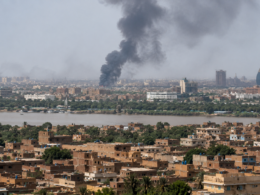
The findings provide a new financial dimension to the dramatic April 25 attacks that shook Mali’s military government. JNIM and allied Tuareg separatists launched coordinated operations against Bamako and several other locations, killing Defence Minister Sadio Camara, attacking the capital’s airport, striking military bases and helping drive Russian troops from Kidal in northern Mali. Security analysts said at the time that the scale of the offensive required substantial planning, financing and logistics.
The United Nations did not identify the hostage whose release generated the roughly $50 million payment or say which government or organisation paid the ransom. Three regional sources separately told Reuters that the United Arab Emirates made the payment after an Emirati citizen was kidnapped, while two other foreign nationals from Pakistan and Iran were also released around the same period. A UAE official did not address the specific ransom allegations but said the country remained committed to fighting terrorism and cutting extremist financing.
The amount is extraordinary by Sahel kidnapping standards. Regional security sources told Reuters that ransoms for foreign hostages have typically been around $4 million to $6 million. A $50 million payment would therefore be roughly eight to twelve times that range, illustrating why one kidnapping could materially strengthen the finances of an armed organisation with thousands of fighters.
How did a single $50 million hostage ransom become a major source of financing for JNIM’s Mali offensive?
The new UN assessment indicates that the ransom was not retained by a single kidnapping cell. Most of the money was distributed among katibas, the semi-autonomous fighting units operating within JNIM across the Sahel, allowing the windfall to support a much wider militant campaign.
The United Nations did not provide a detailed accounting showing how many dollars were spent on individual weapons, vehicles, salaries or operations. It did, however, conclude that the ransom played an important role in financing JNIM’s offensive across Mali. Regional security specialists told Reuters that large cash injections of this kind can fund weapons purchases, fuel, communications equipment, transport, recruitment and payments to fighters while allowing commanders to sustain operations across vast distances.
That financial capacity is especially important in the Sahel because the battlefield extends across enormous areas with weak state control. JNIM units operate across Mali, Burkina Faso and Niger and have expanded activity towards Benin and Togo. Moving fighters between these areas, maintaining vehicles, buying supplies and compensating local networks requires a continuing cash flow even when the weapons themselves may be relatively inexpensive.
The timing makes the UN finding particularly significant. The ransom was received in 2025, while the scale of JNIM’s operations increased dramatically during 2026. The monitoring team now provides evidence connecting those developments financially rather than relying only on assumptions about where militant groups obtained the resources required for their expansion.

What happened during the April JNIM offensive that the United Nations says the ransom helped finance?
On April 25, JNIM and the Tuareg-led Azawad Liberation Front launched simultaneous attacks around Bamako and across several other parts of Mali. The operation represented one of the most serious challenges to the military government since officers seized power and subsequently pushed out French troops and United Nations peacekeepers.
Defence Minister Sadio Camara was killed when a car bomb destroyed his home. Insurgents also struck Bamako’s airport and attacked military positions at Sévaré and Gao, while separatist forces seized Kidal in northern Mali. Around 200 Russian personnel were reported to have left Kidal after the attack, underlining the limits of the security assistance provided by Russia’s Africa Corps.
The geographical spread was as important as the individual targets. Attacks hit the political centre of the country and military positions more than 1,000 kilometres apart within the same operational window, forcing security forces to defend several fronts simultaneously. Reuters’ analysis of the offensive concluded that the attacks demonstrated a level of coordination not previously seen between JNIM and Tuareg separatists pursuing very different long-term political objectives.
At the time, conflict researchers emphasised that such an operation would have required considerable preparation, money and logistical capacity. The new UN report now says the 2025 ransom was one of the financial resources that made JNIM’s expanding offensive possible.
How powerful has Jama’at Nusrat al-Islam wal-Muslimin become across Mali and the wider Sahel?
The UN monitoring team estimates that JNIM has between 7,000 and 8,000 fighters across the Sahel, with approximately half based in Mali. That gives the organisation a substantial manpower base compared with the fragmented militant groups that operated in northern Mali when the country’s current insurgency accelerated in 2012.
JNIM was formed in 2017 through the merger of several al Qaeda-aligned organisations and is led by Iyad Ag Ghaly, a veteran of earlier Tuareg rebellions. The coalition has expanded by combining insurgent warfare with local political arrangements, taxation, recruitment and parallel systems of justice in areas where governments have limited reach.
Reuters mapping published after the April attacks showed al Qaeda-linked and Islamic State-linked influence stretching across a belt more than 3,000 kilometres wide, from western Mali towards Nigeria and Chad. Mining operations involving gold, lithium and uranium are increasingly exposed to instability, while coastal states further south are facing growing pressure from armed groups moving out of the traditional central Sahel conflict zone.
JNIM has also been tightening pressure directly around Bamako. Militants have disrupted fuel supplies and attempted to demonstrate that the military government cannot guarantee basic economic security even in the capital. Kidnapping therefore serves two objectives simultaneously: raising money and undermining public confidence in the state’s ability to protect residents and foreigners.
Why does the UN report say some of the Mali ransom money reached al Qaeda networks outside Africa?
The most internationally significant finding is that the $50 million did not remain entirely inside the Sahel.
The UN monitoring team said some funds were allocated to al Qaeda in the Islamic Maghreb, an organisation incorporated into the wider JNIM structure. AQIM then transferred part of that money to al Qaeda’s core leadership and to al Qaeda in the Arabian Peninsula, or AQAP, which operates in Yemen.
The monitoring team assessed that al Qaeda’s central leadership is probably located in Iran or Afghanistan. The report does not publicly identify the recipients, the amount transferred outside Africa or exactly how those funds were moved, so those elements should not be stated more precisely than the evidence allows.
The financial transfers nevertheless demonstrate that JNIM is not functioning purely as an isolated West African insurgency. Its battlefield strength in the Sahel can generate resources that flow back through the wider al Qaeda network, reversing the historical image of African affiliates depending primarily on support from a central organisation based elsewhere.
That evolution helps explain why international security agencies increasingly view Africa as the operational centre of gravity for al Qaeda rather than simply one of several peripheral theatres. Reuters notes that the organisation has become much more decentralised and that some of its strongest affiliates are now African groups capable of raising substantial resources themselves.
Did the United Arab Emirates pay the $50 million ransom identified in the UN report?
The United Nations report itself does not name the payer, and that distinction is important.
Three regional sources told Reuters that the country responsible for the payment was the United Arab Emirates. They said an Emirati national was among those freed and that two additional foreign hostages, from Pakistan and Iran, were released around the same period. The sources did not explain precisely how the transaction occurred.
Reuters had reported in October 2025 that an agreement had been reached to release UAE citizens kidnapped by al Qaeda-linked insurgents in Mali, with three sources at the time putting the ransom at approximately $50 million and attributing the payment to the UAE.
However, the UAE has not publicly confirmed making the ransom payment described in the UN assessment. Responding to Reuters’ latest questions, an Emirati official did not discuss the specific kidnapping or payment but emphasised the country’s counterterrorism efforts and its work through international and regional mechanisms to disrupt extremist financing.
The publishable formulation should therefore remain that regional sources identified the UAE as the payer, rather than presenting UAE payment as a finding formally established by the United Nations.
Why can hostage ransoms transform militant finances more dramatically than other revenue sources?
Kidnapping has long been part of militant financing in the Sahel because foreign hostages can command sums far beyond the economic value obtainable through ordinary local taxation or criminal activity.
The size of the reported 2025 payment makes this case exceptional. Security sources told Reuters that typical foreign-hostage ransom payments have generally ranged between $4 million and $6 million, while the UN assessment refers to approximately $50 million in this case. At the midpoint of that typical range, the latest payment would be about ten times larger.
That difference matters for an insurgent organisation. Revenue collected slowly through checkpoints, livestock taxation, smuggling or local extortion may be sufficient to sustain individual fighting units. A single $50 million injection can instead create strategic flexibility, allowing an organisation to finance a broader campaign while simultaneously maintaining reserves and sending resources to allied organisations.
JNIM also uses kidnapping as psychological warfare. The UN report says taking hostages helps generate money while damaging confidence in government security. A successful kidnapping can discourage foreign investment, reduce tourism and increase perceptions that authorities cannot control their territory even when the hostage is ultimately released.
The group demonstrated how central the tactic remains when it announced in June that it would pay millions of euros for information leading to the capture of Mali’s president and other senior officials. Reuters reported separately that JNIM offered €2 million for President Assimi Goita and smaller rewards for other members of the government.
Why have years of French, UN and Russian military intervention failed to contain the Sahel insurgency?
Mali’s security crisis has passed through several phases of international intervention without producing a durable military solution.
France intervened in 2013 after Islamist militants and separatists seized large parts of northern Mali. Thousands of United Nations peacekeepers subsequently deployed, while the United States established major surveillance infrastructure in neighbouring Niger. The militant organisations initially suffered territorial losses but gradually regrouped and expanded into Burkina Faso and Niger.
Military coups then transformed the region’s security partnerships. Governments in Mali, Burkina Faso and Niger expelled or sharply reduced cooperation with Western forces and increasingly turned towards Russia. Mali initially worked with Wagner personnel before Russia’s Defence Ministry-linked Africa Corps assumed a larger role.
The April offensive exposed limits to that model as well. JNIM and allied separatists struck Bamako, killed the defence minister and seized Kidal despite approximately 2,500 Russian personnel being deployed across about 20 Malian bases, according to an organisation monitoring Russian operations cited by Reuters.
The underlying challenge is that militant organisations combine military activity with local grievances, economic coercion, governance and alliances that shift according to region. Eliminating fighters in one district does not necessarily remove the networks supplying recruits, money and political support elsewhere.
The UN ransom finding adds another complication because even a highly effective counterterrorism campaign can be undermined if militants periodically obtain cash injections large enough to finance months of expanded operations.
Could JNIM’s growing strength threaten coastal West African states beyond Mali, Burkina Faso and Niger?
The expansion is already moving beyond the three central Sahel states.
The United Nations says JNIM-linked fighters operate not only in Mali, Burkina Faso and Niger but also in Benin and Togo. Reuters mapping shows militant influence approaching coastal economies whose governments have historically faced much lower levels of jihadist violence than the landlocked Sahel countries.
That geographical expansion is strategically important because coastal West Africa contains major ports, mining operations, transport corridors and significantly larger commercial economies. Governments including Benin, Togo, Ghana and Côte d’Ivoire have consequently strengthened northern security zones and regional cooperation to prevent militants from establishing deeper networks.
The risk does not mean JNIM is about to seize major coastal capitals. Much of its expansion has involved remote border regions where state institutions are weaker and armed groups can exploit local grievances before extending influence further south.
The April attacks nevertheless showed that the organisation can combine pressure on peripheral territories with strikes against politically sensitive urban targets. A financing model capable of converting kidnapping proceeds into wider operational capacity increases the concern that similar strategies could eventually be used elsewhere.
What are the key takeaways from the UN finding that a $50 million ransom financed al Qaeda-linked operations in Mali?
- A new United Nations monitoring report says most of an approximately $50 million ransom received in 2025 for the release of a hostage was redistributed among JNIM fighting units across the Sahel and played an important role in financing the group’s offensive across Mali.
- The UN report does not identify either the hostage or the payer. Three regional sources told Reuters that the United Arab Emirates made the payment after an Emirati citizen was kidnapped, but the UAE has not publicly confirmed the specific ransom transaction.
- The reported amount was unusually large. Security sources said foreign-hostage ransoms in the region have generally been around $4 million to $6 million, making a $50 million payment roughly eight to twelve times the typical range cited by Reuters.
- JNIM and allied Tuareg separatists launched a major offensive on April 25 that killed Mali’s Defence Minister Sadio Camara, struck Bamako’s airport and military bases, and helped force Russian personnel from Kidal in northern Mali.
- The United Nations estimates that JNIM has around 7,000 to 8,000 fighters across the Sahel, with approximately half operating inside Mali. Its activity now extends across Mali, Burkina Faso and Niger and into Benin and Togo.
- Part of the ransom was passed through al Qaeda in the Islamic Maghreb to al Qaeda’s core leadership and to al Qaeda in the Arabian Peninsula in Yemen, according to the UN monitoring team. The report does not disclose how much money reached those organisations.
- The findings indicate that JNIM is increasingly capable of financing not only its own West African insurgency but parts of the wider al Qaeda network, reflecting the growing importance of African affiliates within the organisation’s global structure.
- The case also highlights the security dilemma surrounding hostage negotiations: paying a ransom can save captives’ lives but may simultaneously provide armed organisations with resources capable of funding much larger campaigns.
Why the $50 million ransom changes the way Mali’s April offensive should be understood
The April assault on Mali was striking because of its breadth. Militants attacked targets around the capital, killed the defence minister, challenged military installations across the country and coordinated with Tuareg separatists who simultaneously advanced in the north. At the time, analysts could see that such an operation required substantial money and logistics, but the sources of that operational surge were less clear.
The new United Nations assessment supplies part of that missing financial picture. A single hostage negotiation appears to have generated approximately $50 million, most of which the monitoring team says was redistributed among JNIM units and helped finance the offensive. The implication is not that the ransom alone created JNIM’s military capability. The organisation had been expanding for years. Instead, the payment appears to have amplified a force that already possessed fighters, local networks and territorial reach.
The comparison with ordinary ransom payments shows why the effect could be so significant. A $50 million payment is roughly ten times the midpoint of the $4 million to $6 million range security sources described as typical for foreign hostages. For an insurgent organisation operating in economies where wages, vehicles and locally sourced supplies can cost far less than they do in Western military systems, that represents substantial purchasing power.
The money also did not stop at Mali’s borders. According to the UN, a portion entered financial channels connecting JNIM and AQIM with al Qaeda’s core organisation and AQAP in Yemen. That flow is strategically revealing because it shows an African affiliate capable of generating resources that benefit the global network rather than simply receiving support from it.
For Mali’s military government, the finding creates another difficult security question. Bamako has replaced much of its previous Western security architecture with Russian support, yet JNIM has continued expanding and demonstrated an ability to attack the capital itself. Stopping that expansion will require more than winning individual battles if kidnappings, taxation and other financing networks continually replenish the organisation’s resources.
The wider international dilemma is equally uncomfortable. Governments have a powerful obligation to protect citizens taken hostage, and the circumstances behind the 2025 payment remain only partially public. At the same time, the UN assessment indicates that the proceeds from one hostage release subsequently strengthened an organisation capable of financing attacks across an entire country.
That is what makes the August 15 finding more consequential than another report on militant financing. It provides a rare view of how money from a single kidnapping can move from a hostage negotiation into fighting units, then into a major national offensive and finally into financial channels connecting militant organisations thousands of kilometres apart.
Discover more from Business-News-Today.com
Subscribe to get the latest posts sent to your email.