



The Hornsea 3 Offshore Wind Farm is located in the UK North Sea, about 120 kilometres off the Norfolk coast and 160 kilometres off the Yorkshire coast. The project is owned equally by Ørsted and Apollo-managed funds, with Ørsted retaining responsibility for development, construction and long-term operations.
Hornsea 3 is designed to deliver 2.9GW of offshore wind capacity, making it set to become the world’s single largest offshore wind farm when completed. The project will use 197 large monopile foundations and Siemens Gamesa offshore wind turbines, with power exported through high-voltage direct current transmission infrastructure from the offshore converter platforms to the onshore converter station at Swardeston before connection into the UK grid.
The project moved through a major 2026 construction phase after Ørsted installed the first offshore converter station, pulled the first offshore export cable onto land and installed the first of 197 XXL monopile foundations. The wind farm is expected to be completed around the end of 2027 and is designed to generate enough renewable electricity to power more than 3.3 million UK homes.
Hornsea 3 matters because it sits at the intersection of Britain’s offshore wind ambitions, grid-integration challenges and the financial reset facing the global wind industry. It is not just another North Sea wind farm. It is a large-scale test of whether the UK can keep building multi-gigawatt offshore projects while managing supply-chain pressure, financing risk, grid connection complexity and long construction timelines.

Where is the Hornsea 3 Offshore Wind Farm located and what infrastructure is being built?
The Hornsea 3 Offshore Wind Farm is located in the Hornsea zone in the UK sector of the North Sea. The offshore array area covers about 696 square kilometres and lies approximately 120 kilometres northeast of the Norfolk coast and 160 kilometres east of the Yorkshire coast.
The project is the third gigawatt-scale development in the Hornsea zone after Hornsea 1 and Hornsea 2. Hornsea 1 has capacity of 1.2GW, while Hornsea 2 has capacity of 1.3GW. Hornsea 3 is significantly larger at 2.9GW, giving the wider Hornsea cluster a central role in the UK offshore wind system.
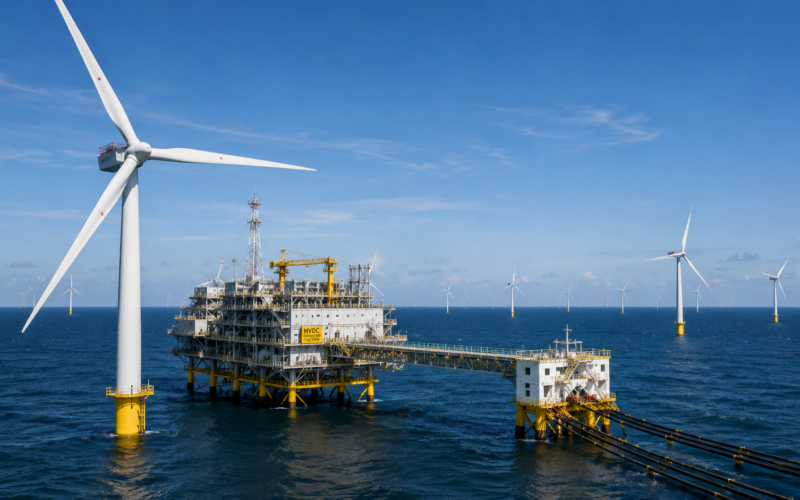
The project’s offshore infrastructure includes wind turbines, monopile foundations, inter-array electrical systems, offshore converter platforms, export cables and associated transmission equipment. Power generated offshore will be converted for long-distance transmission and then delivered to shore through offshore export cables.
Onshore, the project connects at Weybourne in Norfolk and then runs through an onshore cable route toward the Norwich Main National Grid Substation. The onshore cable corridor and grid-connection works are essential because offshore generation capacity has limited value unless power can be delivered reliably into the electricity network.
Hornsea 3 is also linked to a co-located battery energy storage system at Swardeston near Norwich. Ørsted has taken final investment decision on a Tesla battery system with a 300MW power rating and 600MWh storage capacity, located on the same site as the project’s onshore converter station. That battery is a separate but strategically connected asset because large offshore wind farms increasingly need flexibility, not only generation capacity.
Who owns and operates the Hornsea 3 Offshore Wind Farm?
Hornsea 3 is owned through a 50:50 ownership structure between Ørsted and Apollo-managed funds. Ørsted completed the divestment of a 50% stake in the Hornsea 3 Offshore Wind Farm after signing the agreement with Apollo in 2025.
Ørsted retains the remaining 50% ownership and continues to lead development, construction and operation of the project. Under the transaction structure, Ørsted is responsible for constructing Hornsea 3 under a full-scope EPC contract and providing long-term operations and maintenance services from its East Coast operations and maintenance hub.
The Apollo transaction is important because offshore wind projects require large amounts of capital over long construction periods. By selling a 50% stake, Ørsted brought in financial partners while retaining operational control. Apollo’s investment also included a commitment to fund 50% of the project’s remaining construction costs.
Mubadala Investment Company also announced a US$325 million investment alongside the Apollo-led consortium. That investment adds another layer of institutional capital to the project and reflects how large offshore wind developments are increasingly funded through partnerships between developers, infrastructure investors and sovereign capital.
The ownership structure also shows how offshore wind financing has changed. Developers such as Ørsted still bring construction, procurement, operations and market expertise, but multi-gigawatt projects increasingly need recycled capital, minority stake sales and long-term infrastructure investors to manage balance-sheet exposure.
What is the planned capacity of the Hornsea 3 Offshore Wind Farm?
Hornsea 3 is planned to have 2.9GW of offshore wind capacity. Ørsted has described the project as the world’s single largest offshore wind farm, with enough generation capacity to power more than 3.3 million UK homes.
The current build is based on 197 large monopile foundations, each intended to support a 15MW-class turbine. Ørsted installed the first of these XXL monopiles in May 2026, marking the start of one of the project’s most important offshore installation campaigns.
The turbine package is based on Siemens Gamesa’s SG 14-236 DD offshore wind turbine platform. The base turbine rating is 14MW excluding power boost, while Ørsted’s 2026 construction update described each installed turbine position as being topped by a 15MW turbine. The difference reflects how offshore wind project capacity is often described through nominal turbine models, power-boosted capacity and overall project capacity.
Hornsea 3’s scale matters because offshore wind economics depend heavily on size. A larger project can spread fixed costs across more capacity, use large installation vessels more efficiently, support dedicated transmission infrastructure and create stronger supply-chain commitments. At the same time, size increases execution risk because delays in turbines, foundations, cables or converter systems can affect a very large capacity block.
The project’s expected completion around the end of 2027 makes 2026 a decisive year. Foundation installation, export cable work, converter platform delivery and onshore grid works all need to advance in sequence for the project to stay on schedule.
How will Hornsea 3 transmit power from the North Sea to the UK grid?
Hornsea 3 will use high-voltage direct current transmission technology to move power from the offshore wind farm to the UK grid. This is important because the wind farm is located far offshore, and long-distance transmission from multi-gigawatt projects requires efficient grid technology.
Hitachi Energy is supplying two HVDC Light converter systems for Hornsea 3, while Aibel is delivering two HVDC offshore converter platforms. The offshore converter platforms convert electricity generated by the turbines into a form suitable for efficient long-distance transmission to shore.
Ørsted confirmed in 2026 that the first offshore converter station had been successfully installed. That milestone is important because offshore converter platforms are among the largest and most complex pieces of infrastructure in an HVDC-connected wind farm.
The export cable system is also moving through active installation. Ørsted said in 2026 that the first offshore export cable had been pulled onto land to meet its onshore counterpart. Jan De Nul is transporting and installing about 680 kilometres of export cable during 2026, allowing power from the project to reach the UK coast and then move onward through the onshore grid connection.
Onshore cable works connect the landfall at Weybourne in Norfolk to the Norwich Main National Grid Substation. VolkerFitzpatrick has been involved in the onshore cable works, including installation across a route of about 52 kilometres. This onshore section matters because grid bottlenecks are one of the biggest practical constraints for offshore wind expansion.
Which companies won major contracts for the Hornsea 3 Offshore Wind Farm?
Hornsea 3 has a large contractor base across turbines, foundations, HVDC systems, cable installation, onshore works, battery storage and operations support. Ørsted said at final investment decision that all major contracts for the project were in place.
Siemens Gamesa is supplying the offshore wind turbines. The project uses the SG 14-236 DD offshore wind turbine platform, a large direct-drive turbine designed for next-generation offshore wind farms. The turbines will be installed on monopile foundations in the Hornsea 3 array area.
SeAH Wind and Haizea were awarded contracts for XXL monopile foundations. Ørsted’s agreement made Hornsea 3 the lead customer for SeAH Wind’s monopile facility in Teesside, giving the project direct UK supply-chain relevance. Haizea’s contract also expanded the project’s European foundation manufacturing base.
Cadeler is responsible for foundation installation. Ørsted committed Cadeler’s new-generation installation vessel capacity to the Hornsea 3 foundation campaign, and the first monopile was installed in 2026 using Cadeler’s Wind Ally installation vessel.
Hitachi Energy and Aibel are central to the project’s transmission system. Hitachi Energy is supplying the HVDC converter systems, while Aibel is delivering the offshore converter platforms based on the Aibel and Hitachi Energy HVDC platform concept. Hornsea 3 is the first Hornsea phase to use HVDC technology.
Jan De Nul is involved in export cable transport and installation, with about 680 kilometres of export cable to be transported and installed during 2026. VolkerFitzpatrick, supported by VolkerStevin and VolkerTrenchless Solutions, has worked on the onshore cable route from Weybourne to the Norwich Main National Grid Substation.
Tesla Energy is supplying the co-located battery energy storage system at Swardeston. The battery is not part of the offshore generating array, but it is co-located with Hornsea 3’s onshore converter station and supports grid flexibility around the project’s connection infrastructure.
How did the Hornsea 3 Offshore Wind Farm move from approval to construction?
Hornsea 3 has moved through a long development path involving seabed rights, planning, environmental assessment, grid connection work, government revenue support and final investment decision. Like other large offshore wind farms, it required years of development before physical offshore construction became visible.
The project secured a UK Contract for Difference in 2022 at an inflation-indexed strike price of £37.35 per megawatt-hour in 2012 prices. That revenue framework was important because offshore wind projects need long-term price visibility to support investment decisions, especially when capital costs, interest rates and supply-chain pressures are high.
Ørsted later secured additional Contract for Difference support in the UK’s allocation round 6 for a 1,080MW share of Hornsea 3. This additional support helped improve the commercial framework after a difficult period for offshore wind economics globally.
Ørsted took final investment decision on Hornsea 3 in December 2023. The FID confirmed that the company would proceed with what it described as the world’s single largest offshore wind farm, targeting completion around the end of 2027.
After FID, the project shifted into procurement, onshore construction, component fabrication and offshore installation readiness. By 2026, that transition had become visible through the first foundation arrivals in the UK, export cable landfall activity, converter platform installation and first monopile installation offshore.
What are the latest Hornsea 3 construction updates in 2026?
The latest 2026 updates show Hornsea 3 moving through the offshore construction phase. In February 2026, Ørsted confirmed that the first sets of monopile foundations had arrived in the UK. That marked the start of the offshore foundation supply chain becoming visible at port and installation level.
In the first quarter of 2026, the first offshore export cable was pulled onto land to meet its onshore counterpart. Ørsted described this as a major link between the offshore and onshore power systems. The export cable campaign is central to project execution because Hornsea 3’s offshore generation must be connected to the UK grid through a reliable transmission route.
Ørsted also confirmed that the first offshore converter station had been installed before the first monopile milestone. That is significant because the converter platforms are central to the HVDC architecture that will transmit power from the offshore wind farm to shore.
In May 2026, Ørsted installed the first of 197 XXL monopile foundations. The company described these as the largest monopiles used by Ørsted on any of its European wind farms to date. The milestone marked the start of a major foundation installation campaign that will define the project’s 2026 offshore schedule.
The project remains on a completion target around the end of 2027. The key execution question is whether foundation installation, turbine installation, cable works, commissioning and grid-interface activity can continue without material delay.
What role does Hornsea 3 play in UK offshore wind strategy?
Hornsea 3 plays a major role in UK offshore wind strategy because it represents a single 2.9GW capacity addition in a market trying to expand low-carbon power generation while reducing dependence on fossil fuels. Large offshore wind farms are central to Britain’s electricity decarbonisation strategy because the UK has strong North Sea wind resources and a long-established offshore supply chain.
The project also reinforces the importance of the east coast offshore wind corridor. Hornsea 1, Hornsea 2 and Hornsea 3 together create a major offshore wind cluster operated from Ørsted’s East Coast operations and maintenance hub. That clustering can support shared skills, logistics, ports, vessels and operational knowledge.
Hornsea 3 also demonstrates how future offshore wind projects are becoming more infrastructure-heavy. The challenge is not only installing turbines. It includes HVDC transmission, export cables, onshore substations, grid connection, battery storage, vessel availability and supply-chain coordination.
For the UK, this matters because reaching offshore wind targets depends on building generation capacity and transmission capacity together. A wind farm may be offshore, but the delivery problem often continues inland through cable corridors, substations, planning conditions, land agreements and grid constraints.
Hornsea 3 therefore acts as a test case for the next phase of UK offshore wind. It is large enough to move national capacity numbers, but complex enough to show the limits of policy targets unless grid delivery, financing and supply chains keep pace.
What regulatory, environmental and community issues shape Hornsea 3?
Hornsea 3 operates under a large planning and environmental framework covering offshore construction, marine ecology, fisheries, shipping, seabirds, marine mammals, onshore land use, cable corridors, coastal landfall and grid connection.
The offshore array area is large, and construction activity involves vessel movement, foundation piling, cable installation and seabed works. These activities require environmental controls, marine coordination and monitoring commitments to reduce impacts during construction and operation.
Onshore, the cable route through Norfolk has been a major community issue because underground cable works can affect farmland, traffic, local roads, hedgerows and drainage. Reinstatement, land access and construction management are therefore important to local acceptance.
The project also includes a community benefit fund. Ørsted has committed £7 million through the Hornsea 3 Community Benefit Fund, paid as £700,000 annually over ten years, for projects developed by and for local communities in North Norfolk and parts of Suffolk.
Environmental debate around offshore wind is broader than any one project. Offshore wind reduces power-sector emissions when it displaces fossil generation, but construction still affects marine and coastal environments. The project’s long-term public value depends on managing those construction impacts while delivering large volumes of low-carbon electricity.
What could limit the Hornsea 3 Offshore Wind Farm’s delivery or performance?
The main delivery risk for Hornsea 3 is coordination across a very large offshore construction chain. Foundations, turbines, converter platforms, export cables, onshore cables, substations and grid connection works all have to progress in the right sequence.
Weather is a practical risk. Offshore construction campaigns depend on safe installation windows, and poor weather can affect foundation installation, cable laying, turbine work and vessel scheduling. The project’s size means small delays across repeated installation cycles can accumulate.
Supply-chain risk also matters. Offshore wind projects rely on specialised factories, ports, vessels and installation crews. XXL monopiles, large turbines, HVDC converter systems and export cables are all high-value components with long manufacturing and delivery timelines.
Grid connection remains another critical factor. Hornsea 3 can only deliver value if power is transmitted reliably from the offshore array to the UK grid. HVDC systems, offshore converter platforms, export cables and onshore connection works must be commissioned and tested successfully.
Performance after completion will depend on wind resource, turbine availability, wake effects, maintenance execution and grid availability. A 2.9GW nameplate project will not produce at full capacity all the time, so long-term value depends on capacity factor, operational reliability and market conditions.
What is the future outlook for the Hornsea 3 Offshore Wind Farm?
The future outlook for Hornsea 3 is constructive but execution-sensitive. The project has passed final investment decision, secured major contracts, completed a 50% ownership sell-down, moved into offshore construction and installed its first monopile foundation in 2026.
The next major milestones will involve continued monopile installation, export cable works, turbine installation, converter system commissioning and full grid integration. Each of these stages carries schedule risk, but the project has already moved beyond the most uncertain pre-construction phase.
If completed around the end of 2027 as planned, Hornsea 3 will replace Hornsea 2 as the world’s largest offshore wind farm. It will also strengthen the UK’s North Sea offshore wind base and increase the importance of Ørsted’s East Coast operations and maintenance hub.
The project’s long-term relevance goes beyond its record-setting size. Hornsea 3 will show whether large offshore wind projects can still be delivered at scale after a period of inflation, higher interest rates, supply-chain stress and pressure on developer balance sheets.
For Ørsted, Apollo and their partners, the project is a test of capital recycling, infrastructure partnership and construction execution. For the UK, it is a test of whether policy-backed offshore wind can become physical generating capacity fast enough to support power-sector decarbonisation.
Hornsea 3 is already past the point of being only a planning ambition. In 2026, foundations, export cables and converter infrastructure are moving into place. The remaining question is whether the world’s next largest offshore wind farm can turn those construction milestones into full commercial delivery by the end of 2027.
Discover more from Business-News-Today.com
Subscribe to get the latest posts sent to your email.