




Grid Dynamics Holdings, Inc. (Nasdaq: GDYN) has entered a strategic partnership with Doosan Robotics Inc. to combine Doosan’s collaborative robots with Grid Dynamics’ GAIN Platform for Physical AI and related integration services. The companies are targeting manufacturing and logistics tasks that traditional robotics software struggles to handle, including complex object inspection, variable assembly and packaging of unseen or deformable items. For Grid Dynamics, the agreement extends its AI transformation pitch from cloud software into factory-floor automation and gives it access to a robotics partner operating in 45 countries. The strategic appeal is clear because enterprise buyers increasingly want integrated hardware, software, simulation and deployment support rather than disconnected tools. The tension is equally clear because the announcement contains no contract value, customer commitments, deployment timetable or revenue guidance, leaving investors to judge execution while GDYN shares remain near the lower end of their 52-week range.
What exactly are Grid Dynamics and Doosan Robotics combining for industrial customers?
The partnership brings together two components that industrial customers normally have to assemble through several suppliers. Doosan contributes the physical automation layer, including collaborative robotic arms, control systems, safety features and its international distribution footprint. Grid Dynamics contributes the AI software, engineering services and deployment infrastructure needed to make those robots perform more adaptive tasks.
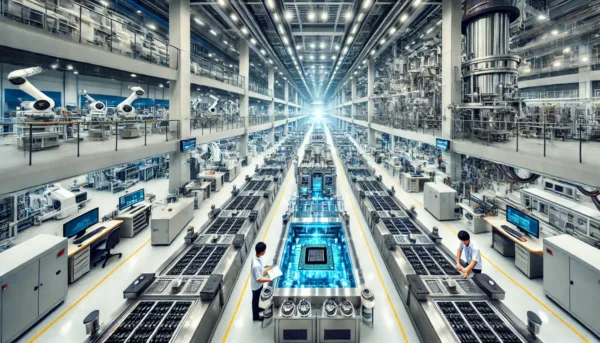
At the centre of the offering is the GAIN Platform for Physical AI. It is designed to help customers create robotic manipulation workflows, deploy physical AI models and optimise production lines through digital twins. Grid Dynamics can also provide engineers who work directly with a customer to integrate sensors, simulation environments, cloud infrastructure and factory systems.
This matters because buying a robotic arm is only one part of an automation project. Customers must define the task, collect operational data, train or configure the software, integrate the robot with existing machinery and validate that it performs safely under changing conditions. Those integration requirements can make advanced robotics projects slow, expensive and difficult to scale.
The partners want to package more of that work into a coordinated offering. Their intended result is a turnkey physical AI stack covering the robot, AI models, workflow software, digital-twin environment and implementation services.
The announcement does not make the arrangement exclusive. It also does not identify a minimum sales commitment, geographic allocation or formal revenue-sharing formula. Grid Dynamics therefore gains a potentially valuable route to market, but not a guaranteed pipeline.
Why does the GAIN Platform target work that conventional robots cannot handle reliably?
Traditional industrial robots are highly effective when the environment and task remain predictable. A robot can repeat the same weld, lift or assembly movement thousands of times when the position, shape and orientation of every component are known.
The challenge emerges when objects vary, production lines change or the robot encounters something it has not previously been programmed to recognise. Conventional rule-based automation can require extensive reprogramming whenever a product, package or workflow changes.
Grid Dynamics and Doosan are targeting applications where perception, decision-making and physical movement must work together. Examples include inspecting complex surfaces, assembling components with variable positioning, handling deformable packages and identifying unfamiliar objects moving through a logistics operation.
The GAIN platform is intended to combine visual information, sensor data, AI models and simulation so the robot can respond to more variation. Digital twins allow engineers to model a production line virtually and test robotic behaviour before deploying changes in a live facility. That can reduce physical testing costs and lower the risk of interrupting production.
This is the practical distinction behind the term physical AI. Generative AI produces text, images or software outputs within a digital environment. Physical AI must perceive the real world, choose an appropriate action and execute that action through machinery where errors can damage equipment, disrupt production or endanger workers.
The commercial opportunity could be substantial, but it also carries a higher implementation burden. Manufacturing buyers generally require reliability, safety validation and measurable returns before expanding a pilot across multiple facilities.
How could Doosan Robotics shorten Grid Dynamics’ path from technical capability to commercial scale?
Grid Dynamics already had physical AI technology before announcing the partnership. Its missing ingredient was a direct connection to an established robotics manufacturer with customers, hardware and international sales channels.
Doosan Robotics supplies collaborative robots across 45 countries and offers products for industrial, logistics and service applications. Its portfolio includes robots designed for palletising, material handling, machine tending, food preparation and other tasks where human workers may operate nearby.
That installed hardware footprint can provide Grid Dynamics with access to customers that already understand robotics and may be considering more advanced automation. The partnership could also allow the companies to approach new customers with a single implementation proposition rather than requiring manufacturers to coordinate separate hardware and software vendors.
Doosan gains an AI and integration layer that may make its robots useful for a broader range of tasks. Grid Dynamics gains a hardware partner and a potentially more efficient sales channel. That is a rational division of capabilities.
However, access to customers is not the same as booked revenue. The partners still need to identify repeatable use cases, demonstrate reliable performance and convert initial projects into larger deployments.
The strongest commercial outcome would be a standardised solution that can be adapted across many factories with limited custom engineering. If every installation requires a lengthy bespoke project, revenue may grow but margins and scalability could remain constrained.
What do Grid Dynamics’ latest financial results reveal about its ability to fund the expansion?
Grid Dynamics entered the partnership with a strong cash position but mixed operating trends.
First-quarter 2026 revenue reached $104.1 million, increasing 3.7% from a year earlier and finishing slightly above the company’s guidance. AI-related work represented a record 29.3% of revenue, equivalent to approximately $30.5 million. Partnership-influenced revenue accounted for another 19.1% of the total, illustrating why alliances have become an important part of the company’s growth strategy.
The physical AI opportunity is currently being built from a relatively small industrial revenue base. Consumer packaged goods and manufacturing contributed $9.8 million, or 9.4% of first-quarter revenue. That was down from $10.8 million, or 10.7%, in the comparable 2025 quarter.
Profitability also requires attention. GAAP gross margin declined to 34.8% from 36.8%, while the company recorded a $1.5 million GAAP net loss after earning $2.9 million a year earlier. Non-GAAP EBITDA fell to $12.5 million from $14.6 million.
Grid Dynamics nevertheless held $327.5 million in cash and cash equivalents at the end of March and generated $8.4 million in quarterly operating cash flow. That liquidity gives the company room to invest in engineers, intellectual property and go-to-market activity without relying on immediate external financing.
Management expects second-quarter revenue of $106 million to $108 million and non-GAAP EBITDA of $14 million to $15 million. Full-year revenue guidance remains $435 million to $465 million, representing expected growth of 5.6% to 12.9%.
The partnership could support that longer-term growth story, but the announcement does not indicate whether it will make a material contribution to the 2026 outlook.
Why is the absence of contract economics the biggest limitation in this partnership announcement?
Strategic partnerships can range from meaningful commercial agreements to loosely defined marketing relationships. Investors cannot determine where this arrangement sits because the companies disclosed no financial terms.
There is no named customer, purchase order, minimum deployment volume or target revenue. The release also lacks information about implementation costs, pricing, ownership of jointly developed intellectual property and how service revenue will be divided.
That does not make the partnership unimportant. Doosan’s hardware footprint and Grid Dynamics’ AI engineering capabilities form a credible combination. It does mean the immediate financial impact cannot be quantified.
Grid Dynamics must also manage customer concentration. Its ten largest clients generated 57.7% of 2025 revenue, while one customer contributed 15.4%. A scalable robotics channel could help diversify the business, but only if it produces multiple meaningful customer relationships.
The July 30 second-quarter earnings call will provide management with an early opportunity to add substance. Investors should listen for the number of active physical AI engagements, expected pilot duration, average contract size and whether Doosan-sourced opportunities are already included in the company’s pipeline.
Without that detail, the deal should be treated as strategic positioning rather than a confirmed earnings catalyst.
How should investors read GDYN’s stock performance before the July 30 earnings report?
GDYN closed at $5.80 on July 16, 2026, valuing Grid Dynamics at approximately $491 million. The shares gained about 1.1% during the session, but the partnership announcement was released after regular trading ended, so that move should not be interpreted as a market reaction to the news.
The stock was approximately 1.2% below its July 10 close and about 8.9% below its June 16 close. Its 52-week range was $5.11 to $11.24, placing the latest price roughly 48% below the high and 14% above the low.
That valuation backdrop suggests investors have not rewarded the company simply for expanding its AI narrative. Revenue is growing, but gross margin compression, slower organic momentum in some verticals and the gap between GAAP and adjusted profitability remain relevant concerns.
The balance sheet offers some protection. Cash represented a large proportion of the company’s market capitalisation at the end of the first quarter, although that comparison does not account for liabilities, working-capital requirements or future investment.
The next earnings report will matter more than the partnership announcement for near-term valuation. Investors will be looking for confirmation that second-quarter revenue reached guidance, adjusted EBITDA improved and AI growth continued without further pressure on gross margin.
Which operating indicators would prove the partnership is becoming a durable growth engine?
The first proof point would be named customer deployments. A pilot with a recognised manufacturer or logistics operator would establish that the offering has advanced beyond technical integration and joint marketing.
The second would be repeatability. Expansion from one production line to several facilities would indicate that customers are achieving sufficient returns to invest further.
The third would be improving industrial revenue. Grid Dynamics’ CPG and manufacturing segment currently contributes less than 10% of total sales. Sustained growth in that vertical would show whether physical AI is creating an additional revenue pillar.
Investors should also watch the proportion of fixed-price and platform-enabled work. A business dominated by engineering hours may grow without producing much operating leverage. Reusable software, standard deployment templates and recurring platform revenue would present a stronger margin opportunity.
Finally, management should disclose enough information to separate physical AI momentum from the company’s wider AI portfolio. That could include pilot counts, qualified pipeline, deployment conversion rates or annual contract value.
Grid Dynamics has assembled a credible technical proposition with Doosan Robotics. The investment case now depends on whether customers move from demonstrations to production and whether production deployments generate repeatable, profitable revenue.
What are the most important takeaways from the Grid Dynamics and Doosan Robotics partnership?
- Grid Dynamics is combining its GAIN Platform for Physical AI with Doosan Robotics’ collaborative robot portfolio and international distribution footprint.
- The offering targets complex inspection, variable assembly and packaging tasks that conventional rule-based automation struggles to handle.
- Digital twins could help customers test robotic workflows virtually before making changes to live production lines.
- Doosan operates in 45 countries, giving Grid Dynamics a potentially valuable route into industrial customers.
- The announcement includes no contract value, minimum sales commitment, named customer or revenue timetable.
- Grid Dynamics generated $104.1 million in first-quarter revenue, with AI work reaching a record 29.3% of sales.
- CPG and manufacturing represented only 9.4% of quarterly revenue and declined from the comparable 2025 period.
- The company held $327.5 million in cash, providing substantial capacity to invest in physical AI capabilities.
- GDYN closed at $5.80 on July 16, approximately 48% below its 52-week high.
- Customer deployments, repeat orders, industrial revenue growth and margin improvement will determine whether the partnership becomes financially meaningful.
Discover more from Business-News-Today.com
Subscribe to get the latest posts sent to your email.