


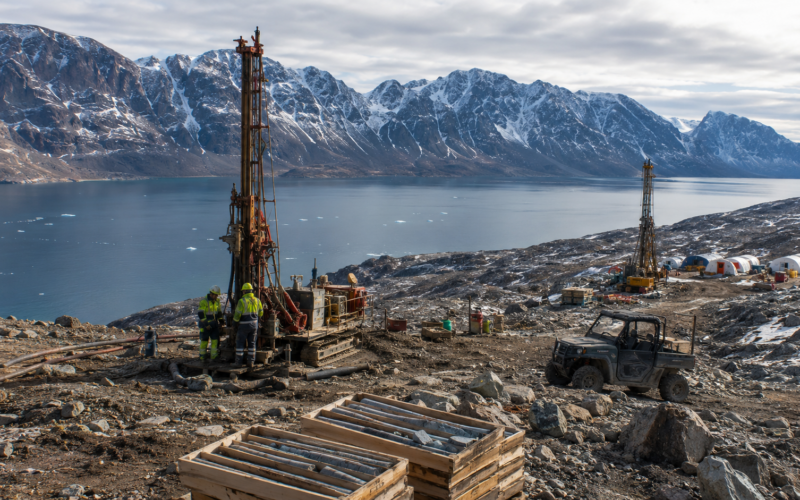
Greenland Mines Ltd. (Nasdaq: GRML) has agreed to acquire Neo North Star Resources, Inc., owner of the Sarfartoq Rare Earths Project in southwest Greenland, in a US$35 million cash-and-stock transaction that immediately broadens its critical minerals strategy beyond the Skaergaard palladium-gold-platinum asset. The deal gives Greenland Mines Ltd. control of an advanced neodymium-praseodymium rare earths project while keeping Neo Performance Materials Inc. (TSX: NEO) aligned as a strategic shareholder and offtake partner. Neo Performance Materials Inc. will retain rights tied to up to 60% of future ore or mineral concentrate production from Sarfartoq, preserving a potential bridge between Greenlandic feedstock and European rare earth processing and magnet manufacturing. For investors, the announcement lands while Greenland Mines Ltd. trades as a highly speculative microcap, with $GRML recently around US$0.39, far below its 52-week high of US$3.91 but still above its 52-week low of US$0.16.
Why is Greenland Mines acquiring Sarfartoq at a time when rare earth supply chains are under geopolitical pressure?
The strategic logic of the Sarfartoq acquisition is not difficult to see. Neodymium and praseodymium sit at the heart of high-performance permanent magnets used in electric vehicles, wind turbines, robotics, industrial motors and defence systems. Those are not niche end markets anymore. They are the industrial nervous system of electrification, automation and national security. That makes Sarfartoq more than a mining optionality story for Greenland Mines Ltd.; it gives the company direct exposure to the part of the rare earth value chain where Western policymakers, original equipment manufacturers and magnet producers are most anxious about China-linked supply concentration.
The transaction also marks a notable repositioning for Neo Performance Materials Inc. Instead of remaining the project driver, Neo Performance Materials Inc. is effectively letting Greenland Mines Ltd. take the upstream development lead while retaining strategic exposure through equity and offtake. That structure tells its own story. Mine development is capital-intensive, slow and politically exposed, while midstream separation and downstream magnet production can generate more immediate strategic value if feedstock access is preserved. Neo Performance Materials Inc. is therefore not abandoning Sarfartoq. It is reshaping its exposure to the project in a way that limits direct development burden while protecting future supply access.
For Greenland Mines Ltd., the risk-reward equation is the opposite. The company is taking on the permitting, technical update, financing and development challenge in exchange for the chance to control a rare earths asset that already has historic drilling, resource work, metallurgical studies and a prior economic assessment behind it. That is a very different profile from a raw grassroots claim. However, investors should not confuse “advanced” with “de-risked.” Sarfartoq still needs updated technical economics, regulatory approvals, capital planning and a credible path from exploration licence to commercial mine development.
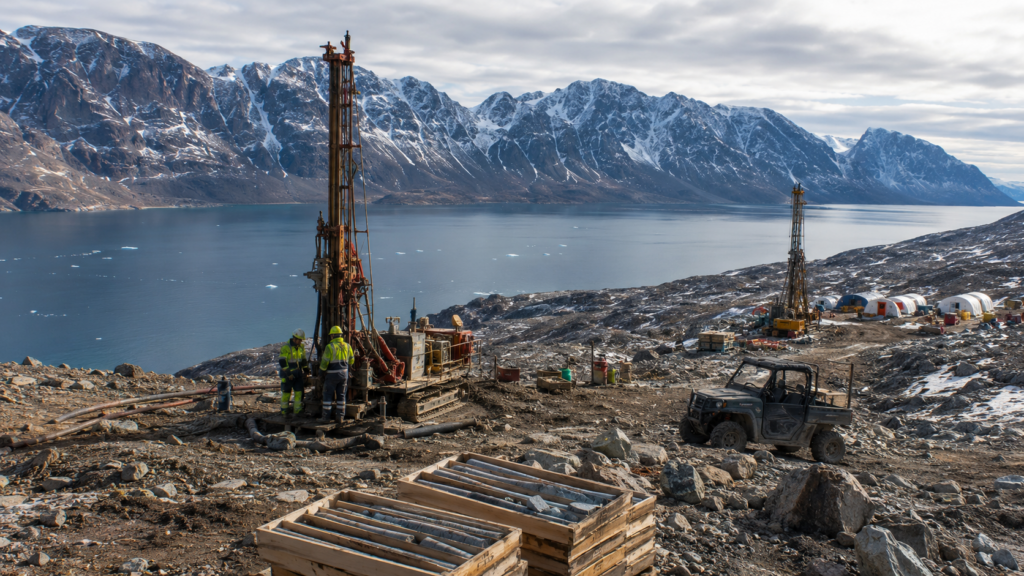
How does Sarfartoq change the strategic profile of Greenland Mines beyond the Skaergaard project?
Before this transaction, Greenland Mines Ltd. was already tied to Greenland’s critical minerals narrative through the Skaergaard project, which offers exposure to palladium, gold and platinum, with possible by-product value from other metals. Sarfartoq changes the portfolio mix because it adds a magnet rare earths angle that is more directly connected to Western industrial policy. Palladium and platinum matter for industrial and automotive applications, but neodymium and praseodymium carry a different strategic charge in 2026 because they are central to electrification, clean energy and defence supply chains.
The combination of Skaergaard and Sarfartoq gives Greenland Mines Ltd. a broader North Atlantic critical minerals platform rather than a single-project development story. That matters for positioning. A company with two advanced Greenlandic assets can speak to different pools of capital, including precious metals investors, critical minerals funds, strategic industry partners, and potentially policy-linked financing channels. It also creates optionality. If one commodity cycle cools, the company can still frame its long-term investment case around another strategic materials theme.
However, broader portfolios can also dilute focus. Greenland Mines Ltd. is not a large diversified miner with excess balance-sheet capacity. It remains a small Nasdaq-listed company with a market capitalization under US$50 million based on current market data. That is tiny relative to the technical, environmental, permitting and infrastructure requirements typically associated with Arctic mine development. The Sarfartoq acquisition therefore improves strategic relevance, but it also raises the execution bar sharply. The company now has to prove that it can convert asset ownership into disciplined project advancement rather than simply collecting compelling geology.
Why does Neo Performance Materials’ offtake role matter for the Sarfartoq rare earths project?
Neo Performance Materials Inc. is the most important industrial counterparty in this transaction because it gives Sarfartoq something many early-stage rare earth projects lack: a visible potential route into downstream processing and magnet supply chains. Neo Performance Materials Inc. already operates rare earth separation infrastructure in Estonia and opened a rare earth permanent magnet facility in Narva, Estonia in September 2025. That European footprint gives the Sarfartoq project a more coherent commercial narrative than a standalone mine hoping to find a future buyer.
The offtake structure is especially relevant because rare earth mining is not only about digging up ore. The harder strategic bottleneck is often separation, refining, qualification and magnet manufacturing. Western governments have learned the awkward way that rare earth supply chains are chains, not slogans. A deposit without processing access can remain stranded. A magnet plant without secure feedstock can become a factory waiting for chemistry. Sarfartoq’s link to Neo Performance Materials Inc. does not eliminate those problems, but it does create a more integrated framework.
The broader market context strengthens that point. Europe has been trying to build rare earth magnet capacity outside China, but execution has been uneven. Neo Performance Materials Inc.’s Estonia magnet facility stands out because it gives Europe a real industrial base in a segment where supply chain dependence remains acute. At the same time, other European magnet ambitions have faced setbacks, including the cancellation of a planned rare earth magnet factory by GKN Powder Metallurgy. That makes reliable feedstock alignment more valuable, not less.
What technical work and permitting hurdles still stand between Sarfartoq and commercial production?
The strongest feature of Sarfartoq is that it is not starting from zero. The ST1 zone has historic resource work, more than 23,000 metres of drilling, metallurgical testing, mineralogical studies and environmental baseline work behind it. Prior disclosures show that Sarfartoq has a high ratio of neodymium and praseodymium, with historic work indicating 27 million kilograms of neodymium oxide and 8 million kilograms of praseodymium oxide in the ST1 project. That high Nd-Pr weighting is commercially important because magnet rare earths carry the most strategic value inside the broader rare earth basket.
The next major test is whether Greenland Mines Ltd. can update the technical and economic case using current market assumptions, modern permitting expectations and realistic development costs. The historic preliminary economic assessment was prepared in a different rare earth price environment and before the current wave of geopolitical supply-chain urgency. Higher Nd-Pr prices can improve theoretical economics, but Arctic logistics, inflation, energy infrastructure, environmental review and capital intensity can offset part of that benefit. A new economic study will need to show not only better price assumptions, but also credible development sequencing.
Permitting is another key hurdle. The transaction itself requires approval from the Government of Greenland under the Greenland Mineral Activities Act, and the project will ultimately need a pathway toward exploitation licensing if it moves beyond exploration and technical updates. Greenland is strategically attractive because of its mineral endowment and North Atlantic location, but it is also a jurisdiction where environmental standards, local engagement and political scrutiny matter deeply. Investors should treat government approval for the transaction as an important step, not as a shortcut to mine construction.
How should investors read the $GRML stock reaction and valuation context after the Sarfartoq deal?
The market layer is where the story becomes more complicated. Greenland Mines Ltd. recently traded near US$0.39 on Nasdaq, with an intraday range of roughly US$0.37 to US$0.43 and a market capitalization of about US$47 million. The stock remains far below its 52-week high of US$3.91, even after trading well above its 52-week low of US$0.16. That profile suggests that the market is treating $GRML as a speculative development-stage vehicle rather than a fully validated critical minerals platform.
That caution is not irrational. A US$35 million acquisition is meaningful relative to Greenland Mines Ltd.’s market value, especially because US$20 million is cash consideration and US$15 million will be paid in newly issued shares. The company is acquiring strategic relevance, but investors will want to understand the balance-sheet path, dilution impact, work-program funding and timeline for updated economics. In microcap mining, the headline asset can be exciting while the financing pathway quietly does the heavy lifting. The market has seen that movie before, and it does not always buy popcorn twice.
For Neo Performance Materials Inc., the sentiment read is different. Neo Performance Materials Inc. appears to be prioritizing capital allocation discipline by keeping exposure to Sarfartoq without carrying the full upstream execution burden. That may appeal to investors who prefer Neo Performance Materials Inc. to focus on separation, materials and magnet production rather than mine development. The trade-off is that Neo Performance Materials Inc. loses direct control over project execution pace. If Greenland Mines Ltd. accelerates Sarfartoq effectively, Neo Performance Materials Inc. keeps strategic upside. If progress stalls, Neo Performance Materials Inc. may still have offtake rights on a project that remains years away from meaningful supply.
What does the Sarfartoq deal signal about Greenland’s role in Western critical minerals security?
The Sarfartoq transaction fits into a larger Greenland story. The island is increasingly viewed as a politically sensitive but strategically attractive source of critical minerals for Europe and North America. Its geography matters. Greenland sits inside the North Atlantic security architecture, close to Europe and North America, and outside China’s direct industrial orbit. That makes projects such as Sarfartoq attractive to policymakers looking for alternative supply chains.
The timing is also notable because Greenland rare earth assets are drawing renewed attention across multiple companies and commodities. Critical Metals Corp. recently announced a 15-year offtake agreement tied to the Tanbreez rare earth project in Greenland, underscoring the island’s growing role in Western rare earth supply planning. Sarfartoq is different because it is specifically tied to neodymium-praseodymium magnet materials and to Neo Performance Materials Inc.’s European midstream and downstream platform. Together, these developments show that Greenland is moving from geological potential into commercial supply-chain negotiations.
That does not mean Greenland will quickly become a rare earth superpower. Mine development timelines are long, and projects must still satisfy environmental, technical and community expectations. The better reading is that Greenland is becoming a strategic option set. For Western governments, that matters because even partial diversification can reduce pressure in a market where China remains dominant across rare earth processing and magnet supply chains. For Greenland Mines Ltd., the opportunity is to turn that geopolitical relevance into project credibility before investor patience runs thin.
What are the key execution risks for Greenland Mines after the Sarfartoq acquisition?
The first risk is technical refresh risk. Historic resource estimates and older economic studies are useful starting points, but they are not substitutes for updated project economics. Greenland Mines Ltd. must demonstrate that Sarfartoq can support a modern development case under current cost, permitting, environmental and financing conditions. If the updated preliminary economic assessment fails to confirm attractive economics, the strategic narrative will weaken quickly.
The second risk is financing. Greenland Mines Ltd. is taking on a larger critical minerals identity at a time when mining capital markets remain selective. Rare earth projects can attract strategic interest, but they also require patient capital and credible technical leadership. Investors will likely watch whether Greenland Mines Ltd. can bring in additional partners, government-linked support or project-level funding without excessive dilution at the listed-company level.
The third risk is timeline discipline. The rare earth market rewards projects that can move from story to milestones, but Arctic development is rarely fast. Updated technical work, government engagement, environmental studies, exploitation licence discussions, offtake refinement and financing can each become gating items. The company’s challenge is to create a visible sequence of progress. Without that, Sarfartoq risks becoming another strategic mineral asset that everyone agrees is important while nobody knows when it will produce.
Key takeaways on what the Sarfartoq rare earths deal means for Greenland Mines, Neo Performance Materials and Western supply chains
- Greenland Mines Ltd. is shifting from a single critical minerals development story into a broader Greenland platform with exposure to both Skaergaard and Sarfartoq.
- Sarfartoq adds direct exposure to neodymium and praseodymium, two rare earth elements central to permanent magnets used in electric vehicles, wind turbines, robotics and defence systems.
- Neo Performance Materials Inc. is reducing direct upstream development responsibility while preserving strategic exposure through equity and offtake rights.
- The offtake structure gives Sarfartoq a more credible downstream pathway than many early-stage rare earth projects.
- Greenland Mines Ltd. now has to prove that historic drilling, resource work and economic studies can be converted into updated, financeable project economics.
- The transaction increases strategic relevance but also raises funding, dilution and execution risks for a Nasdaq microcap company.
- Greenland’s critical minerals profile is strengthening as Western supply chains look for politically aligned alternatives to China-linked rare earth concentration.
- The market’s cautious valuation of $GRML suggests investors still want hard evidence of technical progress, permitting momentum and capital discipline.
- Neo Performance Materials Inc.’s Estonia magnet and separation footprint makes Sarfartoq more strategically connected to Europe’s rare earth magnet ambitions.
- The next major catalysts are transaction approval, updated technical work, Government of Greenland engagement and clarity on how Greenland Mines Ltd. funds the Sarfartoq development pathway.
Discover more from Business-News-Today.com
Subscribe to get the latest posts sent to your email.