

PLS Group Limited (ASX:PLS) is committing approximately A$175 million to the P2000 expansion before making a final investment decision, signalling confidence that the next lithium supply cycle could reward producers capable of delivering large volumes before competitors catch up. The investment will protect the project schedule by advancing engineering, infrastructure and long-lead equipment procurement ahead of the feasibility study expected in the December quarter of 2026. PLS shares traded around A$5.18 on July 3, valuing the company at approximately A$16.7 billion, but the stock remains about 19 per cent below its June 3 close and almost 24 per cent beneath its A$6.81 yearly high. The immediate tests are the early-July restart of the Ngungaju plant and the June-quarter report on July 30, when investors will learn whether stronger lithium pricing has continued to offset higher restart expenditure.
The tension is unusually clear. PLS Group is generating strong operating cash margins, holds more than A$1.4 billion in cash and has added US$600 million of long-term debt capacity, giving it more financial firepower than most independent lithium producers. However, its valuation already assumes that Pilgangoora can maintain attractive margins, restart Ngungaju successfully and eventually double production capacity through P2000. The company is investing early to avoid missing the next demand window, but shareholders must decide whether that discipline is preserving future value or committing capital before lithium-market visibility is strong enough.
What does PLS Group actually own, and why is its business different from smaller lithium miners?
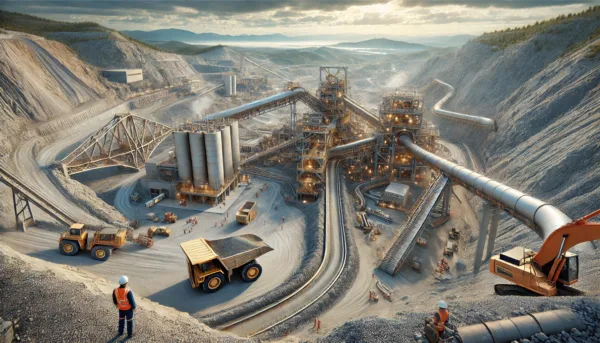
PLS Group owns 100 per cent of the Pilgangoora Operation in Western Australia, described by the company as the world’s largest independent hard-rock lithium operation. Unlike an early-stage developer relying on a future mine, PLS already operates large-scale mining and processing infrastructure, produces spodumene concentrate and supplies established battery-material customers across Asia. The company has also accumulated years of operating knowledge covering ore sorting, flotation, recovery optimisation, logistics and customer specifications.
That operating scale changes the risk profile. A junior lithium developer must finance an entire mine, processing facility, power supply, road network and export chain before earning revenue. PLS can expand around existing pits, processing plants, roads, personnel and Port Hedland logistics, reducing some of the execution and capital-intensity risks normally associated with greenfield projects.
The portfolio is also becoming more geographically and commercially diversified. PLS owns the Colina lithium project in Minas Gerais, Brazil, and holds an 18 per cent interest in the POSCO Pilbara Lithium Solution chemical facility in South Korea. It is separately commissioning a mine-site mid-stream demonstration plant at Pilgangoora, with first lithium-phosphate product expected during the September quarter of 2026.
This creates several potential value layers, but it also makes PLS more complex than a straightforward spodumene producer. Pilgangoora remains the principal source of cash, while Colina, P2000, the mid-stream plant and the South Korean hydroxide facility require capital or continued strategic attention. Investors therefore need to judge whether diversification improves resilience or pulls capital towards projects whose returns remain dependent on volatile chemical-conversion margins.
The strongest competitive advantage remains scale combined with low operating costs. In the March quarter, PLS produced a record 232,400 tonnes of spodumene concentrate while reducing unit operating costs to A$520 per tonne on a free-on-board basis. That cost position gives the company a larger margin buffer than higher-cost producers when lithium prices weaken and greater cash-flow leverage when prices rise.
Why is PLS committing A$175 million before the P2000 feasibility study and final investment decision?
P2000 is designed to increase Pilgangoora’s concentrate-production capacity to approximately two million tonnes annually. The expansion would involve a new concentrator beside the existing Pilgan and Ngungaju facilities, using established flotation and ore-processing knowledge accumulated through earlier Pilgangoora expansions. Feasibility-study results are expected during the December quarter of 2026, with a final investment decision remaining conditional on technical results, funding capacity and lithium-market conditions.
PLS is not yet approving the entire development. The approximately A$175 million is pre-final-investment-decision expenditure intended to protect the schedule. Around A$100 million is expected to support engineering and procurement of long-lead processing equipment, approximately A$60 million will fund site works and operational preparation, and around A$15 million will advance the Wodgina Road East infrastructure programme.
This matters because grinding mills, crushers, flotation cells, filters and other large processing components may take years to manufacture and deliver. Waiting until the feasibility study and final investment decision are complete could push first production beyond the period in which PLS expects lithium supply to tighten. Early procurement allows the company to target first ore in mid-2029 if the board approves the project.
The strategy is effectively purchasing time. Some of the investment should retain value even if P2000 is delayed because engineering, road improvements and infrastructure can support the existing operation. However, specialised equipment and project-specific works could become stranded or generate weak returns if market conditions deteriorate and the full expansion is postponed indefinitely.
The earlier pre-feasibility study estimated an incremental net present value of A$2.6 billion and an internal rate of return of 55 per cent under its stated assumptions. Those figures suggest attractive potential returns, but investors should not treat them as guaranteed outcomes. Construction costs, labour availability, exchange rates, processing performance and long-term spodumene prices may change before first ore is produced.
The decision therefore reflects calculated urgency rather than an unconditional bet. PLS is trying to avoid the classic commodity-cycle mistake of approving new supply only after prices have already risen and customers have begun searching elsewhere. The trade-off is that shareholders are funding part of the schedule before receiving the completed feasibility study.
What must happen between the Ngungaju restart, July quarterly report and December P2000 decision?
The first milestone is the Ngungaju restart. The approximately 200,000-tonne-per-year plant was scheduled to resume production in early July following maintenance work and a crusher upgrade. PLS expects the facility to ramp towards historical production levels during the September quarter, increasing the company’s exposure to improved spodumene pricing without requiring the scale of investment associated with P2000.
Investors should not assume the entire 200,000 tonnes will immediately appear in sales. Commissioning and ramp-up require ore feed, plant availability, acceptable recovery and reliable product quality. The company also warned that preparation expenses would push second-half FY26 unit costs towards the upper end of its A$560 to A$600 per tonne guidance range.
The July 30 quarterly report will provide the first clearer indication of how that preparation affected cash flow. It should include June-quarter production, shipments, realised pricing, operating costs, capital expenditure and updated FY27 guidance. The market will be particularly sensitive to whether the strong March-quarter margins were maintained as restart spending increased.
The next milestone is stable Ngungaju production during the September quarter. A smooth ramp-up would demonstrate that PLS can restore idled capacity without major disruption. It would also provide more operational evidence relevant to P2000 because the proposed expansion must eventually coordinate three processing facilities across one large mining operation.
The December-quarter feasibility study is the decisive project catalyst. Investors need an updated capital-cost estimate, construction schedule, expected operating costs, recovery assumptions and production profile. The study must also explain how mining, water, roads, power, accommodation and Port Hedland logistics will support production of approximately two million tonnes annually.
A final investment decision will reveal how management balances growth against capital returns. PLS may approve P2000 immediately, delay the project until market conditions become clearer or phase expenditure to preserve flexibility. The strongest outcome would not necessarily be the fastest approval. It would be a decision supported by credible economics and enough demand visibility to justify the capital at conservative lithium-price assumptions.
Can Pilgangoora’s current margins finance P2000 without weakening the PLS balance sheet?
The March quarter illustrated the operating leverage available when lithium pricing and production improve simultaneously. Revenue increased 52 per cent from the preceding quarter to A$567 million, supported by record production of 232,400 tonnes and sales of 195,700 tonnes. The average realised spodumene price reached US$1,867 per tonne for material grading approximately 5.2 per cent lithium oxide, equivalent to US$2,155 per tonne on a six per cent basis.
Unit operating costs declined 11 per cent to A$520 per tonne on a free-on-board basis. PLS consequently generated an operating cash margin of A$461 million during the quarter and A$394 million after mine development and sustaining capital expenditure. Cash increased 52 per cent to A$1.455 billion, although that balance also included a US$100 million customer prepayment.
This financial position makes the A$175 million pre-final-investment-decision commitment manageable. It is spread across FY27 and represents a fraction of the cash generated during a strong operating quarter. PLS also completed a US$600 million senior-unsecured-notes offering carrying a 6.875 per cent coupon and maturing in 2031. Part of those proceeds refinanced A$375 million drawn under its revolving credit facility, leaving additional funding flexibility.
The balance sheet nevertheless should not be viewed as an unlimited cheque book. The earlier P2000 study indicated an expansion cost around A$1.2 billion before subsequent optimisation and inflation adjustments. Pilgangoora also requires mine development, sustaining capital, road upgrades, accommodation and heavy-equipment investment, while Colina and downstream projects may eventually compete for funding.
Debt introduces another fixed obligation. The US$600 million notes improve maturity and funding diversity, but their interest expense continues through lithium-price downturns. PLS must therefore ensure that growth expenditure does not reduce its ability to withstand another period of weak spodumene pricing.
The company’s strongest funding advantage is optionality. P2000 production remains unallocated, giving PLS the ability to negotiate prepayments, strategic partnerships or offtake arrangements that could reduce the amount of corporate capital required. The risk is that customers may demand favourable pricing or other concessions in exchange for financing.
How do the Canmax price floor and downstream partnerships change the risk for PLS shareholders?
PLS entered a multi-year agreement to supply Canmax Technologies with 150,000 tonnes of spodumene concentrate annually from 2026. The agreement includes a US$100 million unsecured prepayment and a floor price of US$1,000 per tonne on a six per cent spodumene-equivalent basis, while preserving exposure to higher market prices.
The price floor offers meaningful downside protection for part of PLS production. It does not protect every tonne, and US$1,000 per tonne may produce significantly lower margins than the March-quarter realised price. However, it provides a minimum revenue framework and strengthens liquidity during periods of extreme market volatility.
PLS also maintains relationships with POSCO, Ganfeng Lithium, Chengxin Lithium, Yahua, General Lithium and Ningbo Ronbay New Energy Technology. These relationships create multiple routes into the battery-material supply chain and may support future product sales or project funding. They also expose PLS to customer concentration, Chinese battery-market conditions and changes in international trade policy.
The South Korean hydroxide operation provides strategic access to an ex-China chemical supply chain. Both production trains restarted during the March quarter, producing a combined 2,730 tonnes of lithium hydroxide, with most output achieving battery-grade quality. However, the facility was operating at moderated levels because chemical-conversion margins remained difficult.
That contrast explains why downstream integration is not automatically superior to concentrate production. Chemical plants can capture more value when conversion margins are healthy, but they carry higher operating complexity, inventory exposure and customer-qualification requirements. PLS has extended the period during which it can increase its South Korean ownership from 18 per cent to 30 per cent at cost until July 2027, allowing it to observe market conditions before committing more capital.
The mid-stream demonstration plant offers another possible route. The facility is intended to convert spodumene into lithium phosphate at the mine site, potentially removing waste material before transport and creating a lower-emissions intermediate product. Australian Government grant funding of up to A$38.1 million and a Ronbay offtake agreement reduce some development risk, but commercial economics still need to be proven through commissioning and operating data.
Is PLS Group’s A$16.7 billion valuation still pricing too much lithium optimism?
PLS traded around A$5.18 on July 3, producing an approximate market capitalisation of A$16.7 billion. The shares were about 2.8 per cent above the June 26 close but approximately 19.4 per cent below the June 3 close of A$6.43. The 52-week range stood at A$1.41 to A$6.81, illustrating how quickly lithium sentiment has shifted during the past year.
The correction has removed some speculative heat, but the valuation remains demanding relative to the company’s recent earnings history. Publicly available analyst estimates indicate a neutral overall consensus, with an average target near A$4.81 and a wide range extending from roughly A$2.50 to A$6.00. The spread demonstrates that PLS valuation is being driven as much by differing lithium-price forecasts as by disagreement over operational capability.
The bullish case begins with scale. Pilgangoora is operating, low cost and capable of producing substantial cash when prices are favourable. Ngungaju adds near-term volume, P2000 could double capacity, and Colina may eventually diversify production into Brazil. PLS also has more balance-sheet flexibility and customer relationships than most emerging lithium companies.
The cautious case is that the market has already assigned substantial value to projects that will not contribute material production for several years. P2000 is targeting first ore in mid-2029, while Colina’s feasibility study is not expected until the December quarter of 2027. Investors paying the current valuation are therefore relying on lithium demand, pricing and project economics remaining supportive across a long development window.
The recent share-price decline also shows how vulnerable the stock is to changing expectations. PLS fell sharply after reaching its June high even though the company approved growth spending and the broader lithium outlook remained stronger than a year earlier. That behaviour suggests the earlier rally had priced in a near-perfect recovery.
A more sustainable rerating would require evidence that higher lithium prices are converting into repeated quarterly cash generation, not merely a short pricing spike. The July 30 report will therefore matter more than another broad statement about long-term battery demand.
How does booming battery storage demand change the lithium outlook beyond electric vehicles?
Lithium carbonate traded around 162,500 Chinese yuan per tonne on July 2, approximately 162 per cent higher than a year earlier despite declining around 5 per cent during the previous month. The recovery has improved producer margins, but the monthly pullback demonstrates that the market remains volatile and sensitive to Chinese supply, inventories and policy decisions.
The most important demand change is the rise of stationary battery storage. Industry estimates indicate lithium demand from storage systems is growing at around 40 per cent annually as utilities, renewable-energy developers and data-centre operators require more dispatchable electricity. This reduces the lithium sector’s historical dependence on electric-vehicle sales and creates a second large growth engine.
Storage demand may be particularly relevant to PLS because lithium iron phosphate batteries, widely used in grid storage, require lithium but not nickel or cobalt. Growth in that chemistry strengthens the strategic position of large lithium producers even when demand for more expensive electric vehicles slows.
The threat is technological competition. Sodium-ion batteries are beginning to attract investment for grid-scale storage because sodium is abundant and may offer lower costs and strong performance across a wide temperature range. General Motors, CATL, BYD and specialist storage companies are progressing sodium-ion capacity, while forecasts suggest the chemistry could capture a meaningful portion of storage additions by 2030.
Sodium-ion growth does not remove the lithium opportunity. Storage demand is expanding quickly enough for multiple chemistries, and lithium-ion manufacturing already benefits from enormous global scale. However, it cautions against assuming that every new storage project will translate directly into the same amount of lithium demand.
Supply remains equally important. High prices encourage idled mines to restart and new projects to seek financing. PLS itself is restarting Ngungaju and preparing P2000, while major companies including Rio Tinto are expanding lithium portfolios. A demand boom can therefore be followed by another period of oversupply if producers approve capacity faster than the market can absorb it.
What execution risks should retail investors track before the next PLS rerating?
The first risk is a weaker-than-expected Ngungaju ramp-up. The plant has operated previously, which reduces technical uncertainty, but equipment reliability, recovery and ore-feed performance must be demonstrated after restart. Higher costs without the expected production increase would weaken the near-term cash-flow story.
The second risk is lithium-price volatility. March-quarter realised pricing generated substantial margins, but prices can move much faster than mine costs. A sharp decline could reduce cash generation while PLS is simultaneously spending on P2000 engineering, Pilgangoora infrastructure and other growth programmes.
The third risk is capital-cost inflation. The final P2000 feasibility study may produce a substantially higher development estimate than the earlier A$1.2 billion figure. Labour, steel, equipment, construction and accommodation costs remain important variables in Western Australia, particularly when multiple mining projects compete for contractors.
The fourth risk is development concentration. P2000 would make Pilgangoora an even larger part of PLS Group’s value. Operational scale creates cost advantages, but an infrastructure failure, weather event, water constraint or processing problem at Pilgangoora could affect a substantial portion of group production.
The fifth risk is downstream capital allocation. The South Korean chemical facility, mid-stream plant and possible future chemical partnerships could strengthen PLS’s strategic position, but they may also absorb capital without earning returns comparable with mining and concentrate production.
The sixth risk is valuation. Even after the June correction, PLS remains valued as a successful large-scale producer with substantial future growth. A disappointing quarterly report or a weaker P2000 study could produce a significant reaction because investors have already recognised much of the company’s operating and strategic advantage.
The most credible investment case does not require lithium prices to return to extreme cycle highs. It requires PLS to maintain low costs, grow volumes cautiously and approve P2000 only if the project generates attractive returns under conservative assumptions. The next several months will show whether management can protect that discipline while the lithium market tempts producers to accelerate again.
What are the key PLS Group takeaways before the July 30 quarterly report?
- PLS Group has approved approximately A$175 million of pre-final-investment-decision expenditure to maintain the P2000 schedule while its feasibility study continues.
- P2000 could increase Pilgangoora concentrate capacity to approximately two million tonnes annually, with first ore targeted for mid-2029 if approved.
- The approximately 200,000-tonne-per-year Ngungaju plant is expected to restart in early July and ramp through the September quarter.
- March-quarter production reached a record 232,400 tonnes, while free-on-board operating costs declined to A$520 per tonne.
- PLS generated an A$461 million operating cash margin during the March quarter and ended March with A$1.455 billion in cash.
- The Canmax agreement provides a US$1,000-per-tonne price floor for 150,000 tonnes of annual supply, reducing downside exposure for part of production.
- PLS shares remain around 19 per cent below their June 3 close, but the A$16.7 billion valuation continues to assume successful growth and supportive lithium markets.
- The July 30 report must clarify Ngungaju restart costs, FY27 guidance, cash generation and the quality of the company’s recent lithium-price recovery.
Discover more from Business-News-Today.com
Subscribe to get the latest posts sent to your email.