




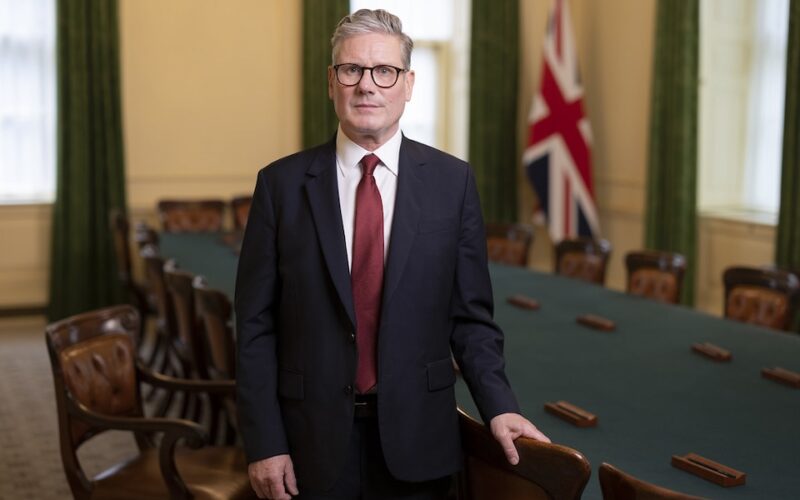
Prime Minister Sir Keir Starmer has pledged stronger security, tougher enforcement and faster legislation after two Jewish men were stabbed in Golders Green in what he described as another vile terrorist attack against Britain’s Jewish community.
Speaking from 10 Downing Street on 30 April 2026, Sir Keir Starmer said the attack in north London could not be treated as an isolated incident. The Prime Minister connected the Golders Green stabbing to a wider pattern of antisemitic attacks and intimidation, including incidents in Hendon, Kenton United Synagogue, the Jewish Ambulance Service Hatzola and the deadly synagogue attack at Heaton Park in Manchester in October.
The Prime Minister said the latest attack had deepened a long-running sense of fear among Jewish people in Britain. He said British Jews were scared to show who they were in their communities, scared to attend synagogue, scared to go to university as Jewish students, scared to send children to school as Jewish children, and even scared to use the National Health Service while being openly Jewish.
The Golders Green attack has now become a defining test of how the United Kingdom government responds to antisemitic violence, extremist mobilisation and hostile-state threats. Sir Keir Starmer said the government would increase visible policing in Jewish communities, expand investment in Jewish security services, strengthen powers against charities promoting antisemitic extremism, restrict hate preachers, and fast-track legislation to counter malign activity linked to states such as Iran.
Why did Sir Keir Starmer frame the Golders Green attack as part of a wider antisemitism crisis in Britain?
Sir Keir Starmer’s central message from Downing Street was that the Golders Green attack should not be viewed as a one-off act of violence. The Prime Minister said the stabbing of two Jewish men in broad daylight had taken the anxiety felt by Britain’s Jewish community into what he described as terror.
The institutional significance of the remarks lies in the way the Prime Minister shifted the issue from local policing to national security and social cohesion. By speaking from Downing Street, after visiting Golders Green, Sir Keir Starmer placed the attack within the government’s highest public communications channel. That matters because the United Kingdom government is now treating antisemitic violence not only as a community safety issue but also as a broader challenge to public order, counter-extremism policy and national resilience.
The Prime Minister referred to a series of recent attacks involving Jewish community sites and services. These included an arson attack in Hendon, an attack on Hatzola, the fireball at Kenton United Synagogue and the Heaton Park synagogue attack in Manchester. By linking these incidents, Sir Keir Starmer argued that Jewish fear in Britain had accumulated through repeated attacks rather than through one isolated event.
That framing is likely to shape the government’s response in three ways. It gives ministers political justification for higher security spending around Jewish institutions. It strengthens the case for legal changes against antisemitic extremism. It also places public protest language, campus security and foreign-state threat activity into the same policy conversation.
How is the United Kingdom government planning to strengthen security for Jewish communities after Golders Green?
Sir Keir Starmer said the government would strengthen the visible police presence in Jewish communities. That commitment is significant because visibility is central to reassurance after targeted attacks. For communities that feel exposed in public spaces, additional police presence around synagogues, schools, community centres and neighbourhoods can serve both as a deterrent and as a public signal that the state recognises the threat.
The Prime Minister also said investment would be increased in Jewish security services. In practice, Jewish community security in Britain often involves close coordination between police, community volunteers, local institutions and specialist security groups. Sir Keir Starmer thanked the Jewish security services and first responders, saying their actions had helped prevent a much greater tragedy in Golders Green.
The wider implication is that the United Kingdom government is likely to lean more heavily on partnership-based security. That model recognises that the police alone may not detect every threat in time, especially when local volunteers and community organisations are closest to day-to-day risk. The government’s challenge will be to strengthen that system without making Jewish life feel permanently securitised.
Security expansion also raises operational questions. Ministers will need to balance funding, police resources, counter-terrorism intelligence, local government coordination and public confidence. The Prime Minister’s remarks suggest that Downing Street now sees Jewish community security as a priority requiring both immediate reassurance and longer-term institutional support.
What legal measures did Sir Keir Starmer propose against antisemitic extremism and hate preaching?
Sir Keir Starmer said the government would introduce stronger powers to shut down charities that promote antisemitic extremism. This signals a possible tightening of scrutiny around organisations accused of using charitable status, community platforms or public legitimacy to support extremist messaging.
The Prime Minister also said hate preachers would be prevented from entering the country and barred from campuses, streets and communities. That statement places immigration enforcement, higher education security and public order powers into the same policy frame. It suggests that the government wants to reduce the ability of extremist speakers to use public platforms in Britain to normalise antisemitic hostility.
Sir Keir Starmer further said the government would work with the justice system to speed up sentencing for antisemitic attacks, with a stronger deterrence effect similar to the approach used during riots. This is one of the more consequential parts of the Downing Street statement because it moves the government response beyond policing and into court processing, sentencing timelines and criminal justice deterrence.
The legal and institutional test will be precision. Stronger powers must distinguish between protected political speech, unlawful incitement, support for terrorism and targeted racist intimidation. The Prime Minister said freedom of speech and peaceful protest would remain protected, but he also argued that certain slogans and imagery crossed into the veneration of violence against Jews.
Why did the Prime Minister connect antisemitism in Britain with the threat posed by Iran?
Sir Keir Starmer said the United Kingdom needed stronger powers to tackle the malign threat posed by states such as Iran. He said the government knew that Iran wanted to harm British Jews and would therefore fast-track the necessary legislation.
That statement expands the political meaning of the Golders Green attack beyond domestic extremism. By invoking Iran, the Prime Minister placed antisemitic threats against British Jews within the national security framework of hostile-state activity. This is a significant escalation in language because it connects community protection, counter-terrorism and foreign interference policy.
The United Kingdom has already faced growing concern over hostile-state activity, threats against dissidents, intimidation of communities and covert influence operations. Sir Keir Starmer’s remarks indicate that the government sees British Jewish security as part of that broader landscape, particularly where foreign states or state-linked actors are believed to encourage, enable or exploit antisemitic violence.
The wider consequence is that future legislation may not be limited to domestic hate crime. It could include measures aimed at foreign proxies, covert networks, extremist influence operations, financing channels and individuals acting on behalf of hostile states. For Jewish communities, this could mean stronger intelligence-led protection. For civil liberties groups, it may raise questions about how new powers are defined, overseen and applied.
How did Sir Keir Starmer address protest language and public tolerance of antisemitism?
Sir Keir Starmer used part of his Downing Street statement to challenge what he described as the public diminishing of antisemitism. He said many people in Britain either failed to see antisemitism or did not want to see it.
The Prime Minister referred to regular marches across Britain and said peaceful protest and freedom of speech were protected. However, he argued that people who marched alongside those wearing images of paragliders without challenging them were venerating the murder of Jews. He also said that people standing alongside those using slogans calling to globalise the intifada were effectively calling for terrorism against Jews and should face prosecution.
This section of the statement is politically sensitive because it sits at the intersection of free speech, protest rights, Middle East politics, public order and hate crime enforcement. Sir Keir Starmer was not arguing against protest as such. He was drawing a line between lawful political expression and conduct that he said glorified or encouraged violence against Jews.
The broader consequence is that the government may push police, prosecutors and universities to take a firmer line on antisemitic imagery, slogans and intimidation at public demonstrations and on campuses. That could sharpen debates over how Britain distinguishes between criticism of Israeli government policy, support for Palestinian rights, antisemitic intimidation and support for proscribed or violent causes.
What does the Downing Street statement reveal about the pressure on Britain’s social cohesion model?
Sir Keir Starmer’s remarks were not limited to security policy. The Prime Minister said Britain’s values were not a gift passed automatically from one generation to another. He said those values had to be earned each day through action.
That language matters because it reframes British tolerance as an active civic responsibility rather than a passive national identity claim. Sir Keir Starmer said political leaders often respond to such attacks by saying they are not Britain or that they affront British values. This time, he said the attacks kept happening and that society had to confront the reality more directly.
The social cohesion challenge is stark. Jewish citizens in Britain are being told by the Prime Minister that the state recognises their fear. At the same time, the wider public is being told that symbolic statements of tolerance are insufficient if antisemitism is ignored, minimised or tolerated in public life.
This is where the Golders Green attack becomes more than a criminal justice story. It has become a test of whether British institutions, civil society, universities, faith groups, protest organisers, political parties and law enforcement bodies can respond consistently to antisemitism without weakening democratic freedoms. The Prime Minister’s message was that freedom and tolerance remain meaningful only if minority communities can rely on them in daily life.
What is the institutional read on the Golders Green attack and the Downing Street response?
The stronger institutional read is that the Golders Green attack has pushed antisemitism into the centre of Britain’s security and social cohesion agenda. Sir Keir Starmer’s response was deliberately broader than a condemnation of one attack. It combined counter-terrorism language, community protection commitments, charity regulation, immigration controls, campus restrictions, criminal justice reform and hostile-state legislation.
That breadth signals urgency, but it also creates a complex delivery challenge. Increasing police visibility can happen quickly. Expanding community security funding can follow through government spending decisions. Changing charity law, speeding sentencing and passing hostile-state legislation require more careful design and parliamentary work.
The government will also have to manage trust. Jewish communities will judge the response by whether daily life feels safer, not by the strength of Downing Street language alone. Civil liberties groups, universities and protest organisers will watch whether new enforcement measures remain targeted and legally precise. Police and prosecutors will face pressure to draw clearer operational lines around antisemitic incitement, intimidation and terrorism-related speech.
Sir Keir Starmer’s statement therefore marks a policy inflection point. The Golders Green attack has forced the government to treat antisemitism as both an immediate security threat and a deeper societal failure. The Prime Minister’s challenge now is whether the promised response can move from Downing Street rhetoric to visible protection, credible enforcement and durable public trust.
What are the key takeaways from Sir Keir Starmer’s Downing Street remarks on the Golders Green attack?
- Sir Keir Starmer said two Jewish men were stabbed in Golders Green because they were Jews.
- The Prime Minister said the Golders Green attack followed other antisemitic incidents involving Hendon, Hatzola, Kenton United Synagogue and Heaton Park in Manchester.
- The United Kingdom government will increase visible police presence in Jewish communities.
- Sir Keir Starmer said the government would strengthen powers against charities promoting antisemitic extremism and restrict hate preachers.
- The Prime Minister said the United Kingdom would fast-track legislation to counter threats from states such as Iran.
Discover more from Business-News-Today.com
Subscribe to get the latest posts sent to your email.