


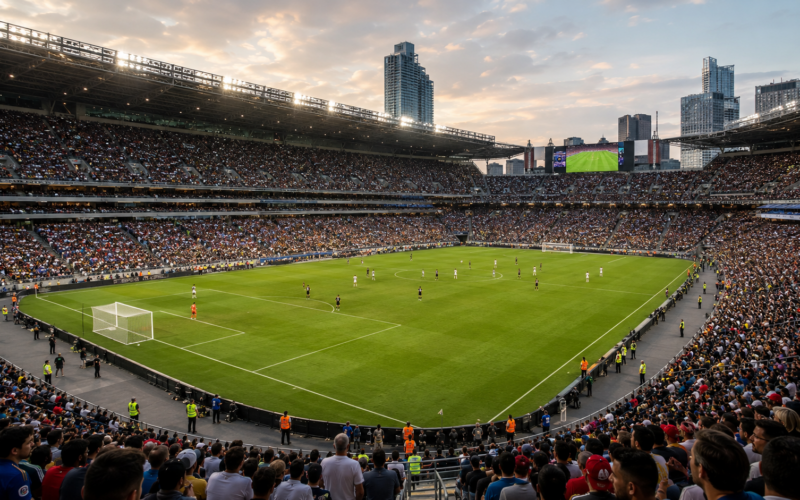
Jhon Arias scored the only goal as Colombia defeated Ghana 1-0 in their FIFA World Cup 2026 Round of 32 match at Kansas City Stadium in Missouri on Friday, July 3, 2026. Arias converted Luis Suárez’s low cross in the 14th minute after the substitute had unexpectedly replaced the injured Jhon Córdoba.
Both teams were forced into early changes, with Córdoba leaving after an apparent groin problem and Ghana right-back Marvin Senaya suffering a hamstring injury. The disruption affected Ghana more severely, as Arias drifted into the space created by the defensive reshuffle and calmly guided Suárez’s delivery beyond Lawrence Ati-Zigi.
Luis Díaz had a second-half goal disallowed for offside, while Ati-Zigi produced seven saves to prevent Colombia from turning their control into a more comfortable result. Ghana attempted eight shots but failed to place any on target as Camilo Vargas completed the match without making a save.
Colombia advanced unbeaten into the Round of 16 and recorded their third consecutive clean sheet at FIFA World Cup 2026. Ghana were eliminated, while Néstor Lorenzo’s side will face Switzerland at BC Place in Vancouver on Tuesday, July 7, at 1pm local time.
FIFA World Cup 2026 Colombia 1-0 Ghana full match scorecard and key incidents
How did two injuries inside the opening 13 minutes immediately alter the knockout match?
The opening period was unusually disrupted. Ghana began positively and produced the first attempt when Partey collected a loose ball outside the penalty area before driving narrowly wide of Vargas’ left post.
Colombia then lost Córdoba after only seven minutes. The centre-forward appeared to suffer a groin problem and was unable to continue, forcing Lorenzo to introduce Suárez far earlier than expected.
Ghana suffered a comparable setback when Senaya injured his hamstring and was replaced by Seidu in the 13th minute. The two changes made Colombia vs Ghana the first FIFA World Cup match in which both teams substituted a player before the 15th minute.
The consequences were not equal. Suárez entered with immediate clarity about his attacking role, whereas Seidu was required to join an unsettled defensive line and quickly establish his positioning against Díaz, Arias and Mojica.
Why did Luis Suárez’s unexpected introduction become the decisive tactical change?
Suárez offered a different attacking profile from Córdoba. Instead of remaining centrally between Ghana’s defenders, he moved towards the right channel and combined with Muñoz and Arias.
That movement pulled Mensah towards the ball and gave Arias freedom to attack the far side of the penalty area. Suárez’s first attempted cross was blocked, but Colombia recovered possession and returned the ball to him almost immediately.
His second delivery travelled low across the Ghana defence. Arias had drifted away from his marker and met the cross with a controlled first-time finish into the bottom corner.
Suárez had entered in the eighth minute and created the goal six minutes later. His assist became the earliest goal contribution by a substitute in FIFA World Cup history, turning an unwanted injury change into the moment that decided the match.
How did Jhon Arias escape Ghana’s defensive attention for the opening goal?
Arias began on Colombia’s right but rarely remained in one position. He moved inside when Muñoz advanced and then attacked the opposite side of the penalty area whenever Díaz or Suárez carried the ball from a wider starting point.
Ghana’s early defensive reshuffle weakened the communication between Seidu, Luckassen and the midfielders positioned ahead of them. When Suárez prepared his second cross, the defenders moved towards the near side and failed to track Arias arriving behind them.
The finish was technically controlled rather than spectacular. Arias opened his body and guided the ball past Ati-Zigi without attempting to overpower the goalkeeper.
Official timing placed the goal at 13 minutes and 49 seconds. It became Colombia’s second-earliest FIFA World Cup goal, behind only Pablo Armero’s fifth-minute strike against Greece in 2014.
Why could Ghana not recover after conceding despite retaining counterattacking pace?
Ghana possessed players capable of threatening transitions through Semenyo, Iñaki Williams and Jordan Ayew. Colombia prevented that pace from becoming decisive by protecting the centre and immediately pressuring the first pass after losing possession.
Lerma remained in front of Sánchez and Lucumí, reducing the space from which Ghana’s forwards could turn. Puerta and James Rodríguez then moved towards Partey and Sibo whenever Ghana attempted to build rather than counter.
Ghana were consequently encouraged to play towards the touchlines. Williams and Ayew often received with their backs to goal, while Semenyo encountered two defenders whenever he attempted to move inside.
Semenyo remained Ghana’s strongest individual threat and had one shot blocked before driving a dangerous ball across goal during the second half. No supporting runner attacked the delivery, allowing it to pass harmlessly through Colombia’s penalty area.
How did Colombia’s pressing structure prevent Ghana from recording a shot on target?
Colombia did not press at maximum intensity throughout the match, particularly in the demanding Kansas City conditions. Lorenzo instead organised pressure around Ghana’s central passes and waited for the ball to reach a receiver facing his own goal.
Suárez screened the route towards Partey, while Díaz and Arias positioned themselves to close Ghana’s full-backs. Puerta then moved aggressively towards the next midfielder whenever Ghana attempted to progress.
The approach limited Ghana to eight attempts, five of which were blocked. The remaining shots travelled off target, leaving Vargas without a save across the entire match.
Ghana’s attacking problem was not a complete absence of possession. The team simply failed to move the ball into positions from which Williams, Semenyo or the midfield runners could shoot without a Colombian defender directly in the path.
Why did Lawrence Ati-Zigi keep Ghana within one goal until the final whistle?
Ati-Zigi returned to Ghana’s starting line-up and became the primary reason the contest remained unresolved. His first important save came in the 19th minute when Díaz drove powerfully towards goal from outside the penalty area.
The goalkeeper then reacted sharply to deny Mojica’s firm header during first-half stoppage time. Suárez had already headed narrowly wide, and Ghana entered the interval fortunate to trail by only one goal.
Ati-Zigi remained influential after half-time. He prevented Puerta and Díaz from increasing the lead before later collecting Sánchez’s header from a Colombia corner.
Seven saves represented one of the strongest individual goalkeeping performances of the Round of 32. Ghana were eliminated, but the goalkeeper ensured one successful attack would have remained enough to force extra time until the closing whistle.
Why was Luis Díaz’s disallowed goal a warning Ghana could not convert into momentum?
Colombia appeared to double the lead in the 57th minute when Díaz collected a forward pass inside the penalty area and finished calmly beyond Ati-Zigi. The assistant referee raised the flag, and the goal was ruled out because Díaz had moved offside.
The decision gave Ghana another opportunity to remain in the match. Queiroz responded by introducing Fatawu and Owusu for Williams and Sibo five minutes later.
Those substitutions added running power but did not create greater control. Fatawu was booked soon after entering, while Owusu struggled to progress the ball through Colombia’s compact midfield.
Ghana survived the disallowed goal without using the reprieve to increase pressure on Vargas. Colombia continued generating the better opportunities and looked considerably more likely to score the second goal than Ghana did to find an equaliser.
Why did removing James Rodríguez at half-time not reduce Colombia’s control?
James had helped Colombia dictate the opening half through his ability to receive between Ghana’s midfield and defensive lines. One delicate pass released Díaz towards the side netting, while his positioning repeatedly drew Partey away from the central holding area.
Lorenzo replaced his captain with Ríos at half-time. The change reduced Colombia’s creative passing but increased the team’s athleticism, ball recovery and ability to cover Ghana’s transitions.
Ríos joined Puerta ahead of Lerma and pressed more aggressively whenever Ghana attempted to move through midfield. Colombia therefore became less dependent on extended passing sequences and more capable of recovering possession quickly.
The adjustment also reflected the demands of the next round. James’ workload could be managed, while Colombia protected the lead without asking their most experienced creator to complete another demanding half in the heat.
How did Colombia control the match despite failing to convert four major chances?
Colombia finished with five big chances but scored only one. Suárez, Mojica, Díaz and other attackers were unable to convert opportunities that could have removed the uncertainty much earlier.
The low score did not accurately reflect the balance of play. Colombia produced 20 attempts, eight shots on target and more than two expected goals while controlling 61% of possession.
Ghana created only 0.27 expected goals and no big chance. That statistical profile meant Colombia could survive its own wastefulness because the defensive structure prevented an equivalent threat from developing at the opposite end.
Greater efficiency will still be required against Switzerland. A stronger opponent may punish Colombia for leaving a knockout match undecided after creating enough chances to establish a comfortable advantage.
Why did Antoine Semenyo remain Ghana’s best route forward without receiving enough support?
Semenyo combined power, acceleration and a willingness to shoot from difficult areas. His first-half attempt was blocked, but the move showed that he could create danger even when Colombia’s defensive structure appeared settled.
His most threatening second-half action came when he moved into the right channel and drove the ball across Vargas’ goal. The delivery travelled through the most dangerous area, but neither a striker nor an advancing midfielder arrived to complete the move.
Williams had already been removed, while Jordan Ayew often received too far from goal to become the central target. Ghana’s midfielders also remained cautious because committing additional runners risked exposing the defence to Díaz and Arias.
Semenyo therefore carried the attacking burden without enough movement around him. Colombia could focus multiple defenders on his runs because Ghana did not create a second simultaneous threat elsewhere in the penalty area.
Why did Ghana’s five substitutions fail to produce a sustained late attack?
Queiroz used all five substitutions, beginning with the enforced introduction of Seidu. Fatawu and Owusu arrived shortly after the hour before Nuamah and Prince Adu entered for the closing period.
The changes increased Ghana’s speed but reduced the experience available to manage possession under pressure. Partey remained the principal organiser, yet Colombia consistently blocked the next forward pass.
Nuamah attempted to carry the ball directly, while Adu gave Ghana another runner around the defensive line. Neither player received the quality or volume of service required to threaten Vargas.
Colombia also responded through Quintero and Campaz. Quintero retained possession and attempted a dangerous long-range shot, while Campaz supplied fresh energy during stoppage time when Ghana needed to commit players forward.
Why did Colombia’s defensive discipline matter more than the single-goal margin?
A 1-0 result can suggest a narrow contest decided by one isolated attack. The underlying performance showed Colombia controlling far more than the scoreboard indicated.
Sánchez and Lucumí defended Ghana’s direct passes without being drawn unnecessarily into midfield. Muñoz and Mojica recovered quickly after attacking, while Lerma protected the area through which Semenyo and Williams wanted to accelerate.
Colombia completed a third consecutive FIFA World Cup clean sheet for the first time in the country’s history. Vargas needed only three saves across those three matches and none against Ghana, illustrating how effectively the players ahead of him restricted opportunities.
The defensive control allowed Colombia to tolerate missed chances. Lorenzo’s side were never completely safe, but Ghana rarely produced the type of attack required to make the narrow margin feel genuinely unstable.
What did Ghana’s FIFA World Cup 2026 campaign reveal about their development needs?
Ghana progressed from a difficult group containing England, Croatia and Panama. Their defensive organisation and late victory over Panama demonstrated resilience, but the attack remained inconsistent throughout the tournament.
The lack of creativity became particularly damaging against Colombia. Ghana could run into space during transitions but struggled when required to construct attacks against a settled defensive block.
Their midfield requires more progressive passing and stronger movement ahead of the ball. Partey could circulate possession, but the attacking players often waited in isolated positions rather than creating combinations around Colombia’s midfield line.
Ghana also need greater calm after setbacks. The early injury and Arias goal unsettled the team, and several periods of possession ended with forced passes rather than patient attempts to move Colombia out of shape.
What must Colombia improve before facing Switzerland in Vancouver?
Switzerland will present a more compact and experienced defensive challenge. Murat Yakin’s team conceded possession to Algeria but protected the central areas before scoring through Breel Embolo and Dan Ndoye.
Colombia must improve their finishing because Switzerland are unlikely to permit five major chances. Díaz, Suárez and the supporting midfielders will need to convert the limited openings created around Gregor Kobel’s goal.
The fitness of Córdoba will also require assessment. Suárez performed effectively after entering, but the potential loss of the starting centre-forward would alter Colombia’s attacking options and pressing structure.
Lorenzo must additionally decide whether James should return to the starting line-up after completing only the first half against Ghana. His passing can help unlock Switzerland, although Ríos offers greater protection against the runs of Johan Manzambi and Ndoye.
Colombia enter the Round of 16 unbeaten and with three successive clean sheets. The challenge is turning control into greater scoring efficiency before Switzerland’s transition threat can punish an incomplete attack.
How does Colombia’s victory complete the FIFA World Cup 2026 Round of 16 bracket?
Colombia became the final team to qualify for the Round of 16. They will travel to Vancouver to face Switzerland, who defeated Algeria 2-0 in their Round of 32 match.
Both teams enter the fixture unbeaten. Switzerland have combined compact defending with rapid transitions, while Colombia have controlled possession and conceded only once across four FIFA World Cup 2026 matches.
The winner will advance to the quarter-finals and meet the winner of Argentina vs Egypt. That bracket path is confirmed, although neither potential opponent should be treated as the quarter-final participant before the Round of 16 results are complete.
Ghana were eliminated in their first FIFA World Cup knockout appearance since reaching the 2010 quarter-finals. Colombia advanced from a knockout round for only the second time, following their 2-0 victory over Uruguay in 2014.
Key takeaways from Colombia vs Ghana at FIFA World Cup 2026
- Colombia defeated Ghana 1-0 and became the final team to reach the FIFA World Cup 2026 Round of 16.
- Jhon Córdoba suffered an apparent groin injury and was replaced by Luis Suárez in the eighth minute.
- Ghana right-back Marvin Senaya was forced off with a hamstring injury five minutes later.
- Suárez assisted Jhon Arias only six minutes after entering, producing the earliest World Cup goal contribution by a substitute.
- Arias scored at 13 minutes and 49 seconds, Colombia’s second-earliest FIFA World Cup goal.
- Luis Díaz had a 57th-minute finish disallowed for offside.
- Lawrence Ati-Zigi made seven saves as Ghana remained within one goal throughout the match.
- Colombia registered 20 attempts, eight shots on target and 2.04 expected goals.
- Ghana produced eight attempts but failed to place a shot on target.
- Colombia advanced to face Switzerland at BC Place, while Ghana were eliminated.
Discover more from Business-News-Today.com
Subscribe to get the latest posts sent to your email.