





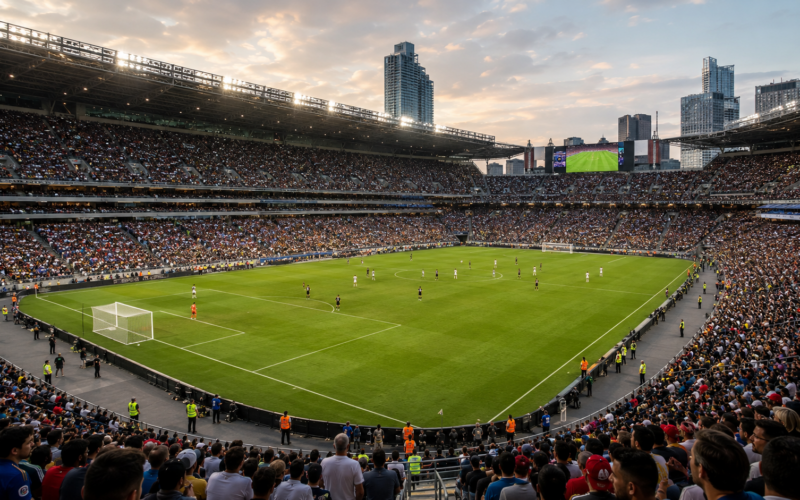
Japan and Sweden played out a 1-1 draw in their final FIFA World Cup 2026 Group F match at Dallas Stadium in Arlington, Texas, on Thursday, June 25, 2026. The match concluded during the morning of June 26 in India and was watched by a sold-out crowd of 70,137.
Daizen Maeda gave Japan the lead in the 56th minute after a sharp attacking move involving Ayase Ueda and Ritsu Doan. Maeda received Doan’s pass inside the penalty area, controlled with his left foot and finished with his right past Jacob Widell Zetterström.
Sweden equalised six minutes later through Anthony Elanga, who cut inside from the right and bent a left-footed strike beyond Zion Suzuki. Viktor Gyökeres supplied the assist by moving the ball into Elanga’s path and dragging Japan’s defensive attention away from the shot.
The result sent both teams into the Round of 32. Japan finished second in Group F with five points and secured a knockout meeting with Brazil in Houston, while Sweden finished third with four points and qualified through the best-third-place pathway.
FIFA World Cup 2026 Japan 1-1 Sweden full match scorecard and key incidents
Why did the first half feel cautious despite both teams still having group-position incentives?
Japan entered the match already well placed to qualify, but still with an outside route to winning Group F if the Netherlands dropped points against Tunisia. Sweden, by contrast, needed at least a draw to remove the danger created by their heavy defeat to the Netherlands.
Those incentives produced a first half that carried tactical caution rather than urgency. Japan held their 3-4-3 shape, protected central areas and looked for quick combinations through Doan, Ueda and Maeda, while Sweden used a 3-4-1-2 to keep Gyökeres and Isak high without overcommitting the wing-backs.
The early pattern was open in structure but limited in real threat. Sweden earned early corners, Japan circulated the ball cleanly and both teams appeared aware that a heavy defeat would be more damaging than a controlled draw.
The best first-half chance came shortly before the interval when Maeda laid the ball into Nakamura’s path. The winger struck first time, forcing Widell Zetterström into a stretching save around his left post.
Sweden’s main first-half concern was Hien’s injury. The centre-back, already booked in the 32nd minute, was replaced by Bergvall five minutes later, forcing Potter to adjust the balance of his defensive unit before the match had fully opened.
How did Ritsu Doan and Ayase Ueda create Japan’s breakthrough?
Japan increased their tempo after half-time. Tanaka’s early second-half effort signalled that Moriyasu’s side were no longer satisfied merely to manage the draw.
The breakthrough came in the 56th minute through one of the cleanest passing moves of the match. Doan cut in from the right, exchanged possession with Ueda and then slid a precise pass between Sweden’s centre-backs.
Maeda timed his movement intelligently, arriving inside the penalty area without being tracked. He controlled the ball with his left foot and finished with his right, giving Japan a 1-0 lead and briefly pushing them closer to a possible first-place challenge.
The goal also underlined Japan’s attacking identity. Rather than relying on crosses or individual runs, the move was built through quick angles, coordinated rotation and one-touch decision-making around the penalty area.
Maeda’s finish was Japan’s seventh goal of the tournament, setting a national record for goals scored by the country in a single FIFA World Cup campaign. It also reinforced the depth of a squad in which different attackers had contributed across the group stage.
Why did Anthony Elanga’s equaliser completely change Sweden’s emotional position?
Sweden were in danger when Japan scored. A defeat would have left Potter’s team on three points with a damaged goal difference from the 5-1 loss to the Netherlands, placing their third-place qualification in jeopardy.
Elanga changed the equation in the 62nd minute. Gyökeres moved across Tanaka and helped draw Japan’s midfield away from the ball, creating the narrow window for Elanga to cut inside from the right.
The winger’s left-footed strike curled from the edge of the right side of the penalty area, bending beyond the line of defenders and past an unsighted Suzuki. It was Elanga’s second goal of the tournament after his consolation against the Netherlands.
The equaliser restored Sweden to four points, a total strong enough to secure progression through the best-third-place ranking. It also changed the psychology of the final half-hour, allowing Sweden to chase a winner without the same immediate fear of elimination.
Elanga later thought Sweden’s draw might not be enough and reacted with visible frustration at full-time, before teammates and staff made clear that the point had secured their place. That reaction captured how tense the third-place equation had become for Potter’s side.
Why did Zion Suzuki’s late saves preserve Japan’s second-place finish?
Sweden came closest to winning the match after Elanga’s equaliser. Isak found space inside the penalty area three minutes later, but Suzuki moved quickly to his left and pushed the effort away.
The Japan goalkeeper was even more important in stoppage time. Elanga forced another save in the 92nd minute, Sweden then won a corner, and Isak met the delivery with a near-post header.
Suzuki reacted again, deflecting the header onto the crossbar and then claiming the dropping ball in traffic. The sequence prevented Sweden from overtaking Japan in the table and preserved the Samurai Blue’s automatic qualification route.
The late saves mattered beyond this match. Had Sweden scored, Japan would have finished third and faced the uncertainty of third-place allocation rather than a confirmed date with Brazil.
Japan’s defence had moments of looseness after going ahead, but Suzuki’s concentration ensured the team left Dallas with the result it required. His performance also provided encouragement before facing a Brazil side led by an in-form Vinícius Júnior.
What did Sweden’s second-half improvement reveal about Graham Potter’s adjustments?
Sweden looked passive during parts of the first half, particularly when Japan circulated possession through the right side. Potter’s side became more direct after falling behind and began using Gyökeres as a reference point rather than simply trying to progress through midfield.
Gyökeres’ assist for Elanga’s equaliser was not a conventional final pass, but it reflected the importance of his movement. He carried Japan’s defensive attention away from the shooting lane and created room for Elanga to strike.
Sweden also found greater value from set-pieces after the equaliser. Ayari’s corners repeatedly forced Japan to defend the six-yard area, and Isak’s stoppage-time header came from that pressure.
The late introductions of Sema, Svensson, Starfelt and Nygren were designed to stabilise the wing-back zones and protect the draw while leaving enough height for attacking corners. Sweden did not dominate the match, but they finished with the stronger final surge.
Potter’s larger task before the Round of 32 is tightening defensive spacing. Sweden scored six goals in three group matches but also conceded seven, showing both their attacking potential and vulnerability.
How did Japan qualify with five points and why does the Brazil fixture carry such weight?
Japan completed Group F unbeaten with five points after drawing with the Netherlands and Sweden and defeating Tunisia. The 4-0 win over Tunisia gave them the goal-difference cushion required to finish second ahead of Sweden.
The Brazil fixture is both difficult and commercially significant. Japan will face a team that won Group C with seven points and entered the knockout stage after consecutive 3-0 victories over Haiti and Scotland.
From a tactical perspective, Japan’s compact possession game could challenge Brazil if they evade the first wave of pressure. Doan, Kamada, Ueda and Maeda can combine quickly, while Japan’s back three offers multiple passing angles when pressed.
The danger lies in transition defence. Brazil’s Vinícius Júnior has scored four tournament goals, and Bruno Guimarães has repeatedly turned turnovers into direct attacks.
Moriyasu will need Japan to repeat the clean second-half coordination that produced Maeda’s goal, while also avoiding the loose defensive moments that allowed Sweden’s late set-piece pressure. The Round of 32 match in Houston could become one of the most attractive early knockout fixtures.
Why did Sweden’s four-point third-place finish secure progression?
Sweden finished third with four points, level goal difference and seven goals scored. That record was enough to rank among the eight best third-placed teams across the 12 groups.
The result was a recovery from a volatile group campaign. Sweden opened with a 5-1 victory over Tunisia, then lost 5-1 to the Netherlands, creating a rare situation in which their goal difference returned to zero after two emphatic scorelines.
The draw with Japan stabilised the campaign. Elanga’s goal ensured Sweden avoided the risk of finishing on three points, where goal difference and goals scored would have become more dangerous.
Sweden’s next opponent depended on the final combination of group winners and third-place qualifiers. Their likely challenge will be demanding because third-placed teams are generally paired with group winners in the Round of 32.
Potter will still take the trade-off. Sweden arrived at the final whistle having avoided elimination and retained a forward line containing Isak, Gyökeres and Elanga, all capable of troubling a higher-ranked opponent in a one-off knockout match.
How did the Netherlands result determine the final Group F table?
The Netherlands defeated Tunisia 3-1 in the simultaneous match, finishing first with seven points. That result meant Japan could not win the group even after taking the lead against Sweden.
Japan finished second with five points, having drawn with the Netherlands and Sweden while defeating Tunisia. Their unbeaten record was enough for automatic qualification, but not enough to overtake the Dutch.
Sweden finished third with four points and qualified through the best-third-place ranking. Their superior points total made the final ranking less dependent on goal difference than it would have been after a defeat.
Tunisia finished fourth without a point after three defeats. Their goal difference of minus 10 reflected heavy losses across all three Group F fixtures.
FIFA World Cup 2026 Group F final points table
What does Japan vs Brazil mean for the Round of 32?
Japan will face Brazil at Houston Stadium on Monday, June 29. The fixture brings together a technically disciplined Japan side and a Brazil team that finished Group C unbeaten with seven points.
Japan’s confidence will come from their ability to build through pressure. The Maeda goal against Sweden showed how quickly Moriyasu’s team can move from wing rotation into a central penalty-area chance.
Brazil will present a much sharper pressing and transition challenge. Vinícius Júnior has been one of the standout players of the group stage, while Bruno Guimarães has repeatedly turned midfield recoveries into direct attacking chances.
Japan’s defensive task will centre on protecting the channels outside the back three. If Doan and Nakamura advance aggressively, Brazil will look to attack the spaces behind them before Japan can reset.
The match also gives Japan an opportunity to test whether their unbeaten group campaign can translate against an elite knockout opponent. Their draw with the Netherlands and controlled performance against Sweden suggest they will not approach Brazil as a passive underdog.
What uncertainty remains for Sweden before the Round of 32?
Sweden’s qualification was confirmed, but their opponent was not immediately clear at the time this match ended. The exact third-place allocation depends on which eight third-placed teams qualify from the 12 groups.
What is clear is that Sweden are likely to face a group winner. Their defensive record, with seven goals conceded in three matches, will be the first concern for Potter before the knockout phase.
The attacking picture is more encouraging. Elanga scored twice in the group stage, Gyökeres contributed with direct power and intelligent movement, and Isak still produced decisive late chances despite a relatively quiet match.
Sweden’s route has been inconsistent but resilient. A five-goal win, a five-goal defeat and a pressure-heavy draw produced four points, a neutral goal difference and a place in the last 32.
Key takeaways from Japan vs Sweden at FIFA World Cup 2026
- Japan and Sweden drew 1-1 at Dallas Stadium, and both teams advanced from Group F.
- Daizen Maeda opened the scoring in the 56th minute after a sharp move created by Ritsu Doan and Ayase Ueda.
- Anthony Elanga equalised six minutes later with a curling left-footed strike from the right side of the penalty area.
- Viktor Gyökeres assisted Sweden’s goal and helped create the shooting lane with intelligent movement.
- Zion Suzuki denied Alexander Isak three minutes after the equaliser and again in stoppage time.
- Japan finished second in Group F with five points and remained unbeaten through the group stage.
- Sweden finished third with four points and qualified through the best-third-place route.
- The Netherlands won Group F after beating Tunisia 3-1 in the simultaneous match.
- Japan will face Brazil in the Round of 32 at Houston Stadium on June 29.
- Sweden’s Round of 32 opponent depended on the final third-place allocation when the match ended.
Discover more from Business-News-Today.com
Subscribe to get the latest posts sent to your email.



