Dreamfolks Services Limited (NSE: DREAMFOLKS; BSE: 543591) has launched DreamFolks Club Nagavalli Wilderness Estate, a members-only luxury destination spread across approximately 30 acres on the Odisha-Andhra Pradesh border in the Eastern Ghats. Announced on October 11, 2026, the estate includes a 25-acre golf course, 37 cottages, wellness facilities and experiential activities connected with the region’s natural and cultural heritage. The development adds a physical hospitality destination to a business that is attempting to move beyond its traditional airport lounge aggregation model following a major disruption to domestic lounge services. With consolidated revenue falling approximately 88.8% year-on-year to ₹39.01 crore in Q1 FY27 and the company reporting a net loss of ₹13.83 crore, the launch represents a diversification milestone rather than immediate evidence of a financial recovery. Its commercial importance will depend on membership adoption, property utilisation, operating economics and whether premium lifestyle services can generate sufficient earnings to offset the contraction in the company’s former core business.
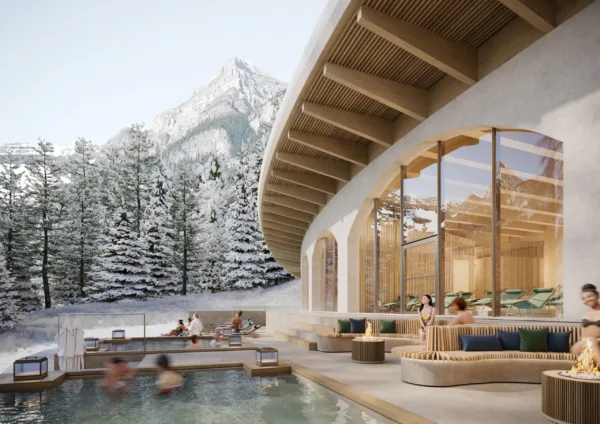
Nagavalli Wilderness Estate takes its name from the Nagavalli River, which separates the estate from its golf course and forms part of the boundary between Odisha and Andhra Pradesh. DreamFolks has positioned the destination around a distinctive cross-border golfing experience, with the course extending across the river into Andhra Pradesh. Beyond golf, the estate incorporates 20 luxury cottages and 17 eco cottages, together with a spa, swimming pool, multicuisine restaurant and an event hall accommodating approximately 50 to 75 guests. The company is also incorporating outdoor adventure, regional cuisine, local art and cultural experiences into its membership proposition, broadening the development beyond conventional golf-club facilities.
The launch comes during a period of considerable business-model restructuring for DreamFolks Services Limited, which discontinued its domestic airport lounge services in September 2025 after changes in relationships with important lounge operators. Although its global lounge network and other domestic services continued, the subsequent revenue contraction exposed the company’s dependence on its former aggregation business. Management has responded by expanding international lounge access, railway hospitality, golf services, lifestyle benefits and direct-to-consumer memberships. Nagavalli Wilderness Estate provides a tangible destination within that wider strategy, but the October announcement does not disclose the property’s investment cost, underlying ownership structure, membership numbers, occupancy expectations or projected financial contribution.
What makes DreamFolks Club Nagavalli Wilderness Estate different from conventional luxury resorts?
Nagavalli Wilderness Estate has been designed as a private membership destination rather than a conventional hotel marketed primarily through room bookings. The approximately 30-acre property includes a 25-acre golf course, making golf the central physical attraction around which its accommodation and recreational services are organised. Its location across the Nagavalli River creates an unusual geographical feature, allowing golfers to play from the Odisha side toward the Andhra Pradesh side. The company has not disclosed the number of golf holes, course length, professional certification or other technical specifications, so the golf facility’s competitive standing cannot yet be assessed against established championship courses.
The accommodation offering consists of 37 cottages, divided between 20 luxury units and 17 eco units. Luxury cottages account for approximately 54% of the property’s disclosed accommodation inventory, while eco cottages represent the remaining 46%. This combination potentially enables the operator to address customers seeking different forms of premium accommodation, although the company has not published nightly tariffs or separate financial targets for the two categories. The eventual accommodation economics will depend on occupied room nights, realised pricing, seasonal demand and the operating costs associated with maintaining a relatively small destination property.
The estate also contains a spa, swimming pool, multicuisine restaurant and event facilities with seating capacity for approximately 50 to 75 guests. These amenities create opportunities for spending beyond accommodation, particularly through dining, wellness treatments and private gatherings. A smaller event venue may suit intimate corporate retreats, family celebrations and curated group activities rather than large conferences or destination weddings. However, the launch announcement does not establish whether such events will be sold separately, included in membership packages or restricted to existing members.
Cultural and nature-based experiences are another component of the proposition. DreamFolks has described plans for members to engage with local tribal traditions, performances, regional arts and crafts, outdoor adventure and food associated with the Eastern Ghats. This creates an opportunity to distinguish the estate from conventional urban private clubs, although the company has not identified specific community partnerships or commercial arrangements with local artisans and performers. The credibility of the cultural offering will depend on how these experiences are delivered and whether participating communities receive meaningful economic opportunities.
Why is DreamFolks expanding into private clubs after exiting India’s domestic airport lounge business?
DreamFolks Services Limited built its original business around connecting financial institutions, card networks and their customers with third-party airport lounge operators. That model enabled the company to distribute lounge access without having to own every facility used by travellers, supporting expansion through technology integrations and service partnerships. However, changes in the domestic airport lounge industry during 2025 weakened this position as certain operators and financial institutions altered their commercial arrangements. DreamFolks discontinued domestic airport lounge services for its clients in September 2025, while continuing its international lounge operations and other domestic offerings.
The restructuring has encouraged the company to broaden its business from a specialist travel-access intermediary into a provider of travel and lifestyle benefits. Its current portfolio encompasses global airport lounges, railway lounges, golf games and lessons, airport transfers, meet-and-assist services, wellness benefits, dining and private club memberships. Rather than relying entirely on one frequently used credit card benefit, DreamFolks is attempting to offer multiple services that financial institutions and enterprises can combine for different customer segments. The strategy could reduce exposure to individual service categories if alternative offerings generate substantial and profitable transaction volumes.
Nagavalli Wilderness Estate introduces another dimension by connecting the DreamFolks Club brand with a physical leisure destination. Existing membership products primarily provide access to a collection of services and facilities, while the newly launched estate offers a more concentrated hospitality experience built around accommodation, golf and recreation. This may create opportunities for integrated memberships, corporate arrangements and customer engagement that extend beyond individual airport transactions. However, the company’s filing does not establish whether it owns the underlying land and buildings, operates the estate through a contractual arrangement or shares operating responsibilities with another party.
The commercial model is particularly relevant because physical hospitality properties may involve different economics from technology-enabled service aggregation. Accommodation facilities, restaurants, golf courses and landscaped grounds require maintenance, staffing and operational expenditure regardless of short-term customer utilisation. Depending on the contractual structure, DreamFolks could face direct operating obligations or participate through a less capital-intensive management or partnership arrangement. Until management discloses those terms, the estate should not be characterised as either a wholly owned hospitality asset or an asset-light franchise operation.
Can DreamFolks Club membership pricing create a meaningful new revenue stream for the company?
DreamFolks has already established a consumer membership proposition through DreamFolks Club, offering different levels of access to travel, golf, dining and premium lifestyle experiences. Its publicly advertised annual membership tiers include White at ₹10,000, Orange at ₹30,000 and Black at ₹50,000, excluding applicable taxes. The higher-priced packages incorporate combinations of global lounge access, railway lounge visits, golf benefits and private club privileges. These are prices for the wider DreamFolks Club membership programme and should not be interpreted as confirmed Nagavalli Wilderness Estate membership fees.
The company’s August 2026 earnings discussion provided additional insight into early commercial adoption. Chief Business Officer Sandeep Sonawane indicated that Black memberships were attracting relatively stronger sales, while the approximate average price across membership categories was around ₹30,000. He also explained that the programme remained at an early stage and was making only a small contribution to total revenue. Management had not disclosed total paid memberships, average customer retention or a quantified profitability contribution from the programme.
The relationship between membership pricing and revenue potential therefore depends heavily on customer acquisition and retention. At an illustrative annual membership price of ₹30,000, every 1,000 memberships would represent ₹3 crore in gross customer billings before applicable taxes and any adjustments related to discounts, benefit delivery or revenue recognition. That calculation does not constitute a forecast, and DreamFolks has not indicated that the Nagavalli estate will generate those membership volumes or use the same pricing structure. Actual profitability would also depend on the costs of providing membership benefits, operating expenses and the accounting treatment of annual subscriptions.
Nagavalli could improve the wider membership proposition by introducing a destination that consumers associate directly with the DreamFolks brand. Premium customers may place greater value on access to distinctive accommodation and recreational experiences than on individual discounted services. Corporate clients could also consider curated hospitality benefits as part of employee recognition or customer loyalty programmes, although no Nagavalli-specific corporate agreement has been announced. The commercial test will be whether access to the new estate attracts additional paying members, increases renewals or generates incremental spending beyond benefits already included in existing packages.
Membership-led hospitality businesses also depend on balancing perceived exclusivity with sufficient customer utilisation. Too few members may leave facilities underused, while excessive membership sales without corresponding capacity could weaken service quality and customer satisfaction. DreamFolks will need to manage these competing considerations if the destination becomes a meaningful part of its premium consumer offering. The company’s future disclosures on membership volumes, utilisation and customer economics would provide a stronger basis for assessing the business than the estate’s physical size alone.
How severe was DreamFolks Services’ financial decline in FY26 and the June 2026 quarter?
DreamFolks’ diversification strategy is unfolding after a significant deterioration in its reported financial performance. During FY26, the company generated consolidated revenue from operations of approximately ₹660.56 crore, compared with ₹1,291.88 crore in FY25. This represents a decline of approximately 48.9%, largely reflecting the structural disruption to its domestic airport lounge business. Consolidated profit after tax fell from approximately ₹65.05 crore to ₹11.62 crore over the same period, an 82.1% contraction.
The deterioration became more pronounced in Q1 FY27, the quarter ended June 30, 2026. Consolidated revenue from operations declined to ₹39.01 crore from ₹348.95 crore in the corresponding quarter a year earlier, representing an 88.8% fall. The company reported a net loss of ₹13.83 crore, compared with a profit of ₹21.27 crore in Q1 FY26. Adjusted EBITDA also moved from a positive ₹30.49 crore to a loss of ₹16.37 crore, demonstrating that the revenue decline had translated into operating pressure.
The sequential figures reveal that the financial adjustment was continuing after the initial industry disruption. Revenue declined from approximately ₹52.64 crore in Q4 FY26 to ₹39.01 crore in Q1 FY27, a further contraction of approximately 25.9%. The adjusted EBITDA loss widened from ₹14.36 crore to ₹16.37 crore, while the net loss increased from ₹13.01 crore to ₹13.83 crore. These figures establish that the company had not yet achieved a stable earnings recovery by the end of June 2026.
Management attributed part of the June-quarter gross profitability pressure to upfront minimum-guarantee commitments associated with expanding the global lounge business. These commitments can create a mismatch between payments required to secure access to service networks and the transaction volumes subsequently generated through those arrangements. Management expects the economics to improve as utilisation rises, but that expectation depends on sufficient customer activity and the terms of the underlying contracts. The company has not demonstrated that higher future volumes will necessarily recover all costs associated with the expansion.
The decline in earnings also makes the financial scale of new businesses especially relevant. During Q1 FY27, services outside airport lounges accounted for approximately 33% of consolidated revenue, indicating that diversification is contributing to the operating mix. Applied to the quarter’s ₹39.01 crore revenue base, that percentage represents approximately ₹12.9 crore, although the disclosed proportion is rounded. A larger contribution from new services within a substantially smaller overall business does not by itself establish that these newer activities can replace the revenue previously generated by domestic airport lounge aggregation.
Nagavalli Wilderness Estate should consequently be assessed against the size of the financial adjustment rather than simply the range of amenities announced. Even if the property attracts premium customers, a single 37-cottage destination is unlikely to be an adequate measure of the wider recovery programme without evidence of broader membership sales, service distribution and operating profitability. Its value may emerge through brand development, customer engagement and additional product offerings rather than large standalone revenue. The company’s next financial disclosures will be necessary to determine whether the expansion strategy is beginning to improve consolidated results.
How could DreamFolks finance its lifestyle expansion while managing existing operating losses?
DreamFolks entered its current restructuring with financial resources that management believes provide flexibility to invest in new services. In its August investor presentation, the company reported approximately ₹193.3 crore in cash and cash-equivalent resources as of June 30, 2026, alongside net worth of approximately ₹300.4 crore. The disclosed liquidity measure had increased from approximately ₹149 crore at the end of the preceding quarter, supported partly by efforts to collect outstanding customer receivables. These figures indicate that the company retained financial resources despite reporting losses during the June quarter.
However, reported liquidity and earnings capacity are different considerations. Cash and investment balances can support expenditure during an operating transition, but persistent negative operating results may gradually reduce available financial flexibility. The company’s FY26 consolidated operating cash flow declined to approximately ₹8.31 crore from ₹57.42 crore in FY25, reflecting a substantial reduction in cash generation. Its ability to finance simultaneous international, railway and lifestyle initiatives will therefore depend partly on restoring positive operating contributions and managing working capital.
DreamFolks has also been increasing its involvement in railway hospitality through Ten11 Hospitality, giving it more direct exposure to the operation of premium railway lounges. This activity differs from a purely intermediary model because operating physical hospitality facilities can involve establishment expenditure, staffing and continuing service costs. The Nagavalli estate potentially introduces similar questions, although the company has not disclosed enough information to determine its specific financial obligations. Expansion into facilities with direct operating responsibilities would create a different capital-allocation profile from acquiring access rights to third-party services.
The October 11 filing contains no investment amount for Nagavalli Wilderness Estate, nor does it identify how the development was financed. It also does not disclose whether any capital expenditure will appear directly on DreamFolks’ balance sheet or through a subsidiary, joint venture or operating arrangement. Without those details, the property cannot be assigned a reliable capital intensity, payback period or return on investment. Any assessment of its financial contribution must remain conditional on later disclosures.
The company faces a choice between investing for future revenue diversification and limiting expenditure until established business activities recover. Spending on new services may be commercially justified if it produces recurring customer revenue and stronger margins, but the benefits may take time to materialise. Management’s capacity to pursue several initiatives simultaneously will be tested by cash conversion and the operating performance of newer businesses. The presence of a new hospitality destination strengthens the company’s service proposition, but financial sustainability requires the wider portfolio to generate cash rather than depend indefinitely on existing reserves.
How does Nagavalli fit alongside DreamFolks’ international lounges and railway hospitality strategy?
DreamFolks is not relying exclusively on private clubs to diversify its operations. By June 2026, the company reported access to more than 1,100 global airport lounges and related touchpoints, including over 70 additional lounges introduced during the first quarter of FY27. Its wider service network extended across more than 6,000 touchpoints in over 100 countries, including international golf facilities and other travel and lifestyle services. These figures describe the company’s accessible network rather than facilities necessarily owned or operated directly by DreamFolks.
Golf already represents an established product category within that network. Management reported access to more than 80 golf outlets in India and over 860 international golf courses during its August earnings discussion. Nagavalli introduces a destination built around golf into a business that has previously emphasised golf access and lessons through partner networks. This could provide an additional platform for membership products, premium experiences and customer engagement, although the company has not disclosed an integrated commercial offering specifically combining Nagavalli with its international golf network.
International expansion is another important element of the strategy. DreamFolks has been pursuing relationships with financial institutions and card networks across Asia-Pacific markets while expanding service distribution beyond India. Management discussed new or developing programmes involving clients in Singapore and Indonesia during its August earnings call, alongside the continuing expansion of global lounge services. These activities support the company’s intention to reduce reliance on a single domestic travel-benefit market.
The distinction between business models will become increasingly important as the portfolio develops. International lounge access and travel-benefit distribution can scale through technology platforms and commercial partnerships, whereas the economics of operating hospitality facilities are more closely linked to individual locations and physical capacity. A membership destination may improve customer differentiation, but it does not necessarily provide the scalability of a widely distributed digital service. DreamFolks will need to demonstrate that these different operating models complement each other rather than introduce complexity disproportionate to their revenue contributions.
The most commercially promising outcome would be a portfolio in which banks and enterprises continue to provide substantial customer distribution while direct memberships create an additional consumer relationship. A distinctive destination such as Nagavalli could strengthen the appeal of selected premium membership packages without becoming the company’s principal revenue source. Whether that integration is achievable will depend on customer demand, membership economics and the commercial arrangements surrounding the new estate.
What does the DREAMFOLKS share price indicate about investor confidence in the restructuring?
DreamFolks Services shares closed at ₹59.61 on the National Stock Exchange of India on October 9, 2026, gaining approximately 0.34% during the trading session. The stock traded between ₹59.02 and ₹60.45, with approximately 32,548 shares changing hands. Its closing price was approximately 62.7% below the reported 52-week high of ₹160 and only around 6.4% above the 52-week low of ₹56. The October 11 Nagavalli announcement occurred after the last completed trading session, meaning the October 9 share price does not reflect a verified market reaction to the estate’s launch.
The stock also declined from its September 9 closing price of ₹68.55 to ₹59.61 on October 9, representing a fall of approximately 13% over the one-month period. This weakness indicates that the company’s continuing diversification announcements have not yet produced a sustained recovery in its equity valuation. However, share-price movements cannot be attributed exclusively to one operating development because wider market conditions, trading liquidity and investor expectations also influence prices. The more defensible interpretation is that the market remains cautious while the company’s financial turnaround is still unproven.
At the October 9 closing price, DreamFolks had an indicative equity market capitalisation of approximately ₹318 crore based on its reported share capital. Comparing that figure with its June-quarter net worth of approximately ₹300.4 crore suggests a relatively modest premium to reported accounting equity, although market capitalisation and book value measure different aspects of the business. The comparison also does not establish that the stock is undervalued, particularly when the company is reporting operating losses. Future profitability, the recoverability of assets and the returns generated from new investments will influence how investors assess its equity value.
Traditional trailing price-to-earnings comparisons are less informative during periods of sharp earnings deterioration because historical profits may no longer represent current operating conditions. DreamFolks’ FY26 profitability was significantly lower than in FY25, and Q1 FY27 produced a net loss rather than positive earnings. Consequently, investors have less reason to rely on previous earnings multiples without accounting for the structural changes to the domestic lounge business. The commercial value of the new strategy is more likely to be tested through sequential revenue recovery, gross profitability and improved operating cash generation.
The Nagavalli launch introduces a new physical destination and strengthens the company’s consumer-facing narrative, but it does not provide sufficient financial information to justify a measurable earnings revision. An improvement in sentiment would require evidence that diversification is becoming economically meaningful rather than simply increasing the number of services available. The next quarterly results and subsequent membership disclosures will provide stronger indicators than the size of the estate or the publicity surrounding its opening.
What must DreamFolks demonstrate next for Nagavalli Wilderness Estate to support a lasting recovery?
The next operational milestone for Nagavalli Wilderness Estate will be evidence of customer adoption. The October announcement establishes the launch of the property and identifies its facilities, but it does not provide confirmed membership bookings, occupancy levels, room tariffs or event reservations. Disclosure of these metrics would help establish whether the destination is attracting sufficient demand to support its operating model. Comparisons across future reporting periods would also be useful because a newly launched property may experience different demand patterns during its initial marketing and customer acquisition phase.
Membership renewals could become another important indicator of the wider DreamFolks Club proposition. The company’s existing membership programme combines travel and lifestyle services that may encourage repeat engagement, but customer retention depends on the practical value and availability of those benefits. A destination like Nagavalli could strengthen customer loyalty if members regularly use the facilities and regard the experience as distinctive. Conversely, expensive operating facilities with limited repeat visits would make the economics more difficult to sustain.
Financial disclosure will be equally important. Management has not stated whether Nagavalli is expected to contribute materially to FY27 revenue or disclosed any timetable for reaching operating profitability. Details about the investment structure, revenue-sharing arrangements and ongoing financial obligations would allow the market to distinguish between a capital-intensive hospitality operation and a more flexible partnership model. Without that distinction, it would be premature to incorporate substantial property earnings into expectations for DreamFolks’ financial recovery.
The new estate also provides an opportunity to evaluate the company’s ability to manage hospitality services alongside its established technology and benefit-distribution activities. Success in aggregating thousands of global service touchpoints does not automatically demonstrate expertise in managing a specific destination’s accommodation, food services and maintenance requirements. The relevant operational capabilities may reside within partners or other entities, but those responsibilities have not been identified in the current announcement. Greater clarity on the operating structure would help establish whether DreamFolks is expanding its direct hospitality exposure or mainly extending its consumer brand through a destination partnership.
DreamFolks’ broader recovery depends on restoring a profitable revenue base after the sharp contraction in domestic airport lounge services. Nagavalli Wilderness Estate adds a differentiated membership destination, while global lounges, railway hospitality and lifestyle benefit distribution provide additional avenues for growth. The company retains financial resources and an established institutional customer network, but its latest reported results show that the newer activities have not yet replaced the earnings capacity of its former business. The strongest evidence of progress will be a sustained improvement in consolidated revenue, gross profitability and cash generation, accompanied by measurable membership adoption and transparent economics for the new estate.
What are the key takeaways from DreamFolks’ Nagavalli club launch and financial turnaround strategy?
- DreamFolks Services Limited launched Nagavalli Wilderness Estate on October 11, 2026, in the Eastern Ghats along the Odisha-Andhra Pradesh border.
- The approximately 30-acre private destination includes a 25-acre golf course and 37 cottages, comprising 20 luxury and 17 eco units.
- Amenities include a spa, swimming pool, restaurant and an event hall accommodating approximately 50 to 75 guests.
- The development strengthens the company’s diversification beyond its former domestic airport lounge aggregation business.
- DreamFolks reported an 88.8% year-on-year revenue decline in Q1 FY27, with consolidated revenue falling to ₹39.01 crore.
- The company recorded a ₹13.83 crore quarterly net loss, compared with a ₹21.27 crore profit in the corresponding previous-year period.
- Non-airport lounge services accounted for approximately 33% of Q1 FY27 revenue, but overall business volume remained substantially below historical levels.
- DreamFolks Club’s broader consumer membership programme offers annual packages priced between ₹10,000 and ₹50,000 before taxes, although Nagavalli-specific fees have not been disclosed.
- DREAMFOLKS shares closed at ₹59.61 on October 9, approximately 62.7% below their reported 52-week high.
- Future disclosures on membership adoption, property economics and consolidated profitability will determine whether the diversification strategy is delivering sustainable financial improvement.
Discover more from Business-News-Today.com
Subscribe to get the latest posts sent to your email.