




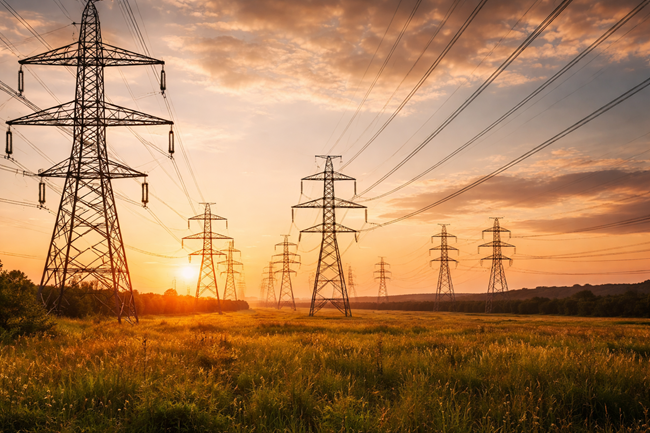
Diamond Power Infrastructure Limited (NSE: DIACABS; BSE: 522163) has secured a ₹185.16 crore contract confirmation and Letter of Award from Adani Energy Solutions Limited for the supply of AL59 aluminium alloy conductors. The order covers 1,050 kilometres of AL59 Moose conductor for the Tuticorin Project and 3,770 kilometres of AL59 Zebra conductor for the Pune-III Project. Deliveries are scheduled between July 2026 and February 2027, placing most of the potential revenue contribution within the current financial year. The contract strengthens Diamond Power Infrastructure’s position in advanced transmission conductors and extends an existing commercial relationship with Adani Energy Solutions. The central tension is whether the company can translate a rapidly growing order pipeline into revenue, margins and cash flow while managing overlapping delivery schedules and variable aluminium-linked pricing.
The disclosed value excludes Goods and Services Tax but includes packing, forwarding, freight and transit insurance. Including Goods and Services Tax at 18%, the gross invoice value would be approximately ₹218.49 crore, although the economic contract value relevant to Diamond Power Infrastructure’s revenue analysis is the pre-tax amount. Adani Energy Solutions awarded the order on behalf of its project special-purpose vehicles, and Diamond Power Infrastructure confirmed that the transaction is unrelated-party business conducted at arm’s length.
How material is the ₹185 crore Adani Energy Solutions order for Diamond Power Infrastructure?
The ₹185.16 crore award is equivalent to approximately 9.7% of Diamond Power Infrastructure’s FY26 revenue from operations of ₹1,910.10 crore. It also represents about 5.3% of the company’s disclosed FY26 closing revenue order book of roughly ₹3,498 crore. The comparison illustrates that the contract is financially meaningful without being large enough, by itself, to redefine the company’s earnings profile.
The order is more significant when considered alongside the company’s recent contract momentum. Earlier in July, Diamond Power Infrastructure secured a ₹435.71 crore order for high-tension and low-tension cables for 310 megawatts of data centre projects in Hyderabad. The Adani Energy Solutions conductor award and the Hyderabad cable contract together amount to approximately ₹620.87 crore, equivalent to almost 18% of the order book reported at the end of FY26.
These are different product categories and customer applications. The Hyderabad order involves more than 2,100 kilometres of power cables, while the Adani Energy Solutions award involves 4,820 kilometres of overhead transmission conductors. The combination nevertheless places substantial manufacturing, procurement and logistics requirements on the company from the second quarter of FY27 onward.
The Adani Energy Solutions contract is also unusually concentrated in the Pune-III Project. Approximately 78% of the total conductor length relates to the 3,770-kilometre AL59 Zebra requirement, while the Tuticorin portion accounts for the remaining 22%. Completion of the Pune-III supplies will therefore be the dominant factor determining whether Diamond Power Infrastructure meets the overall contract schedule.
Why does the variable aluminium and currency formula matter for realised revenue and margins?
The ₹185.16 crore figure is not a permanently fixed contract value. Diamond Power Infrastructure disclosed that pricing was calculated using an aluminium London Metal Exchange reference of US$2,550 per metric tonne, a premium of US$106 per metric tonne and a US dollar to Indian rupee exchange rate of 87.
Final prices will be calculated using the agreed price-variation formula and the average aluminium and currency levels during the month preceding each scheduled dispatch. Consequently, the reported value may increase or decrease as aluminium prices and the rupee-dollar exchange rate change.
This mechanism is commercially important because aluminium is a major cost component in conductor manufacturing. A functioning pass-through formula can reduce the risk that a manufacturer remains locked into a selling price while raw-material costs move sharply against it. It also means higher contract revenue caused by rising aluminium prices would not necessarily represent higher underlying profitability because much of the increase could correspond to a higher input cost.
Timing remains important even when a formula provides contractual protection. Diamond Power Infrastructure must procure aluminium, manufacture the conductors, fund inventory and transport completed products before collecting the corresponding customer payments. Differences between procurement dates, formula reference periods, dispatches and customer payment cycles can still affect working capital and reported margins.
Investors should therefore avoid treating the full ₹185.16 crore as guaranteed incremental revenue or applying the company’s historical earnings margin directly to the award. Diamond Power Infrastructure has not disclosed the expected gross margin, operating margin, payment milestones or working-capital requirement for the contract.
Can Diamond Power Infrastructure manage overlapping Adani and Hyderabad project deliveries?
The delivery programme begins immediately. Diamond Power Infrastructure is scheduled to supply 500 kilometres of AL59 Moose conductor for Tuticorin in July 2026 and the remaining 550 kilometres in August. Pune-III deliveries begin with 570 kilometres in August, followed by 500 kilometres in September, 500 kilometres in October, 700 kilometres in November and 500 kilometres in each month from December 2026 to February 2027.
August is therefore the heaviest disclosed month, with combined scheduled shipments of 1,120 kilometres across the two transmission projects. The Tuticorin requirement is expected to be completed during the first two months, while Pune-III creates a longer production and dispatch programme extending across seven months.
The timeline overlaps almost entirely with the ₹435.71 crore Hyderabad data centre cable contract. Deliveries for that order are expected to begin in the first week of August 2026 and continue through March 2027. Although cables and conductors involve different production processes, the orders will compete for procurement planning, quality-control resources, logistics coordination, working capital and senior management attention.
Diamond Power Infrastructure reported installed conductor capacity exceeding 250,000 metric tonnes per annum at its integrated Vadodara manufacturing campus. It also said it had undertaken capacity debottlenecking and added medium-voltage cable lines during FY26. These investments provide a stronger operating base, but the company has not disclosed the tonnage represented by the Adani Energy Solutions order, making it impossible to calculate the precise capacity-utilisation impact from the kilometre figure alone.
The next operational test is not simply whether the company can produce the required volume. It must meet customer specifications, testing standards and dispatch dates without allowing the larger order pipeline to create bottlenecks elsewhere in the business.
Successful execution could improve plant utilisation and overhead absorption. Delays, quality failures or procurement mismatches could postpone revenue recognition and weaken the margin benefit expected from higher manufacturing scale.
What does the repeat Adani relationship reveal about customer validation and concentration risk?
The new order builds on Diamond Power Infrastructure’s existing relationship with companies within the wider Adani portfolio. Recent disclosures have included cable and conductor orders involving Adani Energy Solutions, Adani Electricity Mumbai Limited, Adani Power Limited and Adani Green Energy Limited. The repeat business indicates that Diamond Power Infrastructure has progressed through the technical qualification, commercial evaluation and manufacturing-assurance processes required by major power-sector customers.
Repeat orders are particularly relevant in transmission equipment because utility and infrastructure customers generally require extensive product testing, documentation and delivery reliability. A supplier that completes initial orders satisfactorily can improve its prospects of participating in subsequent tenders or negotiated procurement programmes.
The relationship also introduces a concentration consideration. A growing volume of business associated with one corporate group can strengthen revenue visibility, but it may also increase exposure to that group’s project schedules, procurement strategy and capital-expenditure decisions.
Diamond Power Infrastructure has not disclosed what proportion of its current order book comes from Adani entities, so the relationship should not be described as a quantified group-level dependency. The appropriate conclusion is that Adani-related business has become strategically visible, while the actual concentration level remains undisclosed.
The customer base extends beyond Adani entities. Diamond Power Infrastructure has disclosed relationships with utilities, infrastructure companies, renewable energy developers, engineering contractors, industrial customers and data centre projects. Continued diversification across customers and end markets would reduce the risk that a delay in one programme materially disrupts the company’s overall growth trajectory.
How does the Adani conductor contract fit into Diamond Power Infrastructure’s FY26 earnings acceleration?
Diamond Power Infrastructure entered FY27 following a sharp financial improvement. FY26 revenue from operations increased 71% to ₹1,910.10 crore, while earnings before interest, tax, depreciation and amortisation rose 243% to ₹231.62 crore. Profit after tax increased 355% to ₹158.17 crore.
The earnings before interest, tax, depreciation and amortisation margin improved from 6.1% in FY25 to 12.1% in FY26. Management attributed the progress to better utilisation, a stronger product mix, operating leverage and greater contributions from premium products, including AL59 and high-temperature low-sag conductors.
The Adani Energy Solutions order reinforces that strategy because it involves AL59 conductors rather than only traditional conductor products. Advanced conductors can support grid-modernisation requirements by providing performance advantages appropriate to higher-capacity transmission systems, although the company has not disclosed whether this particular contract carries a higher margin than its portfolio average.
The financial significance will depend on execution quality. At a simple average, the eight-month contract value equates to about ₹23.1 crore per month, but actual revenue is unlikely to be distributed evenly because the physical delivery schedule varies significantly. August and November contain heavier dispatch requirements than several other months.
Order wins improve visibility, but they are not equivalent to reported revenue or profit. The company must manufacture, test, dispatch and satisfy contractual requirements before the economic benefit appears in its financial statements.
Why does India’s power transmission investment cycle support further conductor demand?
The wider market backdrop remains supportive. The Indian government’s National Electricity Plan for transmission envisages total investment of approximately ₹9.16 lakh crore through 2032. The transmission network is planned to expand from roughly 4.98 lakh circuit kilometres in November 2025 to 6.48 lakh circuit kilometres by 2032, alongside a substantial increase in transformation capacity.
The plan is intended to support projected peak electricity demand of 458 gigawatts by 2032 and integrate rising renewable generation into the national grid. India also plans more than 1,91,000 circuit kilometres of new transmission lines and 1,270 gigavolt-amperes of additional transformation capacity during the decade ending in 2031-32.
That investment pipeline creates a multi-year addressable market for conductors, cables, substations, transformers and related electrical equipment. It does not guarantee proportional growth for every supplier because procurement remains competitive, project timelines can shift and utilities retain substantial pricing power.
Diamond Power Infrastructure’s opportunity is to combine manufacturing scale with qualification in higher-value products. Its disclosed capabilities include AL59, high-temperature low-sag conductors, medium-voltage covered conductors and extra-high-voltage cables, together with a testing infrastructure designed for high-voltage applications.
The Adani Energy Solutions order offers evidence that the company is participating in this transmission-capital-expenditure cycle. Sustained value creation will require a wider series of profitable contracts rather than reliance on the scale of India’s investment plan alone.
What does the DIACABS share price imply about expectations after the order win?
Diamond Power Infrastructure shares closed at ₹226.49 on 17 July 2026, up approximately 0.7% for the session following the late-evening disclosure of the Adani Energy Solutions order. The relatively measured movement contrasted with the stronger reaction earlier in July, when the shares rose sharply after the ₹435.71 crore Hyderabad data centre cable contract was announced.
At the closing price, the stock remained about 10% below its 52-week high of ₹251.80 and approximately 96% above its 52-week low of ₹115.57. Its market capitalisation was around ₹11,900 crore.
Using Diamond Power Infrastructure’s reported FY26 earnings per share of ₹3, the stock was valued at approximately 75.5 times historical annual earnings. That multiple indicates that the market already expects substantial future growth in revenue and profit.
The order supports those expectations but does not settle the valuation debate. Diamond Power Infrastructure must demonstrate that the larger pipeline can be delivered without margin erosion, excessive working-capital expansion or repeated schedule slippage.
The market’s focus is likely to shift from the number and size of new orders toward quarterly execution. Revenue conversion, operating margins, receivable days, inventory levels and cash generation will provide stronger evidence of value creation than gross order announcements alone.
Which milestones will show whether the Adani Energy Solutions order creates lasting value?
The first measurable milestone is completion of the 500-kilometre Tuticorin shipment scheduled for July 2026. August will be more demanding because the company is expected to complete the remaining 550 kilometres for Tuticorin and begin Pune-III with another 570 kilometres.
Investors will also need confirmation that formal purchase orders, dispatch instructions and delivery locations arrive in accordance with the customer schedule. Diamond Power Infrastructure cautioned that final outcomes remain subject to commodity prices, currency movements, customer schedules and receipt of formal purchase orders.
The next quarterly results should show whether recent order wins are lifting revenue without reversing the FY26 margin improvement. Stronger operating cash flow alongside revenue growth would indicate that production and collections are progressing efficiently.
What has improved is near-term order visibility, exposure to advanced conductor products and validation from a major transmission customer. What remains unresolved is the contract’s actual margin, the realised value after aluminium and currency adjustments and the working-capital effect of overlapping projects.
The thesis will strengthen if Diamond Power Infrastructure meets the monthly delivery schedule, preserves double-digit operating margins and converts its expanding order book into cash. It will weaken if revenue growth is accompanied by rising receivables, inventory accumulation or declining profitability.
Key takeaways from Diamond Power Infrastructure’s ₹185 crore Adani conductor order
- Diamond Power Infrastructure has received a contract confirmation and Letter of Award worth approximately ₹185.16 crore from Adani Energy Solutions Limited.
- The contract covers 4,820 kilometres of AL59 aluminium alloy conductors for the Tuticorin and Pune-III transmission projects.
- Tuticorin requires 1,050 kilometres of AL59 Moose conductor, while Pune-III requires 3,770 kilometres of AL59 Zebra conductor.
- Deliveries are scheduled from July 2026 through February 2027, with August carrying the heaviest disclosed monthly requirement.
- The order is equivalent to approximately 9.7% of Diamond Power Infrastructure’s FY26 revenue and 5.3% of its disclosed year-end order book.
- Contract pricing will vary according to aluminium London Metal Exchange prices and the US dollar to Indian rupee exchange rate.
- The order overlaps with a ₹435.71 crore Hyderabad data centre cable contract scheduled from August 2026 to March 2027.
- Diamond Power Infrastructure reported FY26 revenue growth of 71% and profit-after-tax growth of 355%, raising expectations for further execution-led growth.
- The company has not disclosed the expected contract margin, payment terms or precise working-capital requirement.
- The principal proof points are scheduled dispatches, revenue conversion, margin preservation and cash generation during FY27.
Discover more from Business-News-Today.com
Subscribe to get the latest posts sent to your email.