

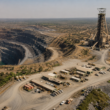
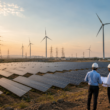




MasTec, Inc. (NYSE: MTZ) has agreed to acquire The Superior Group for approximately $1.65 billion, giving the infrastructure contractor a larger position inside hyperscale data centres and other mission-critical facilities. The transaction includes approximately $1.175 billion in cash and $475 million of MasTec shares, with a further earnout linked to Superior’s financial performance during the three years after closing. Superior adds electrical design, engineering, construction, prefabrication, integrated systems and maintenance capabilities that complement MasTec’s existing power, communications and civil infrastructure operations. MasTec shares closed at $372.89 on July 10, roughly unchanged across five trading sessions but approximately 11.1% higher over one month, as investors balanced the deal’s AI infrastructure potential against a larger debt commitment. The strategic importance lies in MasTec moving from connecting data centres to the grid and fibre network towards owning more of the specialised work required inside the facility itself.
Why is MasTec buying Superior Group instead of expanding its data-centre capabilities organically?
MasTec already participates in the infrastructure surrounding data centres. Its operating businesses construct power-delivery systems, substations, communications networks, renewable-energy projects and other infrastructure required before a computing campus can operate. Superior extends that involvement beyond the perimeter and into the electrical systems installed within data-centre buildings.
That distinction matters because data-centre projects are becoming more electrically complex as AI computing raises rack density and power demand. A contractor connecting a campus to transmission infrastructure captures only one part of the project. The company responsible for internal electrical distribution, control systems, prefabricated assemblies and ongoing maintenance participates more directly in the facility’s construction budget.
Building those capabilities organically would require MasTec to recruit specialised engineers, project managers, electricians and manufacturing personnel at a time when the industry is already experiencing shortages. The company would also need to establish customer relationships and demonstrate that it could execute large, technically demanding projects without disrupting timelines.
Superior provides an operating platform with approximately 3,000 employees and a history extending back more than a century. It brings established project-management processes, customer relationships and prefabrication capabilities that would take years to reproduce at comparable scale.
The acquisition therefore compresses MasTec’s expansion timetable. Instead of gradually building an internal electrical contracting business, MasTec is paying for immediate access to capacity, trained labour and a portfolio of live projects.
The risk is that MasTec is purchasing those capabilities during a period of exceptionally strong demand. High growth and scarce electrical labour can support attractive valuations, but they can also encourage buyers to assume that current project volumes and margins will persist indefinitely.
Why have electrical contractors become strategically important to the AI data-centre boom?
Public attention surrounding AI infrastructure tends to concentrate on graphics processors, advanced semiconductors and model developers. Those technologies are essential, but they cannot operate without transformers, switchgear, substations, cabling, backup power, cooling infrastructure and electrical distribution systems.
AI data centres consume substantially more power per building than many conventional computing facilities. Increasing rack densities require carefully designed electrical systems capable of delivering large amounts of power reliably while maintaining redundancy and safety.
The difficulty is not limited to purchasing equipment. Data-centre operators need experienced contractors capable of coordinating engineering, procurement, construction and commissioning within tight schedules. A delayed electrical installation can leave billions of dollars of servers waiting inside an unfinished facility.
This makes skilled electrical labour and project execution a strategic constraint. Hyperscalers can secure land, order chips and announce capital-expenditure plans, but the campus still depends on contractors capable of converting those commitments into operational megawatts.
Superior’s prefabrication and modular-manufacturing capabilities are particularly relevant. Electrical assemblies can be produced in controlled environments, tested before delivery and installed more efficiently at the construction site. This can reduce labour requirements, improve quality and shorten project schedules.
Prefabrication also supports standardisation across multi-building campuses. A hyperscale customer developing several facilities may prefer repeatable electrical modules rather than redesigning every installation from the beginning.
MasTec is therefore buying more than an electrical contractor. It is acquiring execution capacity inside one of the most important physical bottlenecks in the AI investment cycle.
Does the $1.65 billion purchase price represent disciplined capital allocation for MasTec?
The purchase price consists of approximately $1.175 billion in cash and $475 million in MasTec shares. The cash component represents about 71% of the fixed consideration, meaning MasTec is accepting a meaningful increase in financial exposure while limiting the immediate dilution imposed on shareholders.
Superior is expected to generate between $1.6 billion and $1.7 billion of revenue during 2026 and adjusted EBITDA of between $225 million and $250 million. Using the midpoint of that earnings range, the fixed purchase price represents approximately 6.9 times estimated 2026 adjusted EBITDA.
That multiple appears reasonable for a growing mission-critical contractor with exposure to data centres, particularly when compared with the valuations assigned to many AI infrastructure companies. MasTec is not paying a software-style revenue multiple for a labour-intensive construction company.
The transaction is also expected to increase revenue, adjusted EBITDA, adjusted earnings per share and operating cash flow immediately after completion. MasTec expects Superior to contribute $800 million to $900 million of revenue and $100 million to $115 million of adjusted EBITDA during the remainder of 2026.
For 2027, Superior is expected to produce revenue of $2.2 billion to $2.5 billion and adjusted EBITDA of $250 million to $275 million. At the midpoint, Superior could add roughly 13% to MasTec’s current annual revenue base before considering organic growth elsewhere in the company.
The deal price is not the only economic cost. MasTec may pay an additional earnout if Superior exceeds specified financial targets during the 36 months following completion. Integration expenditure, financing costs and the retention of skilled personnel will also affect the final return.
The acquisition will look disciplined if Superior delivers the forecast cash flow and expands MasTec’s customer relationships. It will look less attractive if project margins normalise sharply after the current AI construction cycle peaks.
How will the Superior acquisition affect MasTec’s debt, cash flow and balance-sheet flexibility?
MasTec ended the first quarter of 2026 with approximately $2.53 billion of total debt, $273.7 million of cash and net debt of about $2.26 billion. The $1.175 billion cash portion of the Superior acquisition is equivalent to more than half of that existing net-debt position.
MasTec plans to fund the payment through cash on hand, its existing credit facility and two delayed-draw term-loan facilities arranged alongside the acquisition agreement. This structure gives the company funding certainty, but it will temporarily increase leverage and interest expense.
The balance-sheet effect must be considered alongside Superior’s earnings contribution. Adding a company expected to produce between $250 million and $275 million of adjusted EBITDA during 2027 provides additional capacity to service and repay debt.
MasTec’s existing operations are also expanding. First-quarter revenue rose 34% to $3.83 billion, while adjusted EBITDA increased 73% to $283.6 million. The company’s 18-month backlog reached $20.3 billion, indicating strong visibility across power, communications and infrastructure projects.
However, cash generation can be uneven in construction. MasTec produced $98.9 million of operating cash flow during the first quarter, but free cash flow was only $11.9 million after capital expenditure. Project timing, customer payments and working-capital requirements can create significant quarterly variation.
Superior will introduce additional working-capital needs because large electrical projects require labour, materials and equipment before customers make final payments. Rapid revenue growth can therefore consume cash even when reported earnings are increasing.
The acquisition reduces MasTec’s near-term freedom to pursue other large transactions. Debt reduction and integration should take priority until the company demonstrates that Superior’s earnings convert reliably into operating cash.
How does Superior Group move MasTec from outside the data centre to inside the facility?
MasTec’s existing businesses already participate in several stages of data-centre development. Power-delivery teams can construct transmission connections and substations. Communications teams can install fibre and network infrastructure. Clean-energy operations can support renewable generation and associated facilities.
Superior adds the electrical systems required after power reaches the campus. Its services include design, preconstruction, engineering, project management, electrical installation, integrated systems, prefabrication and maintenance.
This creates the potential for MasTec to offer a broader package to hyperscalers and data-centre developers. A customer could use related MasTec businesses for grid connections, fibre routes, civil construction and internal electrical work rather than coordinating several unrelated contractors.
A wider service offering could improve customer retention and increase the amount of revenue MasTec captures from each project. It may also allow earlier involvement in project planning, when design decisions and procurement strategies are still being established.
The model could reduce execution risk for customers if MasTec coordinates schedules across power, communications and building systems. Delays often arise when one contractor finishes late or when designs developed by separate providers do not integrate cleanly.
MasTec must preserve Superior’s existing customer relationships and operating culture. Large contractors can destroy value by imposing central processes that slow specialised subsidiaries or weaken entrepreneurial leadership.
Superior’s management team is expected to remain with the business. Retaining that leadership will be important because customers often award complex projects based on confidence in specific executives and project teams rather than the parent company’s brand alone.
The strongest version of the transaction keeps Superior’s operating speed while giving it access to MasTec’s national scale, capital resources and broader infrastructure capabilities.
Could customer concentration create risks despite strong hyperscale demand?
Data-centre construction is dominated by a relatively small group of hyperscale technology companies and specialised developers. Those customers have enormous spending programmes, but they also possess substantial bargaining power.
A contractor may report rapid growth while remaining dependent on a limited number of projects or clients. If one hyperscaler delays a campus, changes its design or reallocates capital to another region, a supplier’s backlog and workforce utilisation can change quickly.
Large customers also expect contractors to meet demanding safety, quality and schedule requirements. A serious project failure can damage a relationship extending across multiple future campuses.
MasTec can reduce concentration risk by expanding Superior’s capabilities across healthcare, industrial facilities, entertainment venues and other mission-critical markets. These sectors may not grow as quickly as AI data centres, but they can stabilise revenue when one construction cycle slows.
MasTec’s broader portfolio also provides diversification. The company operates across power delivery, renewable energy, communications, pipelines and civil infrastructure. Weakness in one market can sometimes be offset by investment in another.
The acquisition nevertheless increases MasTec’s sensitivity to hyperscale capital expenditure. Investors who previously viewed the company mainly as a diversified infrastructure contractor may begin valuing it partly as an AI data-centre proxy.
That can support a higher valuation while demand remains strong. It can also increase volatility when investors question whether cloud companies are overbuilding capacity or delaying construction.
Why could prefabrication and modular electrical systems become Superior’s most valuable capability?
The shortage of skilled electrical labour is one of the main constraints facing data-centre construction. Prefabrication helps address that problem by moving part of the work from dispersed construction sites into dedicated manufacturing facilities.
Components assembled in a controlled environment can be produced repeatedly, inspected more easily and delivered when the construction site is ready. This reduces the amount of high-skill labour required at each location and can improve safety by limiting work performed in congested project areas.
Modular systems also allow construction activities to proceed in parallel. While foundations and buildings are being completed, electrical assemblies can be manufactured elsewhere. The modules can then be transported and installed when the site reaches the appropriate stage.
This approach is particularly useful for hyperscale customers building standardised facilities across several regions. Repeatable designs can shorten engineering cycles and improve predictability.
MasTec could apply Superior’s prefabrication expertise across other infrastructure businesses. Power-delivery, industrial and energy projects may also benefit from modular assemblies that reduce on-site work and improve schedule control.
The challenge is that prefabrication requires accurate early designs. Changes made late in a project can make completed modules unsuitable or require expensive rework.
Factories must also maintain sufficient utilisation. Capacity created for a surge in data-centre demand can become a fixed-cost burden if project volumes decline.
Superior’s modular capabilities create a competitive advantage only if MasTec maintains a steady pipeline and coordinates design decisions before production begins.
What does MasTec’s July 10 share price reveal about investor confidence in the deal?
MasTec shares closed at $372.89 on July 10, down 3.1% for the session after gaining 6.7% on July 8, the first full trading day following the acquisition announcement.
The stock ended roughly flat compared with its July 2 close of $373.43. It was approximately 11.1% above the June 10 close of $335.58, showing that investor confidence had improved during the preceding month even before the deal.
MasTec’s 52-week range stood between $160.08 and $441.43. The July 10 closing price was around 15.5% below the annual high but more than double the annual low, reflecting the strong rerating already produced by power and data-centre infrastructure demand.
The initial rally indicates that investors view Superior as a strategically valuable asset acquired at a defensible multiple. The subsequent pullback suggests some investors took profits or reconsidered the balance-sheet impact after the first reaction.
The market is not treating the transaction as a risk-free AI acquisition. MasTec must fund the cash payment, retain Superior’s employees and deliver the forecast earnings while continuing to execute a record existing backlog.
The share price will increasingly respond to data-centre bookings, electrical margins and debt reduction. Investors will want evidence that the acquisition improves earnings per share without weakening cash flow or forcing further equity issuance.
The stock’s current valuation already reflects significant optimism surrounding infrastructure demand. Superior can justify that confidence, but it also raises the consequences of any slowdown.
What broader industry signal does MasTec’s Superior Group acquisition send?
The transaction shows that the value chain surrounding AI is expanding beyond semiconductor companies and data-centre landlords. Contractors, equipment suppliers and electrical engineering businesses are becoming strategic assets because they control the capacity required to build infrastructure.
The deal may encourage further consolidation among electrical contractors. Large infrastructure groups can offer national reach, procurement scale and financial capacity, while specialist contractors bring technical expertise and relationships with hyperscale customers.
Private owners of mission-critical contractors may reassess valuations as demand from data centres, semiconductor factories, battery plants and advanced manufacturing facilities increases. Scarcity of skilled labour and prefabrication capacity could support further transactions.
The acquisition also signals that hyperscale customers may prefer larger suppliers capable of executing projects across several locations. Smaller contractors can remain important, but the financial and bonding requirements of multibillion-dollar campuses favour companies with substantial balance sheets.
Competition could intensify for electricians, engineers and project managers. Wage inflation and employee retention may become as important to project economics as copper or transformer pricing.
MasTec’s move also reduces the distinction between technology infrastructure and traditional construction. AI may be delivered through software, but the investment cycle depends on physical assets built by companies that once appeared far removed from the technology sector.
The next stage of the AI boom will be judged partly by how quickly contractors can convert announced capital expenditure into usable computing capacity. MasTec is positioning itself to capture more of that conversion.
What must MasTec deliver after the Superior acquisition closes in July 2026?
The first requirement is retaining Superior’s leadership, engineering teams and skilled electrical workforce. The transaction’s value depends heavily on specialised people who can move to competitors if integration damages the existing culture.
The second requirement is protecting customer relationships. MasTec must show hyperscalers and developers that the acquisition increases capacity without disrupting current projects or changing commercial commitments.
The third requirement is disciplined debt reduction. Superior’s operating cash flow should be used to restore balance-sheet flexibility before MasTec pursues another large acquisition.
The fourth requirement is transparent data-centre reporting. Investors need clearer visibility into bookings, margins, customer concentration and the portion of MasTec’s backlog linked to AI infrastructure.
The fifth requirement is integration across operating businesses. MasTec should demonstrate project wins involving power delivery, communications and Superior’s internal electrical capabilities rather than operating the acquired company as an isolated subsidiary.
The sixth requirement is margin protection. Rapid growth is valuable only if labour costs, project delays and material inflation do not erode profitability.
The seventh requirement is realistic capital allocation. MasTec must avoid assuming that every announced data-centre project will proceed on schedule.
The acquisition gives MasTec a credible position across more of the physical data-centre stack. Whether it creates enduring shareholder value will depend on execution after the AI headlines have moved to the next large spending announcement.
What are the key takeaways from MasTec’s $1.65 billion Superior Group acquisition?
- MasTec is buying Superior Group to expand from external power and communications work into electrical systems installed inside data centres.
- The fixed purchase price includes approximately $1.175 billion in cash and $475 million of MasTec shares, plus a possible performance earnout.
- The deal values Superior at approximately 6.9 times the midpoint of expected 2026 adjusted EBITDA.
- Superior is forecast to generate between $2.2 billion and $2.5 billion of revenue during 2027, making it a material addition to MasTec’s operating scale.
- Electrical design, prefabrication and skilled labour are becoming critical bottlenecks as AI data centres increase power density and construction complexity.
- The acquisition could allow MasTec to coordinate grid connections, fibre, civil works and internal electrical construction through related businesses.
- MasTec’s existing net debt of approximately $2.26 billion means the cash-funded portion will temporarily increase leverage and financing risk.
- MasTec shares remained roughly flat over five sessions but were up about 11.1% over one month at the July 10 close.
- Customer concentration, labour shortages, project delays and a possible slowdown in hyperscale spending remain the principal execution risks.
- The transaction signals that contractors and electrical infrastructure providers are becoming strategic beneficiaries of the AI investment cycle.
Share this:
Discover more from Business-News-Today.com
Subscribe to get the latest posts sent to your email.
