


Narayana Hrudayalaya Limited (NSE: NH, BSE: 539551), operator of the Narayana Health hospital network, has used artificial heart pumps to keep three critically ill teenagers alive until successful donor heart transplants could be completed in Bengaluru. The cases involved Ventricular Assist Devices, including one case requiring support for both sides of the heart, and each teenager received a suitable donor heart within 28 to 45 days. For Narayana Hrudayalaya Limited, the milestone strengthens its positioning in high-acuity pediatric cardiac care, a segment that depends on transplant systems, intensive care depth, surgical precision and affordability rather than routine hospital throughput. The announcement also arrives as Narayana Hrudayalaya Limited shares trade near ₹1,970 on the National Stock Exchange of India, with recent market momentum suggesting that investors remain attentive to the company’s ability to convert clinical complexity into scalable healthcare delivery.
Why does Narayana Health’s artificial heart pump milestone matter for pediatric cardiac care in India?
Narayana Health’s successful use of artificial heart pumps in three teenagers is more than a moving clinical story. It demonstrates how Indian tertiary-care hospitals are beginning to operate in a space once associated mainly with a small number of highly specialised global transplant centres. Ventricular Assist Devices are not routine hospital equipment in the way that cath labs, imaging systems or intensive-care ventilators are. They require a coordinated ecosystem involving pediatric cardiology, cardiac surgery, transplant readiness, anticoagulation management, infection control, intensive-care monitoring, donor allocation logistics and post-transplant rehabilitation. In other words, this is not a plug-and-play device story. It is a systems story.
The immediate clinical significance is clear: the devices bought time for three teenagers whose hearts were no longer strong enough to sustain life. In end-stage heart failure, time is often the scarcest commodity, especially when a donor organ is not immediately available. By using mechanical circulatory support as a bridge to transplant, Narayana Health appears to have converted three near-terminal cases into successful transplant recoveries. That matters because the gap between needing a donor heart and actually receiving one remains one of the most difficult bottlenecks in advanced cardiac medicine.
The strategic significance is equally important for Narayana Hrudayalaya Limited. High-acuity pediatric cardiac care is a credibility business before it is a volume business. Families, payers, referring physicians and regulators place enormous weight on outcomes, continuity of care and complication management. A hospital network that can handle VAD-supported teenage heart failure cases and complete successful transplants gains a different kind of institutional visibility. It signals that Narayana Health is not only treating cardiac disease at scale, but also building the kind of infrastructure needed for complex, time-sensitive interventions where failure margins are razor thin.
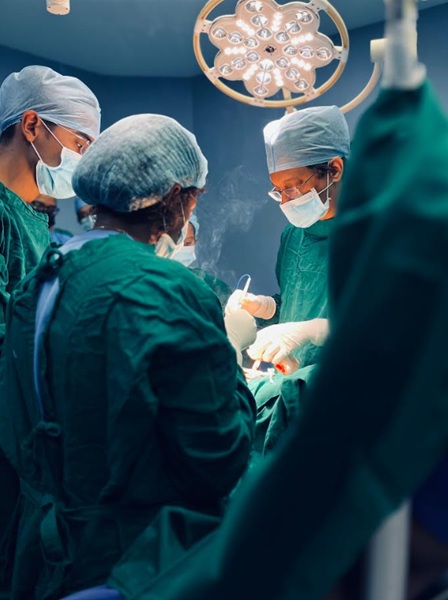
How did Ventricular Assist Devices change the risk profile for three teenagers awaiting donor hearts?
The three cases show why artificial heart pumps are strategically important in advanced heart failure care. One teenager had severe heart dysfunction complicated by dangerous blood clots and required biventricular support, meaning both sides of the heart needed mechanical assistance. After 45 days on support, the patient received a donor heart and was discharged within weeks. A second teenager, diagnosed with a condition in which the heart becomes stretched and weak, was supported by a mechanical pump for 28 days before transplant. A third patient, a childhood cancer survivor who had already lost a kidney to a tumour, faced severe heart failure and was supported by an artificial pump for 30 days before undergoing a successful transplant.
Clinically, these cases highlight three different layers of complexity. The first was the challenge of supporting both sides of a failing heart while managing clot-related risk. The second reflected the classic progression of dilated cardiomyopathy into transplant-level heart failure. The third showed the added difficulty of transplant management in a patient with a serious prior cancer history and reduced renal reserve. For Narayana Health, the common thread was not that the cases were identical. It was that the system was able to adapt mechanical circulatory support to three different high-risk patient profiles.
That adaptability is the part investors and healthcare strategists should pay attention to. A single successful case can be treated as a medical achievement. Three separate teenage cases, all bridged to transplant within a relatively short waiting period, suggest deeper protocol maturity. Dr. Shashiraj Subramanya H S, Head of Paediatric Cardiology at Narayana Health, said the patients had been at the edge of survival and that the use of artificial pumps until donor hearts became available represented an important moment for heart failure care in India. Dr. Varun Shetty, Senior Consultant in Cardiac Surgery at Narayana Health, said the hospital had worked over the past decade to make such advanced technologies viable for Indian families through stronger systems and a focus on affordability. Dr. Riyan Sukumar Shetty, Director of Paediatric Intensive Care at Narayana Health, said the VADs acted as lifesaving bridges and that seeing the patients return home was a defining moment for the team.
What does the VAD to transplant success reveal about Narayana Hrudayalaya Limited’s high-acuity strategy?
The milestone fits into a broader direction visible across Narayana Hrudayalaya Limited’s healthcare model. The company has historically been associated with cardiac care and affordability, but its growth story is increasingly tied to high-acuity, technology-enabled tertiary services. In FY2024-25, Narayana Health reported large cardiac-care volumes across diagnostics, interventions and surgeries, while also reporting heart and VAD transplant activity across its network. The VAD cases therefore do not sit outside the company’s operating story. They reinforce the same strategic arc: a hospital operator trying to scale complex care without making it inaccessible to the broader Indian market.
That distinction matters because Indian hospital chains are being valued not only on bed additions but also on case mix, pricing power, operating efficiency and clinical differentiation. A higher share of complex tertiary procedures can support stronger revenue intensity per occupied bed, although it also raises the burden of specialist staffing, device procurement, quality governance and post-operative care. For Narayana Hrudayalaya Limited, a pediatric transplant milestone strengthens the narrative that its cardiac platform can remain relevant as Indian healthcare demand moves beyond basic access toward outcome-intensive care.
The company’s challenge is to balance clinical ambition with capital discipline. Artificial heart pump programs require expensive devices, highly trained personnel, intensive-care capacity and strict follow-up systems. These are not low-cost interventions by design. The strategic test for Narayana Health is whether it can embed such therapies within a broader affordability model without compromising outcomes or overloading margins. That is where its historical brand position becomes useful, but also demanding. Once a hospital network tells the market that advanced care can be made viable in India, the next question is whether that viability can be repeated beyond marquee cases.
Narayana Hrudayalaya Limited’s market context adds another layer to the story. The stock has recently traded near ₹1,970, below its 52-week high but well above its 52-week low, while recent weekly and monthly performance has been positive. That does not mean investors are pricing in these three transplant cases directly. Hospital stocks do not usually rerate on isolated clinical milestones. However, the market does pay attention to signals that a hospital chain can defend premium case mix, expand high-end specialties and maintain patient trust while scaling capacity.
The sentiment around Narayana Hrudayalaya Limited is therefore best described as cautiously constructive rather than euphoric. The company’s valuation already reflects investor expectations for execution, margin resilience and growth across India and international operations. A pediatric VAD-to-transplant milestone supports the qualitative side of the investment thesis because it reinforces clinical depth. It does not remove financial questions around capex, device costs, payer mix, insurance penetration, medical talent availability or regulatory oversight.
For investors, the more useful takeaway is that high-acuity credibility can become a long-term moat if it translates into referral flows, specialist retention and differentiated outcomes. In a competitive hospital market, the hospitals that can treat the most complex cases often become magnets for both patients and clinicians. Narayana Health’s artificial heart pump success therefore strengthens the company’s strategic narrative, but the stock still has to be judged on familiar fundamentals: occupancy, average revenue per occupied bed, margin stability, cash generation and disciplined expansion.
Could VAD-enabled pediatric transplant programs reshape competition among Indian hospital chains?
The competitive implications extend beyond Narayana Health. Indian hospital operators such as Apollo Hospitals Enterprise Limited, Max Healthcare Institute Limited and Fortis Healthcare Limited are all competing in a healthcare market where premium tertiary capabilities increasingly shape brand perception. The ability to support pediatric heart failure patients with artificial pumps and then complete transplants adds a high-end benchmark to that competition. It tells the market that the next phase of hospital differentiation may not come only from new towers, new beds or new cities. It may come from clinical programs that can prove they can handle extremely complex, multidisciplinary cases.
The barrier to entry is not merely buying devices. A hospital must be able to identify candidates early, stabilise critically ill children, manage complications, coordinate transplant listing, maintain family communication, prepare surgical teams and handle post-transplant immunosuppression. Each weak link can undermine the entire program. That is why VAD-enabled transplant care is a systems capability, not just a surgical capability. For competitors, the message is simple: advanced cardiac branding will increasingly require proof, not brochure language.
There is also a policy dimension. If India wants more equitable access to advanced pediatric heart failure care, donor matching systems, organ transport logistics, insurance coverage and state-level transplant coordination will matter as much as hospital ambition. Narayana Health’s cases show what is possible when the pieces align. The harder question is whether similar outcomes can be delivered more consistently across regions, income groups and hospital networks. That is where private-sector clinical innovation intersects with public-sector health infrastructure.
What execution risks could limit the wider rollout of artificial heart pump bridges in India?
The biggest risk is affordability. Ventricular Assist Devices and the associated intensive-care ecosystem are expensive. Even where hospitals try to optimise cost, families may still face significant financial strain unless insurance, philanthropy, hospital support or public schemes can close the gap. For a hospital operator, the commercial model must be carefully designed because underpricing complex care can pressure margins, while overpricing it can restrict access and weaken the public-health value of the program.
The second risk is clinical repeatability. Three successful cases are meaningful, but transplant programs are judged over time by survival, complications, infection rates, neurological outcomes, renal outcomes and quality of life after discharge. Pediatric VAD care also requires exacting management of anticoagulation and device-related complications. For Narayana Health, future credibility will depend on whether this success becomes part of a durable outcomes record rather than remaining an exceptional cluster of cases.
The third risk is system dependency. Donor hearts became available for all three teenagers within 28 to 45 days, which is a remarkable window in a market where organ scarcity can be severe. If donor availability slows, the duration of pump support can lengthen, raising cost and complication risk. This means that the success of VAD bridge programs is tied not only to hospital execution but also to broader organ donation awareness, allocation transparency and emergency transport infrastructure. No hospital, however skilled, can solve the donor shortage alone.
Why could successful heart pump bridges become a strategic proof point for affordable tertiary care models?
Narayana Health’s achievement matters because it brings together two themes that usually pull against each other: advanced technology and affordability. High-end cardiac devices often deepen healthcare inequality because they are available only to patients who can pay or travel. Narayana Health’s broader proposition has been that sophisticated care can be systematised, standardised and delivered at lower relative cost than many global benchmarks. The teenage transplant cases give that proposition fresh clinical weight, although the economics must still be watched carefully.
For Narayana Hrudayalaya Limited, the strategic upside is not limited to publicity. Successful high-acuity programs can strengthen referral networks, attract specialists, support medical training, improve payer relationships and reinforce trust among families facing catastrophic diagnoses. They can also help a hospital chain defend its position as healthcare demand in India becomes more specialised. As incomes rise, insurance penetration improves and clinical awareness grows, demand for advanced cardiac, oncology, transplant and critical-care services is likely to increase.
The long-term question is whether Narayana Health can turn individual excellence into reproducible infrastructure. If it can, artificial heart pump bridges could become part of a broader Indian playbook for treating pediatric end-stage heart failure. If it cannot, the cases will still remain extraordinary recoveries, but the systemic impact will be smaller. For now, the milestone gives Narayana Hrudayalaya Limited a credible proof point in a market where clinical trust, investor confidence and healthcare access are becoming more tightly connected.
Key takeaways: what does Narayana Health’s artificial heart pump milestone mean for Indian healthcare?
- Narayana Health’s successful use of Ventricular Assist Devices in three teenagers strengthens Narayana Hrudayalaya Limited’s positioning in high-acuity pediatric cardiac care, where outcomes depend on integrated systems rather than isolated surgical capability.
- The cases show how artificial heart pumps can act as a bridge to transplant in India, buying critical time for patients whose hearts are too weak to sustain life while donor matching is completed.
- The milestone reinforces Narayana Health’s broader strategy of building complex tertiary-care capacity while trying to preserve an affordability-led healthcare model in India.
- For investors, the development supports the qualitative Narayana Hrudayalaya Limited thesis around specialist depth, referral strength and case-mix quality, but it does not eliminate financial scrutiny around margins, capex and payer mix.
- The competitive pressure on Indian hospital chains could rise as advanced cardiac programs become a clearer marker of institutional credibility in tertiary and quaternary care.
- The key operational challenge will be repeatability, because VAD-supported transplant care requires sustained excellence in intensive care, infection control, anticoagulation, donor coordination and follow-up.
- Donor heart availability remains a structural constraint, making organ donation systems and transplant logistics critical to the future scalability of such programs in India.
- The success of these three teenage patients could help build confidence among families and clinicians that advanced pediatric heart failure treatment can be performed within India rather than being viewed as accessible only overseas.
- Narayana Hrudayalaya Limited’s recent stock momentum adds market relevance to the story, but the long-term valuation impact will depend on whether clinical milestones translate into durable operating performance.
- The broader healthcare signal is that India’s private hospital sector is moving from capacity expansion toward capability expansion, where specialist outcomes may matter as much as bed count.
Discover more from Business-News-Today.com
Subscribe to get the latest posts sent to your email.