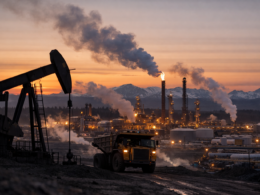



Construction has begun on the Rp2.8 trillion Bogor Raya 1 waste-to-energy project in West Java, advancing one of Indonesia’s major municipal-waste infrastructure programmes from partner selection into physical development.
The facility at Galuga Village in Bogor Regency is designed to process up to 1,500 tonnes of municipal waste per day using moving-grate incineration and a multi-layer air-pollution-control system. Danantara Indonesia says the project is expected to begin operations in mid-2028 and create as many as 1,200 jobs during development and operations.
A power purchase agreement has also been signed with state utility PLN, giving the project a commercial framework for electricity generated from the waste stream. Under Indonesia’s current national waste-to-energy policy, qualifying PSEL facilities receive an electricity purchase price of $0.20 per kilowatt-hour.
That offtake structure is important because Bogor Raya 1 is designed to solve two infrastructure problems simultaneously: reducing the amount of municipal waste moving into landfills while producing dispatchable electricity for the regional grid.
How much waste can Bogor Raya 1 process each year?
A plant operating at its full 1,500-tonne daily design rate would theoretically process about 547,500 tonnes of waste annually before accounting for maintenance downtime and variation in incoming material.
Government reporting around the project puts the expected annual volume above 500,000 tonnes, equivalent to a substantial share of waste generated across Bogor City and Bogor Regency. That makes the project large enough to affect landfill demand rather than operating only as a demonstration facility.
The commercial challenge is securing a consistent waste stream. Waste-to-energy facilities need sufficient feedstock with predictable calorific characteristics, while municipal authorities must maintain collection and transport systems capable of delivering material to the plant every day.
Poor sorting can also affect performance. High levels of moisture or unsuitable material can reduce combustion efficiency, making upstream municipal waste management important even when the power plant itself uses advanced technology.
Why does the PLN power purchase agreement matter before construction is complete?
Large infrastructure projects become easier to finance when developers know who will buy the output and under what pricing framework. The PLN agreement provides an offtake structure for electricity generated by Bogor Raya 1 once the plant enters commercial operation.
The $0.20-per-kWh tariff is established under Indonesia’s national waste-to-energy policy and reflects the fact that these projects provide waste-management services as well as electricity. It should therefore not be compared directly with the lowest solar or coal generation prices without accounting for the avoided landfill and municipal waste costs.
The PPA reduces revenue uncertainty but does not remove construction or operating risk. The plant still has to be delivered within budget, meet emissions requirements and demonstrate that electricity production remains reliable as waste composition changes.
For lenders and equity investors, the combination of a national policy framework, a government-backed project structure and a state utility offtaker provides greater visibility than a merchant power plant dependent entirely on wholesale electricity prices.
How large is the Rp2.8 trillion investment compared with the project’s operating ambition?
At approximately Rp2.8 trillion, Bogor Raya 1 represents a significant infrastructure commitment to process a waste stream that local authorities already need to manage. The project is being developed by Nusantara Bogor New Energy with Zhejiang Weiming Environment as technology partner.
The capital cost covers much more than a conventional electricity generator. Waste reception, combustion systems, pollution controls, ash handling and supporting municipal infrastructure all form part of the investment required to convert urban waste into grid electricity safely.
The facility is expected to supply enough electricity for more than 100,000 households, according to Danantara. That household-equivalent figure provides an intuitive sense of generation scale, although actual grid output will depend on plant utilisation and the energy content of the waste received.
The economics are therefore partly environmental and partly financial. Electricity sales create a revenue stream, but the broader public value comes from reducing reliance on landfill disposal and improving urban waste management.
Why is air-pollution control central to the Bogor project?
Waste incineration can create public concern around particulates, acid gases, heavy metals and other emissions if facilities are poorly designed or operated. Danantara says Bogor Raya 1 will use a moving-grate system with multiple layers of air-pollution-control technology intended to comply with international emission standards.
That requirement is crucial for public acceptance. Waste-to-energy infrastructure can face strong resistance when communities believe governments are solving a landfill problem by creating an air-quality problem instead.
Continuous monitoring and transparent emissions data will therefore be important once the plant begins operating. Technical compliance during commissioning is only the starting point because environmental performance needs to remain within limits throughout the operating life.
The project’s success could influence other Indonesian waste-to-energy developments as well. A well-performing Bogor facility would provide a domestic reference project, while environmental or reliability problems could increase opposition to similar plants elsewhere.
How does Bogor Raya 1 fit Indonesia’s wider waste-to-energy programme?
Bogor Raya 1 is part of a national strategic programme being developed under Presidential Regulation No. 109 of 2025. Danantara has been advancing projects in several metropolitan areas as Indonesia looks for alternatives to landfills that are reaching capacity.
The Bogor facility is among the first projects to move into construction under the newer programme. Other developments are advancing in areas including Bali and Bekasi, making 2026 an important transition year from planning and procurement toward physical implementation.
Standardising the PPA structure can help those projects because developers gain clearer revenue expectations. Using experienced international technology partners can also reduce technical risk while Indonesia builds more domestic operating experience.
The remaining challenge is municipal integration. Central policy can support power pricing and investment, but waste collection, local infrastructure and public engagement still need to work at city and regency level.
What should determine whether Bogor Raya 1 is successful by mid-2028?
Construction schedule is the first test. The government wants the project operating by mid-2028, leaving roughly two years for civil works, equipment installation, grid connection, testing and commissioning.
Waste throughput is the second measure. A 1,500-tonne-per-day facility produces its strongest environmental and financial impact when municipalities consistently supply enough suitable material to keep the plant near design utilisation.
The third measure is environmental compliance. Bogor Raya 1 needs to demonstrate that modern waste incineration can reduce landfill dependence without creating unacceptable emissions or ash-management problems.
Indonesia has already crossed the point where Bogor Raya 1 is merely a policy proposal. Ground has been broken, a technology partner is in place and PLN has signed the electricity offtake framework; the next two years will determine whether Rp2.8 trillion of infrastructure can translate those commitments into reliable power and a materially smaller municipal waste burden.
Discover more from Business-News-Today.com
Subscribe to get the latest posts sent to your email.