



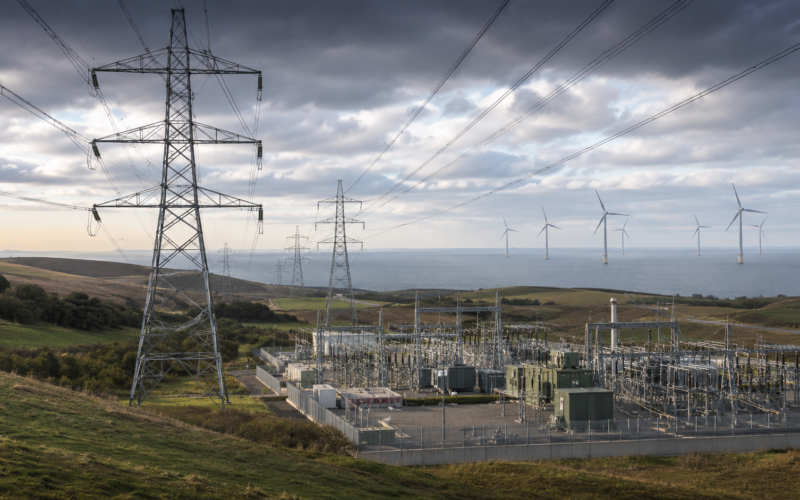
American Electric Power Company, Inc. (NASDAQ: AEP), through regulated subsidiary Indiana Michigan Power, has proposed approximately US$59 million of bill reductions for Indiana customers in 2027, using accelerating electricity demand from large customers including data centers as part of the financial basis for lower base rates. Under the proposal, a typical residential customer using 1,000 kilowatt-hours per month would save an estimated US$100 annually, while residential customers would also receive a three-year freeze covering all rates appearing on their monthly bills.
The plan remains subject to approval by the Indiana Utility Regulatory Commission, which is expected to decide the case around June 2027, with customer savings potentially beginning during summer 2027. The proposal follows two earlier reductions in Indiana customer rates during the first half of 2026, including a June bill decrease partly supported by additional revenue from off-system power sales. I&M says the new base-rate proposal is possible because load growth and associated revenue from major new customers are spreading fixed system costs across a larger volume of electricity sales.
That mechanism is particularly relevant to the debate surrounding AI infrastructure because utilities across the United States are investing heavily to serve data centers while regulators try to ensure residential consumers do not subsidize those projects. AEP has signed agreements supporting 69 GW of incremental load through 2030 across its system and estimates that current large-load contracts could create as much as US$16 billion of cost offsets for existing customers over time. The Indiana proposal provides one of the clearest examples of management attempting to turn that theoretical affordability argument into an actual reduction in household bills.
How can data center growth lower electricity rates instead of increasing them?
Regulated utilities recover much of the cost of power plants, transmission systems, substations, distribution networks and other infrastructure through charges spread across their customer base. When electricity demand expands materially through large industrial customers or data centers, those customers can contribute additional revenue toward fixed system costs that would otherwise be recovered from existing households and businesses.
I&M says that is what is happening in Indiana. New large customers are increasing total electricity sales and providing enough additional revenue for the utility to propose reducing the amount collected through base rates from existing customers, rather than asking those customers to fund the entire system cost themselves.
The economics depend heavily on how contracts and tariffs are structured. If a data center requires billions of dollars of new generation and transmission but can leave before those costs are recovered, other customers could eventually inherit part of the burden; if the customer signs long-duration contracts with minimum payments, credit protections and large-load tariffs, much of that risk can remain with the customer creating the demand.
AEP has made those protections a core part of its load-growth strategy. The company says signed large-load customers must meet credit standards and has been implementing dedicated data-center and large-load tariffs across several states so that growth contributes appropriately to the cost of serving it.
How meaningful is the proposed $59m reduction for Indiana households?
I&M serves more than 600,000 customers across Indiana and Michigan, although the US$59 million proposal applies specifically to Indiana customers rather than the entire service territory. A typical Indiana residential customer consuming 1,000 kWh per month is expected to save approximately US$100 annually, which is equivalent to about US$8.33 per month.
The benefit is modest relative to overall household expenditure but material in the context of utility-rate inflation because the plan combines a direct reduction with a proposed three-year residential rate freeze. If approved as described, customers would gain not only a lower starting bill but greater protection from subsequent increases in the individual rate components appearing on residential bills during the freeze period.
The new proposal also follows an earlier 3.6% decrease that I&M began applying in June for a typical residential customer using 1,000 kWh per month. That reduction was worth roughly US$6 per month and was associated with changes in an off-system sales and PJM-related rider, demonstrating that the utility has already begun translating higher revenue and power-market benefits into lower bills before the larger base-rate case is resolved.
The reductions are not identical and should not simply be added together as though every component will remain unchanged indefinitely. They nonetheless show an unusual direction of travel at a time when many utilities are requesting rate increases to fund grid modernization and rising generation costs.
Why is AEP pursuing customer savings while planning $78bn of capital investment?
AEP plans to invest approximately US$78 billion between 2026 and 2030 across transmission, distribution and generation infrastructure, making affordability especially important as the company expands its regulated asset base. The utility group also says it has line of sight to more than US$10 billion of potential incremental projects beyond that five-year plan.
Ordinarily, such a large investment programme could create significant upward pressure on customer rates because regulated utilities earn returns on approved capital expenditures. AEP’s argument is that unusually strong load growth changes that equation by allowing more customers and more kilowatt-hours to support the same system, while federal financing programmes and grants can lower the cost of specific projects.
The company estimates current large-load contracts could produce up to US$16 billion of cost offsets for existing customers, while federal loan guarantees and grants are expected to provide another US$1.4 billion of customer savings across its broader footprint. These are forward-looking estimates rather than guaranteed reductions, but they illustrate why management increasingly presents data center demand as an affordability opportunity rather than simply a capital-spending burden.
I&M’s Indiana filing provides an important credibility test for that argument. If regulators approve meaningful rate reductions while the utility continues investing in grid reliability and new generation, AEP will have tangible evidence that large-load growth can create benefits for existing customers instead of only raising utility earnings.
How large is AEP’s data center and industrial load pipeline?
AEP reported 69 GW of contracted new load expected through 2030 after adding another 6 GW of signed agreements during the second quarter. The customers include hyperscalers, data centers and industrial facilities across several states served by AEP utilities.
To put that figure in perspective, AEP currently owns or contracts for approximately 33 GW of generating capacity across its system. The 69 GW load pipeline is therefore more than twice the company’s existing generation capacity, although the two figures are not directly comparable because new demand will arrive over several years and can be served through grid purchases, customer-supplied resources, new generation and transmission connections.
Meeting that demand will require substantial additional infrastructure. AEP has secured approximately 13 GW of gas-turbine capacity for potential deployment through 2031 and is evaluating another 10 GW through 2035, alongside investments in transmission and other generation resources.
The scale creates both growth opportunity and execution risk. If projects arrive on schedule and customers meet contractual commitments, AEP can grow its regulated investment base while spreading fixed costs more widely; if large-load projects are delayed, cancelled or consume more infrastructure than expected, affordability benefits could be weaker than current projections imply.
Does the three-year rate freeze limit I&M’s financial flexibility?
Potentially, which is why regulatory design matters.
A residential rate freeze reduces the utility’s ability to pass certain future cost increases immediately to households, particularly if inflation, fuel costs or capital expenditures move faster than expected. I&M must therefore be confident that expected load growth, operating efficiencies and existing tariff mechanisms provide enough financial flexibility to maintain reliability while keeping customer charges stable.
The proposal does not mean I&M stops investing. The utility continues to operate a diversified generation portfolio that includes 2,278 MW of nuclear generation, 450 MW of purchased wind, more than 22 MW of hydro, approximately 35 MW of large-scale solar and 1,497 MW of coal-fueled generation. More than 85% of energy delivered in 2024 was emission-free, largely because of the nuclear contribution.
AEP also remains committed to its system-wide 7%-9% long-term operating earnings growth target through 2030. That means management believes lower customer rates in selected jurisdictions can coexist with higher consolidated earnings if load growth and capital deployment expand the overall earnings base sufficiently.
The regulatory decision will determine whether Indiana authorities agree with that balance.
Why could the Indiana case become important beyond AEP?
Data center electricity demand has become one of the most contested issues in U.S. power markets because AI infrastructure requires enormous amounts of generation and grid capacity. Utilities want the load because it can justify large investments and increase revenue, while regulators and residential customers worry that households could ultimately subsidize infrastructure built primarily for technology companies.
I&M’s proposal offers the opposite narrative: large customers are generating enough incremental revenue to support lower rates for existing customers. If the IURC approves the plan and the promised savings endure while data center projects are built, the case could become a useful reference point for utilities arguing that carefully structured large-load contracts can improve affordability.
The evidence is not complete yet because the savings are still proposed and the regulatory decision is not expected until June 2027. The underlying economic shift is nevertheless already visible across AEP, where signed load growth has reached 69 GW and management is tying a substantial portion of its US$78 billion capital programme directly to serving that demand.
For Indiana households, the immediate question is whether the US$59 million reduction and three-year freeze survive regulatory review. For the power industry, the larger question is whether AI-era electricity demand can be structured so that existing consumers receive part of the economic benefit instead of merely financing the infrastructure required to serve it.
Discover more from Business-News-Today.com
Subscribe to get the latest posts sent to your email.