



Action Energy Company K.S.C.P. (Boursa Kuwait: ALFTAQA) reported a 96.6% year-on-year increase in net profit for the first half of 2026, substantially outpacing its 34.4% revenue growth as its expanded drilling fleet operated at full utilisation. Revenue reached KWD18.1 million, equivalent to about $59 million, while EBITDA increased 28.3% to KWD9 million and contracted backlog with Kuwait Oil Company reached a record KWD349 million, or roughly $1.1 billion. The board also recommended the company’s first interim dividend, at 3 fils per share. The numbers strengthen Action Energy’s growth case, but the next stage is more capital intensive: seven additional rigs, electric submersible pump services, slickline and once-through steam generation operations are being mobilised while leverage has already moved higher from its first-quarter low.
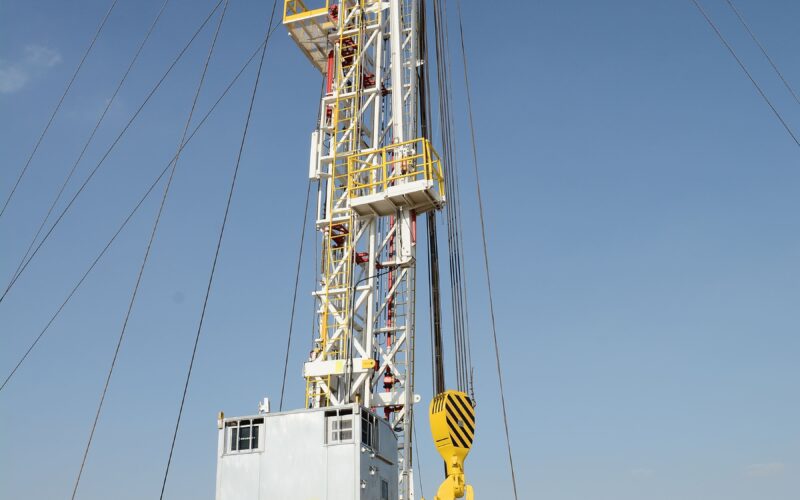
That makes the H1 2026 results less about whether the existing 20-rig platform is working and more about what happens when Action Energy attempts to scale beyond it. The company’s current fleet remained at 100% utilisation in the first half, while the new rig programme could ultimately take its fleet backlog to 27 rigs. The commercial opportunity is supported by long-duration contracts, but investors now have to weigh rising contracted revenue visibility against the funding and execution demands created by that expansion.
Why did Action Energy’s H1 2026 net profit grow far faster than revenue and EBITDA?
The headline earnings growth was striking. Revenue increased 34.4% to KWD18.1 million from approximately KWD13.5 million in H1 2025, while EBITDA rose 28.3% to KWD9 million. Net profit, however, nearly doubled to KWD4.4 million from roughly KWD2.2 million a year earlier. Earnings per share increased by a more moderate 29.5% to 7.72 fils.
One detail deserves attention. EBITDA margin was approximately 49.8%, compared with an implied margin of about 52.1% in the comparable period. In other words, Action Energy generated substantially more revenue and profit, but EBITDA did not expand quite as quickly as sales. That is not necessarily a warning sign during a period of fleet expansion and service mobilisation, but it means the next set of results should be judged not simply by revenue growth but by whether margins stabilise as new assets move from mobilisation into productive operation.
The gap between the 96.6% increase in net profit and the 29.5% increase in earnings per share also needs context. Action Energy’s December 2025 initial public offering included the issuance of 94.5 million new shares, alongside the reoffering of existing shares, expanding the company’s equity base. The slower EPS growth relative to absolute net profit growth is therefore consistent with the larger post-IPO share count rather than suggesting that the earnings headline translates one-for-one into per-share growth.
There is also evidence that the extraordinary growth rates seen earlier in 2026 are beginning to normalise. First-quarter revenue had risen 69.2% year-on-year to KWD9.1 million as 20 rigs contributed for the full quarter versus only 13 rigs in the comparable 2025 period. H1 revenue growth of 34.4% shows that the year-on-year comparison became tougher during the second quarter as the enlarged fleet increasingly entered the prior-year base. That makes future growth more dependent on the seven new rigs and emerging oilfield-service businesses rather than simply annualising the rigs deployed during 2025.
What does 100% rig utilisation and a doubling of rig moves say about operating momentum?
Action Energy operated all 20 existing rigs at 100% utilisation during H1 2026 and completed 202 rig moves, compared with 100 moves in the same period last year. Drilling revenue rose 39% to KWD13.99 million, while rig leasing and mobilisation revenue increased 13.8% to KWD3.23 million.
For an oilfield-services company, utilisation is particularly important because adding equipment only creates economic value when the assets are contracted and working. Action Energy’s current position is therefore considerably stronger than a fleet-growth story built on speculative capacity. The existing rigs are working, and the seven additional rigs announced in January are linked to Kuwait Oil Company awards valued at KWD76.9 million.
The more interesting operational question is what happens once that next wave reaches the field. The company expanded from 13 operating rigs in Q1 2025 to 20 in Q1 2026 and is now preparing for another seven-rig increase. If all seven are mobilised as planned, the contracted fleet footprint would rise to 27 rigs. That creates another potential step-up in revenue, but mobilisation timing will determine how quickly the contracts become visible in reported earnings.
The first-half performance therefore demonstrates the operating leverage that can come from putting incremental rigs into a fully contracted market. It does not yet demonstrate the economics of the next seven-rig expansion. That distinction will become increasingly important as capital expenditure, borrowing and mobilisation costs arrive before a full revenue contribution.

Why is the shift toward oilfield services more important than Action Energy’s $1.1 billion backlog headline?
Action Energy’s contracted backlog increased to KWD349 million at June 30, from KWD321.5 million at the end of 2025, an increase of roughly 8.6%. The scale is notable in relation to the company’s existing revenue base, but backlog should not be treated as equivalent to profit or present shareholder value. What matters is the timing, margin and capital required to convert contracted work into revenue and cash flow.
The change inside the backlog may be more strategically significant than the headline increase. At December 2025, drilling represented approximately 72% of backlog and oilfield services about 28%. By H1 2026, the mix had moved to roughly 61% drilling and 39% oilfield services. That puts Action Energy close to management’s medium-term objective of approximately 60% drilling and 40% oilfield services.
This matters because Action Energy is attempting to become more than a rig contractor. The company is mobilising electric submersible pump, slickline and once-through steam generator services, while other operating revenue, including ancillary and inspection activities, increased 60.8% to approximately KWD850,000 during the first half. Action Energy invested around KWD5.5 million in the new service lines during the period.
A broader oilfield-services portfolio could allow Action Energy to capture more spending around each well and deepen its relationship with Kuwait Oil Company without depending exclusively on adding rigs. The evidence required now is financial. Investors need to see whether the growing services contribution produces attractive margins and recurring cash generation as those businesses move beyond mobilisation.
The July joint venture with Kellton adds another, earlier-stage element. Action Energy owns 51% of the venture and Kellton holds 49%, with plans to provide digital oilfield, artificial intelligence, cloud, cybersecurity and enterprise technology solutions across Gulf Cooperation Council energy markets. Management has identified an addressable oil and gas digitalisation market exceeding $1 billion annually and has set a long-term ambition to capture at least 5%, but that remains a company objective rather than established revenue.
Can seven new Kuwait Oil Company rigs accelerate growth without reversing balance-sheet repair?
Capital allocation is now the central financial tension. Action Energy secured combined credit facilities of KWD40.9 million from Kuwait International Bank and Commercial Bank of Kuwait to support its contracted rig expansion. The Kuwait International Bank facility includes KWD7.3 million for two new 750-horsepower rigs, while the Commercial Bank of Kuwait facility covers four 1,500-horsepower rigs and one 1,000-horsepower rig alongside renewal of existing facilities.
The company invested approximately KWD20.5 million in fleet expansion and new oilfield-service platforms during H1, while operating cash flow increased 48.1% to about KWD5.4 million. Net debt to equity stood at 0.84 times at June 30, compared with 1.65 times a year earlier.
The year-on-year improvement is substantial, helped by the December 2025 IPO and capital restructuring. But there is an important sequential signal. Net debt to equity had fallen to 0.61 times at the end of the first quarter before rising to 0.84 times by the half-year point as investment accelerated.
That increase is not surprising for a business buying rigs against contracted awards, and the H1 ratio remains comfortably below management’s medium-term ceiling of 1.25 times. Nevertheless, it identifies the metric that may matter most through the second half. If new rigs enter service on schedule and generate cash, leverage can remain controlled even as the business becomes larger. If mobilisation slips while capital expenditure and financing costs arrive first, the balance-sheet trajectory could become less favourable.
Action Energy therefore enters H2 with a much stronger financial position than it had before its IPO, but also with a considerably larger investment programme. The next phase will test whether the capital raised and borrowed is being converted into returns quickly enough to justify the expanded asset base.
What does Action Energy’s first interim dividend reveal about its post-IPO capital strategy?
The board recommended an interim cash dividend of 3 fils per share, equivalent to approximately KWD1.7 million. It is Action Energy’s first interim dividend, although shareholders had already approved a 3-fils dividend relating to the 2025 financial year earlier in 2026.
The proposed H1 distribution represents roughly 39% of first-half net profit. That leaves the majority of earnings inside the business at a time when Action Energy is simultaneously financing seven rigs, expanding oilfield services and evaluating broader Gulf opportunities.
Before the listing, the company indicated an intention, subject to board approval, profitability, available reserves and shareholder approval, to distribute around KWD7 million in relation to FY2026 and subsequently target a payout ratio of approximately 50% to 60% of relevant-period net profit. The 3-fils interim payment should therefore be viewed as one component of a broader capital-allocation framework rather than a guarantee of the eventual full-year distribution.
The balance is important. A growing dividend can broaden the appeal of ALFTAQA shares, but Action Energy is still in an expansion cycle where retaining sufficient cash may have greater strategic value than maximising near-term distributions. The strongest outcome would be one in which new rigs and oilfield-service platforms expand free cash generation enough to fund both growth and a sustainable dividend without pushing leverage materially higher.
How should investors read ALFTAQA shares before the market has fully digested the H1 results?
Action Energy shares were around 273 fils in the latest market data available on August 9. TradingView showed the stock down about 0.7% over five sessions but up roughly 3% over one month and about 14.6% in 2026. Since listing in December 2025, the shares have traded between approximately 231 fils and 313 fils.
At 273 fils, ALFTAQA was about 13% below its 313-fils peak but nearly 29% above the 212-fils IPO offer price. Its market capitalisation was approximately KWD155 million, compared with contracted backlog of KWD349 million. The fact that backlog is more than twice the company’s equity market value is visually striking, but the two figures measure fundamentally different things: backlog represents future contracted revenue opportunities, while market capitalisation reflects the equity value investors assign after considering costs, debt, execution and risk.
The timing is also important. The PR Newswire distribution of the H1 results occurred after Boursa Kuwait’s regular trading session had finished on August 9, meaning the reference share price should not be interpreted as the market’s reaction to the newly released figures. Boursa Kuwait’s continuous trading session ends around early afternoon local time.
That leaves the first subsequent trading session as a cleaner test of whether investors focus primarily on the 96.6% profit increase and record backlog, or on the capital requirements attached to the next stage of expansion.
What should investors take away from Action Energy’s H1 2026 results and record backlog?
- Action Energy Company reported H1 2026 revenue of KWD18.1 million, up 34.4% year-on-year.
- Net profit increased 96.6% to KWD4.4 million, while EPS rose 29.5% to 7.72 fils.
- EBITDA increased 28.3% to KWD9 million, with margin around 49.8%.
- All 20 existing rigs operated at 100% utilisation, while rig moves more than doubled to 202.
- Contracted backlog reached a record KWD349 million, or about $1.1 billion.
- The backlog mix shifted to approximately 61% drilling and 39% oilfield services, close to management’s 60:40 medium-term target.
- Seven additional rigs linked to Kuwait Oil Company contracts are being mobilised, creating the next potential growth step.
- Net debt to equity improved sharply year-on-year but increased from 0.61 times at Q1 to 0.84 times at H1 as investment accelerated.
- The board recommended a 3-fils interim dividend worth approximately KWD1.7 million.
- The next measurable proof point is whether new rigs and oilfield-service platforms begin generating sufficient revenue and cash flow to keep leverage controlled while expanding earnings.
What will determine whether Action Energy can turn its 2026 expansion into lasting earnings growth?
Action Energy’s first-half results provide stronger operating evidence than the company had at the time of its December listing. Twenty rigs are fully utilised, profit has nearly doubled, backlog has reached a record level and oilfield services are taking a materially larger share of contracted work. The company is also operating with substantially less leverage than it carried a year ago.
The investment case is nevertheless entering a more demanding phase. Growth during early 2026 benefited heavily from rigs deployed during 2025, while the next leg requires Action Energy to fund, mobilise and operate another seven rigs alongside several developing service platforms. Net debt to equity has already begun moving upward from its post-IPO low, even though it remains below management’s stated ceiling.
The clearest test over the coming quarters will therefore not be whether backlog continues to look large. It will be whether Action Energy converts that backlog into revenue, cash flow and per-share earnings faster than the expansion consumes capital. Successful mobilisation of the seven rigs, a measurable contribution from electric submersible pumps, slickline and once-through steam generation, and leverage remaining below the company’s 1.25-times target would provide stronger evidence that the post-IPO expansion is creating operating scale rather than simply a larger asset base.
Discover more from Business-News-Today.com
Subscribe to get the latest posts sent to your email.