


Auddia Inc. (NASDAQ: AUUD) has advanced LT350 toward its first operational AI datacenter canopy pilot by engaging Fresh Consulting to lead detailed engineering and deployment planning. LT350 is one of three AI-native businesses expected to combine with Auddia under its proposed merger with Thramann Holdings, LLC to form McCarthy Finney, with the planned post-merger ticker MCFN. The announcement matters because LT350 is attempting to convert underused parking lot airspace into distributed AI datacenter capacity through a solar canopy platform that integrates GPU cartridges, battery storage, cooling and power infrastructure. AUUD recently traded around $1.38, with intraday movement between $1.35 and $1.43, showing that the company remains a highly speculative microcap stock even as it tries to build a larger AI infrastructure story.
Why does Auddia’s LT350 pilot matter for the AI infrastructure market?
Auddia’s LT350 pilot matters because the artificial intelligence infrastructure market is facing a basic physical constraint: compute demand is rising faster than traditional datacenter capacity can be built in many regions. AI workloads require power, cooling, space, connectivity and hardware availability. Most datacenter discussions focus on large campuses, hyperscale cloud facilities and grid interconnection delays. LT350 is proposing a different model by using parking lots as distributed sites for modular AI compute capacity.
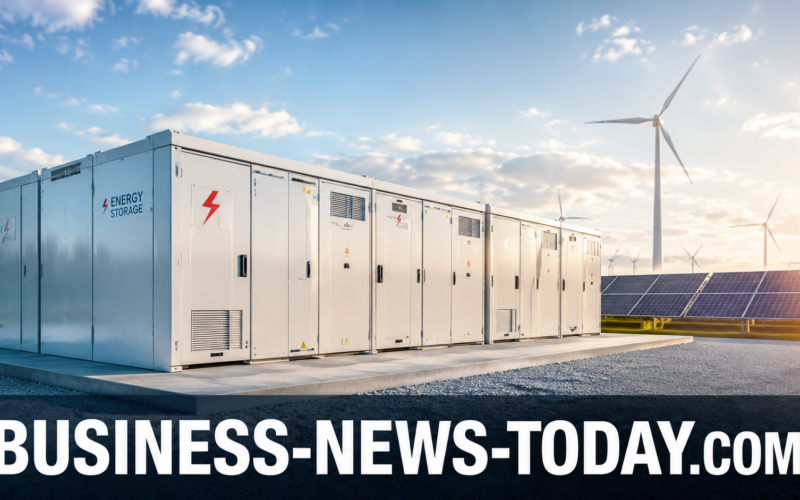
The concept is ambitious. LT350 aims to turn solar parking lot canopies into edge AI datacenters by integrating GPU and CPU server cartridges, battery energy storage, solar inverter systems, liquid cooling and a power-sovereign architecture. If the model works, it could create a new category of distributed AI infrastructure that uses existing paved real estate rather than waiting for large land parcels, utility upgrades and conventional datacenter construction timelines.
The appeal is easy to understand. Parking lots are widespread, often underutilized above ground level and located close to commercial, retail, municipal, healthcare and enterprise sites. A canopy model could potentially combine shade, solar generation, local battery storage and compute infrastructure in one modular system. In theory, that could shorten deployment timelines and move AI compute closer to where data and users are located.
The challenge is that the idea still has to move from concept to engineering reality. Auddia’s announcement is important because Fresh Consulting has been engaged to begin architecture, feasibility validation and system-level design. That marks progress, but it is still early. Investors should treat LT350 as a high-potential infrastructure concept with substantial technical, financing, regulatory and commercialization risk.
How does Fresh Consulting change the credibility of the LT350 engineering plan?
Fresh Consulting changes the credibility of the LT350 plan because the project now has an external engineering partner responsible for translating the concept into a practical technical roadmap. The Phase 1 Statement of Work covers system architecture for LT350’s modular GPU canopy, including server cartridges, battery energy storage cartridges, liquid cooling, solar inverter integration and power systems. That is a significant step because the canopy idea depends on multiple engineering disciplines working together.
The technical complexity is not minor. GPU systems produce heat, require reliable power, need high-speed connectivity and must operate within strict safety and maintenance requirements. Combining that with solar generation, battery systems and outdoor canopy infrastructure creates a difficult engineering problem. A parking lot is not a traditional datacenter shell. LT350 will need to prove that the platform can protect sensitive equipment, maintain uptime, manage thermal load and meet commercial expectations in real-world environments.
Fresh Consulting’s role includes evaluating partner ecosystems across GPUs, batteries, solar, mechanical and electrical contractors, cloud infrastructure and related deployment partners. That matters because LT350 cannot scale as a single-company hardware build. It would need a supply chain, integration partners, site partners, financing and customer demand. The Phase 1 work is designed to produce a roadmap for later design, engineering, fabrication and deployment phases.
The market significance is that Auddia can now frame LT350 as an active engineering program rather than only a patented concept. However, investors should be careful not to confuse an engineering engagement with commercial validation. The project still needs a working pilot, a cost model, customer economics, financing pathways and proof that distributed AI canopy compute can compete against conventional datacenter options.
Why could parking lot canopies become an AI infrastructure opportunity?
Parking lot canopies could become an AI infrastructure opportunity because they combine three resources that are becoming more valuable: land-adjacent space, distributed power potential and proximity to users. Traditional datacenters require major land acquisition, utility coordination, cooling systems and long permitting timelines. Parking lots already sit near commercial centers, enterprises, campuses and public infrastructure. That gives LT350 a potentially faster deployment narrative if site, power and network challenges can be solved.
The solar canopy model also connects to a broader energy constraint in AI infrastructure. Power availability has become one of the biggest bottlenecks for AI datacenter growth. Large datacenters are competing for grid connections, clean energy supply and backup power capacity. LT350’s design attempts to address this through solar integration and battery storage, although the actual power economics will depend heavily on system size, local sun exposure, GPU load, grid access and energy pricing.
The edge-compute angle adds another layer. Some AI workloads may benefit from being closer to enterprise users, industrial facilities, healthcare networks, retail sites or municipal infrastructure. Distributed compute may reduce latency for certain applications and create localized capacity that does not rely entirely on centralized hyperscale datacenters. LT350 is trying to position its canopy model inside that future.
The risk is that AI workloads are not all equally suited to distributed canopies. Frontier model training typically requires massive clustered compute, sophisticated networking and centralized infrastructure. LT350 may be more relevant for inference, edge workloads, enterprise AI, local processing or specialized compute use cases. The business case will depend on identifying the right workloads rather than assuming every AI demand problem can be solved in a parking lot.
How does the LT350 update fit into Auddia’s planned McCarthy Finney merger?
The LT350 update is important because it gives Auddia’s planned McCarthy Finney merger a more tangible infrastructure milestone. Auddia entered into a definitive merger agreement with Thramann Holdings, LLC, which owns LT350, Influence Healthcare and Voyex. If the merger closes, Auddia plans to change its name to McCarthy Finney and trade under the ticker MCFN. The combined company is being positioned as an AI holding company with several portfolio businesses.
That structure creates both opportunity and complexity. On one hand, LT350 gives the merger story an infrastructure theme that is easier for AI investors to understand than a collection of abstract software concepts. AI datacenters, energy constraints and distributed compute are highly visible market themes. If LT350 can make progress toward a pilot, the combined company may have a stronger narrative around real-world AI infrastructure.
On the other hand, the merger also increases execution risk. Investors must evaluate not only Auddia’s current business, but also the proposed combination, the quality of the acquired assets, the financing needs of each portfolio company and management’s ability to run a multi-business AI platform. A holding-company model can create upside if the assets reinforce one another. It can also become difficult to value if each business has different timelines, funding requirements and risk profiles.
The LT350 milestone may help simplify the story by giving investors a specific project to track. The company is targeting a first operational pilot within 18 months of the merger close. That creates a clear timeline, but also a benchmark. If the merger closes and LT350 does not move toward pilot deployment, the market may become less forgiving. In small-cap AI, narrative can open the door, but execution has to walk through it.
What does AUUD stock suggest about investor expectations for Auddia’s AI pivot?
AUUD stock suggests that investors are still treating Auddia as a highly speculative AI microcap rather than a proven infrastructure company. The shares recently traded around $1.38, with intraday movement between $1.35 and $1.43. That price action reflects a company still working to convince the market that its planned McCarthy Finney strategy can become investable beyond headline-driven AI enthusiasm.
The stock’s setup is very different from larger AI infrastructure names. Auddia does not yet have the scale, balance sheet, revenue base or customer visibility of established datacenter, semiconductor or cloud companies. Its upside case rests on whether LT350 and the other proposed portfolio businesses can move from concept-stage or early-stage positioning into commercial execution. That makes AUUD a much higher-risk way to play the AI infrastructure theme.
The LT350 announcement gives investors a concrete development to assess. Fresh Consulting’s engineering engagement is a real operational step, and the company has described 13 issued patents, one allowed patent and two pending patents tied to the canopy platform. Intellectual property can help the story, but patents alone do not prove commercial viability. Investors will need to see pilot results, cost estimates, deployment partners and customer interest.
The main issue for AUUD stock is credibility. Small-cap AI companies often struggle to separate serious technology development from promotional market language. Auddia can improve credibility by delivering measurable milestones: merger completion, Phase 1 engineering outputs, partner announcements, pilot site selection, financing details and eventual operating data. Until then, the stock is likely to remain volatile and highly sensitive to news flow.
Which technical and commercial hurdles could shape LT350’s pilot success?
LT350’s pilot success will depend on whether the platform can solve power, cooling, hardware, safety and maintenance challenges in an outdoor canopy environment. AI compute systems require stable power and thermal management. GPUs are expensive and sensitive infrastructure. Operating them in modular cartridges above parking spaces introduces questions around weather exposure, security, physical access, vibration, maintenance and system uptime.
Cooling may be one of the biggest technical tests. The release describes liquid cooling as part of the planned architecture, which makes sense because AI compute generates significant heat. However, integrating liquid cooling into a distributed outdoor canopy platform could create maintenance and reliability challenges. A traditional datacenter is built around controlled conditions. A parking lot canopy has to deal with weather, dust, vehicle activity and site-specific variability.
Power economics will also matter. Solar generation can help, and battery storage can improve resilience, but AI compute loads are large and continuous. LT350 will need to demonstrate how much of the system’s power can realistically come from onsite solar, how much grid support is needed, and whether the economics work across different geographies. A canopy that sounds green but depends heavily on expensive supplemental power may face a tougher commercial case.
Customer economics will ultimately decide whether LT350 has a market. Potential customers will compare the platform with traditional datacenter colocation, cloud compute, edge compute facilities and on-premises AI infrastructure. LT350 will need to show advantages in deployment speed, latency, energy economics, site utilization or cost. A clever design is not enough. The platform has to solve a problem customers are willing to pay for.
Why does the AI datacenter market create room for unconventional infrastructure models?
The AI datacenter market creates room for unconventional models because conventional infrastructure is under pressure. AI companies, cloud providers and enterprises are competing for power, GPUs, land, cooling systems and network capacity. In many markets, grid interconnection queues and datacenter permitting timelines have become major constraints. That opens the door for alternative architectures that can be deployed closer to demand or use underutilized real estate.
Distributed AI infrastructure is not a replacement for hyperscale datacenters, but it could become a complementary layer. Some workloads require massive centralized clusters, while others may benefit from local inference, low latency, privacy-sensitive processing or edge deployment. If AI adoption spreads across healthcare, retail, industrial sites, cities and enterprises, infrastructure may need to become more distributed.
LT350 is trying to occupy that middle ground. Its canopy model is not just a solar project and not just a datacenter project. It is a hybrid infrastructure concept built around space reuse, energy integration and modular compute. That makes it unusual, but also harder to execute. The more novel the model, the more proof the market will demand.
For the broader sector, Auddia’s announcement reflects a growing search for new AI infrastructure formats. Companies are exploring modular datacenters, nuclear-backed datacenters, grid-adjacent compute, renewable-powered facilities, edge inference nodes and retrofitted real estate. LT350 fits that experimentation wave. Whether it becomes a commercial platform or remains a niche concept will depend on pilot performance and financing discipline.
What should investors watch next as Auddia advances LT350?
Investors should watch whether Auddia completes the proposed merger and whether LT350 reaches the next engineering milestones under Fresh Consulting’s roadmap. The merger is central because LT350 sits inside Thramann Holdings, not Auddia’s legacy operating model. If the business combination closes, the market will begin judging McCarthy Finney on whether it can turn its portfolio claims into operational progress.
Pilot-site selection will be another important signal. A first operational canopy needs a real location, power plan, permitting path, connectivity setup and customer or demonstration use case. The more specific the pilot becomes, the easier it will be for investors to assess feasibility. Vague deployment language may keep the story alive temporarily, but site-level details will be needed for credibility.
Financing will also matter. AI infrastructure is capital-intensive, even at pilot scale. GPUs, batteries, solar hardware, liquid cooling systems, engineering, construction and maintenance all require funding. Auddia’s small public-market profile means investors will watch dilution risk closely. The company will need to balance ambition with capital discipline.
The clearest validation would come from a functioning pilot that demonstrates uptime, compute performance, power economics and customer demand. Until then, LT350 should be viewed as an early-stage infrastructure option rather than a proven AI datacenter business. The idea is timely and potentially interesting. The next test is whether Auddia can make the engineering, economics and capital structure work at the same time.
Key takeaways on what Auddia’s LT350 AI canopy pilot means for AUUD and AI infrastructure
- Auddia has engaged Fresh Consulting to lead engineering and deployment planning for LT350’s first AI datacenter canopy pilot.
- LT350 aims to turn solar parking lot canopies into distributed AI datacenters with modular GPU, battery, solar and cooling infrastructure.
- The business is expected to combine with Auddia through the proposed Thramann Holdings merger to form McCarthy Finney.
- Auddia plans to trade under the ticker MCFN after merger completion.
- The first LT350 pilot is targeted within 18 months of the merger close.
- Fresh Consulting’s Phase 1 work covers architecture, feasibility validation, system design and partner ecosystem evaluation.
- AUUD recently traded around $1.38, highlighting its speculative microcap profile despite the AI infrastructure narrative.
- The opportunity is tied to rising AI compute demand, datacenter power constraints and the search for distributed infrastructure models.
- The main risks include engineering complexity, financing needs, merger execution, customer economics, cooling, power reliability and pilot delivery.
- The next major credibility test will be whether LT350 can move from engineering design to a working pilot with measurable performance and commercial relevance.
Discover more from Business-News-Today.com
Subscribe to get the latest posts sent to your email.