




5E Advanced Materials, Inc. (NASDAQ: FEAM) has secured court approval to acquire substantially all operating assets of bankrupt Searles Valley Minerals, transforming the California boron developer into an operating critical minerals producer through a Section 363 sale. The package includes the Westend and Argus processing facilities, approximately 9,000 acres of Searles Lake brine resources, the Trona Railway, water infrastructure, permits and related operating assets across California. Consideration comprises approximately $3.36 million in cash, 8.3 million 5E Advanced Materials shares and a $6.22 million senior unsecured note, while specified ongoing environmental obligations will remain with the acquired operations. The transaction follows Searles Valley Minerals’ June Chapter 11 filing after years of operational disruption, weak soda ash economics and a capital structure that included substantial secured debt. The central question is whether 5E can use a relatively modest upfront cash commitment to acquire irreplaceable operating infrastructure without allowing financing costs, environmental obligations and integration requirements to overwhelm its much smaller balance sheet.
Why could the Searles Valley acquisition fundamentally change 5E Advanced Materials?
5E Advanced Materials has historically been a development-stage company built around the Fort Cady boron project in Southern California. That strategy offered substantial long-term resource potential but left the company dependent on financing, permitting, engineering and eventual construction before large-scale commercial production could begin. Acquiring Searles Valley changes that sequence by adding operating facilities, existing customers and established mineral production immediately after closing.
The transaction therefore represents more than an expansion of mineral resources. 5E is acquiring infrastructure that has been developed over generations, including processing facilities, power systems, rail logistics and water operations supporting the Trona industrial complex. Management expects the combination to move the company from a pre-revenue development model toward near-term operating revenue while preserving Fort Cady as a longer-duration growth project.
That shift could materially alter how investors value the business. Development companies are often assessed primarily on resource size, permitting progress and future capital requirements, while operating producers can increasingly be judged on revenue, margins, cash flow and production reliability. The acquisition gives 5E a route toward that transition, but only if the acquired facilities can operate economically after emerging from bankruptcy.
What exactly is 5E acquiring from Searles Valley Minerals through the bankruptcy sale?
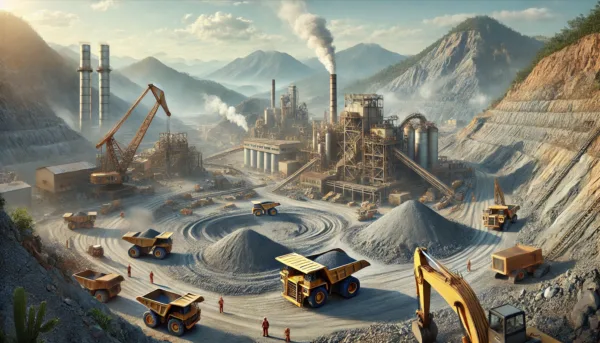
The asset package includes the Westend and Argus production plants and roughly 9,000 acres of mineral-rich brines at Searles Lake. The operations produce refined borates, boric acid, sodium sulfate and salt, creating a broader product mix than the single-project development profile historically associated with 5E. Searles Valley has operated in the region for approximately 150 years, giving the assets an unusually long industrial history.
5E will also acquire the Trona Railway short-line railroad, which connects the remote production complex to the broader national rail network. Potable water production and distribution facilities, permits, licences and other infrastructure are included as well. These logistics assets matter because transporting bulk industrial minerals economically can be almost as important as extracting and processing them.
Management estimates the Searles Lake resource could support production for around 200 years at current extraction rates. That estimate should not be confused with a guaranteed operating life because production economics, environmental requirements, market demand and capital investment can change materially over such a long period. It nevertheless demonstrates why 5E considers the physical resource and infrastructure difficult to replicate.
How much is 5E actually paying when much of the consideration is stock and debt?
The transaction does not have a simple fixed cash purchase price. 5E will pay approximately $3.36 million in cash, issue 8.3 million common shares and provide a $6.22 million senior unsecured promissory note through its acquisition subsidiary. The market value of the equity component will fluctuate with 5E’s share price, meaning the economic value transferred to the sellers changes even though the number of shares is fixed.
At 5E’s September 15 closing price of approximately $1.26, the 8.3 million shares had a market value of roughly $10.5 million. Combined with the cash and note, that would imply about $20 million of stated consideration at that market price before considering assumed obligations and other transaction economics. This is a market-based illustration rather than a fixed contractual purchase price because 5E shares could trade materially higher or lower before the transaction is fully completed.
The equity issuance is also substantial relative to 5E’s existing capital base. With roughly 41.5 million shares outstanding before the transaction, issuing another 8.3 million represents approximately 20% of the existing share count. Assuming no other changes, those shares would represent roughly one-sixth of the enlarged common equity after issuance, making dilution an important part of the acquisition economics.
Why is the $10 million bridge financing important despite the acquisition’s modest cash payment?
Closing requires 5E to receive a $10 million senior secured bridge facility from a seller-related party. The facility carries an 8% payment-in-kind interest rate, meaning interest can be added to principal rather than necessarily paid immediately in cash, and includes a $1 million transaction fee. It is scheduled to mature 270 days after closing.
The financing demonstrates that the transaction requires more liquidity than the approximately $3.36 million cash purchase component alone suggests. 5E needs capital not only to close the acquisition but also to provide working capital and stabilise operations after Searles Valley’s bankruptcy. A mining and processing complex cannot be restarted or expanded solely by acquiring the assets cheaply if inventory, maintenance, employees, energy and environmental compliance require additional cash.
The short maturity creates an early refinancing test. Management will need to generate operating cash, obtain longer-duration financing, issue additional capital or use another source of liquidity before the bridge becomes a constraint. The acquisition therefore gives 5E operating assets quickly, but it also accelerates the timetable for proving that those assets can support a sustainable financing structure.
What does the $6.22 million seller note reveal about the transaction’s financing risk?
The senior unsecured seller note adds another layer to the capital structure. The note carries a 14.5% annual interest rate that is capitalised in kind quarterly, meaning the outstanding balance can grow if interest is not paid in cash. A $1.2 million cash payment is due on the second anniversary, with final maturity scheduled five years after closing.
This arrangement reduces immediate cash required to acquire the assets but increases future obligations. Payment-in-kind financing can be useful during a turnaround because it preserves near-term liquidity, yet it also compounds debt if operating cash generation takes longer than expected. The economic cost therefore becomes more significant if the acquired business requires several years of restructuring before generating substantial free cash flow.
For 5E, the financing structure makes operational execution particularly important. Producing revenue after closing is only the first milestone. Management must eventually demonstrate margins and cash generation sufficient to fund maintenance capital, environmental responsibilities and debt obligations without repeatedly relying on equity markets.
Why did Searles Valley Minerals enter Chapter 11 despite owning scarce mineral assets?
Searles Valley Minerals filed for Chapter 11 protection in June with substantial liabilities after years of operational and market pressure. Court records indicated liabilities running into hundreds of millions of dollars, while reporting around the restructuring identified approximately $85.5 million of secured debt. The bankruptcy therefore reflects financial distress at the operating company rather than a lack of strategic value in the underlying mineral resources.
The problems developed over several years. The 2019 Ridgecrest earthquakes damaged operations and reportedly generated roughly $50 million of repair costs and lost revenue while also affecting brine extraction. Searles Valley later faced weak soda ash pricing, international competition and high energy costs, ultimately reducing its workforce substantially before entering Chapter 11.
This history explains both the opportunity and the risk for 5E. Bankruptcy can allow a buyer to acquire productive assets at a fraction of historical replacement cost because legacy debt is separated from the operating assets. It does not automatically cure the commercial or operational problems that pushed the previous owner into restructuring.
How does the Section 363 structure protect 5E from Searles Valley’s legacy liabilities?
Section 363 of the US Bankruptcy Code allows assets to be sold through a court-supervised process, generally free and clear of specified claims and interests if legal requirements are met. That structure can be attractive to buyers because they can acquire operating assets without automatically assuming the debtor’s entire historical capital structure. The Delaware bankruptcy court approved the going-concern sale on September 15 following negotiations among stakeholders.
However, free and clear does not mean liability-free. 5E will assume specified obligations associated with continuing operations, including certain environmental compliance responsibilities. The acquisition agreement also transfers the assets on an as-is basis, making due diligence and future capital requirements important.
Environmental obligations have been an active issue in the bankruptcy proceedings. Regulators have sought to preserve responsibility for certain compliance costs even as the assets change ownership. Investors should therefore avoid treating the low cash purchase price as evidence that 5E is obtaining a fully rehabilitated production complex without associated obligations.
Why are boron and the Searles Lake assets strategically important to 5E?
Boron was added to the US critical minerals list in 2025, reflecting its importance across defence, energy, agriculture and advanced manufacturing applications. Borates are used in areas ranging from specialised glass and insulation to permanent magnets, fertilisers and other industrial products. Unlike some materials that can be substituted relatively easily, boron has characteristics that make replacement difficult in several applications.
5E says the acquisition would make it the only American-owned producer of borates in the United States once the transaction closes. That positioning complements Fort Cady, where the company controls a large domestic boron resource intended to support future refined borate production. Searles Valley offers existing production while Fort Cady represents potential future capacity.
The combination could therefore create a two-stage platform. Searles Valley provides near-term operating capability and established customer relationships, while Fort Cady could provide longer-term production growth if financing and development proceed successfully. Whether that structure produces competitive economics will depend on production costs and capital requirements rather than strategic importance alone.
Why did 5E shares fall after announcing an acquisition management calls transformative?
5E shares closed at approximately $1.26 on September 15, down about 5.3% for the session after the acquisition announcement. The stock had already declined materially during preceding weeks and was about 22% lower over one month. Its 52-week range extended from approximately $0.90 to $7.50, illustrating the volatility associated with the development-stage company.
The market reaction should not automatically be interpreted as rejection of the strategic rationale. Investors must also account for 8.3 million new shares, the bridge facility, the seller note and the operational liabilities accompanying the acquisition. A transaction that creates revenue can still dilute existing shareholders or require substantial additional capital before becoming cash-generative.
5E’s market capitalisation was only a little above $50 million around the announcement, making the acquisition meaningful relative to the size of the listed company even though the cash component is modest. For a company of this scale, execution at Searles Valley could materially improve the investment case or create significant financial strain.
What must happen before 5E can fully integrate the Searles Valley operations?
The bankruptcy court’s approval clears a major transaction hurdle, but additional conditions remain before completion. The transfer of the Trona Railway requires authorisation from the Surface Transportation Board, and the $10 million bridge financing must be funded under the agreed conditions. 5E expects closing in early October.
After completion, management plans to maintain operations in Trona without interruption and retain a meaningful portion of the existing workforce. That continuity is important because specialised industrial assets depend on experienced operators, established maintenance routines and local knowledge. Preserving customer relationships will also be essential if 5E wants immediate operating revenue to translate into dependable cash flow.
The acquisition gives 5E a path from developer to producer in a single transaction, but that transformation will not be complete when legal ownership changes. The decisive proof points will be production stability, customer retention, operating margins, refinancing of short-term obligations and evidence that Searles Valley can support rather than delay development of Fort Cady.
Key takeaways on 5E Advanced Materials’ acquisition of Searles Valley Minerals assets
- 5E Advanced Materials has secured bankruptcy court approval to acquire substantially all operating assets of Searles Valley Minerals through a Section 363 sale.
- The assets include the Westend and Argus plants, approximately 9,000 acres of Searles Lake brines, the Trona Railway and associated water and logistics infrastructure.
- Consideration includes approximately $3.36 million in cash, 8.3 million 5E shares and a $6.22 million senior unsecured seller note.
- The 8.3 million shares represent roughly 20% of 5E’s existing share count before issuance, making dilution an important part of the transaction economics.
- Closing also requires a $10 million senior secured bridge facility carrying 8% payment-in-kind interest and a $1 million transaction fee.
- The seller note carries a 14.5% annual interest rate, adding a meaningful future financing obligation despite the relatively small upfront cash payment.
- Searles Valley filed Chapter 11 in June after years of earthquake disruption, weak soda ash economics, high costs and substantial debt.
- The acquisition could transform 5E from a development-stage company into an operating producer while preserving Fort Cady as its longer-term growth project.
- 5E shares closed at approximately $1.26 on September 15, down about 5.3% for the session and materially below their 52-week high.
- The next tests are closing in October, operational continuity at Trona, refinancing the bridge facility and demonstrating that the acquired assets can generate sustainable cash flow.
Discover more from Business-News-Today.com
Subscribe to get the latest posts sent to your email.