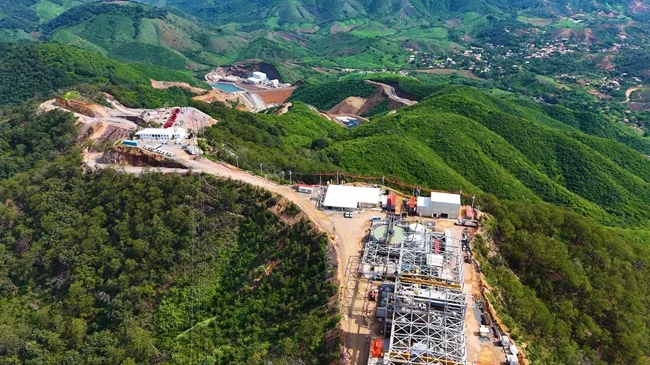




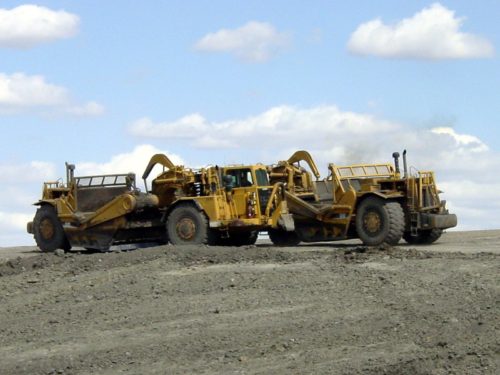
Tambourah Metals Limited (ASX:TMB) has contracted a reverse circulation drilling rig for an exploration campaign of up to approximately 4,000 metres across its Western Australian gold projects. The first phase will comprise about 2,400 metres at the Tambourah Gold Project, including resource-focused infill drilling at Tambourah King and systematic testing of the nearby Alexandria, Young Australian and Western Queen prospects. The campaign is intended to generate the geological, density and metallurgical data needed to support a maiden Mineral Resource estimate at Tambourah King, where mining lease applications remain pending. ASX:TMB shares rose to approximately 3.0 cents during the July 1 session, but the company must now convert narrow high-grade intersections into a coherent and potentially economic gold inventory.
Why does Tambourah Metals’ new RC campaign matter for a maiden Tambourah King resource?
The latest Tambourah Metals drilling campaign represents a shift in exploration intent. Earlier drilling established that high-grade gold exists beneath the historic workings at Tambourah King, while the new program is designed to determine whether those intersections can be connected sufficiently to support a defensible resource model.
Approximately 2,400 metres of the planned campaign will initially be completed across the Tambourah Gold Project. Part of this drilling will close gaps between existing holes at Tambourah King, while about 1,200 metres will test Alexandria, Young Australian and Western Queen. The wider campaign of up to approximately 4,000 metres also includes work planned at the Bryah Gold Project after the rig completes the Tambourah phase.
Infill drilling is less glamorous than announcing a fresh discovery, but it is often where an exploration narrative either gains substance or begins to unravel. A maiden Mineral Resource estimate requires more than several impressive assays. Tambourah Metals must establish the geometry, orientation, continuity, density and grade distribution of the mineralised structure with enough confidence for the ounces to be classified under accepted reporting standards.
The accompanying density and metallurgical studies are therefore strategically important. Density measurements help convert the interpreted volume of mineralised rock into tonnage, while metallurgical testing begins to establish how readily gold could be recovered from the material. Neither study guarantees commercial viability, but both are necessary steps before Tambourah King can progress from an exploration target towards an asset with measurable economic potential.
Pending mining lease applications add another layer to the strategy. Progressing tenure while resource work advances could shorten the time between a successful maiden estimate and more detailed development studies. However, mining leases alone would not remove the need for environmental approvals, heritage work, engineering, mine design and an economically credible processing route.
What do Tambourah King’s high-grade intersections prove, and what remains unproven?
Tambourah King has returned several genuinely high-grade intersections. Previously reported results include 2.65 metres at 32.3 grams per tonne of gold from 58.35 metres, including 1.05 metres at 77 grams per tonne, as well as 2 metres at 49.7 grams per tonne from 50 metres. Other results include 2 metres at 7.7 grams per tonne from 37 metres and 1.31 metres at 38.4 grams per tonne from 82.14 metres.
These numbers confirm that the mineralised system is capable of producing high gold grades at relatively shallow depths. They also justify further spending on resource definition, particularly because the mineralisation occurs beneath historic workings in a goldfield where production took place during the 1890s.
What the results do not yet demonstrate is equally important. Several of the strongest intersections are narrow, which means continuity and mining width will matter as much as headline grade. A very high-grade metre can attract attention, but a mine requires enough connected tonnes to support extraction, dilution, development and processing costs.
Tambourah Metals must therefore show that the high-grade zones are not isolated shoots separated by uneconomic material. The new holes should help define whether gold occurs within a predictable lode structure, whether the zone maintains grade along strike and at depth, and whether the mineralisation can support practical mining dimensions.
Investors should also distinguish between laboratory assay grades and recovered gold. Metallurgical testing will need to examine recovery characteristics, mineral associations and any processing complications. A high-grade deposit with inconsistent geometry or difficult metallurgy can be less valuable than a lower-grade deposit with predictable continuity and straightforward processing.
The central question is no longer whether Tambourah King contains gold. The drilling has already answered that. The question is whether Tambourah Metals can transform the known mineralisation into enough reliable, recoverable ounces to justify the next round of technical and financial studies.
Could Alexandria, Young Australian and Western Queen turn one target into a broader goldfield?
The decision to allocate drilling to Alexandria, Young Australian and Western Queen shows that Tambourah Metals is not treating Tambourah King as an isolated prospect. The company has consolidated more than 20 historic prospects across approximately three kilometres of the Tambourah Goldfield, creating an opportunity to test whether several old workings belong to a wider mineralised system.
Western Queen is situated about 100 metres east of Tambourah King, while Young Australian lies roughly 350 metres to the southeast. Alexandria has previously returned intersections including 2 metres at 5.8 grams per tonne from 60 metres, while Young Australian has produced 1 metre at 4.54 grams per tonne from 33 metres.
Those grades are less dramatic than the strongest Tambourah King results, but the strategic value lies in their location and shallow depth. Confirmation of multiple parallel or connected lodes could increase the potential resource footprint and reduce the company’s reliance on one narrow high-grade zone.
A clustered goldfield can offer operational advantages if several deposits eventually contribute to common infrastructure, mine planning and processing. Small deposits that may not support standalone development can become more relevant when combined into a single production inventory. This is particularly important for a micro-cap explorer, because the route to value may depend on building a district-scale package rather than proving one spectacular but limited vein.
The risk is that widely spaced historic prospects can produce geological complexity rather than aggregation. Different structures may have different orientations, grades and metallurgical characteristics. Tambourah Metals will need systematic drilling, rather than selective follow-up of the best historical results, to establish whether the prospects can genuinely contribute to a consolidated development case.
The new program should begin answering whether Tambourah is one resource target surrounded by exploration distractions or a broader goldfield with several potentially complementary deposits. That distinction could materially affect future funding, partnership and corporate interest.
How does the Tambourah drilling sequence strengthen the company’s wider Western Australia strategy?
Tambourah Metals plans to move the drilling rig to the Bryah Gold Project after completing the Tambourah campaign. At Bryah, the company intends to test extensions to gold mineralisation at Beatty Park South and prepare precollars for diamond drilling supported by Western Australia’s Exploration Incentive Scheme.
Using the same rig across successive projects can improve mobilisation efficiency and maintain operational momentum. It also allows Tambourah Metals to pursue two different value-creation objectives within one broader campaign. Tambourah King is moving towards resource definition, while Beatty Park South remains more discovery and expansion focused.
This sequencing creates portfolio optionality. A positive maiden resource at Tambourah King could give the company a more advanced anchor asset, while drilling success at Beatty Park South could introduce a second growth story. Investors would then be assessing a portfolio containing both near-term resource work and earlier-stage discovery potential.
The trade-off is capital allocation. Exploration companies often struggle when they distribute funding across too many targets without advancing any one asset far enough to create lasting value. Tambourah Metals must ensure that the Bryah campaign does not dilute the technical work required to complete the Tambourah King resource estimate.
The company’s broader portfolio also includes critical minerals projects, but the present drilling program reinforces gold as the immediate market catalyst. That concentration appears rational while the company has high-grade results to follow up and a maiden resource objective within reach. It also places Tambourah Metals in competition with numerous Western Australian explorers seeking capital, contractors and investor attention in a supportive but highly selective gold market.
Does Tambourah Metals have enough funding to advance two gold programs without near-term dilution?
Tambourah Metals reported cash and cash equivalents of approximately A$5.35 million at March 31, 2026. That position provides a meaningful funding base relative to the company’s current market capitalisation of roughly A$8 million, although the cost of the latest drilling campaign has not been disclosed.
The balance sheet was strengthened during 2025 through equity funding, including a A$3 million strategic placement involving Tribeca Investment Partners. That placement was priced at 8.5 cents per share, substantially above the approximately 3.0-cent trading level recorded during the July 1 session.
The gap between the placement price and current market price reflects the scale of the subsequent loss of investor confidence. It also means future equity funding at current levels could be considerably more dilutive unless drilling results produce a meaningful rerating.
The March cash balance suggests Tambourah Metals should be capable of completing the announced drilling campaign and associated technical work without immediately returning to shareholders. However, drilling is only one component of the expenditure pathway. Assays, geological modelling, metallurgical studies, resource estimation, lease progression and further Bryah work will continue consuming capital after the rig leaves the site.
Funding discipline will therefore be judged by what each dollar achieves. The most valuable outcome would be a credible maiden resource supported by sufficient technical data to define the next decision point. Repeated drilling that generates additional isolated high-grade intersections without resolving continuity would consume cash while leaving the core valuation question unanswered.
A successful resource estimate could improve the company’s ability to fund later studies, negotiate partnerships or examine development alternatives on better terms. An inconclusive campaign would raise the probability of further dilution at a depressed share price.
Why did ASX:TMB shares jump even as the stock remains under pressure over one month?
Tambourah Metals shares traded at approximately 3.0 cents during the July 1 session, up around 15.4% from the previous close of 2.6 cents. The reaction indicates that investors viewed the commencement of resource-focused drilling as a tangible catalyst rather than another preliminary exploration update.
The move requires context. Based on recent closing prices, ASX:TMB remained approximately 6% lower over five trading sessions and about 25% lower than the beginning of June. The stock has traded within a 52-week range of roughly 1.9 cents to 22 cents, placing the current price much closer to the bottom than the top of that range.
At micro-cap scale, percentage moves can also be amplified by limited liquidity. A 15% daily gain from a low base does not necessarily indicate a durable reassessment of project value. The share price will probably remain sensitive to drilling progress, assay timing and the eventual quality of the resource model.
Tambourah Metals does not have meaningful major-broker coverage, which increases the role of retail sentiment and announcement-driven trading. The presence of a strategic institutional investor provides some external validation, but the market price sitting far below the 2025 placement level shows that investors want technical delivery rather than capital-market endorsements.
The announcement has given ASX:TMB a fresh catalyst, but the share-price recovery remains fragile. Sustained improvement would require evidence that the company is adding connected tonnes and not merely collecting another set of narrow high-grade intervals.
What milestones must Tambourah Metals deliver before Tambourah King becomes a credible development proposition?
The first milestone is operational execution. Tambourah Metals must mobilise the rig, complete the planned holes safely and avoid delays that could disrupt the subsequent Bryah program. Contractor availability, weather, access and sample turnaround times can all affect the schedule.
The second milestone is geological continuity. New holes must strengthen the interpretation of the Tambourah King lode and reduce uncertainty between existing intersections. Results that confirm consistent mineralisation across multiple sections would be more valuable than a single exceptional assay with weak support from surrounding holes.
The third milestone is a credible maiden Mineral Resource estimate. Resource size, grade, depth and classification will determine whether Tambourah King merits preliminary economic work. Investors should pay close attention to how much of the estimate is supported by higher-confidence drilling and whether the model relies heavily on narrow high-grade zones.
The fourth milestone is technical recoverability. Density and metallurgical studies must provide reasonable assumptions for tonnage and gold recovery. Any evidence of difficult processing, variable recovery or excessive dilution would weaken the development case.
The fifth milestone is tenure and development optionality. Progress on the pending mining lease applications would help, but Tambourah Metals must eventually identify a realistic processing and infrastructure pathway. A smaller high-grade resource could potentially support a different development model from a larger lower-grade system, making resource geometry crucial.
Success would give Tambourah Metals a defined gold asset, a stronger basis for funding discussions and improved leverage when considering partnerships or corporate transactions. Failure to demonstrate continuity would leave the company with attractive assays but limited evidence of scalable economic value. In exploration, the drill rig may create the excitement, but the resource model delivers the verdict.
Key takeaways on what Tambourah Metals’ drilling campaign means for ASX:TMB investors and rivals
- Tambourah Metals has started an exploration campaign of up to approximately 4,000 metres across its Tambourah and Bryah gold interests.
- The initial 2,400-metre Tambourah phase is intended to support a maiden Mineral Resource estimate at Tambourah King.
- Previous high-grade intersections justify the program, but narrow widths make continuity, tonnage and mining dilution critical.
- Drilling at Alexandria, Young Australian and Western Queen could establish whether Tambourah King forms part of a broader multi-lode goldfield.
- Density and metallurgical testing will be as important as new assays because they influence tonnage and potential gold recovery.
- Tambourah Metals’ March quarter cash balance of A$5.35 million provides funding capacity, although continued multi-project exploration will steadily reduce that buffer.
- ASX:TMB’s approximately 15% intraday rise reflects renewed catalyst interest, but the stock remains materially weaker over the past month.
- The current share price remains far below the 8.5-cent strategic placement completed in 2025, highlighting unresolved investor scepticism.
- A credible maiden resource could improve funding and partnership options, while inconclusive drilling could increase future dilution risk.
- The decisive issue is whether Tambourah Metals can convert high-grade intervals into connected, recoverable and potentially mineable ounces.
Discover more from Business-News-Today.com
Subscribe to get the latest posts sent to your email.